The Quick Verdict: Model Y Long Range vs Model Y
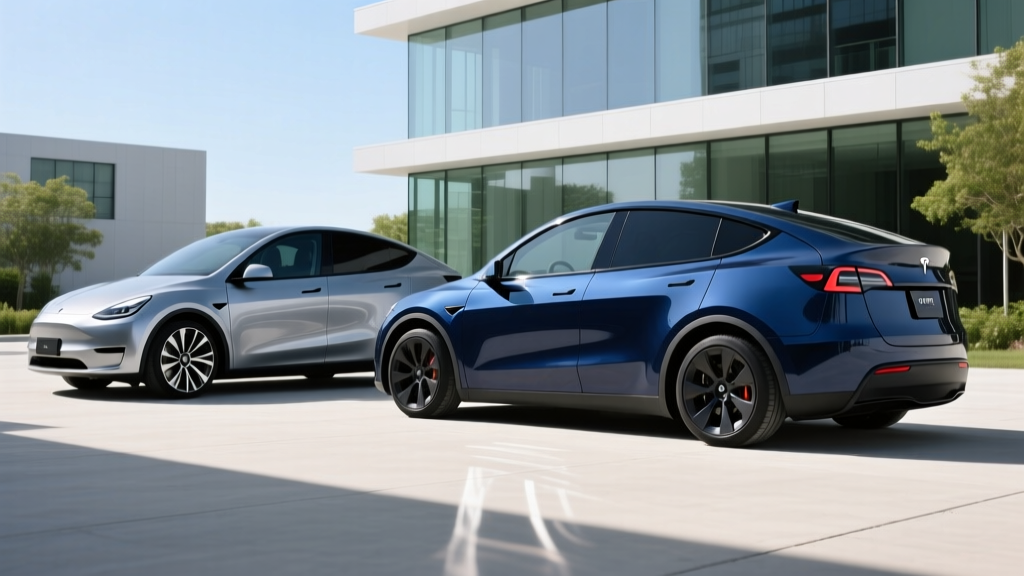
If you're shopping Tesla's best-selling crossover, the choice between the Tesla Model Y Long Range and the standard Model Y (rear-wheel drive) boils down to three variables: how far you drive daily, whether you need all-wheel drive, and whether the Long Range's price premium fits your budget after tax credits. The standard Model Y is the value play — lighter, slightly more efficient per mile, and cheaper at the register. The Long Range trades that affordability for an extra ~60 miles of EPA range, dual-motor AWD, and a quicker 0-60 time. Neither is universally "better." The right answer depends entirely on your commute, climate, and charging setup.
Side-by-Side Spec Table: 2026 Tesla Model Y vs Model Y Long Range
Below is the full specification breakdown for the current 2026 model year. All figures reflect EPA testing and Tesla's published specs. Battery chemistry, usable capacity, and charge rates are drawn from Tesla's engineering documentation and fueleconomy.gov data.
| Specification | Model Y (RWD) | Model Y Long Range AWD |
|---|---|---|
| Base MSRP | $44,990 | $48,990 |
| Drivetrain | Rear-Wheel Drive | Dual-Motor All-Wheel Drive |
| EPA Range | 279 miles | 337 miles |
| Battery Chemistry | LFP (Lithium Iron Phosphate) | NMC (Nickel Manganese Cobalt) |
| Usable Battery Capacity | ~60 kWh | ~75 kWh |
| Peak DC Fast Charge Rate | 170 kW | 250 kW |
| 10–80% DC Fast Charge Time | ~28 minutes | ~22 minutes |
| Level 2 Charge Rate (Max) | 11.5 kW | 11.5 kW |
| 0–60 mph | 6.5 seconds | 4.8 seconds |
| Horsepower | 295 hp | 384 hp |
| EPA Efficiency (Combined) | 133 MPGe / 26 kWh/100mi | 122 MPGe / 28 kWh/100mi |
| Cargo Volume (Rear Seats Up) | 30.2 cu ft | 30.2 cu ft |
| Cargo Volume (Rear Seats Folded) | 72.0 cu ft | 72.0 cu ft |
| Towing Capacity | Not rated | 3,500 lbs |
| Basic Warranty | 4 yr / 50,000 mi | 4 yr / 50,000 mi |
| Battery & Drive Unit Warranty | 8 yr / 120,000 mi | 8 yr / 160,000 mi |
Range & Real-World Efficiency: Where the Long Range Earns Its Name
The EPA gap is significant: 337 miles for the Long Range versus 279 miles for the RWD — a 58-mile advantage. But EPA stickers assume moderate temperatures, mixed driving, and no accessory load. Here's what to expect in practice.
Model Y RWD (EPA 279 mi): Expect ~240–260 miles in mixed highway driving at 70 mph. In freezing temperatures (below 32°F), plan for 190–220 miles due to battery resistance and cabin heating demand.
Model Y Long Range (EPA 337 mi): Expect ~290–310 miles mixed highway. Cold weather drops this to roughly 240–270 miles. The heat pump on both trims helps, but physics still applies.
The RWD Model Y's LFP battery is more energy-dense per cycle at partial states of charge, meaning you can charge it to 100% daily without the degradation concerns that apply to the NMC pack in the Long Range. Tesla recommends keeping NMC batteries between 20–80% for daily use, which effectively reduces the Long Range's daily usable range to roughly 270 miles (80% of 337). That narrows the practical gap considerably if you charge at home every night.
However, on road trips where you charge to 100% before departing, the Long Range's full 337-mile buffer matters — particularly in regions with sparse Supercharger coverage like the Mountain West or rural Midwest.
Charging Speed & Network Considerations
This is where the Long Range pulls ahead decisively. Its NMC pack supports a 250 kW peak DC fast charge rate versus the RWD's 170 kW peak. On a Tesla V3 or V4 Supercharger, the Long Range adds roughly 200 miles of range in 15 minutes, while the RWD adds closer to 140 miles in the same window.
Neither vehicle sustains its peak kW for the full session. The Long Range peaks at 250 kW up to approximately 40% SoC, then tapers through 150 kW and drops below 100 kW past 80%. The RWD peaks at 170 kW with a similar taper pattern. Both vehicles precondition the battery when you navigate to a Supercharger — a critical feature that shaves 5–10 minutes off cold-weather charging sessions.
On the Tesla Supercharger network — now open to NACS-equipped non-Tesla EVs and the most reliable DC network in the U.S. according to J.D. Power EV charging studies — both vehicles charge seamlessly with plug-and-charge billing. The real differentiator is how often you road-trip. If you take four or more long trips per year, the Long Range's faster charging and longer legs between stops add up to meaningful time savings.
For Level 2 home charging, both vehicles max out at 11.5 kW (48 amps on a 60-amp circuit). A full charge from 10% takes roughly 6 hours on the RWD and about 7.5 hours on the Long Range, owing to the larger battery. For most owners charging overnight, this difference is immaterial.
Price, Tax Credits, and Total Cost of Ownership
The sticker-price gap is $4,000. But federal and state incentives, insurance premiums, and energy costs reshape the math.
Federal §30D Tax Credit Eligibility (2026 Rules)
Under current IRS rules for the §30D Clean Vehicle Credit, both the Model Y RWD and Model Y Long Range qualify as SUVs (MSRP cap: $80,000). Both fall well under that ceiling. However, the full $7,500 credit depends on:
- Battery component sourcing: A percentage of battery components must be manufactured or assembled in North America.
- Critical minerals sourcing: A percentage of critical minerals must be extracted or processed in the U.S. or a free-trade-agreement country.
- Buyer income caps: AGI must not exceed $150,000 (single), $225,000 (head of household), or $300,000 (joint).
- Point-of-sale transfer: As of 2024, you can transfer the credit to the dealer for an immediate price reduction at purchase.
Tesla's battery sourcing has shifted across model years. The RWD Model Y's LFP cells have historically been sourced from CATL (China), which can disqualify the critical-minerals portion of the credit. The Long Range's NMC cells, produced at Tesla's Nevada and Texas gigafactories in partnership with Panasonic, have generally met sourcing thresholds. Always verify current eligibility on the IRS Clean Vehicle Credit page before purchasing, as supply chains shift.
| Trim | MSRP | Est. §30D Credit | Effective Price |
|---|---|---|---|
| Model Y RWD | $44,990 | $3,750–$7,500* | $37,490–$41,240 |
| Model Y Long Range | $48,990 | $7,500 | $41,490 |
*RWD credit amount depends on LFP cell sourcing compliance in the current quarter. Verify at purchase.
If the RWD qualifies for only half the credit ($3,750) due to critical-mineral sourcing, the effective price gap widens to roughly $4,000–$7,750. If it qualifies for the full $7,500, the gap narrows to just $250 — making the Long Range an exceptional value.
Ownership Costs Over 5 Years
| Cost Category | Model Y RWD | Model Y Long Range |
|---|---|---|
| Purchase Price (after est. credit) | $39,500 | $41,490 |
| Electricity (at $0.14/kWh national avg) | $2,730 | $2,940 |
| Insurance (national avg) | $9,200 | $9,800 |
| Maintenance (tires, cabin filter, wipers) | $2,100 | $2,100 |
| Estimated Depreciation | $15,800 | $16,600 |
| Total 5-Year Cost | $69,330 | $72,930 |
The RWD is marginally cheaper to insure (lower replacement cost) and marginally cheaper to charge (lighter vehicle, slightly better efficiency at 26 vs. 28 kWh/100mi). Depreciation tracks closely as a percentage of purchase price. Over five years, the RWD saves roughly $3,600 — but that's before factoring in the Long Range's superior road-trip convenience and AWD capability.
Performance, Driving Dynamics, and Capability
The Long Range's dual-motor AWD delivers 384 hp and a 4.8-second 0–60 time — brisk for a family crossover. The RWD's single rear motor produces 295 hp and hits 60 in 6.5 seconds, which is adequate for merging and passing but noticeably less urgent.
Beyond straight-line speed, the drivetrain difference matters in real conditions:
- Snow and rain traction: AWD provides superior launch grip on slippery surfaces. If you live in the Snow Belt or mountain regions, this is a genuine safety and convenience advantage.
- Towing: Only the Long Range is rated for towing — 3,500 lbs with the factory hitch. The RWD is not tow-rated.
- Weight and handling: The RWD is approximately 200 lbs lighter, which translates to slightly sharper turn-in and marginally less tire wear over time.
Both trims include Tesla's Basic Autopilot (adaptive cruise + lane centering), which is a SAE Level 2 driver-assistance system — meaning you must keep your hands on the wheel and eyes on the road at all times. Full Self-Driving (Supervised) is available as a $8,000 add-on or $99/month subscription on both trims but remains Level 2 despite its name.
Tesla Autopilot and FSD (Supervised) are not self-driving systems. They are SAE Level 2 driver-assist features that require continuous driver supervision. You are legally and operationally responsible for the vehicle at all times. NHTSA has issued multiple investigations into Autopilot-related incidents. Never use these systems while fatigued, distracted, or impaired. See NHTSA.gov for current safety bulletins.
Category-by-Category Verdict
🏆 Range Winner: Model Y Long Range
337 EPA miles vs. 279. On road trips, the 58-mile gap means one fewer charging stop on a 600-mile drive. In cold weather, the larger buffer provides a critical margin.
⚡ Charging Speed Winner: Model Y Long Range
250 kW peak vs. 170 kW. The Long Range adds ~60 more miles of range in a 15-minute Supercharger session. Meaningful on multi-state road trips.
💰 Value Winner: Model Y RWD
$4,000 cheaper at MSRP, slightly lower insurance, better efficiency per mile. If the full §30D credit applies to both, the RWD wins on pure cost-per-mile.
🏔️ All-Weather Winner: Model Y Long Range
Dual-motor AWD provides superior traction in snow, rain, and ice. Not optional on the RWD — a dealbreaker for northern-climate buyers.
🔋 Battery Longevity Winner: Model Y RWD
LFP chemistry tolerates daily 100% charging with minimal degradation. You get the full 279 miles every day. NMC in the Long Range prefers 80% daily, reducing usable range to ~270 miles.
🚗 Performance Winner: Model Y Long Range
4.8s 0–60, 384 hp, and AWD launch grip. The RWD is adequate; the Long Range is genuinely quick for a crossover.
🏕️ Towing Winner: Model Y Long Range
3,500-lb rating with factory hitch. The RWD is not tow-rated — zero capacity for bike racks, small trailers, or campers.
📱 Tech & Interior: Tie
Identical 15.4-inch touchscreen, software, Autopilot hardware, and interior materials. No tech advantage to either trim.
Decision Framework: Which Model Y Should You Buy?
Choose the Model Y RWD if:
- Your daily round-trip commute is under 100 miles and you charge at home nightly.
- You live in a mild climate (rarely below freezing) with good public charging infrastructure.
- You don't need AWD or towing capability.
- You want the lowest possible purchase price and prefer charging to 100% daily without battery-health concerns.
- You take fewer than two road trips per year over 300 miles.
Choose the Model Y Long Range if:
- You regularly drive more than 150 miles in a day or take frequent road trips.
- You live in a region with harsh winters, mountain terrain, or limited charging infrastructure.
- You need AWD for snow/ice traction or need to tow up to 3,500 lbs.
- You value faster DC charging to minimize Supercharger stop time.
- The $4,000 premium (potentially offset by a larger tax credit) fits your budget.
Frequently Asked Questions
Is the Model Y Long Range worth the extra $4,000?
For most suburban commuters who charge at home and rarely road-trip, the RWD delivers nearly the same daily experience at a lower price. But if you drive in winter conditions, take regular road trips, or need towing, the Long Range's AWD, extra range, faster charging, and 3,500-lb tow rating justify the premium — especially if the RWD's LFP battery sourcing limits its federal tax credit to $3,750 while the Long Range qualifies for the full $7,500.
Can I charge the Model Y RWD to 100% every day?
Yes. The RWD's LFP battery is designed for regular 100% charging with minimal long-term degradation. Tesla explicitly recommends periodic 100% charges for LFP packs to maintain accurate state-of-charge calibration. This is a genuine ownership advantage over the NMC pack in the Long Range, which Tesla recommends keeping at 80% for daily use.
Does the Model Y RWD have the same Autopilot as the Long Range?
Yes. Both trims ship with Tesla's HW4 Autopilot hardware suite and Basic Autopilot software (Traffic-Aware Cruise Control and Autosteer). Full Self-Driving (Supervised) is available as an add-on for both. Both remain SAE Level 2 systems requiring full driver attention.
How does cold weather affect each model differently?
All EVs lose range in cold weather — typically 20–30% below freezing due to increased battery internal resistance and cabin heating demand. The Long Range starts with a 58-mile EPA advantage, so even after a 25% cold-weather reduction, it retains approximately 253 miles of real-world range versus the RWD's ~209 miles. If cold-weather range is a priority, the Long Range's larger battery provides a more comfortable buffer.
Which Model Y holds its value better?
Historically, the Long Range has held a slight residual-value advantage because AWD and longer range are in higher demand in the used-EV market. However, both trims depreciate similarly as a percentage of their purchase price. According to industry data, Tesla Model Y residuals remain among the strongest in the EV segment, though depreciation has accelerated as new competition has entered the mid-size electric SUV market.
Are there any differences in cargo space or interior?
No. Both trims share the same body, interior layout, 15.4-inch touchscreen, glass roof, and cargo volume (30.2 cu ft rear seats up, 72.0 cu ft folded). The only mechanical differences are the drivetrain, battery pack, and associated weight.