Quick Verdict: Two Flagships, Very Different Buyers
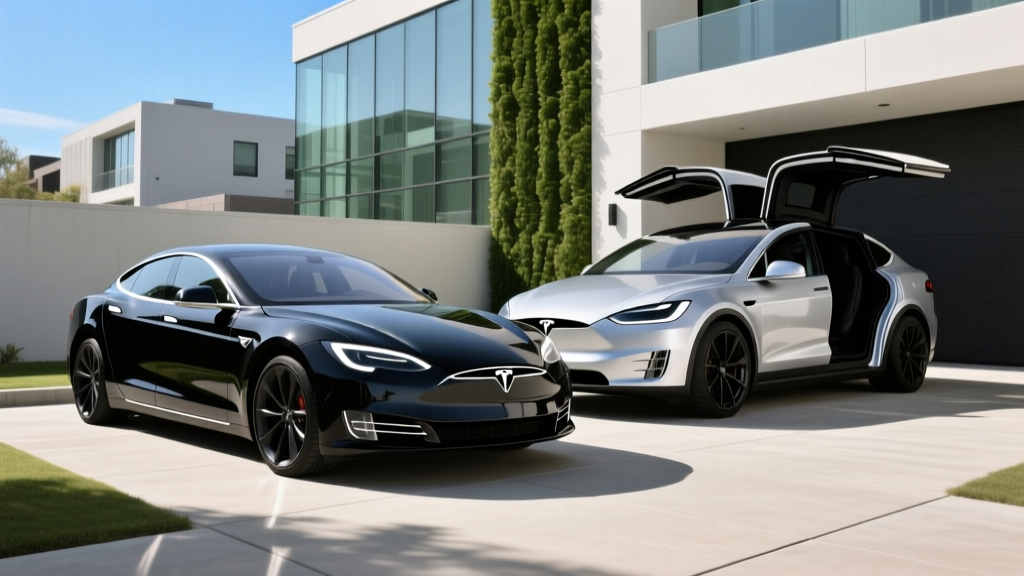
Tesla's Model S sedan and Model X SUV share a platform, a powertrain architecture, and a Supercharger passport — but they solve different problems. The 2026 Model S remains the efficiency and range king of Tesla's lineup, stretching over 400 miles on a charge in Long Range trim. The 2026 Model X trades some of that range for three-row seating, a panoramic windshield, and the party-piece Falcon Wing rear doors. If you're cross-shopping these two, the real question isn't which is "better" — it's whether you need the cargo space and passenger capacity to justify a 50-mile range penalty and a higher sticker price.
Below, we break down every spec that matters to an EV buyer: real-world range expectations, charging curves at 250 kW Superchargers, §30D tax credit eligibility under current IRS rules, and five-year ownership costs. All figures reflect 2026 model-year specifications.
Side-by-Side Specs: Model S vs Model X at a Glance
| Specification | Model S Long Range | Model S Plaid | Model X Long Range | Model X Plaid |
|---|---|---|---|---|
| EPA Range | 402 mi | 359 mi | 348 mi | 320 mi |
| Battery (usable, est.) | ~100 kWh (NMC) | ~100 kWh (NMC) | ~100 kWh (NMC) | ~100 kWh (NMC) |
| Peak DC Fast Charge | 250 kW | 250 kW | 250 kW | 250 kW |
| 10–80% DC Charge Time | ~30 min | ~30 min | ~32 min | ~32 min |
| Level 2 Charge Rate | 11.5 kW (48A) | 11.5 kW (48A) | 11.5 kW (48A) | 11.5 kW (48A) |
| 0–60 mph | 3.1 sec | 1.99 sec | 3.8 sec | 2.5 sec |
| Peak Horsepower | 670 hp | 1,020 hp | 670 hp | 1,020 hp |
| EPA Efficiency (MPGe) | 120 MPGe | 116 MPGe | 109 MPGe | 101 MPGe |
| Cargo Volume (rear seats up) | 28 cu ft (incl. frunk) | 28 cu ft (incl. frunk) | 88 cu ft (max, seats folded) | 88 cu ft (max, seats folded) |
| Seating | 5 | 5 | 5, 6, or 7 | 5, 6, or 7 |
| Base MSRP | $74,990 | $89,990 | $79,990 | $94,990 |
| Battery & Drive Warranty | 8 yr / 150,000 mi | 8 yr / 150,000 mi | 8 yr / 150,000 mi | 8 yr / 150,000 mi |
Sources: EPA fueleconomy.gov, Tesla Model S specs, Tesla Model X specs. Specs reflect 2026 model year; verify with Tesla before purchase.
Range and Efficiency: The Sedan Advantage Is Real
Model S Long Range: EPA 402 mi — expect ~340–360 mi highway at 70 mph, ~280–300 mi in sub-30°F cold weather.
Model X Long Range: EPA 348 mi — expect ~290–310 mi highway at 70 mph, ~240–260 mi in sub-30°F cold weather.
Plaid trims on both models lose roughly 10–15% more range under aggressive driving.
The Model S Long Range's 402-mile EPA figure isn't just a Tesla party trick — it's a function of physics. The sedan's lower roofline, smaller frontal area, and roughly 500-pound weight advantage over the Model X translate directly into less energy burned per mile. On fueleconomy.gov, the Model S Long Range posts 120 MPGe combined versus the Model X Long Range at 109 MPGe. That 11 MPGe gap means the Model S consumes about 28 kWh per 100 miles versus roughly 31 kWh per 100 miles for the Model X.
In practical terms, a 60-mile daily round-trip commute costs the Model S owner about 17 kWh and the Model X owner about 19 kWh. At the national average residential electricity rate of roughly $0.17/kWh, that's a difference of about $125 per year — modest on its own, but it compounds over a five-year ownership cycle.
Cold weather hits both vehicles similarly in percentage terms, but the Model X's lower starting EPA number means you have less buffer. If you live in the upper Midwest or New England and regularly face single-digit temperatures, the Model S Long Range's 402-mile sticker gives you a meaningful cushion that the Model X can't match.
Charging Speed and the Supercharger Network
Both the Model S and Model X share Tesla's 250 kW V3 Supercharger architecture. Neither has yet adopted the newer 350+ kW capability found in some competing 800-volt platforms (Hyundai Ioniq 5, Porsche Taycan), so peak charge rates are identical between the two Teslas.
| Charging Method | Power (kW) | Model S Miles/Hr (est.) | Model X Miles/Hr (est.) |
|---|---|---|---|
| Level 1 (120V, 12A) | ~1.4 kW | ~4 mi/hr | ~3.5 mi/hr |
| Level 2 (240V, 48A) | 11.5 kW | ~34 mi/hr | ~30 mi/hr |
| DC Fast (V3 Supercharger) | Peak 250 kW | ~200 mi in 15 min | ~175 mi in 15 min |
The charge curve for both vehicles follows the same pattern: peak 250 kW is achievable between roughly 10–25% state of charge (SoC) when the battery is properly preconditioned via the car's navigation-routed preconditioning. Above 50% SoC, the rate tapers to around 120 kW, and above 80% it drops further to under 50 kW. This means the advertised "200 miles in 15 minutes" figure applies only to the Model S under ideal conditions — the Model X, being less efficient, recovers fewer miles in the same window even though the energy delivery rate is identical.
Both vehicles benefit from exclusive access to the Tesla Supercharger network, which now includes over 6,000 U.S. stations and is widely regarded as the most reliable public charging infrastructure in the country. With the NACS (North American Charging Standard) connector now adopted by most major automakers, Supercharger stalls are becoming busier — but Tesla owners still enjoy native navigation integration, automatic stall authentication, and preferential pricing at many locations.
Performance: Plaid Is a Gimmick (For Most Buyers)
Let's address the elephant: the Model S Plaid's 1.99-second 0–60 mph time is an engineering marvel. Three motors producing 1,020 hp will do that. The Model X Plaid at 2.5 seconds is absurdly quick for a 5,100-pound SUV. But unless you're shopping for a track-capable daily driver, the Long Range trims at 3.1 and 3.8 seconds respectively are already faster than 95% of vehicles on the road.
The performance penalty of choosing the Model X over the Model S is real but manageable. The SUV's additional weight, taller center of gravity, and larger frontal area mean it doesn't corner or brake as well as the sedan. For spirited driving on back roads, the Model S is noticeably more composed. For school runs and Costco trips, you won't feel the difference.
Pricing, Tax Credits, and Five-Year Ownership Cost
| Model S Long Range | Model X Long Range | |
|---|---|---|
| Base MSRP | $74,990 | $79,990 |
| Federal §30D Tax Credit | $0 (MSRP exceeds $55,000 sedan cap) | $0 (MSRP exceeds $80,000 SUV/van cap — borderline) |
| Typical Out-the-Door (est.) | ~$77,500 | ~$82,800 |
Here's where the IRS §30D rules create a critical distinction. Under current federal guidelines, the new EV tax credit caps eligible MSRP at $55,000 for sedans and $80,000 for SUVs, vans, and pickup trucks (source: IRS.gov §30D). The Model S, classified as a sedan, is far above the $55,000 cap — so no federal credit applies regardless of your income. The Model X, classified as an SUV, sits right at the edge: its $79,990 base MSRP technically falls under the $80,000 SUV cap, but adding any options (paint, wheels, FSD) pushes it over. Even at base MSRP, the Model X must also satisfy critical-mineral and battery-component sourcing requirements, which Tesla has historically struggled to meet fully for the maximum credit.
Bottom line: neither vehicle is likely to qualify for the full $7,500 federal credit in 2026. If the credit is important to your purchase decision, look at the Tesla Model Y or Model 3, which are positioned to capture it. Always consult a tax professional and check the latest IRS guidance before counting on incentives.
Five-Year Ownership Cost Snapshot
| Cost Category | Model S Long Range | Model X Long Range |
|---|---|---|
| Electricity (home + Supercharger mix) | ~$4,900 | ~$5,600 |
| Insurance (avg. annual premium) | ~$2,800/yr ($14,000 total) | ~$3,100/yr ($15,500 total) |
| Maintenance (tires, cabin filter, fluid) | ~$2,200 | ~$2,600 |
| Depreciation (est. 5-yr) | ~$30,000 | ~$34,000 |
| Total 5-Year Operating Cost | ~$51,100 | ~$57,700 |
The Model X costs roughly $6,600 more to own over five years, driven primarily by higher insurance premiums (SUVs and the Falcon Wing door mechanism both contribute), greater energy consumption, and steeper depreciation. The Model S holds its value marginally better, though both Teslas depreciate more than luxury rivals from Porsche or BMW in percentage terms.
Interior, Cargo, and Daily Usability
This is where the Model X fights back — and wins decisively for families.
The Model X offers up to seven seats across three rows, with available six-seat captain's chairs in the second row. The Falcon Wing rear doors open vertically, making it dramatically easier to load children into car seats compared to a conventional SUV door — though they require overhead clearance and can be slow in tight parking garages. Cargo volume reaches 88 cubic feet with the second and third rows folded, rivaling midsize gas SUVs.
The Model S is a five-seat sedan with a generous 28 cubic feet of combined trunk and frunk space. The rear hatch design (it's technically a liftback) makes loading easier than a traditional sedan trunk, but it can't compete with the Model X for bulk hauling. For two-adult households or those with one child, the Model S provides ample space. For families regularly carrying four or more passengers or hauling strollers, bikes, or furniture, the Model X is the only viable Tesla option short of stepping down to the Model Y.
Both vehicles share the same 17-inch center touchscreen, yoke-or-wheel steering option, ventilated front seats, and premium audio system. Build quality has improved meaningfully since the 2021 refresh, though panel-gap variability remains a Tesla hallmark.
Autopilot, FSD, and Smart Driving
Both vehicles ship with Tesla's latest Hardware 4.0 suite and receive identical over-the-air updates for Autopilot and the optional Full Self-Driving (Supervised) package, which costs $8,000 as a one-time purchase or $99/month. There is no functional difference in ADAS capability between the Model S and Model X — same cameras, same neural-net stack, same feature set.
FSD (Supervised) handles most highway and city driving scenarios but still requires active supervision. It's most useful on long road trips where it manages lane changes, on-ramps, and speed adjustments. In complex urban environments, expect regular disengagements. Neither the Model S nor the Model X offers hands-free driving comparable to GM's Super Cruise on approved highways.
Decision Framework: Which Should You Buy?
Choose the Model S if:
- You prioritize maximum range and want 400+ EPA miles for road trips
- You commute long distances and want the lowest per-mile energy cost
- You don't regularly carry more than four passengers
- You prefer sedan driving dynamics and a lower center of gravity
- You want the lowest total cost of ownership among Tesla's flagships
Choose the Model X if:
- You need three-row seating for five or more passengers regularly
- You haul bulky cargo (strollers, bikes, furniture) and need 88 cu ft of space
- Falcon Wing doors genuinely help your car-seat loading workflow
- You value the panoramic windshield and elevated seating position
- Range and efficiency are secondary to passenger capacity
Pros and Cons at a Glance
Model S Pros
- 402-mile EPA range (Long Range) — best in Tesla's lineup
- 120 MPGe efficiency keeps charging costs low
- 3.1-sec 0–60 even in base Long Range trim
- Lower insurance and maintenance costs vs. Model X
- Liftback design offers more utility than a typical sedan
Model S Cons
- Five seats only — no third-row option
- Zero federal tax credit eligibility (sedan MSRP cap)
- 250 kW peak charge rate trails 800V competitors
- Yoke steering still polarizing; conventional wheel preferred by most
Model X Pros
- Up to 7 seats — genuine family hauler
- 88 cu ft cargo volume with seats folded
- Falcon Wing doors ease child-seat loading
- Massive panoramic windshield
- 348-mile EPA range is strong for a 3-row SUV
Model X Cons
- 54 fewer EPA miles than Model S Long Range
- Higher insurance premiums (Falcon Wing mechanism, SUV class)
- Heavier and less agile than the sedan
- Federal tax credit eligibility uncertain at optioned MSRP
- Starting price $5,000 higher before options
Frequently Asked Questions
Does either the Model S or Model X qualify for the $7,500 federal EV tax credit in 2026?
Unlikely. The Model S exceeds the IRS §30D sedan MSRP cap of $55,000, disqualifying it entirely. The Model X's base MSRP of $79,990 technically falls under the $80,000 SUV cap, but adding any factory options pushes it over. Even at base price, the vehicle must meet critical-mineral and battery-component sourcing requirements that may reduce or eliminate the credit. Always verify current eligibility on IRS.gov and consult a tax professional.
Which has better real-world highway range?
The Model S Long Range. In real-world highway testing at 70 mph, expect approximately 340–360 miles from the Model S versus 290–310 miles from the Model X. The sedan's aerodynamic advantage and lower weight make a measurable difference, especially in cold weather where both vehicles lose 20–30% of EPA-rated range.
Can I charge a Model S or Model X at non-Tesla chargers?
Yes. Both vehicles use the NACS (Tesla) connector natively. For CCS-compatible networks like Electrify America, you'll need a NACS-to-CCS adapter (Tesla sells one for ~$250). CHAdeMO charging is not supported. At home, both charge on Level 2 at 11.5 kW using a Tesla Wall Connector or any J1772 station with the included adapter.
Is the Falcon Wing door mechanism reliable?
Tesla has significantly improved the Falcon Wing system since the Model X's 2015 launch, with redesigned sensors and hinges in the 2021 refresh. However, the doors add mechanical complexity, require overhead clearance (they won't open fully in low-ceiling garages), and can be slower than conventional doors. Insurance costs reflect this added complexity. Most owners report satisfactory reliability, but it remains a potential long-term maintenance concern.
Which is better for towing?
The Model X, with a maximum towing capacity of 5,000 pounds (properly equipped). The Model S is not rated for towing. If you need to pull a small trailer or boat, the Model X is your only option.
What's the battery replacement cost out of warranty?
Out-of-warranty battery replacement for the 100 kWh pack in either vehicle currently ranges from $12,000 to $16,000 including labor, based on Tesla service center estimates. However, Tesla's NMC packs have demonstrated strong longevity, with fleet data showing average degradation of roughly 10–12% after 150,000 miles. The 8-year/150,000-mile battery warranty covers replacement if capacity falls below 70%.