Quick Verdict: Two Very Different Flagships
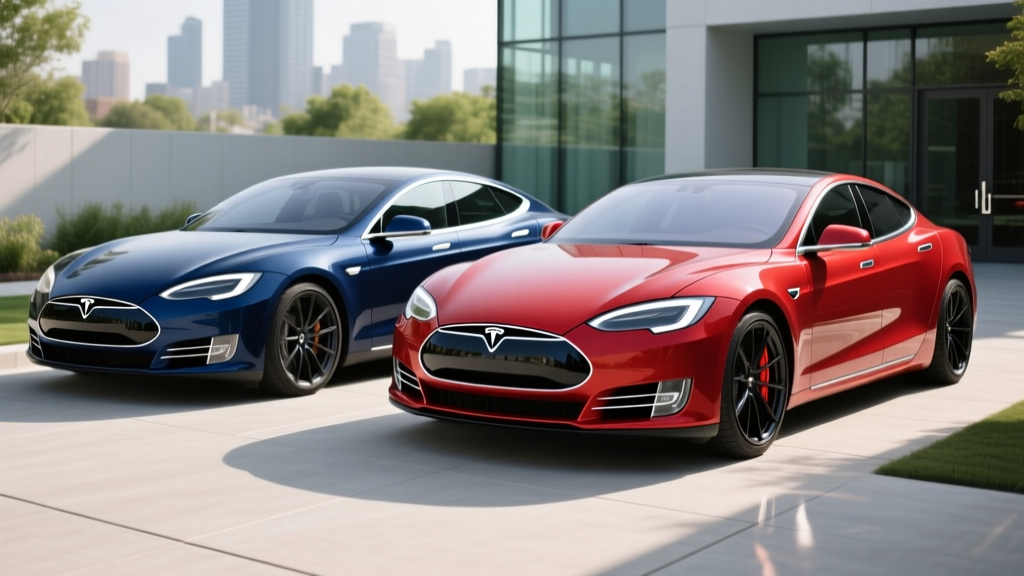
The 2026 Tesla Model S lineup boils down to a fundamental question: do you prioritize cross-country endurance or supercar-rivaling acceleration? The Long Range trim delivers up to 402 miles of EPA-estimated range with a comfortable 3.1-second 0-60 mph time, while the Plaid trades roughly 40 miles of range for a staggering 1,020 horsepower and a 1.99-second sprint. Both share the same 100 kWh (usable) battery architecture and 250 kW peak DC fast-charging capability, but their efficiency profiles, pricing, and ownership costs diverge significantly. This Tesla Model S models comparison breaks down every spec that matters before you place an order.
Side-by-Side Spec Table: Model S Long Range vs Plaid
| Specification | Model S Long Range | Model S Plaid |
|---|---|---|
| EPA Range | 402 mi | 359 mi (19" wheels) / 320 mi (21" wheels) |
| Battery (Usable) | ~100 kWh, NMC | ~100 kWh, NMC |
| Drivetrain | Dual Motor AWD | Tri-Motor AWD |
| Horsepower | 670 hp | 1,020 hp |
| 0-60 mph | 3.1 sec | 1.99 sec |
| Top Speed | 155 mph | 200 mph |
| Peak DC Fast Charge | 250 kW | 250 kW |
| 10-80% DC Fast Charge | ~30 min | ~30 min |
| Level 2 Charge Rate | 11.5 kW (48A) | 11.5 kW (48A) |
| Efficiency (MPGe) | 124 MPGe combined | 116 MPGe combined (19") |
| Cargo Volume | 28 cu ft (rear seats up) | 28 cu ft (rear seats up) |
| Curb Weight | 4,561 lbs | 4,766 lbs |
| Base MSRP | $74,990 | $89,990 |
| Federal Tax Credit (§30D) | Not eligible | Not eligible |
| Warranty (Battery/Drive) | 8 yr / 150,000 mi | 8 yr / 150,000 mi |
Sources: fueleconomy.gov, Tesla spec sheets. Plaid range varies by wheel selection; 21" Arachnid wheels reduce EPA range to ~320 mi.
Range & Efficiency: The Long Range Advantage
Long Range: EPA 402 mi — expect ~340-360 mi highway at 70-75 mph; ~280-310 mi in sub-freezing winter conditions.
Plaid (19"): EPA 359 mi — expect ~300-320 mi highway; ~250-275 mi in cold weather.
Plaid (21"): EPA 320 mi — expect ~270-285 mi highway; ~225-245 mi in cold weather.
The Long Range's dual-motor setup is inherently more efficient than the Plaid's tri-motor configuration. The third motor adds roughly 200 lbs and increases parasitic drag, which shows up in the MPGe gap: 124 combined for Long Range versus 116 for the Plaid on 19-inch wheels. Over 15,000 annual miles, that efficiency difference translates to roughly $60-$80 more in electricity costs per year for the Plaid at the national average of $0.17/kWh — modest in isolation, but it compounds over ownership.
Both trims use the same ~100 kWh usable NMC (nickel manganese cobalt) battery pack. Tesla's thermal management system remains among the best in the industry, with a heat pump standard on both trims that mitigates cold-weather range loss better than most competitors. Still, NMC chemistry is more sensitive to extreme cold than LFP, so preconditioning before DC fast charging is essential for optimal charge speeds in winter.
Charging Speed & Network: Shared Hardware, Identical Limits
Neither trim has a charging advantage over the other. Both peak at 250 kW on DC fast chargers and take approximately 30 minutes to charge from 10% to 80%. The charge curve tapers significantly above 80% — a typical 80-100% top-off adds another 25-30 minutes, so plan your road trips around 10-80% stops for the best time efficiency.
| Charging Level | Power | Miles Added per Hour |
|---|---|---|
| Level 1 (120V / 12A) | ~1.4 kW | ~4-5 mi/hr |
| Level 2 (240V / 48A) | 11.5 kW | ~34-37 mi/hr |
| DC Fast (V3 Supercharger) | 250 kW peak | ~200 mi in 15 min (10-50% SoC) |
Where the Model S excels is network access. The Tesla Supercharger network now exceeds 6,500 stations and 65,000+ connectors in North America. With the NACS connector standard on the Model S, you also have native access to a growing number of third-party networks that have adopted the Tesla plug. Both trims support Supercharger V4 stalls, though neither currently exceeds the 250 kW V3 peak — a limitation of the vehicle-side architecture, not the network.
For home charging, both trims accept 11.5 kW on Level 2, which requires a 60-amp circuit and a hardwired Wall Connector or equivalent. A full overnight charge (0-100%) takes roughly 9-10 hours — practical for daily use if you install a dedicated Level 2 circuit.
Performance: Where the Plaid Justifies Its Premium
The Plaid's tri-motor setup — one front, two rear — produces 1,020 hp and delivers a 1.99-second 0-60 mph time on a prepped surface with rollout subtracted. In real-world street conditions, expect 2.1-2.3 seconds, which still demolishes virtually every production car ever made. The carbon-sleeved rotors in the Plaid's rear motors allow them to spin to 20,000+ RPM without structural failure, an engineering detail that separates Tesla's tri-motor from competitors' simpler setups.
The Long Range is no slouch at 3.1 seconds to 60 mph with 670 hp. For daily driving, passing maneuvers, and even spirited canyon runs, the Long Range delivers more performance than most buyers will ever use. The Plaid's advantage reveals itself at higher speeds — its 200 mph top speed (vs. 155 mph for Long Range) and relentless acceleration above 100 mph make it a genuine supercar alternative, not just a straight-line drag strip queen.
One underappreciated Plaid benefit: the tri-motor torque vectoring system provides sharper cornering dynamics by independently controlling power to each rear wheel. The Long Range's dual-motor system is competent but less precise at the limit.
Pricing, Tax Credits & Ownership Costs
| Cost Category | Model S Long Range | Model S Plaid |
|---|---|---|
| Purchase Price (base) | $74,990 | $89,990 |
| Federal Tax Credit | $0 | $0 |
| Estimated Insurance (annual avg) | $2,800/yr | $3,500/yr |
| Electricity (5 yrs, nat'l avg) | $4,100 | $4,400 |
| Maintenance (5 yrs) | $1,200 | $1,500 |
| Estimated Depreciation (5 yr) | ~45% | ~50% |
| Est. 5-Year Total Cost | ~$52,300 | ~$67,000 |
Insurance is a significant differentiator. The Plaid's 1,020 hp and higher repair costs push premiums roughly 25% above the Long Range. Both trims carry Tesla's 8-year/150,000-mile battery and drive unit warranty, which covers capacity retention below 70%. Tesla's maintenance costs remain low — no oil changes, fewer brake replacements thanks to regenerative braking — but tire costs are higher than average due to the vehicle's weight and performance-oriented rubber.
Depreciation favors the Long Range slightly. High-performance EVs historically lose value faster than efficiency-focused trims, and the Plaid's niche buyer pool narrows its resale market. Expect the Long Range to retain roughly 55% of its value at 5 years versus ~50% for the Plaid, based on current market trends.
Interior, Tech & Daily Usability
Both trims share the same interior architecture: a 17-inch center touchscreen, 12.3-inch instrument cluster, yoke or round steering wheel (buyer's choice at no extra cost), and a 22-speaker audio system. The rear-seat entertainment screen, ventilated front seats, and HEPA air filtration are standard on both. Cargo space is identical at 28 cubic feet behind the rear seats, expanding to 79 cubic feet with the 60/40 split folded — plus a front trunk (frunk) adding roughly 3.1 cubic feet.
Where they differ in tech is the Plaid-exclusive track mode, which provides detailed telemetry, lap timing, and thermal management optimization for circuit use. The Plaid also includes carbon-ceramic brake hardware (standard on 2026 models), which provides fade-free stopping power during repeated high-speed use — a meaningful upgrade if you plan any track days.
On the ADAS front, both trims include Tesla's Basic Autopilot (lane centering, adaptive cruise) as standard. Full Self-Driving (Supervised) is an $8,000 add-on or $99/month subscription for either trim.
Category Winners at a Glance
402 mi EPA vs 359 mi; 124 vs 116 MPGe
1,020 hp, 1.99s 0-60, tri-motor torque vectoring
Both peak at 250 kW; ~30 min 10-80%
$15,000 less; lower insurance; better depreciation
Identical cabin; Plaid adds track mode
More range, lower running costs, same cargo
Decision Framework: Which Model S Should You Buy?
Choose the Model S Long Range if:
- You regularly drive 300+ miles between charging stops (road trips, rural commutes)
- You want the lowest total cost of ownership in the Model S lineup
- 3.1-second 0-60 already exceeds your performance needs
- You prioritize efficiency and lower insurance premiums
- You plan to keep the car 5+ years and want stronger resale value
Choose the Model S Plaid if:
- You want hypercar-rivaling acceleration and genuinely track-capable hardware
- You'll use the tri-motor torque vectoring for spirited driving, not just straight-line speed
- The $15,000 premium and higher insurance costs don't strain your budget
- You value exclusivity and the engineering showcase of a 1,020 hp sedan
- 359 miles of range covers your typical driving patterns (most daily commutes + weekend trips)
Frequently Asked Questions
Is the Tesla Model S Plaid worth $15,000 more than the Long Range?
For most buyers, no. The Long Range delivers 90% of the experience — premium interior, Supercharger access, rapid acceleration, and excellent range — at a significantly lower purchase price and cost of ownership. The Plaid justifies its premium only if you'll regularly exploit its performance envelope on track or in spirited driving. As a daily driver, the extra 350 hp is rarely accessible on public roads.
Do either of the Model S trims qualify for the federal EV tax credit?
No. Under current IRS §30D rules, the Model S exceeds the $55,000 MSRP cap for sedans in both trims. Some state-level incentives may still apply (check your state's energy office or AFDC for state-specific programs), but do not factor the $7,500 federal credit into your Model S budget.
How does real-world range compare to EPA estimates on the highway?
Expect 10-15% below EPA on sustained highway driving at 70-75 mph for both trims. The Long Range delivers roughly 340-360 real-world highway miles; the Plaid on 19-inch wheels delivers roughly 300-320 miles. Cold weather (below 32°F) can reduce range an additional 15-25% due to battery heating demands and increased air density. The Long Range's superior efficiency provides a larger buffer for these real-world losses.
Can I charge the Model S at non-Tesla fast chargers?
Yes. The Model S uses the NACS (North American Charging Standard) connector natively. With the broader industry's adoption of NACS starting in 2024-2025, an increasing number of Electrify America, EVgo, and ChargePoint stations now offer NACS cables. You can also use a CCS-to-NACS adapter for legacy CCS stations, though charge speeds may vary.
What is the battery replacement cost if it degrades past warranty?
Out-of-warranty Model S battery replacements currently range from $12,000 to $16,000 including labor, depending on the pack configuration. However, Tesla's NMC packs have demonstrated strong longevity — most owners report 90%+ state of health at 100,000 miles based on fleet data. The 8-year/150,000-mile warranty covering degradation below 70% provides substantial protection for the ownership period most buyers will experience.