The 2026 Tesla Lineup at a Glance
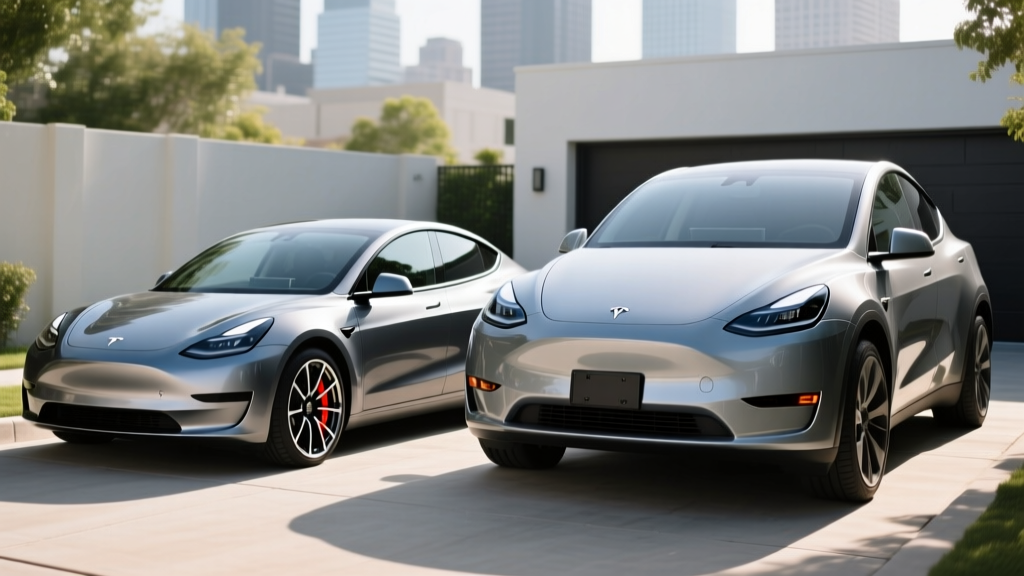
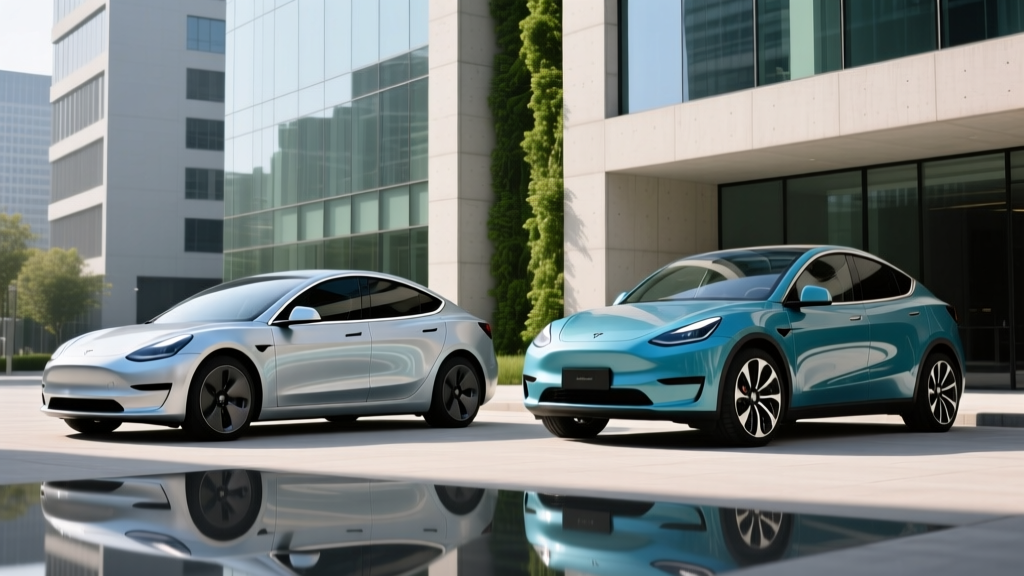
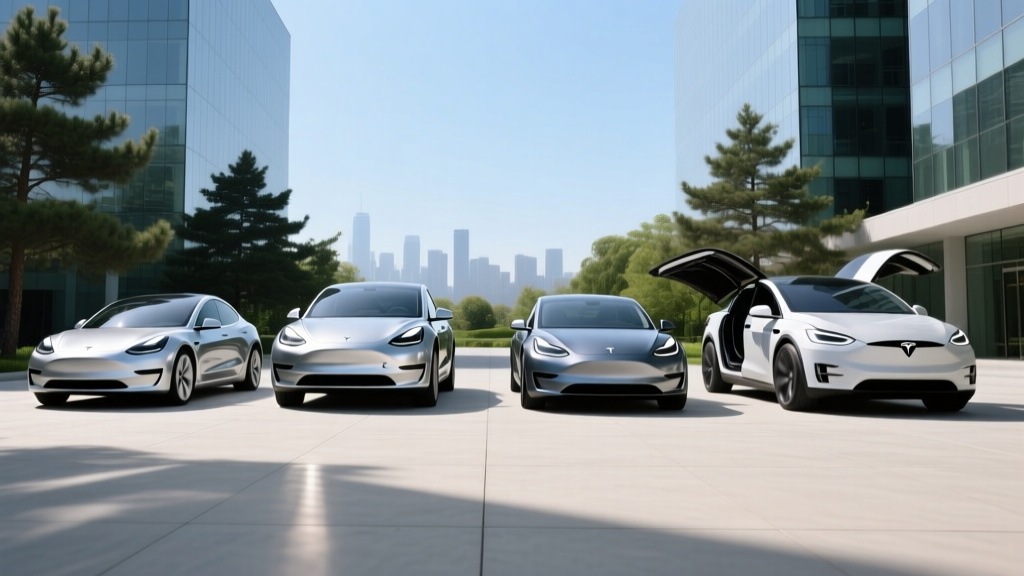
Tesla's 2026 lineup spans four core vehicles, from the compact Model 3 sedan to the flagship Model X SUV. Each targets a different buyer: the budget-conscious commuter, the growing family, the performance sedan enthusiast, and the luxury three-row hauler. But with overlapping price ranges and shared technology, choosing between them requires more than a glance at the sticker price.
This comparison breaks down every current Tesla model across the metrics that matter most to EV buyers: real-world range, charging speed, total cost after federal incentives, cargo practicality, and five-year ownership economics. We'll use 2026 model-year specifications and current IRS §30D tax credit rules to give you a decision-ready framework.
Side-by-Side Spec Table: Every 2026 Tesla Model
Before the subjective verdicts, here are the hard numbers. All figures reflect the most popular or best-value trim for each model. Battery chemistry noted where confirmed by Tesla or fueleconomy.gov.
| Spec | Model 3 Long Range AWD | Model Y Long Range AWD | Model S Long Range | Model X Long Range |
|---|---|---|---|---|
| EPA Range | 363 mi | 320 mi | 402 mi | 335 mi |
| Battery (usable kWh) | ~79 kWh (NMC) | ~79 kWh (NMC) | ~100 kWh (NMC) | ~100 kWh (NMC) |
| Peak DC Fast Charge | 250 kW | 250 kW | 250 kW | 250 kW |
| 10–80% DCFC Time | ~25 min | ~25 min | ~30 min | ~31 min |
| Level 2 Charge Rate | 11.5 kW | 11.5 kW | 11.5 kW | 11.5 kW |
| 0–60 mph | 4.2 sec | 4.8 sec | 3.1 sec | 3.8 sec |
| Horsepower | 346 hp | 384 hp | 670 hp | 670 hp |
| Efficiency (MPGe combined) | 134 MPGe | 123 MPGe | 124 MPGe | 109 MPGe |
| Cargo Volume | 23 cu ft (trunk+frunk) | 76 cu ft (seats folded) | 28 cu ft (trunk+frunk) | 88 cu ft (seats folded) |
| Seating | 5 | 5 (7 optional) | 5 | 5, 6, or 7 |
| Base MSRP | $47,740 | $48,240 | $79,990 | $84,990 |
| Basic Warranty | 4 yr / 50,000 mi | 4 yr / 50,000 mi | 4 yr / 50,000 mi | 4 yr / 50,000 mi |
| Battery/Drive Warranty | 8 yr / 120,000 mi | 8 yr / 120,000 mi | 8 yr / 150,000 mi | 8 yr / 150,000 mi |
Sources: EPA fueleconomy.gov, Tesla specifications. Real-world range typically runs 10–15% below EPA on sustained highway driving at 75+ mph and can drop 20–30% in sub-freezing temperatures.
Range and Efficiency: Real-World Expectations
The Model 3's aerodynamic sedan profile gives it a clear highway efficiency advantage over the taller, boxier Model Y and Model X. If your commute involves sustained 75–80 mph interstate driving, the Model 3 will stretch its electrons furthest. The Model Y sacrifices roughly 43 miles of EPA range compared to the Model 3 despite sharing a similar battery, largely due to its crossover shape and added weight.
The Model X's 109 MPGe combined is the weakest in the lineup. Its falcon-wing doors, larger frontal area, and 5,000+ lb curb weight demand more energy per mile. For buyers who need three rows but want to minimize charging stops, this is a genuine trade-off to weigh.
Charging Speed and Network Access
All four 2026 Teslas peak at 250 kW on DC fast charging via the NACS connector, giving them native access to Tesla's Supercharger network — widely regarded as the most reliable public charging infrastructure in the US, with over 18,000 stalls nationwide. Starting in 2025, Tesla also opened select Supercharger locations to non-Tesla EVs, but Tesla owners retain the most seamless plug-and-charge experience.
The 10–80% charging times are similar across the lineup because Tesla's battery management system throttles the charge curve similarly across vehicles. The Model 3 and Model Y hit 80% in roughly 25 minutes, while the Model S and Model X take about 30–31 minutes due to their larger 100 kWh packs absorbing more total energy even at the same peak rate.
A critical nuance: kW is the charge rate (power), while kWh is battery capacity (energy). A 250 kW peak rate does not mean sustained 250 kW for the full session. Tesla's charge curve typically peaks near 250 kW only between 10–30% state of charge, then tapers progressively. By 60%, you're often seeing 120–150 kW, and above 80% it drops to under 50 kW. This is why manufacturers quote 10–80% times rather than 0–100%.
For home Level 2 charging, all four vehicles accept up to 11.5 kW on a 48-amp circuit, adding roughly 35–44 miles of range per hour depending on the model's efficiency. A full overnight charge from 20% to 80% takes approximately 4–5 hours for the Model 3/Y and 5–6 hours for the Model S/X.
Price, Tax Credits, and After-Incentive Value
- MSRP Cap: Sedans (Model 3, Model S) must be under $55,000. SUVs/pickups/vans (Model Y, Model X) must be under $80,000.
- Income Cap: Modified AGI must not exceed $150,000 (single), $225,000 (head of household), or $300,000 (joint).
- Battery Sourcing: Critical minerals and battery components must meet phased-in domestic/free-trade-partner thresholds per IRS guidelines.
- Point-of-Sale Transfer: Eligible buyers can transfer the credit to the dealer for an immediate price reduction at purchase.
Tax credit eligibility is complex and changes periodically. Consult a tax professional and verify current rules at irs.gov before purchasing.
| Model | Base MSRP | Qualifies for §30D? | Effective Price (if eligible) |
|---|---|---|---|
| Model 3 Long Range AWD | $47,740 | Yes — under $55K sedan cap | ~$40,240 |
| Model Y Long Range AWD | $48,240 | Yes — under $80K SUV cap | ~$40,740 |
| Model S Long Range | $79,990 | No — exceeds $55K sedan cap | $79,990 |
| Model X Long Range | $84,990 | No — exceeds $80K SUV cap | $84,990 |
The tax credit creates a dramatic value gap. The Model 3 and Model Y, after the full $7,500 credit, land in the low $40,000s — making them competitive with well-equipped gas-powered compact SUVs and sedans when you factor in fuel savings. The Model S and Model X, classified differently under §30D rules, fall outside the MSRP caps entirely. The Model S misses the $55,000 sedan threshold, and the Model X misses the $80,000 SUV threshold. This is a structural disadvantage that no amount of feature content can fully offset for price-sensitive buyers.
Category-by-Category Verdicts
🏆 Range Winner: Model S
402 miles EPA. But the Model 3 is the efficiency-per-dollar champion at 134 MPGe and 363 miles for $32,000 less.
🏆 Charging Speed Winner: Tie (Model 3/Y)
Same 250 kW peak, but the Model 3/Y's smaller battery reaches 80% ~5 minutes faster. On road trips, those minutes add up.
🏆 Value Winner: Model 3 Long Range
~$40,240 after credit. Best efficiency, lowest cost per mile, and 363 miles of range. The best Tesla most buyers can justify.
🏆 Practicality Winner: Model Y
76 cu ft cargo with seats folded, optional 7-seat layout, crossover ride height. The family hauler sweet spot.
🏆 Performance Winner: Model S
670 hp, 3.1-sec 0–60, adaptive air suspension. The Plaid variant drops to 1.99 sec if budget allows ($89,990).
🏆 Tech & Interior Winner: Model S/X (Refreshed)
17" center touchscreen, rear-seat display, ventilated seats, premium audio. Model 3 Highland refresh narrowed the gap, but S/X still lead.
🏆 Three-Row Seating: Model X
The only Tesla offering up to 7 seats. The Model Y's optional third row is best suited for small children only.
🏆 Towing Winner: Model X
5,000-lb towing capacity vs. Model Y's 3,500 lb. Model 3 and Model S are not rated for significant towing.
Five-Year Ownership Cost Breakdown
Purchase price is only the beginning. Here's how the four models compare over five years and 75,000 miles of mixed driving, assuming $0.14/kWh home charging and $0.35/kWh public DCFC (with 80% home / 20% public charging split).
| Cost Category | Model 3 LR | Model Y LR | Model S LR | Model X LR |
|---|---|---|---|---|
| Purchase (after credit) | $40,240 | $40,740 | $79,990 | $84,990 |
| Energy (charging) | $2,625 | $2,850 | $2,835 | $3,210 |
| Insurance (avg annual × 5) | $9,500 | $10,250 | $14,000 | $15,000 |
| Maintenance (tires, cabin filter, fluid) | $2,200 | $2,400 | $2,800 | $3,200 |
| Estimated Depreciation | $16,100 | $16,300 | $32,000 | $36,500 |
| Total 5-Year Cost | ~$70,665 | ~$72,540 | ~$131,625 | ~$142,900 |
Insurance estimates based on national averages for 35-year-old driver with clean record. Actual premiums vary significantly by state, age, and driving history. Tesla vehicles generally carry higher insurance premiums than comparable non-Tesla EVs due to repair cost data. Depreciation estimates based on historical Tesla resale trends from Edmunds and Kelley Blue Book.
The Model 3's five-year cost advantage is substantial — roughly $60,000 less than the Model X over the same period. Much of this gap comes from the purchase price and steeper depreciation on the premium models. Energy costs are relatively close because even the heavier Model X only consumes about 30% more electricity per mile than the Model 3.
Maintenance on all Teslas is minimal compared to gas vehicles — no oil changes, no spark plugs, no transmission fluid. Primary recurring costs are tire replacement (EVs wear tires faster due to instant torque and heavier weight), cabin air filters, brake fluid checks, and windshield washer fluid. Expect to replace tires every 30,000–40,000 miles.
Autopilot, FSD, and Driver-Assistance Technology
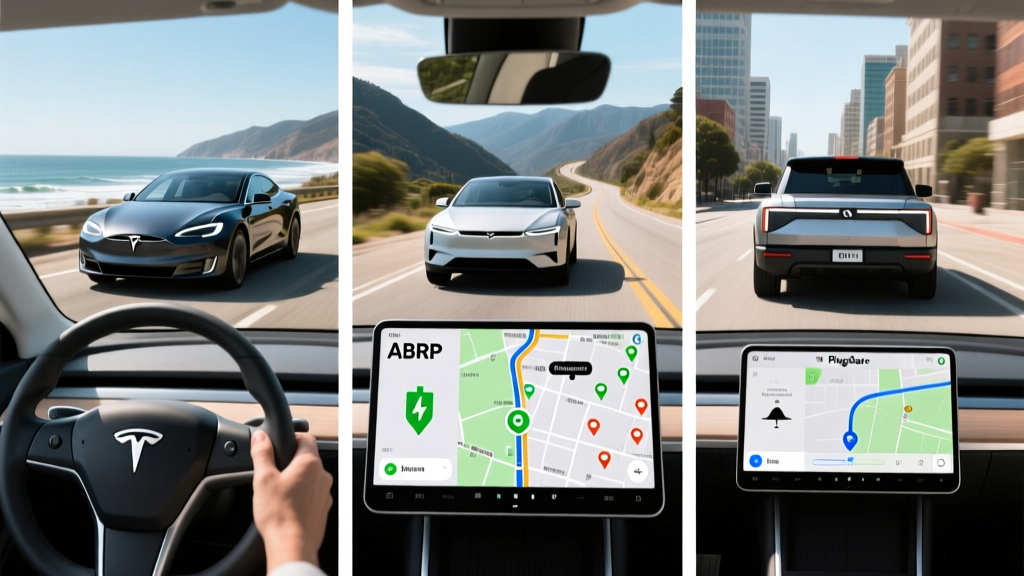
All Tesla driver-assistance features — Basic Autopilot, Enhanced Autopilot, and FSD (Supervised) — are SAE Level 2 systems. This means the driver must remain fully engaged, hands on or near the wheel, and eyes on the road at all times. These are not self-driving systems. Only Level 4 services like Waymo operate without a human driver in defined geographic zones.
Every 2026 Tesla ships with Basic Autopilot (lane centering and adaptive cruise control) included. Enhanced Autopilot ($6,000) adds auto lane change, autosteer on city streets, and smart summon. FSD (Supervised) at $8,000 or $99/month adds traffic light and stop sign recognition, and more aggressive city-street navigation — but still requires full driver supervision.
The hardware is identical across all four models (Tesla's HW4 vision suite), so the driver-assistance experience is effectively the same regardless of which Tesla you choose. The differentiation comes entirely from the software package you purchase, not the vehicle itself.
Decision Framework: Which Tesla Should You Buy?
Choose the Model 3 Long Range if:
- You want the best value after the $7,500 federal tax credit (~$40,240 effective price)
- Your daily driving is under 100 miles and you rarely carry more than two passengers
- You prioritize efficiency and lowest cost-per-mile over cargo space
- You want a sedan with the longest real-world highway range per dollar in the lineup
- You don't need hatchback versatility or a high seating position
Choose the Model Y Long Range if:
- You need hatchback cargo flexibility (76 cu ft) for gear, pets, or kids' equipment
- You want crossover ride height and easier ingress/egress
- You occasionally need a third row for small children (optional 7-seat config)
- You want nearly the same efficiency and price as the Model 3 but with far more utility
- You plan to tow up to 3,500 lbs (small trailer, bike rack, light boat)
Choose the Model S Long Range if:
- You want flagship sedan performance (670 hp, 3.1-sec 0–60) and don't need the §30D credit
- You value adaptive air suspension, premium interior materials, and a 17" touchscreen
- 402 miles of EPA range is a priority for long-distance driving with fewer stops
- You prefer a traditional luxury sedan profile over a crossover or SUV
- Budget allows $80K+ without reliance on federal incentives
Choose the Model X Long Range if:
- You genuinely need three rows of seating for adults or older children on a regular basis
- You need 5,000-lb towing capacity paired with electric efficiency
- Falcon-wing rear doors offer practical value in tight parking situations
- You want the most cargo volume in the Tesla lineup (88 cu ft) with a premium experience
- You accept the efficiency penalty (109 MPGe) and higher insurance costs that come with a large, heavy SUV
Final Recommendation
For the majority of EV shoppers evaluating the Tesla lineup, the Model Y Long Range AWD is the most rational choice in 2026. It qualifies for the full $7,500 federal tax credit, drops to roughly $40,740 after incentives, offers 320 miles of range, and delivers crossover practicality that accommodates real family life. It's the best-selling vehicle in the US for good reason: it does nothing poorly and most things well.
The Model 3 Long Range is the pick for efficiency-focused commuters who don't need cargo space and want the lowest total cost of ownership in the lineup. Its 134 MPGe combined rating and ~$40,240 after-credit price make it one of the most compelling EVs on the market, period.
The Model S and Model X serve narrower audiences: buyers who prioritize performance, luxury, or three-row capacity and whose income or vehicle price disqualifies them from federal incentives. They are excellent vehicles, but the $40,000+ price premium over the Model 3/Y buys diminishing returns for most daily driving scenarios.
Frequently Asked Questions
Do all 2026 Teslas qualify for the $7,500 federal tax credit?
No. Under current IRS §30D rules, the Model 3 and Model Y qualify because they fall under the $55,000 sedan and $80,000 SUV MSRP caps respectively. The Model S ($79,990 sedan) and Model X ($84,990 SUV) both exceed their category caps. Additionally, buyers must meet income thresholds ($150K single / $300K joint) and the vehicle must meet battery component and critical mineral sourcing requirements. Always verify current eligibility at irs.gov before purchasing.
Which Tesla has the best real-world highway range?
The Model S Long Range at 402 miles EPA, but expect roughly 350–370 real-world highway miles at 75 mph in moderate temperatures. The Model 3 Long Range delivers approximately 310–330 real highway miles while costing significantly less per mile driven thanks to its 134 MPGe efficiency rating.
Is the Model Y's optional third row practical for adults?
No. The Model Y's third row is best suited for children under about 5'4". Legroom and headroom are severely limited. If you regularly transport more than five adults or older children, the Model X with its dedicated three-row layout and falcon-wing doors is the appropriate choice.
How long does it take to charge a Tesla at home overnight?
On a Level 2 home charger (11.5 kW / 48-amp circuit), expect roughly 35–44 miles of range added per hour of charging. A typical overnight session from 20% to 80% takes 4–5 hours for the Model 3/Y and 5–6 hours for the Model S/X. Home charger installation costs typically range from $800–$2,500 depending on electrical panel capacity and run length. Always have a licensed electrician assess your panel before installation.
Is Tesla's FSD (Supervised) worth the $8,000 cost?
For most buyers, no. FSD (Supervised) remains a Level 2 driver-assistance system that requires constant driver engagement. The included Basic Autopilot handles highway lane-keeping and adaptive cruise control competently. FSD's city-street capabilities are improving but still require active supervision and occasional intervention. The $99/month subscription is a lower-risk way to trial the feature before committing to a full purchase.
What's the battery degradation like across Tesla models?
Tesla's NMC batteries typically retain 85–90% of original capacity after 100,000 miles based on fleet data. All 2026 models include an 8-year battery warranty guaranteeing at least 70% capacity retention (120,000 miles for Model 3/Y, 150,000 miles for Model S/X). To maximize longevity, Tesla recommends daily charging to 80% for NMC packs and only charging to 100% when needed for long trips.