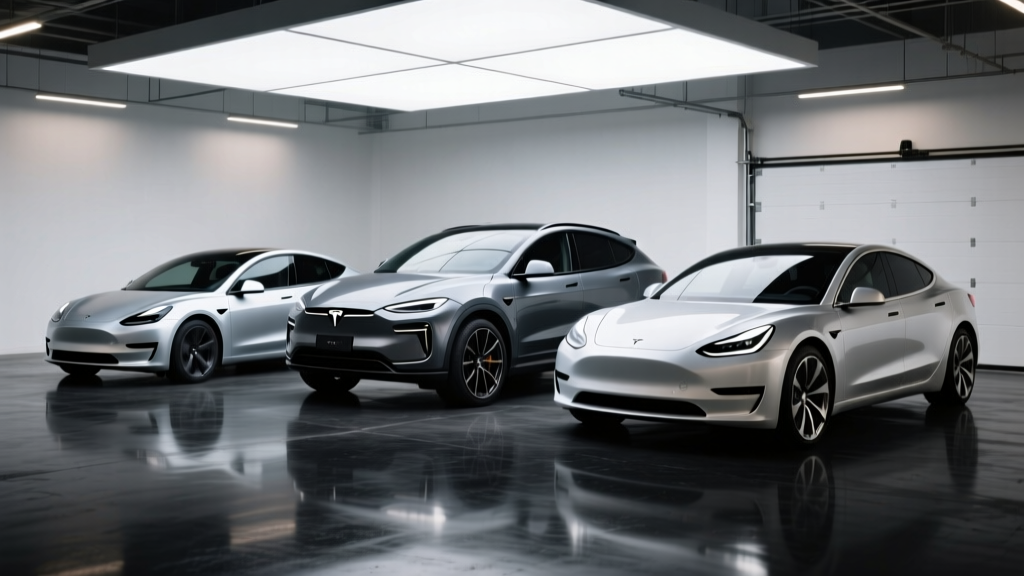
Tesla’s 2026 lineup has consolidated into three core passenger vehicles: the refreshed Model 3 sedan, the redesigned Model Y crossover, and the flagship Model S. Each targets a different buyer, but overlapping price bands and shared Supercharger access make cross-shopping inevitable. This Tesla models comparison breaks down exact EPA range figures, DC fast-charging curves, real-world efficiency, and total ownership costs so you can match the right car to your driving pattern — not just the spec sheet.
Side-by-Side Spec Table: 2026 Model 3, Model Y, and Model S
All figures below reflect 2026 model-year Long Range and Performance trims as published by Tesla and the EPA. Battery chemistry noted where confirmed; usable kWh is the operational window, not gross pack size. Charge times represent 10–80% at peak-capable V4 Superchargers or equivalent 250+ kW DC stations.
| Spec | 2026 Model 3 Long Range | 2026 Model Y Long Range | 2026 Model S Long Range |
|---|---|---|---|
| EPA Range | 363 mi | 330 mi | 402 mi |
| Battery (usable / chemistry) | ~79 kWh / NMC | ~78 kWh / NMC | ~100 kWh / NMC |
| Efficiency (MPGe combined) | 132 MPGe | 122 MPGe | 120 MPGe |
| kWh/100 mi | 25 | 28 | 29 |
| Peak DC Charge Rate | 250 kW | 250 kW | 250 kW |
| 10–80% DC Fast Charge | ~25 min | ~27 min | ~30 min |
| Level 2 (11.5 kW) 0–100% | ~7.5 hr | ~7.5 hr | ~9.5 hr |
| 0–60 mph | 4.2 sec | 4.8 sec | 3.1 sec |
| Horsepower | 384 hp | 384 hp | 670 hp |
| Cargo Volume (rear + frunk) | 23 cu ft | 72 cu ft | 28 cu ft |
| Base MSRP | $47,490 | $48,990 | $79,990 |
| Battery / Drive Unit Warranty | 8 yr / 120,000 mi | 8 yr / 120,000 mi | 8 yr / 150,000 mi |
Range and Efficiency: Real-World Expectations vs. EPA Stickers
The Model 3 Long Range leads the lineup at 363 miles EPA, a number achievable in mixed city/suburban driving at moderate temperatures. Highway cruising at 75 mph typically yields 290–310 miles before needing a charge stop, owing to the sedan’s low drag coefficient (~0.219 Cd). Cold-weather highway range (below 32°F) can drop to roughly 240–260 miles due to battery heating loads and cabin HVAC demand.
Real-World Range Reality: Model Y Long Range owners should plan around 260–280 highway miles per charge in fair weather, and 210–230 in winter. The Model S, despite its 402-mile EPA rating, typically delivers 330–350 on the highway and 270–290 in deep cold, largely because its larger pack offsets its heavier mass and higher rolling resistance.
Efficiency favors the Model 3 decisively. At 25 kWh/100 mi, it costs roughly $0.10–$0.14 per mile to charge on residential electricity (depending on your utility rate), compared to $0.12–$0.16 for the Model Y and Model S. Over 15,000 annual miles, that translates to $1,500–$2,100 in electricity for the Model 3 versus up to $2,400 for the Model S.
Charging Speed and Network Access
All three vehicles share Tesla’s NACS connector and full access to the Supercharger network, which now exceeds 6,500 U.S. stations and 70,000+ stalls (Tesla Supercharger). Peak charge rates cap at 250 kW at V3 and V4 stalls, though sustained rates differ.
| Charging Level | Power (kW) | Model 3 mi/hr | Model Y mi/hr | Model S mi/hr |
|---|---|---|---|---|
| Level 1 (120V) | ~1.4 kW | ~4 | ~4 | ~3 |
| Level 2 (240V / 48A) | 11.5 kW | ~37 | ~34 | ~33 |
| DC Fast (V4 Supercharger) | Up to 250 kW | ~1,000* | ~900* | ~850* |
*Peak miles-per-hour at low SoC; average rate across the 10–80% curve is substantially lower due to charge-curve taper above 50% SoC.
The Model 3’s smaller battery means it reaches 80% slightly faster in absolute time, but the charge curve is nearly identical across all three — Tesla’s battery management system throttles aggressively above 50% to preserve cell longevity. If you frequently charge to 100% at Superchargers, expect the final 20% to add 20–30 minutes regardless of model. Preconditioning (automatic navigation to a Supercharger) is essential for achieving peak rates in cold weather.
Category-by-Category Verdict
Range Winner: Model S Long Range
At 402 miles EPA, the Model S is the only Tesla that can handle 350+ mile legs without a charge stop in ideal conditions. For cross-country road trips with sparse charging, it’s the clear pick.
Efficiency Winner: Model 3 Long Range
132 MPGe combined and 25 kWh/100 mi make the Model 3 the cheapest to fuel. Over five years and 75,000 miles, it saves $500–$1,200 in electricity versus the Model Y or S.
Charging Speed Winner: Model 3 Long Range
10–80% in ~25 minutes edges out the Y and S. The smaller pack fills faster at the same peak kW, and its superior efficiency means each minute of charging yields more usable miles.
Cargo & Utility Winner: Model Y Long Range
72 cu ft with seats folded dwarfs the sedan and flagship. The hatchback form factor, optional third row, and flat load floor make it the only realistic choice for families and gear-heavy buyers.
Performance Winner: Model S Long Range
670 hp and a 3.1-second 0–60 time put it in supercar territory. The dual-motor AWD system delivers relentless acceleration that neither the 3 nor Y can approach.
Value Winner: Model 3 Long Range
Starting at $47,490 before incentives, it delivers 363 miles of range — the best range-per-dollar ratio in the lineup. The $7,500 federal credit (subject to eligibility) brings effective pricing below $40,000.
Pricing and Federal Tax Credit Eligibility
| Model / Trim | Base MSRP | §30D Credit Eligible? | Effective Price (w/ credit) |
|---|---|---|---|
| Model 3 Long Range AWD | $47,490 | Yes (under $55K sedan cap) | ~$39,990 |
| Model 3 Performance | $54,990 | Yes (under $55K sedan cap) | ~$47,490 |
| Model Y Long Range AWD | $48,990 | Yes (under $80K SUV cap) | ~$41,490 |
| Model Y Performance | $53,490 | Yes (under $80K SUV cap) | ~$45,990 |
| Model S Long Range | $79,990 | No (exceeds $55K sedan cap) | $79,990 |
| Model S Plaid | $89,990 | No (exceeds $55K sedan cap) | $89,990 |
The IRS §30D clean vehicle credit applies up to $7,500 at point of sale, but eligibility hinges on three constraints: MSRP caps ($55,000 for sedans, $80,000 for SUVs/trucks), buyer income limits ($150K single / $300K joint AGI), and battery critical-mineral and North American assembly sourcing requirements. The Model 3 and Model Y currently qualify for the full credit when purchased by eligible buyers; the Model S does not due to its MSRP classification as a sedan. Always verify current-year eligibility on the IRS site or with a tax professional, as sourcing rules tighten annually.
Ownership Costs: Efficiency, Insurance, and Maintenance
Beyond the sticker price, five-year ownership costs diverge meaningfully across the three models.
| Cost Category (5 yr / 75K mi) | Model 3 LR | Model Y LR | Model S LR |
|---|---|---|---|
| Electricity (home + Supercharger mix) | ~$4,200 | ~$4,800 | ~$5,100 |
| Insurance (national avg.) | ~$8,500 | ~$9,200 | ~$13,500 |
| Maintenance (tires, cabin filter, fluid) | ~$1,800 | ~$2,100 | ~$2,400 |
| Estimated Depreciation | ~$14,000 | ~$15,500 | ~$28,000 |
| Total 5-Yr Cost of Ownership | ~$28,500 | ~$31,600 | ~$49,000 |
Insurance is the steepest variable. The Model S commands premiums 40–60% higher than the Model 3, driven by repair-cost data and higher claim severity. The Model Y sits in between. Depreciation hits the Model S hardest — luxury sedans historically lose value faster than mass-market crossovers, and Tesla’s frequent price adjustments amplify this effect.
Decision Framework: Which Tesla Fits Your Priorities?
Choose the Model 3 Long Range if:
- You commute 40–80 miles daily and want the lowest cost-per-mile.
- You prioritize range efficiency and don’t need cargo space beyond a sedan trunk.
- You want to maximize the federal tax credit and keep effective purchase price under $40K.
- You solo-drive or carry one passenger most of the time.
Choose the Model Y Long Range if:
- You have children, pets, or regularly haul gear (strollers, bikes, camping equipment).
- You need hatchback versatility and the option of a third-row seat for occasional passengers.
- You want SUV ride height and easier ingress/egress without sacrificing tax-credit eligibility.
- You’re cross-shopping the Hyundai Ioniq 5, Ford Mustang Mach-E, or Kia EV6 and want Supercharger access.
Choose the Model S Long Range if:
- You need 400+ miles of range for long, rural routes with sparse charging.
- Performance (3.1-sec 0–60) and flagship interior quality are non-negotiable.
- The $80K+ price and lack of federal tax credit don’t deter your budget.
- You value air suspension, premium audio, and rear-seat entertainment screens.
Frequently Asked Questions
Which Tesla has the best real-world highway range?
The Model S Long Range delivers roughly 330–350 highway miles at 70–75 mph in fair weather, the highest absolute number. However, the Model 3 Long Range achieves 290–310 highway miles with far less energy cost, making it more practical for most drivers who charge at home overnight.
Do all three models use the same Supercharger network?
Yes. All 2026 Teslas use the NACS connector and access the full Supercharger network natively. Non-Tesla EVs with NACS adapters can now access many Supercharger stalls, but Tesla owners retain priority at some high-demand locations and benefit from integrated navigation preconditioning.
Why doesn’t the Model S qualify for the $7,500 tax credit?
The IRS §30D rules cap eligible sedans at $55,000 MSRP. The Model S starts at $79,990, exceeding this threshold. The Model Y qualifies because it’s classified as an SUV, which carries an $80,000 cap.
Is FSD (Supervised) standard on all three?
No. Basic Autopilot (SAE Level 2) is included. Full Self-Driving (Supervised) remains a paid add-on (~$8,000 or $99/month) and is still a Level 2 driver-assist system — you must remain attentive and keep hands on the wheel. It is not autonomous driving; only Level 4 services like Waymo operate without driver supervision.
Which model has the lowest insurance cost?
The Model 3 Long Range averages the lowest premiums nationally, roughly $1,700/year versus $2,700/year for the Model S. Your actual rate depends on age, location, driving record, and insurer — always pull quotes before purchasing.
How does cold weather affect range across these models?
All three lose 20–30% of EPA range in sustained sub-freezing temperatures, primarily due to cabin heating and battery thermal management. The Model 3’s heat pump (standard since 2021) mitigates this better than older systems, but no EV is immune to cold-weather range reduction. Preconditioning while plugged in is the single most effective countermeasure.