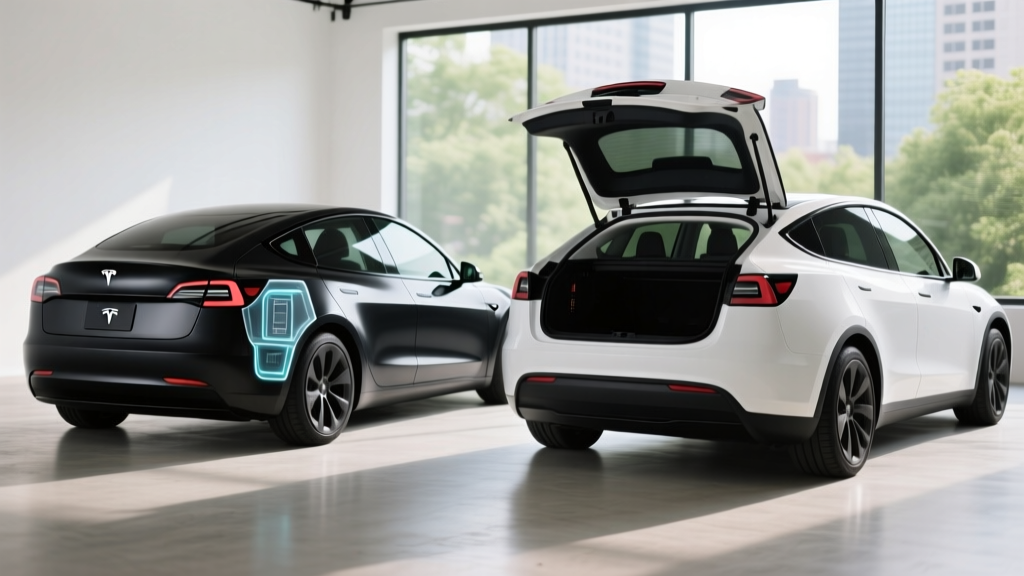
Tesla's two best-selling vehicles share a platform, similar battery chemistry, and nearly identical powertrains—yet the gap between a sedan and a crossover creates very different ownership experiences. If you're researching the difference between Tesla Model 3 and Model Y, the answer isn't about which is objectively better. It's about which shape fits your life, your commute, and your budget after federal incentives.
Below, we compare the 2025/2026 Model 3 Long Range and Model Y Long Range (the trims most buyers cross-shop) across the metrics that actually matter: real-world range, charging speed, cargo utility, total cost, and daily livability. All specs reflect current production figures from Tesla and the EPA.
Side-by-Side: Model 3 vs Model Y Specs at a Glance
| Spec | Model 3 Long Range AWD | Model Y Long Range AWD |
|---|---|---|
| EPA Range | 363 miles | 320 miles |
| Battery (usable, est.) | ~79 kWh (NMC) | ~79 kWh (NMC) |
| Efficiency (MPGe combined) | 132 MPGe (25 kWh/100mi) | 122 MPGe (28 kWh/100mi) |
| Peak DC Fast Charge | 250 kW (CCS via adapter / NACS native) | 250 kW (CCS via adapter / NACS native) |
| 10–80% DC Fast Charge | ~27 minutes | ~27 minutes |
| Level 2 Charge Rate | 11.5 kW (~44 mi/hr) | 11.5 kW (~39 mi/hr) |
| 0–60 mph | 4.2 seconds | 4.8 seconds |
| Horsepower | ~384 hp | ~384 hp |
| Cargo Volume (rear seats up) | 23 cu ft (trunk) | 30 cu ft (rear cargo) |
| Cargo Volume (rear seats folded) | ~65 cu ft (est. with frunk) | 72 cu ft (+ frunk ~4 cu ft) |
| Frunk | Yes (~3 cu ft) | Yes (~4 cu ft) |
| Curb Weight | 4,034 lbs | 4,363 lbs |
| Ground Clearance | 5.5 inches | 6.6 inches |
| Base MSRP (before incentives) | $47,740 | $52,130 |
| Battery & Drive Unit Warranty | 8 years / 120,000 miles | 8 years / 120,000 miles |
Sources: EPA Fueleconomy.gov, Tesla.com specifications. Prices reflect MSRP including destination fee as of early 2026. Specs subject to change by model year.
Range and Efficiency: The Sedan Advantage
The Model 3's efficiency advantage is physics, not magic. A lower, sleeker sedan body produces less aerodynamic drag than a taller crossover. At highway speeds—where drag dominates energy consumption—that difference compounds. The Model 3 consumes roughly 25 kWh per 100 miles combined, while the Model Y needs about 28 kWh per 100 miles, per EPA data.
For daily commuters covering 40–60 miles round trip, either vehicle will go nearly a full work week between charges. The gap matters most on road trips: the Model 3's extra 43 EPA-rated miles translates to roughly one fewer Supercharger stop on a 600-mile drive, or a more comfortable buffer when detouring through areas with sparse charging infrastructure.
Both vehicles use the same NMC (nickel manganese cobalt) battery pack architecture with an estimated ~79 kWh usable capacity. Tesla's battery management system and thermal preconditioning—activated automatically when you navigate to a Supercharger—keep charge speeds competitive across both models.
Charging Speed and Network Access
Here's where the shared platform shows: both the Model 3 and Model Y Long Range peak at 250 kW on DC fast chargers and achieve a 10–80% charge in approximately 27 minutes under ideal conditions. The charge curve tapers significantly above 80%—expect 80–100% to take an additional 15–20 minutes, which is why Tesla and most EV experts recommend charging to 80% on road trips.
| Charging Level | Model 3 LR | Model Y LR | Notes |
|---|---|---|---|
| Level 1 (120V / 12A) | ~3 mi/hr | ~3 mi/hr | Emergency/trickle only |
| Level 2 (240V / 48A) | 11.5 kW (~44 mi/hr) | 11.5 kW (~39 mi/hr) | Home Wall Connector; ~8 hr full charge |
| DC Fast (250 kW peak) | 10–80% in ~27 min | 10–80% in ~27 min | Supercharger V3/V4; tapers above 80% |
Level 2 miles-per-hour differ slightly because the Model Y's heavier curb weight and less efficient drivetrain consume more energy per mile, so the same 11.5 kW input yields fewer added miles per hour of charging.
Network advantage: Both vehicles charge natively on Tesla's Supercharger network, which remains the most reliable and geographically extensive DC fast-charging network in North America. Tesla has opened portions of its network to non-Tesla EVs via the NACS standard, but Tesla owners still benefit from seamless plug-and-charge integration, automatic billing, and real-time stall availability in the Tesla app. Neither Model 3 nor Model Y requires an adapter for Superchargers.
For charging on third-party networks (Electrify America, EVgo, ChargePoint), Tesla now provides or sells a CCS adapter, and newer vehicles ship with NACS ports that are compatible with the growing number of NACS-equipped public chargers. This parity means neither vehicle has a charging-access advantage over the other.
Performance and Driving Dynamics
🏆 Performance Winner: Model 3
- 0–60 mph in 4.2 seconds vs. 4.8 seconds
- Lower center of gravity, sharper cornering
- Lighter by ~329 lbs — less tire wear over time
- More engaging on twisty roads
🏆 Practicality Winner: Model Y
- 72 cu ft max cargo vs. ~65 cu ft (seats-folded)
- Hatchback opening fits bulky items (bikes, furniture)
- 6.6" ground clearance vs. 5.5" — better for snow/rough roads
- Easier rear car-seat installation
Both vehicles use the same dual-motor all-wheel-drive powertrain producing approximately 384 combined horsepower. The Model 3's 0.6-second advantage to 60 mph comes from its lighter weight and more aerodynamic profile. On the road, the Model 3 feels noticeably more agile—its lower seating position and tighter body make it the better choice if you enjoy spirited driving on canyon roads or value a sport-sedan feel.
The Model Y trades that agility for utility. The hatchback cargo area swallows items the Model 3's trunk simply cannot: a full-size bicycle with the front wheel removed, a large dog crate, or flat-pack furniture. If you regularly haul gear, kids, or both, the Model Y's taller roofline and wider opening are functionally superior. The additional 1.1 inches of ground clearance also matters for buyers in snow-belt states or those who frequent unpaved roads.
Interior, Tech, and Daily Livability
Tesla refreshed both vehicles on a similar timeline, so the cabin experience is nearly identical. Both feature:
- 15.4-inch center touchscreen running Tesla's latest software
- Ventilated front seats and heated rear seats
- Ambient lighting and acoustic glass (front and rear)
- Wireless phone charging (dual pads)
- Rear-seat touchscreen for climate and entertainment
The Model 3 received its "Highland" refresh for the 2024 model year, adding ventilated seats, improved sound insulation, a rear passenger screen, and a more refined ride. The Model Y received its "Juniper" refresh for the 2025 model year with analogous upgrades, including a redesigned front fascia, updated interior materials, and similar acoustic improvements.
Tech parity: Both vehicles run the same Tesla software stack, including Basic Autopilot (SAE Level 2 driver assistance) standard. Full Self-Driving (Supervised) remains an optional purchase or subscription and is also Level 2—meaning the driver must remain attentive and keep hands on the wheel at all times. Neither vehicle is self-driving.
The one interior difference that matters: rear-seat headroom and entry/exit. The Model Y's taller roofline gives rear passengers roughly 2 additional inches of headroom, and the higher hip-point makes getting in and out noticeably easier—particularly for older adults, people with mobility limitations, or parents buckling children into car seats.
Price, Tax Credits, and Total Cost of Ownership
| Cost Factor | Model 3 Long Range AWD | Model Y Long Range AWD |
|---|---|---|
| Base MSRP (incl. destination) | $47,740 | $52,130 |
| Federal §30D Tax Credit (max) | Up to $7,500 | Up to $7,500 |
| MSRP Cap (SUVs/trucks: $80k; sedans: $55k) | Under $55k sedan cap ✓ | Under $80k SUV cap ✓ |
| Est. Price After Max Credit | ~$40,240 | ~$44,630 |
| Price Gap After Credit | ~$4,390 (Model Y costs more) | |
Critical tax credit caveat: Under IRS §30D rules, the full $7,500 credit requires meeting both critical-mineral and battery-component sourcing requirements, which Tesla has largely satisfied for US-built vehicles. However, buyer income caps apply ($150,000 single / $300,000 joint modified AGI), and the credit can now be transferred to the dealer at point of sale as a purchase-price reduction. Always verify current-year eligibility with a tax professional or the IRS Clean Vehicle Credits page before purchasing, as sourcing rules and eligible-vehicle lists are updated periodically.
The Model 3's lower MSRP and sedan classification (subject to the $55,000 MSRP cap) means buyers have less headroom for options before hitting the cap. The Model Y, classified as an SUV, falls under the more generous $80,000 cap—so adding Full Self-Driving, premium paint, or 20-inch wheels won't jeopardize credit eligibility.
5-Year Ownership Cost Estimate
| Category | Model 3 LR AWD | Model Y LR AWD |
|---|---|---|
| Energy (electricity, home + public mix) | ~$3,000 | ~$3,360 |
| Insurance (national avg.) | ~$9,600 | ~$10,200 |
| Maintenance (tires, cabin filter, fluid) | ~$1,800 | ~$2,000 |
| Depreciation (est. 5-yr) | ~$18,000 | ~$19,500 |
| Estimated 5-Year Total | ~$32,400 | ~$35,060 |
The Model 3 costs roughly $2,600 less to own over five years, driven primarily by its efficiency advantage (lower electricity costs), slightly lower insurance premiums, and slower depreciation as a lighter vehicle with less tire wear. These are estimates—actual costs vary by state, driving profile, electricity rates, and insurance provider. Tesla vehicles generally carry higher insurance premiums than comparable non-Tesla EVs due to repair costs; always get quotes before purchasing.
The Decision Framework: Which Tesla Fits Your Life?
Choose the Model 3 if:
- Range is your top priority — 43 more EPA miles and ~3 MPGe better efficiency means fewer charging stops and lower electricity costs.
- You drive mostly solo or with one passenger — the rear seat is adequate but tight for adults on long trips.
- You enjoy sporty driving dynamics — lower, lighter, and sharper handling.
- You want the lowest purchase price — ~$4,390 less after tax credits.
- Your cargo needs fit a trunk — groceries, luggage, and daily gear fit fine; bulky items don't.
Choose the Model Y if:
- You regularly carry rear passengers — more headroom, easier car-seat installation, and better entry/exit.
- You need hatchback cargo versatility — bikes, strollers, furniture, and dogs all load more easily.
- You drive in snow or on rough roads — 1.1 extra inches of ground clearance matters.
- You want maximum option headroom under the tax-credit MSRP cap — $80k SUV cap vs. $55k sedan cap.
- You prioritize resale demand — crossovers currently hold stronger demand in the used-EV market.
Frequently Asked Questions
Is the Tesla Model Y just a taller Model 3?
Structurally, they share the same platform, battery architecture, and powertrain. However, the Model Y has a longer wheelbase, taller body, different rear suspension tuning, and a hatchback cargo area. The driving experience, efficiency, and practical use cases are meaningfully different despite the shared DNA.
Which is cheaper to charge — Model 3 or Model Y?
The Model 3, by a small margin. Its 25 kWh/100mi efficiency vs. the Model Y's 28 kWh/100mi means you'll spend roughly 10–12% less on electricity for the same miles driven. Over 60,000 miles, that's approximately $360 in savings at average US electricity rates.
Do both qualify for the full $7,500 federal tax credit?
Both can qualify for up to $7,500 under §30D, provided the buyer meets income requirements ($150k single / $300k joint MAGI) and the vehicle meets battery-sourcing requirements. The Model Y has more MSRP headroom under the $80,000 SUV cap, while the Model 3 sits closer to its $55,000 sedan cap. Always verify current eligibility on IRS.gov before purchasing.
Which has better resale value?
Historically, the Model Y has held a slight edge in resale value due to stronger consumer demand for crossovers over sedans in the used market. However, both vehicles depreciate faster than Toyota or Lexus EVs/hybrids. Depreciation also depends heavily on mileage, condition, and regional EV adoption rates.
Can I tow with either vehicle?
The Model Y offers an optional tow package rated for up to 3,500 lbs. The Model 3 is not rated for towing in the US market. If towing a small trailer or bike rack is a requirement, the Model Y is the clear choice.
Which is better for road trips?
For pure range and efficiency, the Model 3 wins—you'll charge less often and spend slightly less time at Superchargers. For families carrying luggage, coolers, and gear for a week, the Model Y's cargo hatch and roof-rack compatibility make it the more practical road-trip vehicle despite the range penalty.