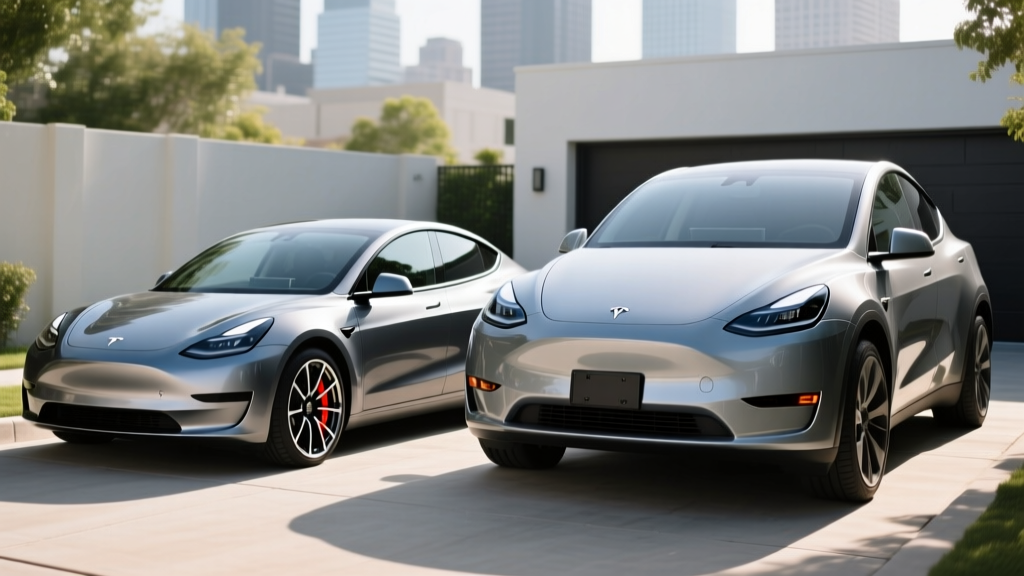
If you've narrowed your EV shortlist to Tesla's two best-sellers, you're not alone. The Model 3 sedan and Model Y crossover share the same underlying platform, similar battery chemistry, and identical software stacks — yet they serve very different buyer profiles. This head-to-head breaks down the 2026 model-year specs that actually matter: real-world range, DC fast-charging curves, federal tax credit eligibility under IRS §30D rules, and five-year ownership costs.
Both vehicles qualify for the full $7,500 federal clean vehicle credit (subject to buyer income caps and point-of-sale transfer), but the Model Y's higher MSRP means the credit covers a smaller percentage of the purchase price. Let's get into the numbers.
Side-by-Side Spec Table: 2026 Tesla Model 3 vs Model Y
All figures below reflect the Long Range AWD trims, the most popular configurations for both vehicles. Base Rear-Wheel-Drive and Performance variants are noted where they diverge.
| Specification | 2026 Tesla Model 3 LR AWD | 2026 Tesla Model Y LR AWD |
|---|---|---|
| EPA Range | 341 miles | 320 miles |
| Battery (usable) | ~75 kWh (NMC) | ~75 kWh (NMC) |
| Efficiency (MPGe combined) | 134 MPGe | 122 MPGe |
| Efficiency (kWh/100 mi) | 25 kWh | 28 kWh |
| Peak DC Fast Charge | 250 kW | 250 kW |
| 10–80% DC Charge Time | ~25 min | ~27 min |
| Level 2 Charge Rate | 11.5 kW (44 mi/hr) | 11.5 kW (40 mi/hr) |
| 0–60 mph | 4.2 seconds | 4.8 seconds |
| Horsepower | 346 hp | 384 hp |
| Cargo Volume (rear seats up) | 23 cu ft | 30 cu ft (+ 12 cu ft frunk area combined ~76 cu ft max) |
| Towing Capacity | Not rated | 3,500 lbs |
| Base MSRP (LR AWD) | $47,740 | $52,490 |
| Battery & Drive Unit Warranty | 8 yr / 120,000 mi | 8 yr / 120,000 mi |
Key takeaway: The Model 3 extracts more miles from the same battery. Its lighter weight (~3,900 lbs vs ~4,400 lbs for the Model Y) and lower drag coefficient translate directly into range and efficiency advantages.
Range & Efficiency: The Real-World Picture
Model 3 LR AWD: EPA 341 mi — expect ~290–310 mi at sustained 75 mph highway speeds; ~240–260 mi in freezing temps with cabin heat.
Model Y LR AWD: EPA 320 mi — expect ~270–290 mi highway; ~220–245 mi in freezing conditions.
Both vehicles use a heat pump, reducing cold-weather losses compared to resistance-heated EVs, but expect 20–25% range reduction below 25°F regardless.
The Model 3's 21-mile EPA advantage over the Model Y widens in real-world highway driving because the sedan's lower frontal area and lighter mass compound at speed. On a 300-mile road trip at 75 mph with mild climate control, the Model 3 will typically arrive with 30–40 miles of buffer remaining, while the Model Y arrives closer to 10–20 miles — enough to matter if your destination charger is offline.
According to fueleconomy.gov, the Model 3 LR AWD consumes 25 kWh per 100 miles combined, versus 28 kWh for the Model Y. Over 15,000 annual miles and a national average electricity rate of $0.16/kWh, that's roughly $75/year in energy savings for the Model 3 — modest, but it compounds over ownership.
Charging Speed & Network Access
Both vehicles peak at 250 kW on DC fast chargers and share the NACS (North American Charging Standard) connector natively. This is a significant advantage: Tesla's Supercharger network remains the most reliable and densest DC fast-charging infrastructure in the U.S., with over 6,000 V3/V4 stalls nationwide. Neither vehicle requires an adapter for Superchargers.
| Charging Level | Power | Model 3 (mi/hr added) | Model Y (mi/hr added) |
|---|---|---|---|
| Level 1 (120V household) | ~1.4 kW | ~3 mi/hr | ~3 mi/hr |
| Level 2 (240V home) | 11.5 kW | ~44 mi/hr | ~40 mi/hr |
| DC Fast (V3 Supercharger) | 250 kW peak | ~175 mi in 15 min | ~162 mi in 15 min |
Charging curve reality check: Neither vehicle sustains 250 kW for the full session. Both peak around 250 kW between 10–30% state of charge, then taper progressively. Above 60% SoC, expect roughly 100–120 kW; above 80%, speeds drop below 50 kW. This is why Tesla (and all responsible EV guidance) quotes 10–80% times rather than 0–100%. The Model 3's slightly lower consumption means those kilowatts translate into more recovered miles.
On third-party networks like Electrify America or EVgo, both vehicles perform identically — the NACS connector works natively, and Tesla's onboard charger handles the handshake cleanly. Preconditioning the battery (automatic when you navigate to a charger via the car's nav system) is critical: arriving at a DC fast charger without preconditioning can cut peak power in half, especially below 50°F.
Performance, Ride & Practicality
The Model 3 Long Range hits 60 mph in 4.2 seconds — genuinely quick for a family sedan. The Model Y LR is only slightly behind at 4.8 seconds, though its higher center of gravity is more noticeable in aggressive cornering. Neither vehicle is a track car, but both deliver the instant torque that makes EV acceleration feel effortless in daily driving.
Where the two diverge sharply is practicality:
- Cargo: The Model Y offers 30 cu ft behind the rear seats and up to ~76 cu ft with seats folded (including the frunk). The Model 3 provides 23 cu ft in the trunk with a smaller frunk. If you regularly haul strollers, camping gear, or Costco runs, the Model Y's hatchback design is transformative.
- Towing: The Model Y is rated for 3,500 lbs — sufficient for a small boat or light utility trailer. The Model 3 is not rated for towing.
- Rear seat space: The Model Y's elevated roofline and slightly longer wheelbase translate to meaningfully more rear headroom and legroom. Adults over 6'0" will notice the difference on longer trips.
- Ground clearance: The Model Y sits higher, making it more practical for snow-belt driveways and rough parking lots.
Tech, Safety & Driver Assistance
Both vehicles ship with Tesla's latest hardware (HW4) and identical software: the 15.4-inch center touchscreen, over-the-air updates, Sentry Mode, and Tesla's app ecosystem. Standard Autopilot includes adaptive cruise control and lane-centering — a capable SAE Level 2 driver-assist system that requires continuous driver supervision.
FSD (Supervised) remains a $8,000 add-on or $99/month subscription for both models. It adds automated lane changes, traffic light/stop sign recognition, and city-street navigation — impressive in capability but still requiring driver oversight. Neither vehicle has a meaningful tech advantage over the other; the software stack is identical.
On safety, both the Model 3 and Model Y have earned IIHS Top Safety Pick+ ratings and 5-star NHTSA overall scores. The Model Y's higher ride height provides a marginal advantage in certain crash geometries, but both are among the safest vehicles in their respective classes.
Pricing & Federal Tax Credit Breakdown
| Cost Factor | Model 3 LR AWD | Model Y LR AWD |
|---|---|---|
| Base MSRP | $47,740 | $52,490 |
| Federal §30D Credit | $7,500 (if eligible) | $7,500 (if eligible) |
| Effective Price (after credit) | ~$40,240 | ~$44,990 |
| Credit as % of MSRP | 15.7% | 14.3% |
| Est. Monthly Payment (72 mo, 5% APR, $0 down) | ~$648 | ~$724 |
Tax credit eligibility is identical for both vehicles — they share the same U.S. assembly (Fremont, CA), battery sourcing, and critical mineral supply chains. The $7,500 credit is available as a point-of-sale transfer through registered dealers, reducing your out-of-pocket cost at purchase rather than waiting for a tax return.
However, the §30D credit has buyer income caps ($150,000 single / $300,000 joint modified AGI) and applies only to vehicles under the MSRP cap ($55,000 for sedans, $80,000 for SUVs/trucks). Both the Model 3 and Model Y LR AWD fall comfortably under their respective caps. Adding higher-priced options or upgrading to Performance trims may push the Model 3 above the $55,000 sedan cap — verify your exact build configuration against IRS guidelines before ordering.
Five-Year Ownership Cost Comparison
| Cost Category (5 years / 75,000 mi) | Model 3 LR AWD | Model Y LR AWD |
|---|---|---|
| Depreciation (est.) | $18,500 | $20,200 |
| Electricity (home charging, $0.16/kWh avg) | $2,813 | $3,360 |
| Insurance (national avg) | $10,500 | $11,250 |
| Maintenance (tires, cabin filter, wiper fluid) | $2,200 | $2,500 |
| Total 5-Year Cost (excl. purchase) | ~$34,013 | ~$37,310 |
The Model 3 costs roughly $3,300 less to own over five years, driven by lower depreciation, better efficiency, and slightly cheaper insurance premiums (sedans typically insure for less than crossovers). Neither vehicle requires oil changes, transmission fluid, or spark plugs — EV maintenance is limited to tire rotations, cabin air filter replacement, brake fluid checks, and windshield washer fluid.
Tire wear deserves attention: both vehicles are heavy and torque-rich. Expect to replace tires every 30,000–40,000 miles. The Model Y's heavier weight and larger contact patch typically mean slightly faster tire wear and higher replacement costs ($1,200–$1,600 for a set of four all-season EV-rated tires).
The Decision Framework: Which Should You Choose?
Choose the Tesla Model 3 if:
- You commute solo or with one passenger and rarely haul large cargo
- Maximizing range per dollar is your top priority (341 mi EPA, 134 MPGe)
- You want the lowest total cost of ownership in the Tesla lineup
- You don't need towing capability
- You prefer a sportier, lower driving position with sharper handling
Choose the Tesla Model Y if:
- You have children, regularly carry rear-seat passengers, or need easy car-seat access
- Cargo versatility matters — strollers, bikes, furniture, or road-trip luggage
- You need towing capacity (3,500 lbs for small trailers or boat)
- You live in a snow-belt area and want higher ground clearance
- You prefer the elevated seating position and easier entry/exit of a crossover
Pros & Cons at a Glance
Model 3 Pros
- Best-in-class efficiency (134 MPGe)
- Longest EPA range in the Tesla lineup (341 mi)
- Lower purchase price and ownership cost
- Sportier handling, lower center of gravity
- Qualifies for full $7,500 federal credit
Model 3 Cons
- Limited cargo space (23 cu ft trunk)
- No towing rating
- Tighter rear seat for tall adults
- Low ground clearance in snow/rough roads
Model Y Pros
- Class-leading cargo versatility (76 cu ft max)
- 3,500-lb towing capacity
- Spacious rear seat with easy car-seat install
- Higher ride height for snow and rough roads
- Hatchback utility for large items
Model Y Cons
- ~$4,750 more expensive than Model 3
- Lower efficiency (122 MPGe) means higher charging costs
- 21 fewer miles of EPA range
- Heavier tire wear and higher replacement cost
Frequently Asked Questions
Do both the Model 3 and Model Y qualify for the $7,500 federal tax credit?
Yes, as of 2026, both vehicles qualify for the full $7,500 §30D clean vehicle credit, provided the buyer meets income requirements ($150K single / $300K joint MAGI) and the vehicle is purchased new. The credit can be transferred to the dealer at point of sale, reducing your purchase price immediately. Always confirm eligibility with your tax professional and the IRS clean vehicle credit page before purchasing.
Which is better for road trips — Model 3 or Model Y?
The Model 3's extra 21 miles of range and superior efficiency mean slightly fewer charging stops on long drives. However, the Model Y's cargo space makes it more practical for family road trips with luggage. On a 600-mile drive, the Model 3 might save you one 15-minute Supercharger stop, but the Model Y lets you pack everything without a roof box.
Is the Model Y just a taller Model 3?
Structurally, they share the same platform, battery pack architecture, and powertrain components. But the Model Y has a longer wheelbase, different suspension tuning, a hatchback rear, and available third-row seating (though the third row is best suited for small children). The driving experience is similar but not identical — the Model 3 feels more agile, the Model Y more spacious and commanding.
Which holds its resale value better?
Historically, the Model Y has depreciated slightly more in percentage terms due to its higher starting price and the crossover segment's competitive density. However, both Tesla models benefit from OTA updates and Supercharger network access, which support long-term desirability. Expect roughly 55–60% value retention at 5 years / 75,000 miles for both, with the Model 3 retaining a marginally higher percentage.
Can I charge either vehicle on non-Tesla charging networks?
Yes. Both the Model 3 and Model Y use the NACS connector natively, which is now the dominant standard in North America. They charge seamlessly on Electrify America, EVgo, ChargePoint, and other networks without adapters. Tesla's Supercharger network remains the most reliable option, but third-party compatibility is excellent.
Sources: EPA fueleconomy.gov, Tesla.com specifications, IRS §30D clean vehicle credit guidelines, IIHS safety ratings, NHTSA 5-star safety data. All pricing and specs reflect 2026 model year as of publication. Tax credit eligibility subject to change — verify with IRS and a qualified tax professional.