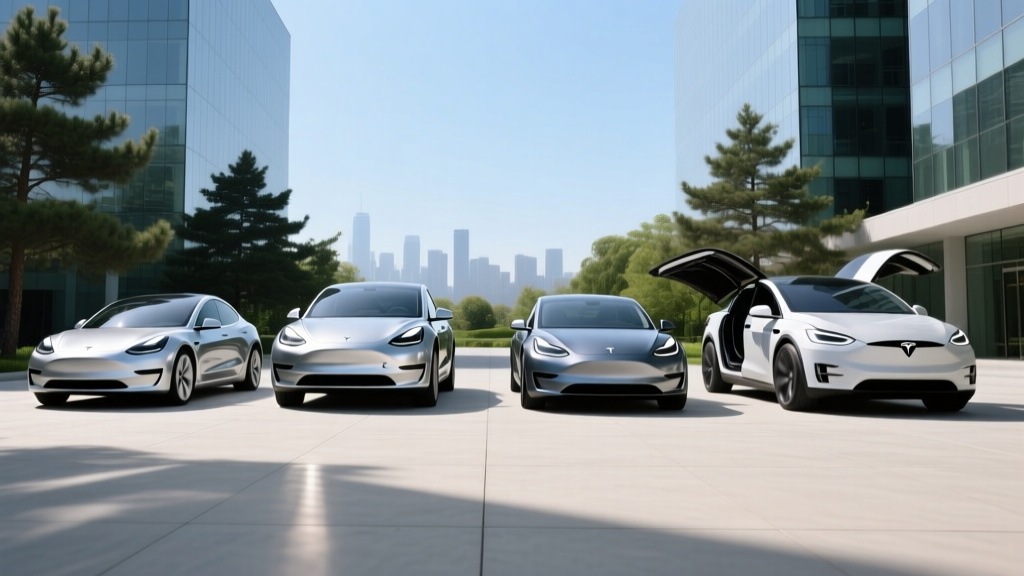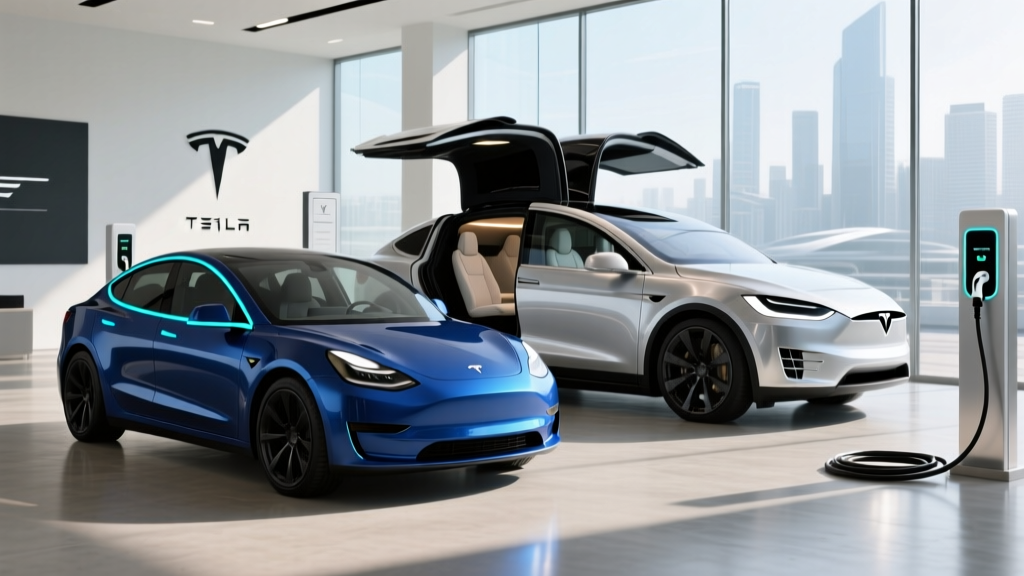
If you're choosing between Tesla's two most established passenger vehicles, you're really choosing between two completely different ownership philosophies. The Model 3 is the efficiency-optimized commuter and road-tripper that punches well above its price. The Model X is the flagship family hauler with falcon-wing drama and three-row capacity. But beyond the obvious size gap, the differences in range, charging behavior, tax-credit eligibility, and long-term costs are substantial enough to swing your decision even if you thought you'd already made it.
This comparison uses current 2026 model-year specifications, EPA data, and IRS §30D tax-credit rules to give you the exact numbers you need. No marketing fluff — just the data.
Tesla Model 3 vs Model X: Side-by-Side Specs
Before we break down category winners, here's the full spec sheet. All figures reflect the most popular trims: Model 3 Long Range AWD and Model X Long Range (with Plaid variants noted where relevant). Battery chemistry for both is NMC (nickel manganese cobalt) in Long Range trims, prioritizing energy density over the LFP chemistry found in the base Model 3 RWD.
| Specification | Model 3 Long Range AWD | Model X Long Range | Model X Plaid |
|---|---|---|---|
| EPA Range | 363 mi | 335 mi | 326 mi |
| Battery (usable) | ~75 kWh (NMC) | ~95 kWh (NMC) | ~95 kWh (NMC) |
| Efficiency (MPGe combined) | 134 MPGe | 109 MPGe | 104 MPGe |
| Efficiency (kWh/100 mi) | 25 kWh | 31 kWh | 32 kWh |
| Peak DC Fast Charge | 250 kW | 250 kW | 250 kW |
| 10–80% DC Charge Time | ~25 min | ~30 min | ~30 min |
| Level 2 Charge Rate | 11.5 kW (48A) | 11.5 kW (48A) | 11.5 kW (48A) |
| 0–60 mph | 4.2 sec | 3.8 sec | 2.5 sec |
| Horsepower | ~384 hp | ~670 hp | ~1,020 hp |
| Cargo Volume (rear seats up) | 23 cu ft | 88 cu ft (behind 2nd row, 5-seat) | 88 cu ft (behind 2nd row, 5-seat) |
| Seating Capacity | 5 | 5, 6, or 7 | 5 or 6 |
| Towing Capacity | Not rated | 5,000 lbs | 5,000 lbs |
| Base MSRP | $47,740 | $79,990 | $94,990 |
| Battery/Drive Unit Warranty | 8 yr / 120,000 mi | 8 yr / 150,000 mi | 8 yr / 150,000 mi |
| Basic Vehicle Warranty | 4 yr / 50,000 mi | 4 yr / 50,000 mi | 4 yr / 50,000 mi |
Sources: fueleconomy.gov (Model 3), fueleconomy.gov (Model X), Tesla.com specifications.
Category-by-Category Verdict
🏆 Range & Efficiency: Model 3
363 mi EPA vs 335 mi, and the Model 3 uses 6 fewer kWh per 100 miles. It's the lighter, more aerodynamic car, and it shows. On a road trip, you'll stop less often and spend less at the charger.
🏆 Charging Speed: Model 3 (Slight Edge)
Both peak at 250 kW on V3 Superchargers, but the Model 3's smaller ~75 kWh battery fills 10–80% in about 25 minutes vs the Model X's ~30 minutes. The Model X must push more total energy through at similar peak rates. Neither vehicle uses the newer 350 kW V4 Supercharger architecture at peak rate yet.
🏆 Performance: Model X Plaid
If raw acceleration matters, the Model X Plaid's 2.5-second 0–60 is hypercar territory in a three-row SUV. The Model 3 LR's 4.2 seconds is quick by any normal standard, but it's not even in the same conversation. Even the base Model X LR at 3.8 seconds outpaces it.
🏆 Value & Price: Model 3
A $32,250 gap in base MSRP is enormous. Even after adjusting for tax credits (see below), the Model 3 costs dramatically less to acquire and operate. It's the default value winner unless you need the space.
🏆 Cargo & Practicality: Model X
88 cu ft behind the second row (5-seat config) vs 23 cu ft in the Model 3's trunk-plus-frunk. The Model X also tows 5,000 lbs and seats up to seven. For families, gear-heavy lifestyles, or towing, there's no contest.
🏆 Tech & Interior: Tie (Different Priorities)
Both run Tesla's latest software on a 15.4-inch center display. The Model X adds a rear passenger screen and the theater of falcon-wing doors. The Model 3's refreshed "Highland" interior is quieter and more refined than earlier years. Neither has a traditional instrument cluster; everything routes through the center screen and (in the Model 3) a small rear screen.
Price Comparison & Federal Tax Credit Eligibility
This is where the math gets interesting — and where the Model 3's advantage widens further for most buyers. Under current IRS §30D rules, the federal clean vehicle credit has strict MSRP caps: $55,000 for sedans and $80,000 for SUVs/pickups/vans.
| Trim | MSRP | Vehicle Class | MSRP Cap | Eligible for §30D Credit? | Effective Price (max credit) |
|---|---|---|---|---|---|
| Model 3 Long Range AWD | $47,740 | Sedan | $55,000 | Yes (up to $7,500) | ~$40,240 |
| Model 3 Performance | $54,990 | Sedan | $55,000 | Yes (up to $7,500) | ~$47,490 |
| Model X Long Range | $79,990 | SUV | $80,000 | Yes (up to $7,500) | ~$72,490 |
| Model X Plaid | $94,990 | SUV | $80,000 | No (exceeds cap) | $94,990 |
Critical caveats: The §30D credit also requires the buyer to meet income thresholds ($150K single / $300K joint AGI), and the vehicle must satisfy battery-component and critical-minerals sourcing requirements that phase in annually. The credit can now be transferred to the dealer as a point-of-sale discount. Always verify your specific eligibility with a tax professional and check the latest sourcing compliance on fueleconomy.gov.
The practical takeaway: the Model 3 Long Range effectively starts around $40,000 for eligible buyers. The Model X Long Range can drop to roughly $72,500 — still an $32,000+ gap. And the Model X Plaid gets no federal credit at all.
Real-World Charging & the Supercharger Network
Both vehicles charge on Tesla's Supercharger network, which remains the most reliable and extensive DC fast-charging system in North America with over 6,500 V3/V4 stalls in the U.S. alone. However, the charging experience differs in practice.
Model 3 charging curve: Peaks at ~250 kW around 10–20% state of charge, then tapers progressively. From 10–80%, expect roughly 25 minutes at a V3 stall (250 kW capable). Above 80%, the curve drops sharply — plan to unplug at 80% on road trips rather than waiting for a full fill.
Model X charging curve: Also peaks near 250 kW, but the larger ~95 kWh battery means it sustains higher charge rates longer in the mid-SoC range. Still, the 10–80% time stretches to about 30 minutes because there's simply more energy to push. On a multi-stop road trip, those extra 5 minutes per stop add up: a 600-mile trip might require two stops in either vehicle, but you'll spend ~50 minutes charging in the Model 3 vs ~60 minutes in the Model X.
For home Level 2 charging, both vehicles accept up to 11.5 kW (48 amps on a 60-amp circuit, NEMA 14-50 or hardwired Wall Connector). That refills the Model 3's 75 kWh battery from empty in roughly 7 hours and the Model X's 95 kWh battery in about 8.5 hours. Most owners charging overnight will wake up full in either case.
5-Year Ownership Cost Breakdown
Purchase price is only the start. Here's how the total cost of ownership compares over five years and 75,000 miles, assuming home charging at $0.14/kWh (national average), no major repairs, and current insurance averages.
| Cost Category | Model 3 LR AWD | Model X LR |
|---|---|---|
| Purchase Price (after max §30D credit) | ~$40,240 | ~$72,490 |
| Electricity (75,000 mi) | ~$2,625 (18,750 kWh) | ~$3,255 (23,250 kWh) |
| Insurance (5-yr avg) | ~$9,500 ($1,900/yr) | ~$14,000 ($2,800/yr) |
| Maintenance (tires, cabin filter, fluid) | ~$2,200 | ~$3,000 |
| Estimated Depreciation (5-yr) | ~$16,000 | ~$30,000 |
| Total 5-Year Cost | ~$70,565 | ~$122,745 |
| Cost Per Mile | ~$0.94 | ~$1.64 |
The Model 3 costs roughly $52,000 less to own over five years. The biggest driver is the purchase-price gap, but insurance is notably higher on the Model X (it's a more expensive vehicle to repair after a collision, given the aluminum body and falcon-wing door mechanisms). Energy costs are only ~$630 apart over five years because electricity is cheap — the efficiency gap matters more on a per-mile basis than in absolute dollars.
Maintenance note: Neither vehicle requires oil changes, spark plugs, or transmission service. Both need tire rotations, cabin air filter replacements, and brake fluid checks. The Model X's heavier weight (~5,100 lbs vs ~4,000 lbs for the Model 3) accelerates tire wear — budget for replacement tires sooner, and note that OEM-spec tires for the Model X run $300–$450 each.
Autopilot, FSD, and Driver Assistance
The hardware is now identical: Tesla's HW4 (AI4) vision-only suite with multiple cameras. Features like Navigate on Autopilot, auto lane change, Smart Summon, and traffic-light recognition work the same in both vehicles. The Model X's higher seating position offers marginally better camera sightlines in dense traffic, but in practice, the driving-assist experience is functionally identical.
Decision Framework: Which Tesla Should You Buy?
Choose the Tesla Model 3 if:
- Your household has 1–2 regular passengers and you rarely need more than 23 cu ft of cargo
- You want the lowest total cost of ownership and maximum range per dollar
- Your daily commute or road-trip style rewards efficiency (you'll use ~25 kWh/100 mi vs 31)
- You qualify for the full §30D credit and want to keep your effective purchase price near $40K
- You don't need towing capability
- Parking in tight urban spaces is a regular concern (the Model 3 is ~20 inches shorter)
Choose the Tesla Model X if:
- You regularly carry 5+ passengers or need three-row seating
- Cargo volume is non-negotiable — you haul strollers, bikes, camping gear, or large items weekly
- You need to tow up to 5,000 lbs (boat, small trailer, camper)
- Performance-SUV thrill matters and the Plaid's 2.5-second 0–60 justifies the $95K price and loss of tax credit
- Falcon-wing doors genuinely help in your use case (tight garage parking where you load kids/car seats from the side)
- Budget is flexible and the $32K+ premium over the Model 3 doesn't strain your finances
Bottom line: The Model 3 is the rational financial choice for most EV buyers. It goes farther, charges slightly faster, costs dramatically less, and is cheaper to insure and maintain. The Model X earns its premium only if you genuinely need the space, seating, or towing — or if the performance-SUV experience is a priority you're willing to fund. Don't buy the Model X "just in case" you need the room; buy it because you use it every week.
Frequently Asked Questions
Can the Model 3 tow anything?
Tesla does not rate the Model 3 for towing in the U.S. market. Some European-spec Model 3s have a tow rating, but North American versions lack the hitch hardware and software enablement. If towing is on your list, the Model X (5,000 lbs) or a different vehicle entirely is the answer.
Do both vehicles get the same software updates and features?
Yes. Tesla pushes the same software feature set to both vehicles. New UI features, Autopilot improvements, and entertainment options roll out to Model 3 and Model X simultaneously (or within the same update cycle). Hardware differences (like the Model X's rear screen) are supported natively.
Which has better resale value?
Historically, the Model 3 has held its value slightly better as a percentage of MSRP, largely because its lower entry price keeps demand high in the used market. The Model X depreciates faster in absolute dollars — a five-year-old Model X can lose $30,000+ in value. However, Tesla's resale values are more volatile than legacy automakers and are influenced by new-vehicle price cuts.
Is the Model X's falcon-wing door mechanism reliable?
Early Model X vehicles (2016–2019) had significant door-mechanism issues. Tesla has revised the hardware and software multiple times, and 2024+ Model X doors are substantially more reliable. However, the complexity of the hinge and sensor system means repair costs after a collision or malfunction are higher than conventional doors. Factor this into insurance expectations.
Which is better in cold weather?
Both vehicles use Tesla's heat pump for efficient cabin heating and battery preconditioning. The Model X's larger battery (~95 kWh vs ~75 kWh) gives it a bigger absolute range buffer in cold weather, where you can expect 20–30% range loss. In practical terms: a cold-weather Model 3 might deliver 250–270 highway miles; the Model X, around 230–250. The Model 3 still wins on efficiency, but the Model X's buffer reduces range-anxiety in extreme cold.
What about the Model Y — isn't that the real alternative to the Model X?
For many buyers, yes. The Model Y Long Range offers 320 mi of range, 76 cu ft of cargo, optional 7-seat layout, and an MSRP around $52,490 — eligible for the §30D credit under the $80K SUV cap. It splits the difference between Model 3 efficiency and Model X practicality at a much lower price than the X. If you're cross-shopping the Model X purely for space, drive a Model Y first.