Tesla Model 3 vs Model S: Quick Verdict
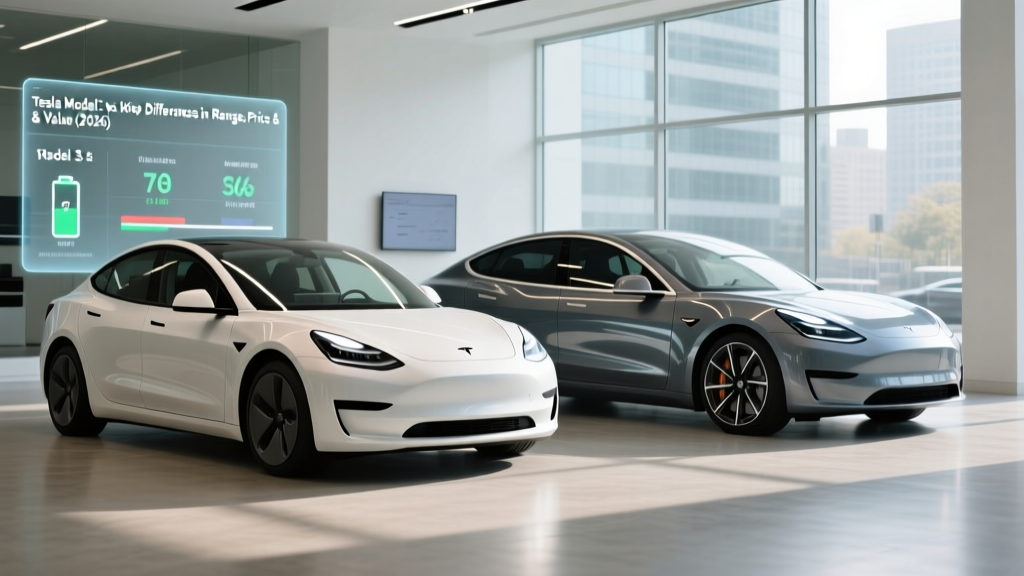
The Tesla Model 3 is a compact luxury sedan built for efficiency and value, while the Model S is a full-size flagship sedan engineered for maximum range, performance, and interior space. In 2026, the gap between them has narrowed on paper but widened in practice — the Model 3 Highland refresh brought premium materials and quieter cabin dynamics that once belonged exclusively to the Model S, while the Model S continues to offer things the 3 simply cannot: a true 400-mile EPA range, adaptive air suspension, and a hatchback cargo layout with over 28 cubic feet of space.
The right choice depends entirely on what you prioritize. If you want the lowest cost of entry with access to the full §30D federal tax credit, the Model 3 Long Range AWD is the clear winner. If you need cross-country range with minimal charging stops, three-row seating availability, and flagship performance, the Model S justifies its premium. Below, we break down every measurable difference.
Side-by-Side Spec Comparison: Model 3 vs Model S
| Specification | 2026 Tesla Model 3 Long Range AWD | 2026 Tesla Model S Long Range |
|---|---|---|
| EPA Range | 363 miles | 402 miles |
| Battery (usable, est.) | ~79 kWh (NMC) | ~100 kWh (NMC) |
| Efficiency (MPGe combined) | 132 MPGe | 120 MPGe |
| Energy Consumption | 25 kWh/100mi | 28 kWh/100mi |
| Peak DC Fast Charge Rate | 250 kW | 250 kW |
| 10–80% DC Charge Time | ~27 minutes | ~30 minutes |
| Level 2 Charge Rate | 11.5 kW | 11.5 kW |
| 0–60 mph | 4.2 seconds | 3.1 seconds |
| Horsepower | 346 hp | 670 hp |
| Drivetrain | Dual Motor AWD | Dual Motor AWD |
| Cargo Volume | 23 cu ft (trunk + frunk) | 28 cu ft (hatch + frunk) |
| Seating Capacity | 5 | 5 |
| Curb Weight | ~4,034 lbs | ~4,561 lbs |
| Base MSRP | $47,740 | $79,990 |
| Battery/Drive Unit Warranty | 8 years / 120,000 miles | 8 years / 150,000 miles |
Sources: EPA fueleconomy.gov, Tesla Model 3 specs, Tesla Model S specs. Figures reflect current model-year Long Range trims.
Range and Efficiency: Real-World Expectations
The EPA sticker tells part of the story, but real-world range depends heavily on driving conditions. The Model 3 Long Range AWD posts an EPA-estimated 363 miles, making it one of the most efficient EVs on the market at 132 MPGe combined. The Model S Long Range achieves 402 miles EPA — a 39-mile advantage — but burns more energy per mile due to its heavier curb weight and larger frontal area.
| Condition | Model 3 LR AWD (est.) | Model S LR (est.) |
|---|---|---|
| EPA Sticker | 363 mi | 402 mi |
| Highway (75 mph, 70°F) | ~300–320 mi | ~330–350 mi |
| Cold Weather (30°F, mixed) | ~255–285 mi | ~280–315 mi |
| Mountain/Terrain-Heavy | ~270–300 mi | ~300–340 mi |
Both vehicles benefit from Tesla's heat pump, which minimizes cold-weather cabin heating losses compared to resistive heaters. However, the Model S's larger battery buffer means it retains more absolute range in adverse conditions — a meaningful advantage on 400+ mile road trips where charging stop frequency matters.
For daily commuting under 80 miles round-trip, the Model 3's efficiency advantage means lower electricity costs per mile. On cross-country drives, the Model S's 402-mile EPA range translates to fewer Supercharger stops — often the difference between one stop and two on a 350-mile leg.
Charging Speed and Network Considerations
Both the Model 3 and Model S peak at 250 kW on V3 Tesla Superchargers, and both support the NACS connector natively — no adapter needed. On the broader public charging landscape, NACS adoption by Electrify America and other networks in 2025–2026 has expanded non-Tesla fast-charging access for both vehicles.
The charging curve tells a more nuanced story than peak kW alone. The Model 3's ~79 kWh battery reaches peak charge rate quickly and sustains it through roughly 50% State of Charge before tapering. The Model S's ~100 kWh pack can absorb more total energy at high rates, but its larger capacity means the 10–80% session takes approximately 30 minutes versus 27 minutes for the Model 3.
| Charging Level | Power | Model 3 (mi/hr added) | Model S (mi/hr added) |
|---|---|---|---|
| Level 1 (120V) | ~1.4 kW | ~4 mi/hr | ~3.5 mi/hr |
| Level 2 (240V, 48A) | 11.5 kW | ~36 mi/hr | ~32 mi/hr |
| DC Fast (V3 Supercharger) | Up to 250 kW | ~170 mi in 15 min | ~200 mi in 15 min |
A key ownership note: preconditioning the battery before arriving at a Supercharger (enabled automatically when you navigate to a charger in the Tesla app) is essential for achieving peak charge rates in both vehicles. Without it, cold-soaked batteries may peak below 100 kW, adding significant time to your stop.
Performance, Ride Quality, and Interior
The Model S Long Range delivers 670 horsepower and a 3.1-second 0–60 time — supercar territory in a five-passenger sedan. The Model 3 Long Range's 346 hp and 4.2-second 0–60 is genuinely quick by any standard, but the gap is immediately noticeable in passing maneuvers and highway on-ramps.
Ride quality is where the generational divide shows most clearly. The Model S rides on adaptive air suspension that adjusts ride height and damping based on road conditions and speed. It absorbs highway expansion joints and rough pavement with composure the Model 3's conventional coil springs cannot fully match. The Model 3 Highland refresh (introduced late 2023, refined through 2025–2026) dramatically improved cabin insulation and seat comfort, but it remains a firmer, more connected ride — sporty rather than plush.
Interior space favors the Model S decisively. Its hatchback design provides 28 cubic feet of cargo room (expandable with seats folded), a ventilated front seat row, available rear-seat entertainment screen, and optional rear-facing third-row jump seats for occasional use. The Model 3's traditional trunk offers 23 cubic feet total (including the frunk), which is competitive with compact sedans but not in the same league for family road trips or bulk hauling.
Price, Tax Credit, and Total Cost of Ownership
This is where the comparison shifts dramatically. The Model 3 Long Range AWD starts at $47,740, while the Model S Long Range begins at $79,990 — a $32,250 gap before incentives.
| Cost Factor | Model 3 LR AWD | Model S LR |
|---|---|---|
| Base MSRP | $47,740 | $79,990 |
| Federal §30D Credit Eligibility | Up to $7,500 (if income/sourcing requirements met) | $0 (exceeds $55,000 sedan MSRP cap) |
| Effective Price After Max Credit | ~$40,240 | $79,990 |
| Est. Annual Insurance | $1,800–$2,400 | $2,800–$3,600 |
| Est. Annual Electricity (12,000 mi) | ~$450 (at $0.15/kWh) | ~$505 (at $0.15/kWh) |
| 5-Year Est. Fuel + Insurance | ~$11,250–$14,250 | ~$16,525–$20,525 |
Federal tax credit per IRS §30D rules. The Model S exceeds the $55,000 MSRP cap for sedans, making it ineligible for the new-vehicle credit regardless of buyer income or battery sourcing. The Model 3 may qualify for the full $7,500 if the buyer meets income caps ($150K single / $300K joint) and the vehicle meets critical-mineral and battery-component sourcing requirements. Point-of-sale transfer is available for eligible purchases. Always verify current eligibility with a tax professional.
The tax credit difference alone can widen the effective price gap to nearly $40,000. For buyers who qualify, the Model 3 becomes one of the most value-dense EVs available — a 363-mile, dual-motor AWD sedan for roughly $40,000 after credit. The Model S buyer is paying for range, performance, space, and prestige that no credit can offset.
Insurance costs also favor the Model 3. Tesla's own insurance product (available in most states) uses real-time driving data to set premiums, and the Model 3's lower repair-cost profile and purchase price translate to meaningfully lower monthly premiums. Over five years, insurance savings alone can total $5,000–$6,000.
Category Winners: Where Each Model Excels
🏆 Range & Road Trips: Model S
402 miles EPA means fewer charging stops on long drives. The larger battery buffer provides more margin in cold weather and mountainous terrain. For buyers who regularly drive 300+ miles in a single day, this advantage compounds into hours saved per year.
🏆 Value & Tax Credit: Model 3
At ~$40,240 after the federal credit, the Model 3 Long Range delivers 363 miles of range, dual-motor AWD, and Tesla's full software suite for less than half the effective cost of a Model S. No other EV in this price bracket matches the combination.
🏆 Efficiency & Daily Operating Cost: Model 3
132 MPGe combined versus 120 MPGe means the Model 3 uses less electricity per mile. Over 12,000 miles annually, the savings are modest (~$55/year at national average electricity rates), but they reflect the Model 3's lighter, more aerodynamic design philosophy.
🏆 Performance & Ride Comfort: Model S
670 hp, 3.1-second 0–60, adaptive air suspension, and a quieter, more spacious cabin. The Model S delivers grand-touring composure and supercar acceleration simultaneously — something the Model 3's sportier but firmer setup doesn't replicate.
🏆 Cargo & Practicality: Model S
The hatchback layout provides 28 cubic feet of easily accessible cargo space. The optional third row (best suited for children) adds seating flexibility the Model 3 cannot offer. For families, the difference between a trunk and a hatchback is felt every grocery trip.
🏆 Tech & Software: Tie
Both vehicles run Tesla's latest software on a 15.4-inch center touchscreen. Autopilot is standard; Full Self-Driving (Supervised) is an $8,000 option on both. The Model S adds a rear-seat entertainment display and a driver-facing instrument cluster the Model 3 lacks, but core infotainment and ADAS features are identical.
Autopilot, FSD, and Driver Assistance
Tesla's Autopilot and Full Self-Driving (Supervised) are SAE Level 2 driver-assistance systems. The driver must remain fully engaged, hands on or near the wheel, and eyes on the road at all times. Neither system makes the vehicle "self-driving." Tesla's FSD (Supervised) can navigate city streets, stop signs, and traffic lights, but it requires active supervision and can make errors requiring immediate driver intervention. Only Level 4 services like Waymo operate without a human driver — and those are geofenced robotaxis, not consumer vehicles.
Both the Model 3 and Model S use Tesla's Hardware 4 (HW4) sensor suite, which includes higher-resolution cameras and improved processing. Feature parity is essentially complete: adaptive cruise control, lane centering, automatic emergency braking, blind-spot monitoring, and the FSD (Supervised) package are available identically on both. The Model S's instrument cluster display provides speed and navigation info directly in the driver's sightline, which some buyers prefer for long highway drives, but it does not change the system's capabilities.
Decision Framework: Which Should You Choose?
Choose the Tesla Model 3 Long Range AWD if:
- Your budget is under $50,000 and you want to maximize the §30D federal tax credit
- Your daily commute is under 100 miles round-trip (covering 95%+ of drivers)
- You primarily drive solo or with one passenger and don't need hatchback cargo space
- You value efficiency and lower insurance/operating costs over raw performance
- You want Tesla's Supercharger network, software, and range at the lowest possible entry price
Choose the Tesla Model S Long Range if:
- You regularly drive 300+ miles in a single day and want to minimize charging stops
- You need hatchback cargo flexibility or occasional third-row seating for children
- You value adaptive air suspension and a quieter, more premium ride quality
- Performance matters — 670 hp and 3.1-second 0–60 is a daily joy, not just a spec-sheet number
- The $80,000 price (with no federal credit) fits your budget without strain
Frequently Asked Questions
Is the Model S worth $32,000 more than the Model 3?
It depends on your priorities. If you need 400+ mile range, air suspension, hatchback cargo, and 670 hp, the Model S delivers capabilities the Model 3 physically cannot match. If your priority is value and daily commuting, the Model 3 at ~$40,240 after the tax credit is arguably the best deal in the EV market, and the Model S premium is hard to justify on practical grounds.
Why doesn't the Model S qualify for the federal EV tax credit?
Under IRS §30D rules, sedans with an MSRP above $55,000 are ineligible for the new clean vehicle credit. The Model S starts at $79,990, well above this cap. The Model 3 Long Range at $47,740 falls under the cap and may qualify for up to $7,500 if the buyer meets income requirements and the vehicle's battery meets critical-mineral and component sourcing thresholds. These rules are subject to change — always verify on irs.gov before purchasing.
Which charges faster at a Supercharger?
Both peak at 250 kW on V3 Superchargers. The Model 3 completes a 10–80% charge in approximately 27 minutes; the Model S takes about 30 minutes due to its larger battery. However, the Model S adds more miles per minute of charging (~200 miles in 15 minutes vs. ~170 for the Model 3) because of its larger energy capacity. For road-trip planning, miles added matters more than percentage filled.
Is the Model 3 interior as nice as the Model S in 2026?
The gap has narrowed significantly. The Model 3 Highland refresh brought ventilated front seats, ambient lighting, acoustic glass, and rear-seat ventilation — features that once distinguished the Model S. However, the Model S still offers more rear legroom, a driver instrument cluster, a rear entertainment screen, and premium materials throughout. If interior luxury is a top priority, the Model S still holds an edge, but the Model 3 no longer feels like a budget compromise.
Which is cheaper to insure?
The Model 3 is meaningfully cheaper to insure. Average annual premiums for the Model 3 Long Range run $1,800–$2,400 depending on state and driver profile, while the Model S typically costs $2,800–$3,600. Over five years, that's a $5,000–$6,000 difference. Tesla Insurance, available in most states, can reduce premiums for both vehicles by using real-time driving behavior data.
Does either offer a LFP battery option?
The Model 3 Rear-Wheel Drive (base trim, not compared here) uses an LFP battery, which offers longer cycle life and can be charged to 100% daily without degradation concerns. However, the Long Range AWD trims compared in this article both use NMC chemistry for higher energy density and better cold-weather performance. Tesla recommends charging NMC batteries to 80% for daily use and 100% only before long trips.
Final Recommendation
There is no universal winner between the Model 3 and Model S — only the right choice for your specific needs and budget. The Model 3 Long Range AWD is the rational, value-maximizing pick for the vast majority of EV buyers: it delivers 363 miles of EPA range, dual-motor AWD, Tesla's full tech suite, and eligibility for the $7,500 federal credit at an effective price around $40,000. It is the EV that makes the strongest financial case for electrification.
The Model S Long Range is the aspirational pick for buyers who have already decided that range, performance, and space are worth a premium that no tax credit will soften. If your lifestyle includes frequent 400-mile days, family cargo needs, and a preference for air-suspension comfort, the Model S earns its price. Just know that you're paying nearly double — and that the Model 3 will handle 90% of what you throw at it for half the cost.