Quick Verdict: Two Teslas, Two Very Different Buyer Profiles
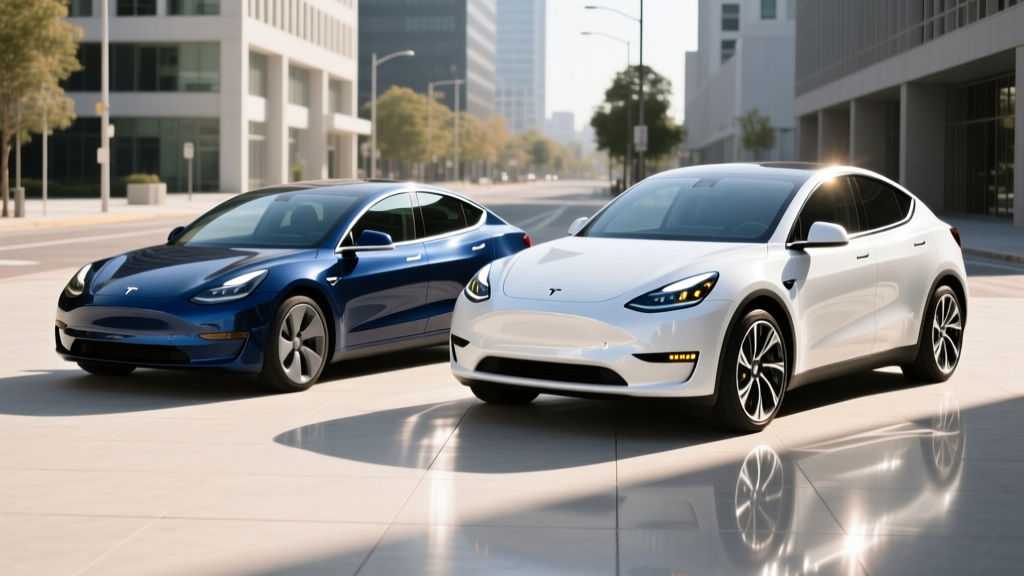
If you've narrowed your EV shortlist to the Tesla Model 3 versus Model Y, you're not alone — these two vehicles consistently top US EV sales charts. They share Tesla's powertrain architecture, Supercharger access, and software ecosystem, yet they serve fundamentally different needs. The Model 3 is the efficiency-first sedan for commuters and road-trippers who want maximum range per dollar. The Model Y is the practical crossover for families who need cargo space, easier ingress, and a higher driving position.
This comparison uses 2026 model-year specifications for the current Long Range and Performance trims of both vehicles. We'll break down exact EPA range figures, real-world highway and cold-weather expectations, charging curves, total ownership costs, and federal tax credit eligibility — because the sticker price rarely tells the full story.
Side-by-Side Spec Table: Model 3 vs Model Y (2026 Long Range)
Numbers first. Here's how the two most popular Tesla trims stack up across every metric that matters to an EV buyer. All figures reflect the latest EPA data at fueleconomy.gov and Tesla's official 2026 spec sheets.
| Specification | Model 3 Long Range AWD | Model Y Long Range AWD |
|---|---|---|
| EPA Range | 363 miles | 337 miles |
| Real-World Highway Range (est.) | ~300–320 miles | ~275–295 miles |
| Real-World Cold-Weather Range (est.) | ~255–285 miles | ~235–260 miles |
| Battery Capacity (usable) | ~79 kWh (NMC) | ~79 kWh (NMC) |
| Efficiency (MPGe combined) | 134 MPGe | 122 MPGe |
| Energy Consumption | 25 kWh/100 mi | 28 kWh/100 mi |
| Peak DC Fast Charge Rate | 250 kW | 250 kW |
| 10–80% DC Fast Charge Time | ~27 minutes | ~29 minutes |
| Level 2 Charge Rate | 11.5 kW (44 mi/hr) | 11.5 kW (41 mi/hr) |
| 0–60 mph | 4.2 seconds | 4.8 seconds |
| Horsepower | 384 hp | 384 hp |
| Drivetrain | Dual Motor AWD | Dual Motor AWD |
| Cargo Volume (rear seats up) | 23 cu ft (trunk + frunk) | 72 cu ft (rear + frunk) |
| Cargo Volume (rear seats folded) | 23 cu ft (sedan trunk) | 76 cu ft (hatchback) |
| Seating Capacity | 5 | 5 (optional 7) |
| Base MSRP | $47,740 | $50,630 |
| Battery & Drive Unit Warranty | 8 yr / 120,000 mi | 8 yr / 120,000 mi |
| Basic Vehicle Warranty | 4 yr / 50,000 mi | 4 yr / 50,000 mi |
Category-by-Category Verdict: Where Each Tesla Wins
🏆 Range & Efficiency Winner: Model 3
At 363 miles EPA and 134 MPGe combined, the Model 3 Long Range is one of the most efficient EVs on the market. Its lower curb weight (~4,034 lbs vs ~4,400 lbs) and sedan aerodynamics (lower drag coefficient) translate directly into fewer charging stops on road trips and lower electricity costs per mile.
🏆 Cargo & Practicality Winner: Model Y
The Model Y's hatchback design and taller roofline yield 72 cu ft of cargo space — more than triple the Model 3's sedan trunk. Folding the rear seats opens up 76 cu ft, enough for furniture, camping gear, or a week's worth of family luggage. The optional third-row seat (for smaller children) adds flexibility no sedan can match.
🏆 Charging Speed Winner: Tie (Slight Edge to Model 3)
Both vehicles peak at 250 kW on V3 Superchargers and use the same NACS connector. However, the Model 3's smaller energy consumption per mile means each minute of charging adds more driving range. At peak rate, the Model 3 adds approximately 13 miles per minute versus the Model Y's ~12 miles per minute.
🏆 Performance Winner: Model 3
The Model 3 Long Range hits 0–60 mph in 4.2 seconds — 0.6 seconds quicker than the Model Y Long Range. Both share the same dual-motor 384 hp powertrain, but the Model 3's lighter chassis gives it the acceleration and handling advantage. The Performance trims widen this gap further (2.9s vs 3.5s).
🏆 Value Winner: Model 3
At $47,740 MSRP, the Model 3 Long Range undercuts the Model Y by $2,890 before incentives. When both qualify for the full federal tax credit, the Model 3's effective price drops further relative to the crossover, making it the clear efficiency-per-dollar champion.
🏆 Tech & Interior Winner: Tie
Both vehicles share Tesla's identical 15.4-inch touchscreen interface, over-the-air updates, HEPA air filtration (on higher trims), and available Enhanced Autopilot / FSD (Supervised). Interior materials and build quality are comparable post-2024 Highland/Juniper refreshes.
Price & Federal Tax Credit Comparison
Sticker price is only half the equation. The IRS §30D federal EV tax credit can reduce your effective cost by up to $7,500, but eligibility depends on your income, the vehicle's MSRP, and battery component/critical mineral sourcing. As of 2026, both the Model 3 and Model Y are assembled at Tesla's Fremont, CA and Austin, TX facilities and have historically qualified for the full credit — but IRS sourcing requirements shift annually, so always verify current eligibility before purchasing.
| Cost Factor | Model 3 Long Range | Model Y Long Range |
|---|---|---|
| Base MSRP (incl. destination) | $47,740 | $50,630 |
| Max Federal Tax Credit (§30D) | Up to $7,500 | Up to $7,500 |
| Effective Price (with full credit) | ~$40,240 | ~$43,130 |
| MSRP Cap (SUVs/vans: $80k; Sedans: $55k) | Under $55k sedan cap ✓ | Under $80k SUV cap ✓ |
| Buyer Income Cap (Single/Married) | $150k / $300k MAGI | $150k / $300k MAGI |
| Point-of-Sale Transfer Available | Yes | Yes |
Charging Network & Real-World Charging Experience
Both the Model 3 and Model Y use the NACS (North American Charging Standard) connector, granting them native access to the entire Tesla Supercharger network — currently over 6,000 V3 (250 kW) and V4 stalls across North America. This remains the most reliable and widely available DC fast-charging network in the US, consistently outperforming CCS-based networks in uptime and plug-and-charge simplicity.
Charging Curve Reality
Neither vehicle sustains its 250 kW peak rate for the full session. Here's what a typical Supercharger session looks like:
- 10–30% SoC: Peak rate near 250 kW — fastest charging window
- 30–55% SoC: Sustained rate ~175–200 kW
- 55–80% SoC: Tapered rate ~100–130 kW
- 80–100% SoC: Sharp taper below 50 kW — avoid charging past 80% on road trips unless necessary
The Model 3's superior efficiency means a 10–80% session adds approximately 240 miles of range versus the Model Y's ~215 miles from the same session duration. On a cross-country trip, this compounds into fewer stops or shorter stops per leg.
Home Level 2 Charging
Both vehicles accept 11.5 kW on Level 2 (48A circuit). Using a Tesla Wall Connector on a 60A circuit:
- Model 3: ~44 miles of range per hour of charging
- Model Y: ~41 miles of range per hour of charging
For most owners, overnight home charging fully replenishes either vehicle regardless of daily driving. A typical home installation (Tesla Wall Connector + electrician + permit) runs $800–$2,000 depending on panel proximity and whether a 200A service upgrade is needed.
5-Year Ownership Cost Breakdown
Purchase price is just the beginning. Here's how the Model 3 and Model Y compare across five years and 75,000 miles of mixed driving, assuming $0.14/kWh home electricity and national average insurance rates.
| Cost Category | Model 3 Long Range | Model Y Long Range |
|---|---|---|
| Purchase Price (after $7,500 credit) | $40,240 | $43,130 |
| Electricity (75,000 mi) | $2,625 (25 kWh/100mi) | $2,940 (28 kWh/100mi) |
| Insurance (5-yr avg, national) | $9,500–$12,000 | $10,000–$13,000 |
| Maintenance (tires, cabin filter, fluid) | $2,200–$3,000 | $2,500–$3,500 |
| Estimated Depreciation (5-yr) | $16,000–$19,000 | $17,000–$20,000 |
| Estimated 5-Year Total | $70,565–$76,865 | $75,570–$82,570 |
Key takeaways: The Model 3 saves roughly $300–$500 over five years on electricity alone due to its higher efficiency. Insurance premiums tend to be slightly lower for the Model 3 (sedans generally carry lower comprehensive/collision rates than SUVs in Tesla's segment). The Model Y holds its resale value marginally better due to stronger crossover demand in the used market, partially offsetting its higher purchase price.
Driving Dynamics & Daily Use: What the Specs Don't Show
Model 3: The Driver's EV
The Model 3's lower center of gravity, lighter weight, and quicker steering make it the more engaging car on a winding road. The 2024 Highland refresh (carried into 2026) improved ride quality substantially with revised dampers and better sound insulation. Visibility is good forward but the sloping rear roofline limits rear-quarter sightlines. The sedan trunk is deep but narrow — long items like skis require folding the rear seats, and even then the pass-through is limited compared to a hatchback.
Model Y: The Family Hauler
The Model Y's taller ride height makes entry and exit easier for parents loading children into car seats — a daily quality-of-life advantage that's hard to quantify in specs. The hatchback opens to a wide, flat load floor that swallows strollers, groceries, and luggage without tetris. The optional third row is best suited for children under ~5'2" — adults will find it cramped on anything beyond short trips. Road noise and ride comfort improved significantly with the Juniper refresh, narrowing the gap with the Model 3's refinement.
ADAS & Autonomy: What Both Teslas Share
Both vehicles come standard with Basic Autopilot (Traffic-Aware Cruise Control and Autosteer on marked roads). The optional Enhanced Autopilot ($6,000) adds Auto Lane Change, Autopark, Summon, and Navigate on Autopilot. FSD (Supervised) ($8,000 or $99/month) adds traffic light/stop sign recognition and city-street autosteer.
Both vehicles share identical sensor suites and compute hardware (HW4/AI4), so there is no ADAS advantage to choosing one over the other. Feature availability, update cadence, and capability are identical across the fleet.
Decision Framework: Which Tesla Should You Buy?
Choose the Tesla Model 3 if:
- You prioritize maximum range per charge and per dollar (363 mi EPA, ~$40k after credit)
- Your daily commute is long (50+ miles) and efficiency matters
- You take frequent road trips and want fewer charging stops
- You prefer a sportier, more engaging driving experience
- You don't regularly haul large cargo or more than two passengers
- You want the lowest 5-year total cost of ownership in Tesla's lineup
Choose the Tesla Model Y if:
- You need cargo versatility — strollers, sports gear, furniture, or weekly bulk shopping
- You frequently carry rear-seat passengers (kids, car seats, elderly family members)
- You prefer a higher seating position and easier vehicle entry/exit
- You want the optional third-row seat for occasional extra passengers
- You value hatchback practicality over sedan sleekness
- You're willing to pay ~$2,890 more (before credit) and sacrifice ~26 miles of EPA range for the utility
Final Recommendation
There is no universal winner between the Tesla Model 3 versus Model Y — the right choice depends entirely on your daily driving pattern and cargo needs. If range, efficiency, and cost-per-mile drive your decision, the Model 3 Long Range is the objectively superior EV. Its 363-mile EPA rating, 134 MPGe combined, and lower purchase price make it one of the best value propositions in the entire EV market.
If you need crossover practicality — easy car-seat loading, hatchback cargo space, available third row — the Model Y Long Range justifies its premium. The 337-mile range is still excellent for a vehicle in its class, and Supercharger access makes road-tripping practical despite the slightly higher energy consumption.
Before purchasing, verify your §30D tax credit eligibility with a tax professional, confirm current battery-sourcing compliance on Tesla's website, and test-drive both vehicles back to back. The seating position, visibility, and cargo differences are best experienced in person — specs tell most of the story, but daily comfort is personal.
Frequently Asked Questions
Does the Model Y have significantly worse range than the Model 3?
The gap is 26 miles on the EPA sticker (337 vs 363), but real-world differences can be larger. On highway road trips, expect the Model Y to deliver roughly 275–295 miles versus the Model 3's 300–320 miles. In cold weather, the Model Y's larger frontal area and heavier weight amplify losses. For most daily commutes under 100 miles, the difference is negligible — it matters most on long road trips where it can mean one additional 15-minute charging stop per 600-mile journey.
Can I charge the Model 3 or Model Y on non-Tesla charging networks?
Both vehicles use the NACS connector natively. Tesla has opened its Supercharger network to other brands via built-in adapters, and third-party NACS chargers from Electrify America, ChargePoint, and others are expanding. For legacy CCS stations, Tesla sells a CCS adapter (~$250) that enables compatibility. CHAdeMO stations are essentially obsolete for Tesla owners.
Is the Model Y's optional third row worth it?
Only if you occasionally need to transport small children (under ~5'2") for short trips. The third row significantly reduces remaining cargo space when deployed, and legroom is tight. For families who regularly need seven seats, a larger SUV (like the Model X or a three-row competitor) is a better fit. The third-row option adds approximately $3,000 to the Model Y's price.
Which Tesla has better resale value?
Historically, the Model Y has held its value slightly better than the Model 3, driven by stronger used-market demand for crossovers. However, both Teslas depreciate more steeply than some competitors (like the Porsche Taycan or Rivian R1T) due to frequent new-vehicle price adjustments and high production volumes. Expect roughly 40–48% depreciation over five years for either model, depending on mileage and condition. Check IIHS safety ratings and market listings for current trends.
Do both vehicles qualify for the full $7,500 federal tax credit?
As of early 2026, both the Model 3 and Model Y Long Range have qualified for the full $7,500 §30D credit when purchased by eligible buyers (under income caps). However, critical mineral and battery component sourcing requirements tighten each calendar year under the Inflation Reduction Act. Always check the latest fueleconomy.gov tax credit listings and confirm with Tesla at the time of purchase, as eligibility can shift mid-year based on supply chain changes.
How do insurance costs compare between the two?
The Model Y typically costs 5–12% more to insure than the Model 3, reflecting its higher MSRP, greater repair costs (more body panels, hatchback glass), and crossover classification. National averages put Model 3 insurance at roughly $1,900–$2,400/year and Model Y at $2,000–$2,600/year, though rates vary significantly by state, driving record, and insurer. Tesla's own insurance product (available in many states) uses real-time driving data and may offer competitive rates for safe drivers of either model.