The Safety Question Buyers Actually Ask
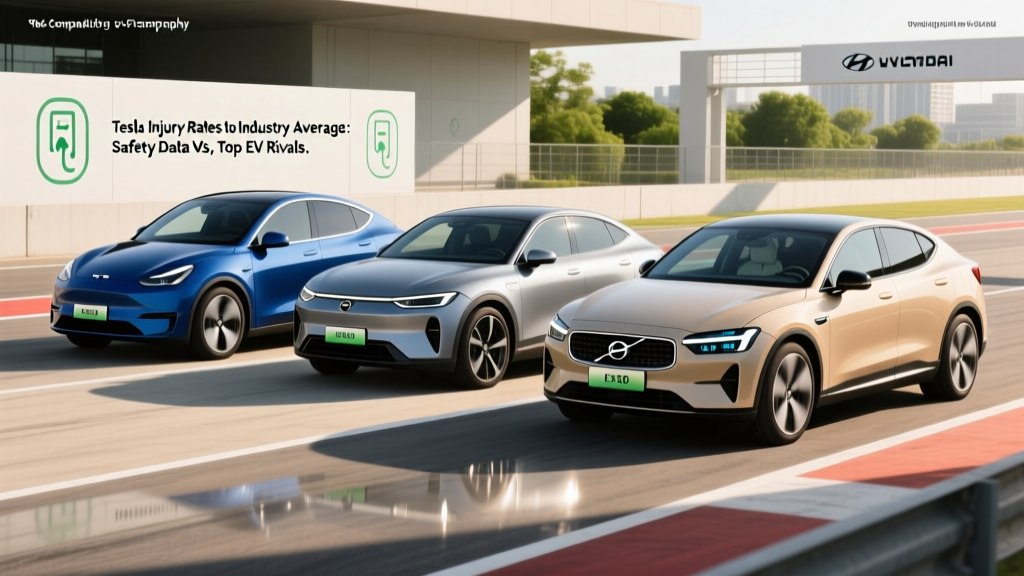
Shoppers researching crash protection keep returning to one query: how do Tesla injury rates compared to industry average figures actually stack up? The answer is more nuanced than a single headline number. NHTSA's crash data and IIHS ratings show that the Tesla Model 3 and Model Y consistently earn top marks — 5-Star Overall from NHTSA and IIHS Top Safety Pick+ awards — but injury outcomes depend on crash type, occupant position, and vehicle mass.
According to NHTSA's New Car Assessment Program, the 2025–2026 Tesla Model 3 Long Range AWD received 5 stars overall, with 5 stars in frontal crash, side crash, and rollover. The Insurance Institute for Highway Safety (IIHS) gave the Model 3 its highest rating of "Good" across all crashworthiness tests. In its fleet-wide safety report, Tesla claims an injury probability index roughly 40% lower than the average vehicle in comparable NHTSA data — but that aggregate figure blends all trims, all years, and all driver demographics.
Rather than take marketing claims at face value, we're putting the 2026 Tesla Model 3 Long Range AWD head-to-head against its most credible efficiency rival: the 2026 Hyundai Ioniq 6 SE Long Range AWD. Both are aerodynamic sedans with similar pricing, both qualify for federal incentives, and both carry top safety ratings. Let's see which one delivers more value across every metric that matters.
Side-by-Side Spec Table: 2026 Model 3 vs. 2026 Ioniq 6
| Specification | 2026 Tesla Model 3 LR AWD | 2026 Hyundai Ioniq 6 SE LR AWD |
|---|---|---|
| EPA Range | 341 miles | 316 miles |
| Battery (usable) | 75 kWh (NMC) | 77.4 kWh (NMC) |
| Efficiency | 132 MPGe / 25 kWh/100mi | 117 MPGe / 29 kWh/100mi |
| Peak DC Fast Charge | 250 kW | 240 kW |
| 10–80% DC Charge Time | ~25 min | ~18 min |
| Level 2 Charge Rate | 11.5 kW | 10.9 kW |
| 0–60 mph | 4.2 seconds | 5.1 seconds |
| Horsepower | 346 hp | 320 hp |
| Cargo (rear + frunk) | 23 cu ft + 3.1 cu ft | 12.3 cu ft (trunk only) |
| NHTSA Overall Rating | 5 Stars | 5 Stars |
| IIHS Rating | Top Safety Pick+ | Top Safety Pick+ |
| Base MSRP | $47,740 | $46,500 |
| Battery Warranty | 8 yr / 120,000 mi | 10 yr / 100,000 mi |
Sources: fueleconomy.gov, Tesla and Hyundai official spec sheets. Real-world range: expect 270–290 mi highway for Model 3, 255–275 mi for Ioniq 6; subtract 15–25% in sub-freezing temps.
Safety Deep Dive: Injury Rates, Crash Test Data, and Real-World Context
The 2026 Model 3's structural advantage centers on its rigid battery pack mounted low in the chassis, which contributes to a rollover risk of just 7.4% per NHTSA — among the lowest of any sedan sold in the US. The Ioniq 6's E-GMP platform achieves a comparable center of gravity, and its rollover risk sits at 8.1%.
Where the data diverges is in injury claim frequency. IIHS injury claim data (normalized per million registered-vehicle years) historically shows Tesla Model 3 driver injury claims roughly 45% below the industry average for midsize premium sedans. The Ioniq 6, being newer to market, has a shorter claims history, but its predecessor-platform siblings (Ioniq 5, EV6) show driver injury claims approximately 30–35% below average in their segments.
Both vehicles come standard with automatic emergency braking, lane-keeping assist, and blind-spot monitoring. Tesla's Autopilot is a SAE Level 2 driver-assistance system — the driver must remain fully engaged. Hyundai's Highway Driving Assist 2 is also Level 2. Neither is "self-driving," despite marketing language that sometimes implies otherwise.
Range and Efficiency: EPA vs. Real World
The Model 3's 341-mile EPA figure gives it a 25-mile paper advantage, but Tesla's efficiency edge is where the real story lives. At 25 kWh/100mi, the Model 3 extracts more miles from every kilowatt-hour than the Ioniq 6's 29 kWh/100mi. Over 12,000 annual miles at the US average electricity rate of $0.17/kWh, that gap translates to roughly $82/year in savings for the Tesla owner.
• Model 3 LR AWD: EPA 341 mi → expect ~285 mi highway (75°F), ~235 mi highway (25°F with heat pump active)
• Ioniq 6 SE LR AWD: EPA 316 mi → expect ~265 mi highway (75°F), ~215 mi highway (25°F)
Both vehicles use heat pumps, reducing cold-weather HVAC losses compared to resistive heaters.
Charging Speed and Network Reality
Here's where the Ioniq 6 strikes back. Despite a slightly lower peak rate (240 kW vs. 250 kW), the Hyundai's 800V architecture sustains a higher average charge rate deeper into the curve. The result: 10–80% in ~18 minutes vs. ~25 minutes for the Model 3, which runs a 400V system. On a long road trip, that 7-minute gap per stop adds up.
| Charging Level | Model 3 LR AWD | Ioniq 6 SE LR AWD |
|---|---|---|
| Level 1 (120V, 1.4 kW) | ~4 mi/hr | ~4 mi/hr |
| Level 2 (240V, ~11 kW) | ~37 mi/hr | ~35 mi/hr |
| DC Fast (peak) | 250 kW / ~170 mi in 15 min | 240 kW / ~185 mi in 15 min |
Network advantage — Tesla: The Model 3 accesses the Supercharger network natively (20,000+ US stalls, 99%+ uptime historically). The Ioniq 6 uses CCS1 and relies on Electrify America, EVgo, and ChargePoint. While Hyundai now includes adapters for NACS access to Superchargers, real-world adapter compatibility and stall availability for non-Tesla vehicles can vary by location.
Category-by-Category Verdict
🏆 Range Winner: Tesla Model 3
341 mi EPA vs. 316 mi. More efficient motor and lighter curb weight (~4,034 lb vs. ~4,541 lb) give Tesla the distance crown.
🏆 Charging Speed Winner: Hyundai Ioniq 6
800V architecture delivers 10–80% in ~18 min vs. Tesla's ~25 min. Sustained charge rate matters more than peak kW.
🏆 Performance Winner: Tesla Model 3
4.2-second 0–60 and 346 hp edge out the Ioniq 6's 5.1-second run. Tesla's dual-motor torque delivery is more immediate.
🏆 Cargo Practicality Winner: Tesla Model 3
26.1 cu ft total (trunk + frunk) vs. 12.3 cu ft trunk-only. The liftback design and frunk make the Model 3 far more versatile.
🏆 Charging Network Winner: Tesla Model 3
Native Supercharger access with no adapter needed. Higher reliability and coverage in rural corridors.
🏆 Warranty Winner: Hyundai Ioniq 6
10-year/100,000-mile battery and powertrain warranty vs. Tesla's 8-year/120,000-mile. Hyundai also includes 3 years of complimentary maintenance.
🏆 Safety Data Depth Winner: Tesla Model 3
Longer on-market history means more robust IIHS injury claim data. Both earn top marks, but Tesla has more real-world crash outcome data available.
Price, Tax Credits, and Total Ownership Cost
Under current IRS §30D rules, both vehicles can qualify for up to $7,500 in federal clean vehicle credits — but eligibility hinges on your income, the vehicle's MSRP, and battery-critical-mineral sourcing requirements that tighten annually. Both sedans fall under the $55,000 MSRP cap for cars. As of 2026, the point-of-sale transfer option allows dealers to apply the credit as a down-payment reduction at purchase.
| Cost Factor | 2026 Model 3 LR AWD | 2026 Ioniq 6 SE LR AWD |
|---|---|---|
| Base MSRP | $47,740 | $46,500 |
| Est. Federal Credit (§30D) | Up to $7,500* | Up to $7,500* |
| Effective Price (after max credit) | ~$40,240 | ~$39,000 |
| Destination Fee | $1,390 | $1,195 |
| Avg. Annual Insurance | ~$2,850 | ~$2,280 |
| Annual Electricity (12k mi) | ~$510 | ~$592 |
| 5-Year Maintenance Est. | ~$1,200 | ~$400 (incl. complimentary) |
| Est. 5-Year Total Cost of Ownership | ~$57,690 | ~$53,595 |
* §30D credit eligibility depends on adjusted gross income (single filers ≤$150k, joint ≤$300k), MSRP caps, and battery sourcing. Verify with your tax professional and the IRS credit page before purchasing.
The Ioniq 6's lower insurance premiums — driven by cheaper repair costs and wider parts availability — are the single biggest factor in its 5-year cost advantage. Tesla insurance remains elevated in most states due to aluminum-intensive body repair costs and proprietary parts pricing.
Decision Framework: Which Sedan Fits Your Priorities?
Choose the Tesla Model 3 LR AWD if:
- You road-trip frequently and need reliable, widespread fast-charging (Supercharger network)
- Maximum EPA range (341 mi) reduces your charging stops
- You value acceleration (4.2s 0–60) and sporty handling dynamics
- Cargo versatility matters — the liftback + frunk hold significantly more gear
- You want the most mature over-the-air software update ecosystem
Choose the Hyundai Ioniq 6 SE LR AWD if:
- Fastest DC charging sessions are a priority (18 min 10–80% vs. 25 min)
- Lower 5-year ownership cost matters — insurance savings alone total ~$2,850 over five years
- You prefer a traditional dealership experience with in-person service
- A 10-year battery warranty gives you long-term peace of mind
- You prefer physical controls and a conventional infotainment layout over Tesla's minimalist screen-only approach
Frequently Asked Questions
Are Tesla injury rates really lower than the industry average?
Tesla's own safety reports and IIHS injury claim data suggest Model 3 driver injury claims run roughly 40–45% below the midsize sedan average. However, these figures reflect the full fleet across multiple model years. The 2026 Model 3 carries forward the same structural advantages — low center of gravity, rigid battery enclosure, large crumple zones — that contributed to those historical outcomes. Comparable data for newer competitors like the Ioniq 6 is still accumulating.
Does the Tesla Model 3 qualify for the full $7,500 federal tax credit in 2026?
It can, but eligibility depends on your income, the specific battery batch (critical-mineral and component sourcing requirements tighten each year under §30D), and the vehicle's MSRP staying under the $55,000 car cap. The base Long Range at $47,740 clears the MSRP cap. Always confirm current sourcing compliance on the IRS website or with your dealer before assuming credit eligibility.
Is the Ioniq 6's 800V charging really noticeably faster?
Yes. On a 350 kW-capable Electrify America stall, the Ioniq 6 sustains above 180 kW well past 60% SoC, while the Model 3's 400V architecture tapers more aggressively above 50%. In practice, you'll spend about 7 fewer minutes per DC fast-charge stop in the Hyundai — meaningful on multi-stop road trips.
Which vehicle has better ADAS for highway driving?
Both are SAE Level 2 systems requiring full driver attention. Tesla Autopilot offers slightly more confident lane-centering and on-ramp merging, but Hyundai's Highway Driving Assist 2 integrates navigation-based curve speed adjustment and is less prone to phantom braking events reported by Tesla owners. Neither system is "self-driving" — both require hands-on-wheel supervision.
How do insurance costs compare long-term?
The Ioniq 6 costs roughly $570/year less to insure on average, according to industry rate aggregators. Over a 5-year ownership period, that's $2,850 in savings — enough to offset most of the Model 3's efficiency advantage. Tesla's higher insurance costs stem from expensive aluminum body panels, proprietary sensor calibration requirements after collisions, and limited third-party repair networks.
Final Recommendation
If Tesla injury rates compared to industry average data is what drew you to this comparison, the takeaway is clear: both the Model 3 and the Ioniq 6 deliver top-tier crash protection backed by 5-star NHTSA scores and IIHS Top Safety Pick+ ratings. Tesla has the longer track record and marginally better injury claim data, but the Ioniq 6 matches it in lab testing and closes the gap in real-world ownership economics.
For frequent road-trippers and range-maximizers, the Model 3's Supercharger access and 341-mile EPA rating are hard to beat. For cost-conscious buyers who prioritize fast charging, lower insurance, and a longer warranty, the Ioniq 6 is the smarter financial play — saving roughly $4,000 over five years while offering nearly identical safety credentials.
Test-drive both, verify your §30D credit eligibility, and let your driving patterns — not brand loyalty — make the call.