Tesla Cybertruck vs. Rivian R1T: The Ultimate Electric Truck Showdown
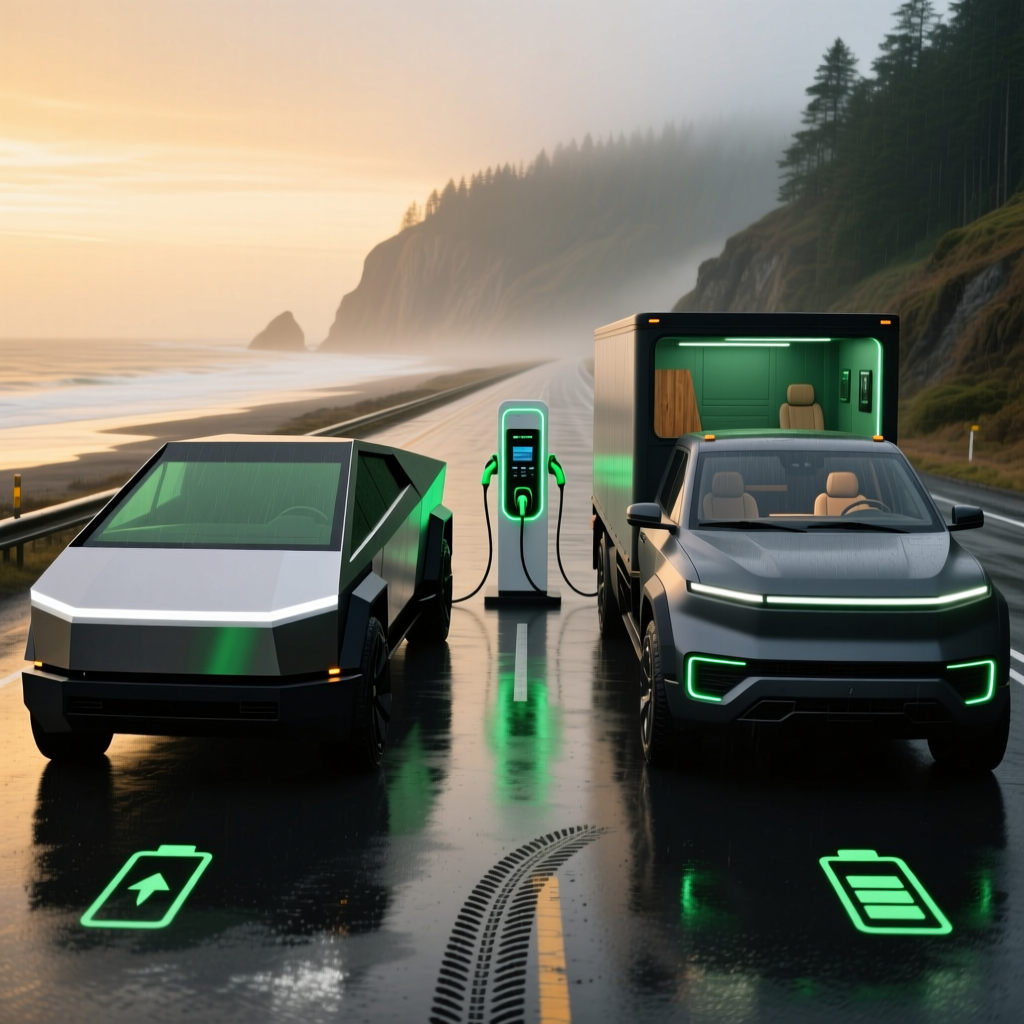
The electric pickup truck segment has exploded into one of the most competitive arenas in the automotive world, and two nameplates sit squarely at the center of the conversation: the Tesla Cybertruck and the Rivian R1T. Both trucks promise zero-emission capability, jaw-dropping performance, and cutting-edge technology — but they approach the pickup formula from radically different philosophies.
The Cybertruck arrives with a polarizing stainless-steel exoskeleton, a minimalist cabin, and Tesla's industry-leading Supercharger network. The Rivian R1T takes a more traditional — yet still adventurous — approach with a refined interior, a versatile gear tunnel, and quad-motor performance that rewrites what a pickup can do on- and off-road.
In this in-depth comparison, we break down every critical category — from range and charging speed to interior space and warranty coverage — so you can decide which electric truck earns a spot in your driveway. For our standalone takes on each model, check out our Tesla Cybertruck review and Rivian R1T review, and see how both stack up in our best electric trucks ranking.
Overview: Two Visions of the Electric Pickup
The Tesla Cybertruck is offered in rear-wheel-drive, all-wheel-drive, and the high-performance Cyberbeast trim. Its angular, cold-rolled stainless-steel body panels are unlike anything else on the road, and its steer-by-wire system replaces the traditional steering column with a yoke-style controller. Tesla positions the Cybertruck as a futuristic utility vehicle that doubles as a performance machine, with a vault-like bed (which Tesla calls the "Vault") featuring a motorized tonneau cover and 67 cubic feet of lockable storage.
The Rivian R1T is available in Dual-Motor, Performance Dual-Motor, and Quad-Motor configurations, with Standard, Large, and Max battery pack options. It leans into the lifestyle-adventure segment with a four-door crew-cab layout, a patented gear tunnel that runs the width of the vehicle, and a camp kitchen accessory that slides out from the tunnel. Rivian's approach blends rugged off-road chops with the refinement of a luxury SUV, making the R1T equally at home on a backcountry trail or a suburban school run.
Both trucks seat five, tow up to 11,000 pounds (Cybertruck) or 11,000 pounds (R1T), and feature adaptive air suspension. But as you'll see below, the details reveal meaningful differences.
Side-by-Side Spec Comparison
| Specification | Tesla Cybertruck (AWD) | Rivian R1T (Dual-Motor Large) |
|---|---|---|
| Starting Price (MSRP) | ~$79,990 | ~$79,900 |
| Powertrain | Dual-Motor AWD | Dual-Motor AWD |
| Horsepower | 600 hp | 533 hp |
| Torque | 743 lb-ft | 610 lb-ft |
| 0–60 mph | 4.1 seconds | 4.5 seconds |
| EPA-Estimated Range | 340 miles | 352 miles |
| Battery Capacity | ~123 kWh | ~128.9 kWh (Large Pack) |
| Max Charging Speed (DC) | ~350 kW (peak) | ~220 kW (peak) |
| Towing Capacity | 11,000 lbs | 11,000 lbs |
| Payload Capacity | 2,500 lbs | 1,764 lbs |
| Bed Length | 6 ft (72 in) | 4 ft 6 in (54 in) + gear tunnel |
| Ground Clearance (max) | 16 in | 14.9 in |
| Wading Depth | Not rated | ~3 ft (36 in) |
| Warranty (Bumper-to-Bumper) | 4 yr / 50,000 mi | 5 yr / 60,000 mi |
| Battery Warranty | 8 yr / 120,000 mi | 8 yr / 175,000 mi |
Note: Specifications reflect the most commonly configured AWD / Dual-Motor variants. Higher-performance trims (Cyberbeast, Quad-Motor R1T) will show different figures. Always verify current pricing & specs with the manufacturer, as EV configurations update frequently.
Range & Efficiency
Range anxiety remains one of the biggest hurdles for prospective EV buyers, and both trucks deliver competitive numbers — but the Rivian R1T edges ahead in EPA-rated distance.
The Tesla Cybertruck AWD carries an EPA-estimated range of 340 miles from its approximately 123 kWh battery pack. The single-motor rear-wheel-drive model is rated slightly higher, while the tri-motor Cyberbeast drops to around 320 miles due to its increased power output. Tesla's energy management software and heat-pump HVAC system help maximize real-world efficiency, though the Cybertruck's brick-like aerodynamics work against it at highway speeds. Independent testing by outlets such as Edmunds has shown that the Cybertruck's real-world highway range can fall to roughly 280–300 miles at sustained 70 mph speeds — a reminder that EPA ratings are best-case laboratory figures.
The Rivian R1T Dual-Motor with the Large Battery Pack earns an EPA-estimated 352 miles of range. Opting for the Max Pack pushes that figure above 400 miles, one of the highest ratings in the electric truck segment. The R1T's more conventional shape gives it a slight aerodynamic advantage at cruising speeds. However, selecting the Quad-Motor trim with larger 21- or 34-inch tires will reduce range noticeably.
Winner: Rivian R1T — The Large Pack R1T offers marginally more EPA-rated range, and the available Max Pack extends the gap significantly for buyers who prioritize distance between charges.
Price & Value
Pricing in the electric truck segment has been volatile, with both Tesla and Rivian adjusting MSRPs multiple times since launch. As of the most recent configurations, the Cybertruck AWD starts around $79,990, while the R1T Dual-Motor Large begins near $79,900. The gap narrows or widens depending on options, destination fees, and applicable federal or state incentives.
Tesla keeps its options list relatively simple. The Cyberbeast performance trim commands a significant premium, while the base rear-wheel-drive model (when available) is positioned as a more affordable entry point. The Cybertruck's stainless-steel body eliminates the need for paint, which keeps costs down and eliminates a common source of cosmetic repairs.
Rivian offers more granular customization. You can mix and match motor configurations, battery packs, wheel sizes, interior materials, and adventure-oriented packages (such as the Off-Road and Camp Kitchen bundles). This flexibility means an R1T can be configured from the mid-$70,000s all the way past $100,000 for a fully loaded Quad-Motor Max Pack model.
When it comes to total cost of ownership, Tesla's extensive Supercharger network — often cited as the most reliable & widespread DC fast-charging infrastructure in North America — can reduce long-range travel costs. Rivian owners have access to the Rivian Adventure Network (still expanding) and can use adapters to access Tesla Superchargers & other third-party networks.
Winner: Tie — Base pricing is nearly identical. Tesla wins on charging infrastructure convenience; Rivian wins on configurability. See our best electric trucks guide for how value factors into our rankings.
Charging Speed
Fast-charging capability is critical for truck owners who plan to tow or take road trips. Here, Tesla holds a clear technical advantage.
The Cybertruck supports peak DC fast-charging rates of approximately 350 kW on compatible V4 Supercharger stalls. Tesla claims the Cybertruck can recover up to 136 miles of range in roughly 15 minutes under optimal conditions. The truck uses a NACS (North American Charging Standard) connector natively, which is rapidly becoming the industry standard.
The Rivian R1T peaks at around 220 kW on DC fast chargers. In practice, the R1T can add approximately 140 miles of range in about 20 minutes. Rivian uses a CCS connector but provides a NACS adapter so owners can access Tesla Supercharger stations. Rivian's Adventure Network chargers, strategically placed near popular outdoor destinations, are designed specifically for trucks & SUVs with pull-through stalls.
While the Cybertruck charges faster on paper, real-world charging curves matter. Both trucks taper charging speed significantly as the battery approaches 80% state of charge. For daily Level 2 home charging (240V), both vehicles add roughly 25–40 miles of range per hour depending on the amperage of the home charger.
Winner: Tesla Cybertruck — Higher peak charging speeds and native access to the most robust fast-charging network give the Cybertruck the edge for road-trippers and frequent travelers.
Performance & Off-Road Capability
Both trucks deliver sports-car acceleration in a pickup body, but they diverge when the pavement ends.
On-Road Performance
The Cybertruck AWD hits 60 mph in approximately 4.1 seconds, while the tri-motor Cyberbeast shaves that down to an astonishing 2.6 seconds — making it one of the quickest production pickups ever built. Tesla's steer-by-wire system and rear-wheel steering give the Cybertruck a surprisingly tight turning radius (under 35 feet), though some drivers need time to adjust to the yoke-style steering wheel.
The R1T Dual-Motor reaches 60 mph in about 4.5 seconds, while the Quad-Motor variant demolishes the sprint in roughly 3.0 seconds. Rivian's Quad-Motor system uses an individual motor at each wheel, enabling true torque vectoring and features like Tank Turns, which can rotate the truck nearly in place — a party trick that's also genuinely useful on tight trails.
Off-Road Capability
The Rivian R1T was engineered from the ground up for off-road duty. It offers up to 14.9 inches of ground clearance via its air suspension, 36 inches of water fording depth, and approach/departure/breakover angles that rival dedicated off-road SUVs. Rivian also provides dedicated drive modes for rock crawling, sand, snow, and towing.
The Cybertruck matches or exceeds the R1T on ground clearance at up to 16 inches and features adaptive air suspension with similar ride-height adjustability. However, its stainless-steel body — while dent-resistant — can be prone to fingerprint smudges and cosmetic scratches. Tesla has not published an official water-fording depth, and early owner reports suggest caution around deep water crossings. The Cybertruck's steer-by-wire system, while innovative, lacks the tactile feedback that serious off-roaders often prefer.
Winner: Rivian R1T for dedicated off-road use (water fording, torque vectoring, proven trail modes). The Cybertruck wins on sheer straight-line acceleration. For more on off-road EVs, see our best electric SUVs roundup, which includes several trail-capable picks.
Interior Space & Cargo Versatility
The interior philosophies of these two trucks couldn't be more different.
Cabin Comfort & Design
The Cybertruck embraces radical minimalism. A single 18.5-inch touchscreen dominates the dash, and nearly all vehicle controls — including glove box release, mirror adjustment, and climate settings — are buried in the touchscreen interface. The cabin materials are vegan leather and microfiber, with a clean, almost austere aesthetic. Rear-seat passengers get a dedicated 9.4-inch touchscreen and surprisingly generous legroom, though the sloping roofline limits headroom for taller riders. A front trunk (frunk) is notably absent on the Cybertruck, a trade-off for its front-mounted cabin air filtration system.
The Rivian R1T feels more like a luxury SUV inside. Natural wood trim, available Nappa leather, and a thoughtfully laid-out dashboard create a warm, premium environment. The R1T retains physical buttons for critical functions like drive-mode selection and hazard lights — a usability advantage over the Cybertruck's screen-centric approach. Rear-seat comfort is excellent, with ample headroom, legroom, and under-seat storage cubbies.
Cargo & Bed Utility
The Cybertruck's Vault measures six feet long with the tailgate up and extends further with the tailgate down. The motorized retractable tonneau cover is rated to support 300 pounds, and the bed includes built-in LED light bars, 120V and 240V power outlets, and integrated ramps. The absence of a frunk is a notable omission for an EV, but the Cybertruck compensates with lockable under-bed storage (the "sub-trunk") and sail pillars that double as structural reinforcement.
The Rivian R1T's bed is shorter at 4 feet 6 inches, but Rivian's ingenious gear tunnel — a 12-cubic-foot pass-through compartment that runs the full width of the truck behind the rear seats — dramatically expands usable storage. The tunnel is ideal for skis, camping gear, or the optional slide-out camp kitchen. The R1T also includes a front trunk (frunk) with approximately 11 cubic feet of lockable, drainable storage — perfect for muddy gear or a cooler of drinks.
Winner: Rivian R1T — The combination of a frunk, gear tunnel, and well-appointed cabin gives the R1T a versatility edge for adventure-oriented lifestyles. The Cybertruck's longer bed is better suited for traditional pickup-duty hauls like lumber or large cargo.
Technology & Safety
Infotainment & Software
Tesla's software ecosystem is arguably the most advanced in the auto industry. Over-the-air (OTA) updates continuously add features, improve performance, and refine the user interface. The Cybertruck's 18.5-inch touchscreen supports streaming media, gaming (with up to 10 teraflops of GPU performance), and a full web browser. Tesla's navigation system integrates real-time Supercharger availability and automatically preconditions the battery for optimal charging upon arrival.
Rivian's infotainment system is also impressive, built on a custom operating system with a 15.6-inch center display and a 12.3-inch digital instrument cluster. The R1T supports wireless Apple CarPlay and Android Auto — a feature Tesla still does not offer. Rivian's OTA updates have been consistently strong, adding features like enhanced driver-assist modes, new drive modes, and UI improvements. The R1T also features a built-in air compressor with a preset tire-pressure function — a handy tool for airing down off-road and re-inflating on the pavement.
Driver Assistance & Safety
Both trucks offer advanced driver-assistance systems (ADAS). Tesla's Autopilot suite includes adaptive cruise control, lane-keeping assist, and automatic emergency braking. The optional Full Self-Driving (Supervised) package adds features like automated lane changes, traffic light recognition, and city-street navigation, though it still requires active driver supervision. According to IIHS and NHTSA data, Tesla vehicles generally earn strong crash-test scores, though the Cybertruck's unique construction has generated some debate in independent safety analyses.
Rivian's Driver+ system provides adaptive cruise control, lane-centering, and highway assist features. The R1T has earned strong marks in safety evaluations, and its more conventional body structure benefits from established crash-engineering principles. Rivian also includes a suite of cameras that provide a 360-degree surround view — invaluable for off-road obstacle avoidance and tight parking situations.
Winner: Tesla Cybertruck on software depth and raw computing power; Rivian R1T on user-friendly interface, smartphone integration, and well-rounded safety features.
Warranty & Ownership Experience
Warranty coverage is an important consideration given the high cost of EV battery replacements.
Tesla provides a 4-year/50,000-mile limited vehicle warranty and an 8-year/120,000-mile battery & drive unit warranty. Tesla's service model relies on mobile service rangers, authorized body shops, and a growing network of service centers. Wait times for service appointments have been a common complaint among Tesla owners, though the company has been expanding capacity.
Rivian offers a more generous 5-year/60,000-mile vehicle warranty and an 8-year/175,000-mile battery warranty — the latter being one of the longest in the industry. Rivian's service network includes dedicated Service Centers and mobile service vans. The company also operates the Rivian Outfitters gear store and offers exclusive owner trips & events through the Rivian Adventure Network, fostering a strong community among R1T owners.
Winner: Rivian R1T — Longer bumper-to-bumper coverage and a substantially more generous battery mileage cap give Rivian the edge in peace of mind.
The Verdict: Which Electric Truck Is Right for You?
Choosing between the Tesla Cybertruck and the Rivian R1T ultimately comes down to your priorities and lifestyle.
Choose the Tesla Cybertruck if you:
- Want the fastest straight-line acceleration available in a pickup truck.
- Value access to the most extensive fast-charging network in North America.
- Prefer a futuristic, minimalist design language & cutting-edge software.
- Need a longer bed for traditional cargo-hauling tasks.
- Enjoy being part of the Tesla ecosystem and its frequent OTA innovations.
Choose the Rivian R1T if you:
- Prioritize off-road capability, including water fording & torque vectoring.
- Want a more refined, luxury-grade interior with physical controls.
- Need maximum cargo versatility (frunk + gear tunnel + bed).
- Prefer longer warranty coverage, especially on the battery pack.
- Value smartphone integration (Apple CarPlay & Android Auto).
Both trucks are outstanding machines that push the boundaries of what a pickup can be. The Cybertruck is a bold, uncompromising statement of Tesla's technological ambition, while the R1T is a thoughtfully engineered adventure vehicle that excels in versatility and real-world usability. Whichever you choose, you'll be driving one of the most capable electric vehicles on the road.
For more head-to-head comparisons, explore our full EV comparison hub, and don't miss our guides to the best electric trucks and best electric SUVs on the market.
Frequently Asked Questions
Can the Tesla Cybertruck or Rivian R1T tow a camper or boat?
Yes. Both trucks are rated to tow up to 11,000 pounds, which covers most travel trailers, boat trailers, and small fifth-wheel campers. However, towing significantly reduces range — expect a 30–50% reduction depending on trailer weight, aerodynamics, and terrain. Tesla's integrated trailer-assist features and the Cybertruck's available range extender battery (when offered) can help mitigate range loss. Rivian's built-in air compressor and dedicated Tow Mode make hitching and trailering more convenient. Always consult the manufacturer's towing guide for your specific configuration.
Which truck is better for off-road adventures?
The Rivian R1T holds a clear advantage for serious off-road use. Its Quad-Motor system enables torque vectoring at each wheel, Tank Turns for tight maneuvering, and up to 36 inches of water fording. Rivian also offers dedicated off-road drive modes and a reinforced underbody. The Cybertruck's 16 inches of ground clearance and durable stainless-steel body are assets, but its unproven water-fording capability and steer-by-wire system may give pause to hardcore trail riders. If off-roading is a top priority, the R1T is the more proven choice. Check our best off-road EVs guide for more options.
How does charging infrastructure compare for each truck?
Tesla's Supercharger network is the gold standard for reliability and coverage, with thousands of stations across North America and increasingly worldwide. The Cybertruck charges natively on Superchargers without adapters. Rivian owners can access Tesla Superchargers using a NACS adapter, and Rivian's own Adventure Network is growing at popular outdoor destinations. For non-Tesla DC fast-charging (Electrify America, EVgo, etc.), both trucks can use adapters as needed. For daily home charging, both trucks perform similarly on Level 2 (240V) chargers. The gap in charging convenience is narrowing as the industry converges on the NACS standard.
Which truck holds its resale value better?
Historically, Tesla vehicles have shown strong resale value retention, though the Cybertruck's polarizing design and limited production volumes make long-term depreciation harder to predict. Rivian, as a newer brand, has less resale history, but the R1T's strong owner satisfaction scores, limited supply, and adventure-lifestyle positioning suggest solid value retention. Independent sources like Kelley Blue Book and Edmunds regularly update depreciation forecasts, so it's worth checking their latest data before purchasing. In general, well-maintained electric trucks from established brands tend to hold value better than sedans, thanks to strong demand in the truck segment.