Quick Answer: Are Stoker Electric Cargo Bikes Worth It Over an EV?
Stoker electric cargo bikes (priced roughly $4,000–$7,000 depending on model and build) can replace 40–60% of daily car trips for urban and suburban households. A 5-year ownership comparison shows a Stoker cargo e-bike costs approximately $5,800–$8,200 total (purchase + charging + maintenance), while a 2026 Chevrolet Bolt EV costs roughly $31,500–$39,000 total over the same period (purchase after tax credit + charging + insurance + maintenance). However, cargo e-bikes are not a full vehicle replacement — they lack weather protection, highway capability, and passenger safety features. They work best as a second-vehicle substitute or primary commuter in mild climates with bike infrastructure.
What Is a Stoker Electric Cargo Bike?
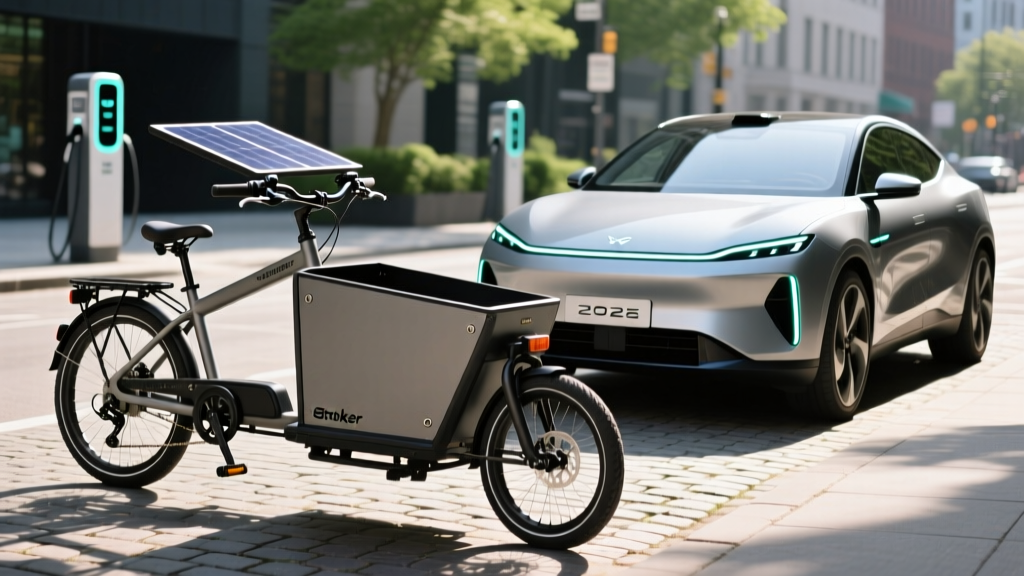
Stoker is a tandem bicycle manufacturer based in California that has expanded into electric-assist cargo bikes. Their cargo models typically feature a long-tail or mid-tail frame designed to haul groceries, children, or work gear, paired with a mid-drive or hub-drive electric motor rated between 250W and 750W (the US Class 1/Class 3 legal limit). Battery packs range from approximately 500 Wh to 1,000 Wh, delivering a real-world assisted range of 30–60 miles per charge depending on cargo weight, terrain, and assist level.
Unlike most mainstream cargo e-bikes from brands like Rad Power, Tern, or Yuba, Stoker emphasizes tandem-capable frames — meaning some models can carry a second rider (stoker) plus cargo, which is a niche within the cargo bike market. This makes them relevant to households evaluating whether a cargo e-bike can genuinely replace one of their two cars.
Stoker Cargo E-Bike vs. a Compact EV: The Numbers
The most useful comparison for a household deciding between a Stoker electric cargo bike and a compact EV is a 5-year total cost of ownership (TCO) analysis. We'll use the 2026 Chevrolet Bolt EV (EPA range 259 miles, MSRP ~$28,900 before incentives) as the EV benchmark, since it represents the affordable end of the EV market.
| Cost Category | Stoker Cargo E-Bike | 2026 Chevy Bolt EV |
|---|---|---|
| Purchase Price | $4,500–$7,000 | $28,900 (MSRP base) |
| Federal Tax Credit (§30D) | $0 (not eligible) | Up to $7,500 (subject to income, MSRP cap, and battery sourcing rules per IRS §30D) |
| Effective Purchase Cost | $4,500–$7,000 | $21,400–$28,900 |
| Annual "Fuel" Cost | ~$30–$50/yr (electricity) | ~$450–$650/yr (electricity at $0.16/kWh avg) |
| 5-Year Fuel/Energy Total | $150–$250 | $2,250–$3,250 |
| Annual Insurance | $0–$150/yr (optional e-bike insurance) | $1,200–$1,800/yr |
| 5-Year Insurance Total | $0–$750 | $6,000–$9,000 |
| Annual Maintenance | $150–$300/yr (tires, chain, brakes, tune-ups) | $300–$500/yr (tires, cabin filter, wipers, software) |
| 5-Year Maintenance Total | $750–$1,500 | $1,500–$2,500 |
| Registration & Fees | $0 | $500–$1,500 (varies by state) |
| 5-Year Total | $5,400–$9,500 | $31,650–$45,150 |
Key takeaway: The Stoker cargo e-bike saves $22,000–$38,000 over 5 years compared to the Bolt EV. But this comparison only holds if the e-bike genuinely replaces the car trips you'd otherwise drive — and that depends heavily on your climate, route, and cargo needs.
Real-World Range: Cargo E-Bike vs. EV
A Stoker cargo e-bike with a 750 Wh battery and a 750W mid-drive motor will deliver approximately:
- 30–40 miles at maximum assist with a 100+ lb cargo load
- 45–60 miles at moderate assist with light cargo or a single rider
- 20–25 miles in cold weather (below 40°F) with heavy assist and cargo
For comparison, the 2026 Chevy Bolt EV delivers an EPA-estimated 259 miles of range from its ~65 kWh battery pack. In real-world highway driving at 70+ mph, expect approximately 220–235 miles. In cold weather (20°F), range drops to roughly 180–200 miles without preconditioning.
The cargo e-bike's range is sufficient for most urban errands (grocery runs, school drop-offs, commuting 5–10 miles each way), but it cannot replicate the EV's intercity capability. If your weekly driving includes a 50-mile highway commute or regular trips outside your metro area, the cargo e-bike supplements a car rather than replacing one.
Charging: Home Access and Costs
One advantage of a Stoker cargo e-bike over an EV is charging simplicity. The battery is removable and charges from any standard 120V household outlet:
- Full charge time: 3–5 hours (500 Wh–1,000 Wh battery, standard 2A charger)
- Cost per full charge: $0.06–$0.12 (at $0.16/kWh national average)
- No electrical upgrades needed: No 240V circuit, no electrician, no permit
By contrast, a home Level 2 EV charger installation typically costs $800–$2,500 (equipment + electrician + permit), and requires a 240V/40A circuit. Renters and apartment dwellers who cannot install home charging face a significant barrier to EV ownership — but not to cargo e-bike ownership, since the battery comes inside with you.
Common Misconceptions: Fact vs. Myth
| Myth | Fact |
|---|---|
| "A cargo e-bike can fully replace my car." | For most households, it replaces 40–60% of trips. Highway travel, heavy rain/snow days, and large cargo loads still require a car or alternative. |
| "E-bikes don't need maintenance." | Cargo e-bikes require chain/ belt service, brake pad replacement ($80–$150), tire changes ($60–$120 each), and eventual battery replacement ($500–$900 after 3–5 years or ~1,000 charge cycles). |
| "EVs are always cheaper to own than gas cars." | EVs save on fuel and maintenance, but higher insurance premiums (+15–25% vs. gas equivalents) and upfront cost mean break-even takes 3–6 years depending on mileage. A cargo e-bike eliminates both problems. |
| "E-bike batteries are unreliable." | Quality mid-drive systems (Bosch, Shimano, Brose) used on premium cargo bikes have proven lifespans of 800–1,200 full charge cycles before dropping to 80% capacity. That's 4–6 years of daily use. |
| "I need a car for my kids." | Cargo e-bikes with proper child seats (Yepp, Thule) can safely carry 1–2 children aged 1–8 on protected bike lanes. However, they lack crash protection equivalent to a vehicle's safety cage, airbags, and crumple zones. |
When a Stoker Cargo E-Bike Makes Sense (Decision Framework)
If X, Then Y: Should You Buy the Cargo E-Bike or the EV?
Choose the Stoker cargo e-bike if:
- Your daily round-trip commute is under 20 miles
- You live in a mild-climate metro area with protected bike infrastructure
- Your household already owns or has access to one car for longer trips
- You cannot install home EV charging (renter, apartment, no garage)
- You want to eliminate a second car payment, insurance, and registration
- Your cargo needs are groceries, 1–2 kids, or work tools under 150 lbs
Choose the compact EV (Bolt, Leaf, Model 3) if:
- You regularly drive more than 30 miles per day or take highway trips
- You live in an area with harsh winters, heavy rain, or extreme heat
- You need to carry more than 2 passengers or heavy/bulky cargo
- You have home charging access or reliable workplace charging
- You qualify for the §30D federal tax credit (income under $150K single / $300K joint, vehicle MSRP under $55K for cars)
- You value crash-test safety ratings (NHTSA 5-star or IIHS Top Safety Pick)
Choose both (the most common answer): Keep one car (EV or PHEV) for long trips and bad weather, and use the Stoker cargo e-bike for daily errands, school runs, and commuting. This combination typically reduces household vehicle expenses by 50–70% while retaining full transportation capability.
What First-Time E-Bike Buyers Should Know
If you're coming from a car-buying mindset, several cargo e-bike ownership realities differ sharply from EVs:
- No federal tax credit: Cargo e-bikes do not qualify for the IRS §30D clean vehicle credit. Some states and utilities offer $300–$1,500 e-bike rebates — check your local programs.
- Theft is a major risk: Cargo e-bikes are high-theft targets. Budget $200–$400 for a U-lock + chain, and consider GPS tracking (AirTag or dedicated tracker). Store indoors when possible.
- Insurance is optional but recommended: Homeowners/renters policies may cover e-bikes up to $2,500; for a $5,000+ Stoker, consider dedicated e-bike insurance (Sundays, Velosurance) at $15–$30/month.
- Battery replacement is inevitable: Plan for a $500–$900 battery replacement in years 4–6. Store the battery between 20–80% charge when not in use to maximize cycle life.
- Class matters: Class 1 e-bikes (pedal-assist only, 20 mph max) are allowed on most bike paths. Class 3 (pedal-assist to 28 mph) may be restricted from some trails. Check local regulations before purchasing.
Frequently Asked Questions
How much does it cost to charge a Stoker electric cargo bike per month?
At the US average electricity rate of $0.16/kWh, charging a 750 Wh battery daily costs approximately $3.60/month. If you ride 5 days per week with partial charges, expect $2–$5/month. This compares to $40–$70/month in electricity for a compact EV driven 1,000 miles/month.
Can I ride a Stoker cargo e-bike in the rain?
Most quality cargo e-bikes are rated IPX4 or IPX5 for water resistance, meaning they handle rain and wet roads. However, the motor and battery connectors should not be submerged. Riders need proper rain gear, fenders, and disc brakes (hydraulic preferred) for wet-weather safety. This is a key limitation versus an enclosed EV.
How long does a cargo e-bike battery last before replacement?
Lithium-ion e-bike batteries (typically NMC chemistry) retain approximately 80% of original capacity after 800–1,200 full charge cycles. With daily charging, that translates to roughly 3–5 years of practical use before noticeable range reduction. Replacement batteries cost $500–$900 depending on capacity and brand.
Is a Stoker cargo e-bike safer than a regular bicycle?
The electric assist helps maintain consistent speed and accelerates through intersections more quickly, which can improve visibility to drivers. However, the added weight (60–85 lbs for the bike, plus cargo) increases stopping distance and makes crashes more consequential. A helmet (consider a speed-pedelec rated model), lights, and defensive riding are essential. An EV's enclosed safety cage, airbags, and crash-test structure remain categorically safer.
Do Stoker cargo e-bikes qualify for any tax incentives?
Not at the federal level — the IRS §30D credit applies only to four-wheeled vehicles meeting specific battery sourcing, MSRP, and buyer income requirements. However, states like California, Colorado, Massachusetts, and Vermont have enacted e-bike rebate programs offering $300–$1,500 off purchase price. Check your state energy office or utility for current programs.