The Quick Answer: Are Smart Cars Gas or Electric?
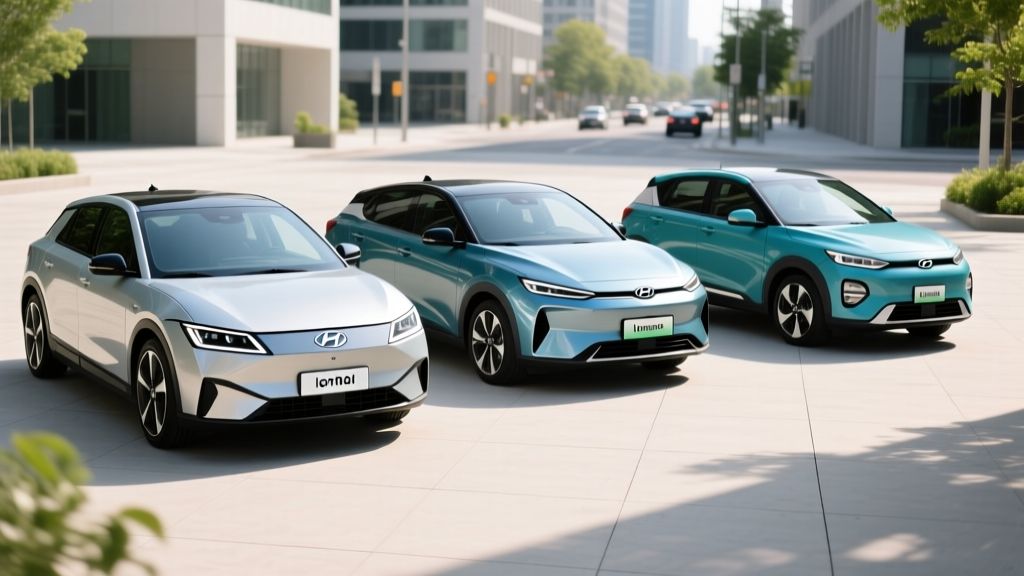
Today, Smart cars are fully electric. The Smart brand discontinued its gasoline-powered Fortwo and Forfour models after the 2019 model year in most markets. Since 2022, Smart has operated as a joint venture between Mercedes-Benz and Geely, producing only battery-electric vehicles (BEVs). The current lineup — the Smart #1 (subcompact crossover) and Smart #3 (coupe-style crossover) — are pure electric vehicles with no internal combustion engine option.
However, Smart EVs are not currently sold in the United States as of 2026. The brand exited the U.S. market after the 2019 model year. If you're asking "are Smart cars gas or electric" because you're considering a used Smart Fortwo, those older models were gasoline-powered (with a brief electric variant). For new purchases, Smart is an EV-only brand available primarily in Europe and Asia.
How Smart Became an Electric-Only Brand
The Smart brand launched in 1998 as a microcar specialist, best known for the two-seat Fortwo — a tiny, gas-powered city car designed for tight European streets. For two decades, Smart sold gasoline models with small three-cylinder engines, and briefly offered the Smart EQ Fortwo (an electric conversion) starting in 2017.
In 2019, Mercedes-Benz parent company Daimler (now Mercedes-Benz Group) formed a 50/50 joint venture with China's Geely Holding Group. The new "Smart Automobile Co." shifted the brand upmarket, abandoning the microcar segment entirely and committing to fully electric compact crossovers built on Geely's Sustainable Experience Architecture (SEA) — the same platform underpinning the Volvo EX30 and Zeekr X.
The result: the Smart #1 (launched 2022) and Smart #3 (launched 2023). Both are five-seat, battery-electric crossovers — dramatically larger and more capable than the old Fortwo, and exclusively electric.
Smart #1 and #3: Current EV Specs and Pricing
Since Smart EVs are not U.S.-market vehicles, the figures below reflect European WLTP testing and pricing. We've included EPA-equivalent estimates where applicable, based on the typical 10-15% reduction from WLTP to EPA standards.
| Specification | Smart #1 Pro+ | Smart #1 Brabus | Smart #3 Pro+ |
|---|---|---|---|
| Battery (usable) | 66 kWh (NMC) | 66 kWh (NMC) | 66 kWh (NMC) |
| WLTP Range | 420 km (~261 mi) | 400 km (~249 mi) | 455 km (~283 mi) |
| Est. EPA Range | ~220-235 mi | ~210-225 mi | ~240-255 mi |
| Motor | Single RWD, 272 hp | Dual AWD, 428 hp | Single RWD, 272 hp |
| 0-100 km/h (0-62 mph) | 6.7 sec | 4.4 sec | 6.7 sec |
| Max DC Fast Charge | 150 kW | 150 kW | 150 kW |
| 10-80% DC Charge Time | ~30 min | ~30 min | ~30 min |
| Level 2 AC Charge | 22 kW (3-phase) | 22 kW (3-phase) | 22 kW (3-phase) |
| EU Base Price | ~€42,000 | ~€49,000 | ~€44,000 |
| Est. U.S. Equivalent | ~$46,000 | ~$54,000 | ~$48,000 |
Real-World Range Reality: The Smart #1 Pro+ carries a WLTP rating of 420 km (~261 mi). In real-world European testing by independent outlets, expect approximately 200-220 miles at highway speeds (70 mph / 110 km/h) in mild weather. Cold-weather highway driving (below freezing) can reduce this to 150-170 miles due to cabin heating demands and battery chemistry limitations. The NMC battery does not include a standard heat pump in all trims — verify this option if buying in cold climates.
Smart EV vs. Gas Subcompact: A Cost and Practicality Comparison
If you're cross-shopping a used gas-powered Smart Fortwo against a modern EV (Smart or otherwise), or comparing the Smart #1 to a gas subcompact like the Honda HR-V or Mazda CX-30, here's how the numbers stack up over five years of ownership.
| Cost Factor (5 Years / 75,000 mi) | Smart #1 Pro+ (EV) | Honda HR-V (Gas) | Smart EQ Fortwo (Used EV) |
|---|---|---|---|
| Purchase Price (est.) | $46,000* | $26,500 | $12,000 (used) |
| Fuel / Energy Cost | $3,750 (home charging, $0.15/kWh) | $7,500 (30 MPG, $3.50/gal) | $2,700 (home charging) |
| Maintenance | $1,200 | $3,000 | $1,500 |
| Insurance (avg.) | $7,500 | $5,500 | $4,500 |
| Depreciation (est.) | $18,000 | $10,000 | $4,000 |
| 5-Year Total Cost | ~$76,450 | ~$52,500 | ~$25,700 |
*Smart #1 pricing is an estimated U.S. equivalent; the vehicle is not currently sold in the U.S. Actual EU pricing applies. Fuel costs assume 12,000 miles/year at 2.8 mi/kWh efficiency for EVs.
Key takeaway: A new Smart #1 EV costs substantially more upfront than a gas subcompact crossover and does not qualify for the U.S. federal §30D tax credit since it is not sold stateside. The used Smart EQ Fortwo offers the lowest total cost but comes with a severely limited 58-mile EPA range and aging battery. For U.S. buyers, competitors like the Chevrolet Equinox EV (~$33,000 after credit) or Hyundai Kona Electric (~$32,975) deliver more range and federal incentive eligibility.
Common Misconceptions About Smart Cars
| Myth | Fact |
|---|---|
| "Smart cars are still tiny two-seaters" | The current Smart #1 and #3 are five-seat compact crossovers — comparable in size to a Volvo EX30 or Mini Countryman. |
| "All Smart cars are electric" | Only post-2022 models (Smart #1, #3) are EV-only. Over 1.5 million gasoline Smart Fortwos were built between 1998-2019. |
| "Smart cars are unsafe because they're small" | The old Fortwo earned mixed crash-test results due to its size. The new Smart #1 earned a 5-star Euro NCAP rating with standard AEB, lane-keep, and multiple airbags. (Euro NCAP) |
| "Smart EVs qualify for the U.S. $7,500 tax credit" | Smart does not sell vehicles in the U.S. market. No Smart model is eligible for the §30D federal credit. (IRS §30D) |
| "Smart is still a Mercedes brand" | Smart is now a 50/50 Mercedes-Benz/Geely joint venture. Mercedes handles design; Geely handles engineering and manufacturing in China. |
What First-Time EV Buyers Should Know Before Considering Smart
If the Smart brand's electric pivot has caught your attention, here are the practical ownership realities that separate marketing from daily life:
Charging Speed vs. Battery Size
The Smart #1's 66 kWh battery paired with a 150 kW peak DC fast-charging rate means a 10-80% charge in approximately 30 minutes. However, charging follows a taper curve — the vehicle will only sustain peak 150 kW briefly (typically between 10-40% state of charge) before throttling down to protect the NMC cells. Expect an average rate closer to 90-100 kW across the full 10-80% session. This is adequate for road trips but slower than competitors like the Hyundai Ioniq 5 (which peaks at 240 kW on 800V architecture).
Home Charging Access Is Non-Negotiable
The Smart #1 supports up to 22 kW AC Level 2 charging on three-phase power — common in Europe but rare in U.S. residential settings. On a standard U.S. 240V/48A Level 2 home charger (11.5 kW), a full charge would take approximately 6-7 hours. Without reliable home charging, owning any EV becomes significantly more expensive and inconvenient, as public DC fast charging costs 2-3x more per kWh than home electricity.
Cold-Weather Range Loss
NMC batteries lose 20-35% of their rated range in sustained sub-freezing temperatures, primarily due to cabin heating energy demands. The Smart #1 does not universally include a heat pump (standard on some trims, optional on others). A heat pump can recover 10-15% of cold-weather range by heating the cabin more efficiently than resistive elements. If you live in a cold climate, confirm heat-pump availability before purchasing any EV.
Decision Framework: Should You Buy a Smart EV?
Choose the Smart #1 or #3 if:
- You live in Europe or Asia where Smart is actively sold and serviced
- You want a premium-badged compact EV crossover in the €40,000-50,000 range
- You prioritize distinctive Mercedes-penned design and a well-trimmed interior
- Your daily commute is under 150 miles and you have reliable home charging
- You value the Brabus performance variant's 4.4-second 0-62 mph time
Look elsewhere if:
- You live in the United States (Smart has no U.S. presence, no service network, and no federal tax credit eligibility)
- You need over 300 miles of EPA-rated range for frequent road trips
- You want the fastest available DC charging (Hyundai/Kia's 800V architecture charges 10-80% in ~18 min)
- You're on a tight budget — U.S.-market EVs like the Chevy Equinox EV or Nissan Leaf start $10,000-$15,000 lower
- You need a tow-rated vehicle (the Smart #1 is not rated for towing)
U.S. Alternatives to the Smart EV
Since Smart does not sell in the U.S., here are the closest American-market equivalents for buyers drawn to the Smart #1's compact-premium-EV concept:
- Volvo EX30: Shares the same Geely SEA platform. Starts at $36,445, offers 265 miles EPA range, and is actually available in U.S. dealerships. (fueleconomy.gov)
- Hyundai Kona Electric: 261 miles EPA range, $32,975 starting MSRP, eligible for the §30D credit (verify current sourcing requirements with your tax professional).
- Mini Cooper SE (2025+): The redesigned electric Mini now offers ~200+ miles of range with a starting price near $30,900, targeting the same urban-premium buyer Smart once courted.
Frequently Asked Questions
Will Smart cars ever return to the United States?
As of 2026, Smart Automobile Co. has not announced U.S. market entry. The brand is focused on Europe, China, Southeast Asia, and select Middle Eastern markets. While Mercedes-Benz's U.S. dealer network could theoretically support Smart sales, no official timeline exists. Industry analysts consider a U.S. return unlikely before 2028 at the earliest.
Are used Smart Fortwo cars still a good buy?
A used gasoline Smart Fortwo (2016-2019) can be found for $8,000-$14,000 and offers 36 MPG combined. However, parts availability is declining as the brand exits markets, and the car's limited cargo space, modest power (89 hp), and poor highway crash-test ratings make it difficult to recommend over a used Honda Fit or Toyota Yaris. The electric Smart EQ Fortwo has only a 58-mile EPA range, making it suitable only as a dedicated city runabout with guaranteed home charging.
What battery chemistry does the Smart #1 use?
The Smart #1 and #3 use NMC (nickel manganese cobalt) lithium-ion cells with 66 kWh of usable capacity. NMC offers higher energy density than LFP (lithium iron phosphate), enabling the compact crossover's ~260-mile range, but NMC cells degrade slightly faster over time and should not be routinely charged to 100% for daily use. Smart recommends an 80% daily charge limit for optimal battery longevity, with the battery warranty covering capacity retention above 70% for 8 years / 160,000 km (99,000 miles).
How does Smart's charging speed compare to rivals?
At 150 kW peak DC charging, the Smart #1 is adequate but not class-leading. The Hyundai Ioniq 5 and Kia EV6 charge at up to 240 kW (10-80% in ~18 minutes) thanks to 800-volt architecture. The Tesla Model Y charges at up to 250 kW on Superchargers. The Smart's 30-minute 10-80% charge time is comparable to the Volkswagen ID.4 (170 kW peak) but noticeably slower than the Korean and American competitors on long road trips.
Does the Smart #1 have Level 2 driver assistance?
Yes. The Smart #1 includes adaptive cruise control, lane-centering assist, automatic emergency braking, and blind-spot monitoring — collectively classified as SAE Level 2 driver assistance. This means the system can control steering and speed simultaneously, but the driver must remain fully engaged, hands on or near the wheel, and eyes on the road at all times. This is not autonomous or "self-driving" capability.