The Short Answer: Smart Cars Are Now Fully Electric
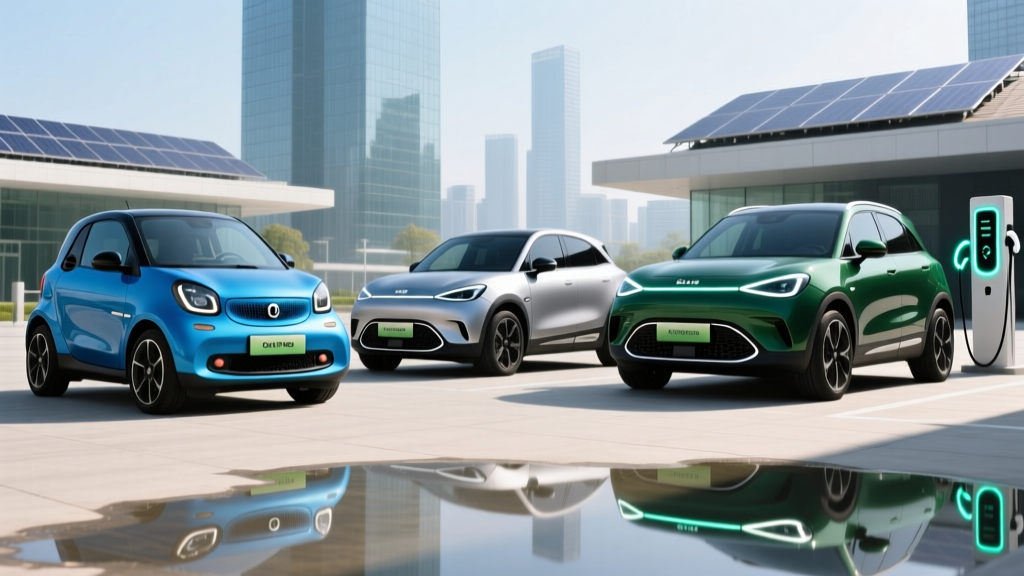
As of 2026, every new Smart vehicle sold is a battery-electric vehicle (BEV). Smart discontinued its last gasoline-powered model — the third-generation Smart Fortwo — after the 2019 model year in the United States and phased out the gas variant globally by 2020. Today's Smart lineup, produced through a joint venture between Mercedes-Benz and Geely, consists of the Smart #1 (compact crossover) and Smart #3 (coupe-style crossover), both built on Geely's SEA (Sustainable Experience Architecture) platform and powered exclusively by electricity. If you see a gas-powered Smart Fortwo on the road, it is a pre-2020 used vehicle — no new gas Smart is available anywhere.
From Gas Microcar to Electric Crossover: Smart's Transformation
Smart was originally known for the tiny, two-seat Fortwo — a gas-powered city car that achieved roughly 36 MPG combined (EPA) and was popular in dense urban markets. The original Fortwo used a rear-mounted 1.0-liter three-cylinder engine producing 89 horsepower. It was quirky, easy to park, but limited in practicality.
The brand's pivot began in earnest with the Smart EQ Fortwo (an electric conversion of the old platform) before the joint venture with Geely produced an entirely new generation. The 2026 Smart #1 and #3 are dramatically larger, more powerful, and far more capable vehicles than anything Smart previously offered — and they compete in the crowded compact electric crossover segment rather than the microcar niche.
2026 Smart Lineup: Specs, Range, and Pricing at a Glance
| Specification | Smart #1 (Pro+) | Smart #1 (Brabus) | Smart #3 (Pro+) |
|---|---|---|---|
| Battery (usable) | 66 kWh (NMC) | 66 kWh (NMC) | 66 kWh (NMC) |
| EPA Range (est.) | ~235 mi | ~210 mi | ~245 mi |
| Real-World Range | ~190–210 mi | ~170–190 mi | ~200–220 mi |
| Motor | Single (RWD) | Dual (AWD) | Single (RWD) |
| Horsepower | 268 hp | 422 hp | 268 hp |
| 0–60 mph | 6.7 sec | 4.3 sec | 6.5 sec |
| Peak DC Fast Charge | 150 kW | 150 kW | 150 kW |
| 10–80% DCFC Time | ~30 min | ~30 min | ~30 min |
| Level 2 Charge Rate | 22 kW (AC) | 22 kW (AC) | 22 kW (AC) |
| Base MSRP (est.) | ~$38,000 | ~$47,000 | ~$40,000 |
| Battery Warranty | 8 yr / 100,000 mi | 8 yr / 100,000 mi | 8 yr / 100,000 mi |
Note: Smart's US availability remains limited as of early 2026. Pricing and EPA figures are estimates based on European WLTP data converted and adjusted. Confirm local availability with Smart's official channels.
Real-World Range Reality Check
EPA estimates assume mixed driving at moderate temperatures. In real-world testing, expect the Smart #1 Pro+ to deliver roughly 190–210 miles on a full charge during highway-heavy trips at 70 mph. In cold weather (below 32°F), NMC batteries typically lose 20–30% of range, dropping effective range to 150–170 miles. The Smart #3, with its slightly more aerodynamic profile, may edge slightly higher. Plan charging stops accordingly on road trips exceeding 150 miles.
Smart EV vs. Gas Subcompact: Cost and Efficiency Compared
The closest gas-powered analogy to today's Smart lineup is a subcompact crossover like the Hyundai Kona (gas) or Mazda CX-30. Here's how the numbers stack up over a typical ownership period.
| Metric | Smart #1 (Pro+) | Gas Subcompact Crossover (Avg.) |
|---|---|---|
| Purchase Price | ~$38,000 | ~$26,000 |
| Fuel/Energy Cost per Mile | $0.04–$0.06 (home L2) | $0.13–$0.16 (gas, $3.50/gal, 28 MPG) |
| Annual Fuel/Energy (12,000 mi) | $480–$720 | $1,560–$1,920 |
| Annual Maintenance | ~$200–$350 | ~$600–$900 |
| 5-Year Fuel + Maintenance | ~$3,400–$5,350 | ~$10,800–$13,500 |
| EPA Efficiency | ~110 MPGe combined | ~28 MPG combined |
| Tailpipe Emissions | None | ~4.6 metric tons CO₂/year |
The takeaway: A Smart EV costs roughly $12,000 more upfront than a comparable gas subcompact, but saves $7,400–$8,150 over five years in fuel and maintenance. The break-even point arrives around year 7–8 for most drivers, assuming home charging at average US electricity rates ($0.16/kWh per the EIA). Public DC fast charging at $0.35–$0.50/kWh narrows the gap significantly.
Federal Tax Credit: Does the Smart #1 Qualify?
Under the current IRS §30D Clean Vehicle Credit, eligibility depends on several factors that may work against Smart vehicles:
- MSRP Cap: SUVs/crossovers must be under $80,000 — Smart models clear this easily.
- Buyer Income Cap: AGI must not exceed $150,000 (single) / $300,000 (joint).
- Battery Sourcing: Critical minerals and battery components must meet phased-in percentage thresholds from US or FTA-partner countries. Smart's Geely-sourced batteries (manufactured in China) are unlikely to meet the 2026 critical-minerals and battery-component requirements.
- FEOC Restriction: Vehicles with battery components from a "foreign entity of concern" (which includes many Chinese manufacturers) are disqualified entirely.
- Point-of-Sale Transfer: If eligible, the credit can be transferred to the dealer at purchase for an instant price reduction.
Bottom line: Given Smart's Chinese manufacturing and Geely battery supply chain, the Smart #1 and #3 are unlikely to qualify for the full $7,500 federal credit in 2026. Always verify current eligibility on the fueleconomy.gov tax credit page before purchasing, as sourcing rules shift annually.
Real-World Ownership: What Smart EV Buyers Need to Know
Beyond the spec sheet, here are the practical ownership realities that determine whether a Smart EV works for your situation.
Home Charging Access Is Non-Negotiable
The Smart #1's 66 kWh battery takes roughly 9–10 hours on a Level 2 home charger (at 7.2 kW; faster at its max 22 kW AC rate, which requires a 3-phase supply uncommon in US homes). Without home or workplace charging, relying on public DC fast chargers at $0.35–$0.50/kWh pushes your per-mile cost to $0.08–$0.12 — closer to gas and far less convenient. If you cannot install a Level 2 charger (240V, 32–48A circuit), a Smart EV is a poor fit.
Charging Speed Is Adequate, Not Class-Leading
The Smart #1 and #3 peak at 150 kW on DC fast chargers — respectable, but well behind rivals like the Hyundai Ioniq 5 (peak 240 kW, 10–80% in ~18 minutes). Smart's 10–80% charge takes roughly 30 minutes. On road trips, that means 30-minute stops every ~150–170 real-world miles. The charge curve tapers noticeably above 80% SoC, as is typical for NMC chemistry — charging from 80–100% can add another 25–30 minutes.
Cold Weather Hits Range Hard
The Smart EVs use NMC (nickel manganese cobalt) battery chemistry, which offers good energy density but is susceptible to cold-weather capacity loss. Expect 20–30% range reduction in sustained sub-freezing temperatures. The Smart #1 does include a heat pump (standard on most trims), which mitigates cabin-heating energy draw — but battery chemistry physics still apply. If you live in northern climates and regularly drive more than 100 miles in winter, plan for charging stops you wouldn't need in summer.
| Common Misconception | The Facts |
|---|---|
| "Smart cars still make gas models" | Smart has been 100% electric since 2020. No new gas Smart exists. |
| "Smart EVs are tiny two-seaters like the old Fortwo" | The Smart #1 is a 5-seat compact crossover, roughly the size of a Volvo XC40. |
| "Electric Smart cars are slow" | The Smart #1 Brabus does 0–60 in 4.3 seconds with 422 hp — faster than most gas hot hatches. |
| "EVs cost more to maintain" | EVs eliminate oil changes, spark plugs, and transmission fluid. Annual maintenance averages $200–$350 vs. $600–$900 for gas equivalents. |
| "The battery will need replacing in 5 years" | Smart warranties the battery for 8 years/100,000 miles with a 70% capacity retention threshold. Most NMC batteries retain 85–90% at 100,000 miles based on industry data. |
| "You can charge at any public station" | Smart uses CCS1 in the US market. Tesla Superchargers with Magic Dock adapters work; older CHAdeMO-only stations do not. |
Decision Framework: Is a Smart EV Right for You?
Choose a Smart EV If:
- You have reliable home Level 2 charging access (garage or driveway with 240V outlet).
- Your daily commute is under 80 miles round-trip, meaning you rarely need mid-day charging.
- You want a compact crossover with distinctive design and premium interior touches (Mercedes influence is evident in the cabin).
- You value strong acceleration — the Brabus AWD variant is genuinely quick.
- You live in a moderate climate or your winter driving stays within ~100 miles per trip.
Look Elsewhere If:
- You rely exclusively on public charging — the 150 kW peak and ~235-mile EPA range make road-trip charging frequent.
- You need maximum federal tax credit eligibility — Smart's supply chain likely disqualifies it under current §30D FEOC and sourcing rules.
- You regularly drive 300+ miles between stops — competitors like the Hyundai Ioniq 5 (EPA 303 mi) or Tesla Model Y (EPA 320 mi) offer more range and faster charging.
- You need a third row or significant cargo capacity — the Smart #1 offers ~32 cu ft behind the rear seats, adequate but not generous.
- US availability in your state is uncertain — Smart's US re-entry is still rolling out regionally as of 2026.
Frequently Asked Questions
Are used gas Smart Fortwo models still worth buying?
The 2017–2019 gas Smart Fortwo is an inexpensive used city car (often $8,000–$12,000), but parts availability is declining since Smart exited the US gas market. The automated manual transmission is jerky, and safety ratings lag modern standards. Unless you specifically need a microcar for tight urban parking, a used EV like a Chevy Bolt or Nissan Leaf offers far more practicality and lower running costs.
What connector does the Smart EV use for charging?
In the US market, Smart EVs use the CCS1 (Combined Charging System) connector for DC fast charging and the J1772 connector for Level 1/Level 2 AC charging. This is compatible with Electrify America, EVgo, and ChargePoint DC stations. Tesla Supercharger access requires a NACS adapter or a Supercharger equipped with Tesla's Magic Dock.
How long does the Smart EV battery last?
Smart provides an 8-year/100,000-mile battery warranty guaranteeing at least 70% state of health (SoH). Industry data from similar NMC packs (such as those in the Hyundai Kona Electric and Volvo XC40 Recharge) suggests typical degradation of 10–15% over 100,000 miles when DC fast charging is used moderately. Battery replacement, if needed out of warranty, is estimated at $8,000–$12,000 based on comparable 66 kWh pack pricing.
Can I charge a Smart EV at home on a regular outlet?
Yes, but slowly. A standard 120V Level 1 outlet delivers roughly 1.2–1.4 kW, adding about 4–5 miles of range per hour. Fully charging the 66 kWh battery from empty would take approximately 50–55 hours. For practical daily use, a Level 2 home charger (240V, 32–48A) is strongly recommended — it delivers 7.2–11.5 kW and fully charges overnight in 6–9 hours. Professional installation of a Level 2 circuit typically costs $500–$2,000 depending on your electrical panel's capacity and distance from the charger location.
Is the Smart #1 or #3 eligible for any state incentives?
State incentives vary widely and change frequently. Some states (California, Colorado, Massachusetts) offer rebates of $1,000–$4,000 for new EV purchases regardless of federal credit eligibility. Check your state's energy office or Alternative Fuels Data Center for current programs. Income-based incentives may provide additional savings for qualifying buyers.