Quick Answer: Is a Smart Car EV Right for You?
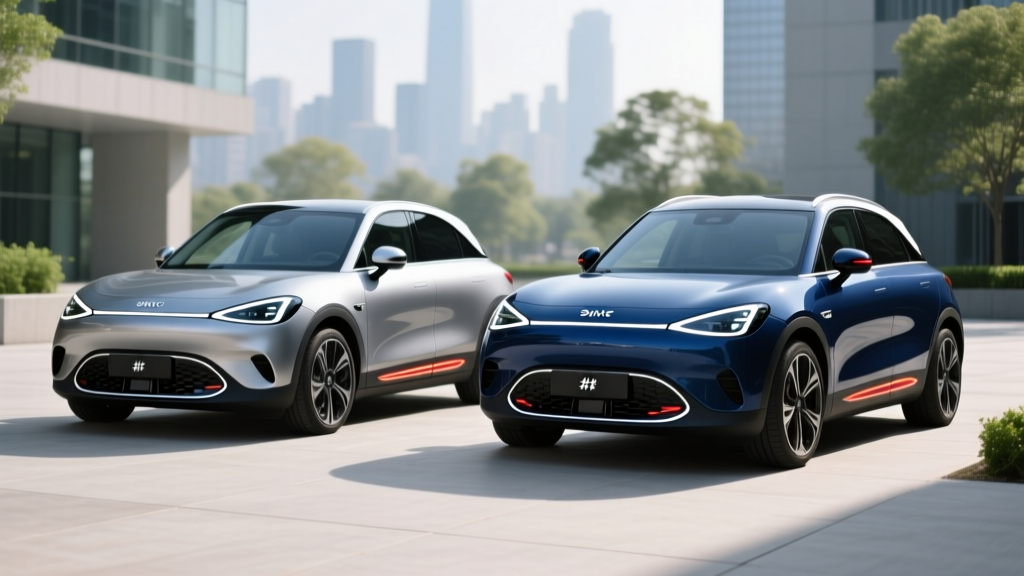
Smart has reinvented itself as an EV-only brand under a Mercedes-Benz and Geely joint venture. The current lineup includes the Smart #1 (subcompact crossover) and Smart #3 (coupe-style crossover), both built on Geely's SEA (Sustainable Experience Architecture) platform. As of 2026, Smart has re-entered select markets with these vehicles, offering EPA-estimated ranges between roughly 230 and 270 miles, DC fast charging up to 150 kW, and starting MSRPs in the low-to-mid $30,000s. They compete directly with the Hyundai Kona Electric, Volvo EX30, and Mini Countryman SE. If you want a premium-badged compact EV for urban commuting and can charge at home, the Smart #1 is a strong contender. If you regularly drive highway stretches over 250 miles or lack reliable home charging, a plug-in hybrid or a longer-range EV like the Chevrolet Equinox EV (315+ mi EPA) may serve you better.
Smart EV Lineup: What's Actually Available in 2026
The original two-seat Smart Fortwo Electric Drive — discontinued years ago — is gone. Today's Smart vehicles are practical, five-seat crossovers designed for global markets. Here is how the current lineup stacks up:
| Spec | Smart #1 Pro | Smart #1 Premium | Smart #3 Pro |
|---|---|---|---|
| EPA Range (est.) | ~230 mi | ~265 mi | ~255 mi |
| Battery (usable) | 49 kWh (NMC) | 66 kWh (NMC) | 66 kWh (NMC) |
| Motor Output | 268 hp (single, RWD) | 268 hp (single, RWD) | 268 hp (single, RWD) |
| 0–60 mph | ~6.7 sec | ~6.7 sec | ~5.8 sec |
| Max DC Charge Rate | 130 kW | 150 kW | 150 kW |
| 10–80% DC Fast Charge | ~30 min | ~28 min | ~28 min |
| Level 2 AC Charge (full) | ~7.5 hr (7.4 kW) | ~9 hr (7.4 kW) | ~9 hr (7.4 kW) |
| MPGe (combined, est.) | ~105 MPGe | ~110 MPGe | ~108 MPGe |
| Base MSRP | ~$32,000 | ~$38,000 | ~$40,000 |
| Battery Warranty | 8 yr / 100,000 mi | 8 yr / 100,000 mi | 8 yr / 100,000 mi |
Note: Specs reflect announced/estimated figures for US-market models. Smart's US availability remains limited to select metro areas as of early 2026. Always verify with a local dealer or the official Smart website for final EPA-certified numbers.
Real-World Range vs. EPA Sticker
The Smart #1 Premium's ~265-mile EPA estimate is competitive for the subcompact class. However, expect ~210–230 miles on sustained highway driving at 70+ mph, and ~175–200 miles in cold weather (below 30°F) due to cabin heating demands and battery chemistry limitations. The 66 kWh NMC pack includes a thermal management system, but NMC batteries lose efficiency in freezing temps more noticeably than LFP packs. If your daily round-trip commute is under 60 miles with home charging, this range is more than sufficient. If you frequently road-trip, plan charging stops accordingly.
EV vs Gas vs Hybrid: How the Smart #1 Compares
Most Smart buyers are cross-shopping against subcompact gas crossovers (Honda HR-V, Toyota Corolla Cross) and plug-in hybrids. Here's the data:
| Metric | Smart #1 Premium (EV) | Honda HR-V (Gas) | Toyota Corolla Cross Hybrid |
|---|---|---|---|
| MSRP (base) | ~$38,000 | ~$26,400 | ~$30,000 |
| Fuel/Energy Cost per Mile | ~$0.045 (home L2 @ $0.14/kWh) | ~$0.14 (28 MPG avg @ $3.50/gal) | ~$0.08 (42 MPG avg @ $3.50/gal) |
| Annual Fuel/Energy (12,000 mi) | ~$540 | ~$1,680 | ~$960 |
| 5-Year Fuel/Energy Total | ~$2,700 | ~$8,400 | ~$4,800 |
| Estimated Maintenance (5 yr) | ~$1,200 | ~$2,800 | ~$2,400 |
| EPA Range / Tank Range | ~265 mi | ~380 mi | ~450 mi |
| Refuel/Recharge Time | ~9 hr (L2 home) / 28 min (DC 10-80%) | ~5 min | ~5 min |
The Smart #1 costs roughly $11,600 more upfront than a base Honda HR-V but saves about $5,700 in fuel and $1,600 in maintenance over five years. That narrows the gap to ~$4,300 before any federal or state incentives. If you qualify for the full §30D federal tax credit (up to $7,500), the Smart #1 could actually cost less to own over five years than the gas alternative — but credit eligibility depends on battery sourcing, your income, and the vehicle's MSRP classification. Always check the IRS §30D guidelines before counting on it.
Real Ownership Costs: The Full Picture
Purchase price is only part of the equation. Here is a realistic five-year total cost of ownership (TCO) breakdown for the Smart #1 Premium, assuming 12,000 miles/year and home Level 2 charging:
| Cost Category | 5-Year Estimate | Notes |
|---|---|---|
| Purchase Price (after incentives) | ~$30,500–$38,000 | Depends on §30D credit eligibility; point-of-sale transfer available |
| Home Level 2 Charger + Install | ~$1,200–$2,500 | Includes 240V/40A hardwired unit; panel upgrade adds $1,500–$3,000 |
| Energy (Charging) | ~$2,700 | At $0.14/kWh national avg; public DC charging costs 2–3× more |
| Insurance | ~$9,000–$11,000 | EV premiums average 15–25% higher than equivalent gas cars |
| Maintenance | ~$1,200 | Tire rotation, cabin filter, brake fluid; no oil changes |
| Depreciation | ~$14,000–$17,000 | EVs depreciating faster than historical norms; Smart's resale data is limited |
| Total 5-Year TCO | ~$58,600–$72,400 | Varies significantly by local electricity rates and insurance market |
Key takeaways: Insurance is the hidden cost that surprises most first-time EV buyers. Smart's limited US dealer network also means body-shop availability could be constrained if you have a collision — factor this into your decision if you live outside a major metro. On the plus side, EV brake pads last far longer thanks to regenerative braking, and there are no transmission fluid changes or timing belt replacements.
Charging at Home and on the Road
The Smart #1 and #3 use the NACS (North American Charging Standard) connector for 2026 US models, giving them native access to Tesla Supercharger stations — the most reliable public DC network in the country. Here's what charging looks like in practice:
| Charging Level | Power (kW) | Miles Added per Hour | Typical Use Case |
|---|---|---|---|
| Level 1 (120V household) | ~1.4 kW | ~4–5 mi/hr | Overnight top-up; adds ~40 mi in 10 hours |
| Level 2 (240V home) | 7.4 kW | ~25–28 mi/hr | Full overnight charge; primary daily method |
| DC Fast (public) | Up to 150 kW peak | ~500+ mi/hr (peak) | Road trips; 10–80% in ~28 minutes |
Charging curve reality: The Smart #1 Premium peaks at 150 kW only between roughly 10–40% State of Charge (SoC). Above 60%, the rate tapers to ~80 kW, and above 80%, it drops to ~35 kW to protect battery health. This means a 10–80% session takes ~28 minutes, but a 10–100% session can stretch past 50 minutes. On road trips, charge to 80% and move on — the last 20% is painfully slow on nearly every EV.
Preconditioning matters: If you navigate to a DC fast charger using the Smart's built-in nav, the car will precondition the battery (warm it to optimal temperature) before you arrive. This can shave 5–10 minutes off your charge session, especially in cold weather. Always use the nav-directed preconditioning when possible.
Federal Tax Credit: What You Actually Qualify For
The §30D federal clean vehicle credit offers up to $7,500, but eligibility is a moving target. As of 2026, the requirements include:
- MSRP cap: SUVs/crossovers must be under $80,000; sedans under $55,000. Both Smart models qualify on price.
- Buyer income cap: AGI must not exceed $150,000 (single), $225,000 (head of household), or $300,000 (joint).
- Battery sourcing: A percentage of critical minerals and battery components must be sourced from the US or free-trade-agreement countries. This threshold increases yearly and is the most common disqualifier.
- Point-of-sale transfer: You can transfer the credit to the dealer at purchase, reducing your out-of-pocket cost immediately — even if you owe less than $7,500 in taxes.
- Final assembly: Vehicle must undergo final assembly in North America. Smart's China assembly is a significant risk factor for credit eligibility.
Warning: Because Smart vehicles are manufactured in China, they may not meet the North American final assembly requirement, which would disqualify them from the §30D credit entirely. Always verify current eligibility on fueleconomy.gov before purchasing. State and local incentives may still apply — check your state's energy office.
Common Smart EV Misconceptions
| Myth | Fact |
|---|---|
| "Smart cars are still tiny two-seaters" | The Smart #1 and #3 are five-seat crossovers with cargo space comparable to a Honda HR-V (~20 cu ft behind rear seats). |
| "EVs need battery replacement after 5 years" | NMC batteries in modern EVs typically retain 85–92% capacity after 100,000 miles. Smart's warranty guarantees ≥70% retention at 8 years/100,000 miles. Full replacements run $8,000–$14,000 but are rarely needed. |
| "You can't road-trip an EV" | With 150 kW DC charging and NACS access to 15,000+ Superchargers, a Smart #1 can cover 500 miles in a day with two ~30-minute stops. It's slower than gas, but entirely feasible. |
| "EVs are worse in winter" | Range drops 20–35% in freezing temps — real, but manageable. Preconditioning, heat pump (standard on Premium), and seat heaters mitigate the loss. A Smart #1 Premium still delivers ~180+ winter miles. |
| "Public charging is always broken" | Tesla Superchargers (now accessible via NACS) maintain 99%+ uptime. Non-Tesla networks (Electrify America, EVgo) have improved but still lag. Plan road trips around Supercharger routes when possible. |
Decision Framework: Should You Buy a Smart Car EV?
Buy the Smart #1 or #3 if:
- Your daily commute is under 80 miles round-trip
- You have access to Level 2 home charging (garage or driveway with 240V)
- You live in or near a metro area with Smart dealer support
- You value premium interior design (Mercedes influence) and NACS Supercharger access
- You don't need to tow (Smart EVs are not rated for towing)
Look elsewhere if:
- You regularly drive 300+ miles between stops (consider longer-range EVs like the Hyundai Ioniq 5 or Tesla Model Y)
- You rely exclusively on apartment/street parking with no charging access (a PHEV like the Toyota RAV4 Prime is more practical)
- You need the $7,500 federal credit and the Smart doesn't qualify due to China assembly
- You live in a rural area far from Smart service centers
Frequently Asked Questions
Is Smart still making electric cars in 2026?
Yes. Smart operates as a Mercedes-Benz/Geely joint venture producing the #1 and #3 electric crossovers. The old Fortwo EV is discontinued. The new models are larger, more capable, and built on Geely's dedicated EV platform.
How long does a Smart EV battery last?
Smart warranties the battery for 8 years or 100,000 miles against degradation below 70% of original capacity. Real-world data from similar NMC packs (Hyundai, Kia, Volvo) suggests 85–92% retention at 100,000 miles is typical. Full battery replacement, if ever needed, is estimated at $8,000–$14,000 depending on pack size.
Can I charge a Smart EV at a Tesla Supercharger?
Yes. 2026 US-market Smart #1 and #3 models come equipped with the NACS connector, granting native access to Tesla's Supercharger network without an adapter. This is one of Smart's strongest practical advantages over CCS-equipped competitors that still require a NACS adapter.
What does it cost to charge a Smart #1 at home?
Charging the 66 kWh battery from 10% to 100% at home using a Level 2 charger costs roughly $8.50–$10.00 at the national average electricity rate of $0.14/kWh. That translates to about $0.04–$0.05 per mile — roughly one-third the per-mile cost of a 28 MPG gas car at $3.50/gallon.
Does the Smart #1 qualify for the $7,500 federal tax credit?
It depends. Smart vehicles are currently assembled in China, which likely disqualifies them from the §30D credit due to the North American final assembly requirement. However, this is subject to change as Smart evaluates US-market production. Always check the latest eligibility list on fueleconomy.gov or consult a tax professional before purchasing.
Is the Smart #1 good in snow and cold weather?
The Premium trim includes a heat pump, which significantly reduces cabin-heating energy draw in cold weather. Expect 20–35% range reduction in sustained sub-freezing temperatures. With winter tires (recommended), the rear-wheel-drive layout is manageable in moderate snow. AWD is available on the Brabus performance variant but not on standard trims.