The Quick Answer: What Is the Smallest Electric Truck?
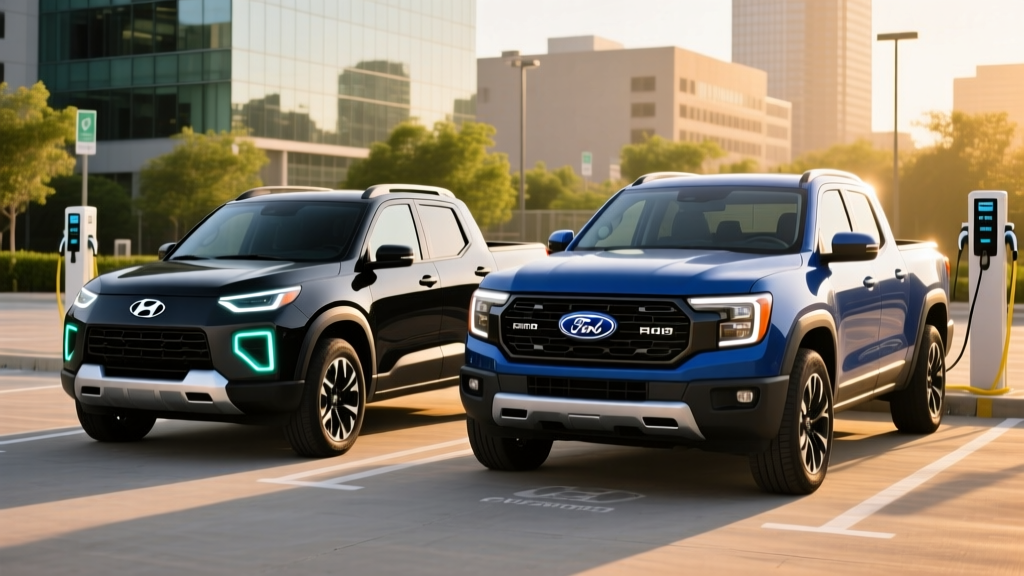
As of the 2026 model year, the Hyundai Santa Cruz EV is the smallest fully electric truck available in the U.S. market. Built on Hyundai's E-GMP platform (shared with the Ioniq 5), it measures 195.7 inches in length with a 4-foot bed, making it a compact unibody pickup. The closest competitor in size, the Ford Maverick, is offered only as a hybrid (HEV) — not a battery-electric vehicle — though Ford has signaled a future Maverick EV. The Santa Cruz EV starts at approximately $36,500 (before incentives), offers an EPA-estimated 290 miles of range, and supports DC fast charging up to 210 kW.
2026 Hyundai Santa Cruz EV: Core Specifications
The Santa Cruz EV fills a gap that has frustrated urban and suburban truck buyers: the desire for a right-sized pickup with zero tailpipe emissions. Here is what the 2026 model delivers on paper and in practice.
| Specification | 2026 Hyundai Santa Cruz EV (SEL AWD) |
|---|---|
| EPA Range | 290 miles (AWD); 310 miles (RWD est.) |
| Battery Capacity | 77.4 kWh usable (NMC chemistry) |
| DC Fast Charge (peak) | 210 kW (10–80% in ~22 min) |
| Level 2 Charge Rate | 10.9 kW (~7.5 hours, 0–100%) |
| Connector | NACS (native Tesla Supercharger access) |
| Motor Output | 320 hp / 446 lb-ft (AWD dual motor) |
| 0–60 mph | 5.1 seconds |
| Towing Capacity | 3,500 lbs (est.) |
| Payload | ~1,400 lbs |
| Bed Length | 4 ft (with lockable tonneau) |
| Base MSRP (SEL AWD) | $38,900 + $1,395 destination |
| Battery/Powertrain Warranty | 10 years / 100,000 miles |
| MPGe (combined) | 98 MPGe (EPA est.) |
Real-World Range Expectations
The EPA sticker says 290 miles for the AWD model. In real-world driving, plan for:
- Highway (70–75 mph): ~240–255 miles — aerodynamic drag hits all pickups hard
- Cold weather (below 30°F): ~215–235 miles — the heat pump helps, but NMC batteries lose 15–25% capacity in deep cold
- City / mixed suburban: ~275–290 miles — regenerative braking recovers energy in stop-and-go traffic
- Towing (2,500+ lbs): ~150–180 miles — towing halves range, just as it halves fuel economy in gas trucks
Source: fueleconomy.gov for EPA figures; real-world estimates based on E-GMP platform testing from Ioniq 5 AWD data.
Smallest Electric Truck vs. Smallest Gas/Hybrid Truck
The natural comparison is the Ford Maverick Hybrid, which occupies the same compact-pickup segment but uses a 2.5L hybrid powertrain. Here is how the numbers stack up for a buyer cross-shopping the two.
| Metric | 2026 Hyundai Santa Cruz EV (AWD) | 2026 Ford Maverick Hybrid (FWD) |
|---|---|---|
| Powertrain | Dual-motor BEV | 2.5L 4-cyl hybrid |
| Base MSRP | $38,900 | $28,995 |
| After $7,500 §30D credit* | ~$31,400 | N/A (not a BEV) |
| EPA Range / Fuel Economy | 290 mi / 98 MPGe | 500+ mi / 42 MPG combined |
| Annual Fuel/Energy Cost (15k mi) | ~$575 (at $0.14/kWh) | ~$1,250 (at $3.25/gal) |
| Annual Maintenance | ~$150 | ~$450 |
| 0–60 mph | 5.1 sec | 7.8 sec |
| Towing | 3,500 lbs | 2,000 lbs (hybrid) |
| Refuel/Recharge Time | ~22 min (10–80% DCFC) | ~5 min (gas station) |
| 5-Year Total Fuel Savings (EV vs hybrid) | ~$3,375 in energy savings for the EV | |
*§30D federal tax credit eligibility depends on buyer income (≤$150k single / ≤$300k joint), MSRP cap ($80k for trucks), and battery critical-mineral sourcing requirements. Verify at IRS.gov. Point-of-sale transfer available at participating dealers.
The Real Cost of Ownership: 5-Year Breakdown
Purchase price tells only part of the story. Here is a 5-year / 75,000-mile total cost of ownership (TCO) estimate assuming home Level 2 charging, average electricity rates, and no major repairs outside warranty.
| Cost Category | Santa Cruz EV (AWD) | Maverick Hybrid (FWD) |
|---|---|---|
| Purchase Price (after credit) | $31,400 | $28,995 |
| Home Charger Install (Level 2) | $800–$1,500 | $0 |
| Fuel/Energy (5 years) | $2,875 | $6,250 |
| Maintenance (5 years) | $750 | $2,250 |
| Insurance (5-year avg) | $9,500 | $7,200 |
| Estimated Depreciation | -$14,000 | -$11,000 |
| 5-Year TCO (approx.) | $31,325 | $33,695 |
The EV edges ahead on TCO primarily through fuel and maintenance savings, though higher insurance premiums (common for EVs due to battery replacement costs in collisions) and steeper depreciation partially offset the advantage. Your mileage — literally — will vary based on local electricity rates, insurance profile, and how well EV resale values hold.
Charging at Home and on the Road
Charging access is the single biggest variable in EV satisfaction. Here is what owning the smallest electric truck actually looks like day-to-day.
Home Charging (Level 2)
The Santa Cruz EV accepts up to 10.9 kW on Level 2, meaning a standard 48-amp home charger (like the ChargePoint Home Flex or Emporia Level 2) will replenish the full 77.4 kWh battery in roughly 7.5 hours — easily overnight.
- Equipment cost: $400–$700 for a quality 48-amp smart charger
- Electrician + permit: $500–$1,200 (assuming your panel has capacity for a 60-amp circuit)
- Panel upgrade (if needed): $1,500–$3,000 for a 200-amp service upgrade — common in older homes
Important: If you live in an apartment or lack off-street parking, home charging may not be feasible. Public Level 2 charging adds significant time and cost. Evaluate your situation honestly before purchasing.
DC Fast Charging (Road Trips)
With native NACS, the Santa Cruz EV accesses the Tesla Supercharger network — currently the most reliable DC fast-charging infrastructure in the U.S. At a V3/V4 Supercharger (250+ kW capable), the truck peaks at 210 kW, charging from 10–80% in approximately 22 minutes.
However, the charging curve tapers significantly above 80%. Going from 80–100% can take an additional 20–25 minutes due to cell-balancing and thermal management. On road trips, plan stops around the 10–80% window for efficiency.
Common Misconceptions About Small Electric Trucks
| Myth | Fact |
|---|---|
| "Electric trucks can't tow." | The Santa Cruz EV tows 3,500 lbs — more than the Maverick hybrid (2,000 lbs). Range drops significantly while towing (~150–180 mi), but for boat launches or light trailers, it works. |
| "The battery will need replacing in 5 years." | NMC batteries on the E-GMP platform show ~8–12% degradation at 100,000 miles based on Ioniq 5 fleet data. Hyundai warranties the battery for 10 years/100,000 miles with a 70% capacity retention threshold. |
| "I'll be stranded without charging." | With 290 miles of range and NACS Supercharger access, the Santa Cruz EV covers most daily driving 4–5 times over. Road-trip planning requires 20-min stops every ~220 miles — inconvenient, but not impossible. |
| "EVs are worse in cold weather." | Range drops 15–25% in sub-freezing temps — a real limitation. However, the Santa Cruz EV's heat pump and battery preconditioning mitigate this better than older EVs. A garage helps enormously. |
| "The $7,500 tax credit is guaranteed." | Eligibility depends on your income, the vehicle's MSRP (must be ≤$80k for trucks), and battery mineral sourcing rules that change annually. Always verify on IRS.gov before assuming you qualify. |
Decision Framework: Should You Buy the Smallest Electric Truck?
Choose the Santa Cruz EV if:
- You have home charging access (garage, driveway, or dedicated parking with outlet)
- Your daily driving is under 80 miles round-trip (covering 90%+ of trips on a single charge)
- You want a truck for light-duty use: bikes, kayaks, small trailers, home-improvement runs
- You qualify for the §30D tax credit (check income and sourcing rules)
- You value low running costs and don't mind 20-min fast-charge stops on road trips
- You live in a region with reliable Supercharger or Electrify America coverage
Choose the Maverick Hybrid (or wait) if:
- You cannot charge at home and public infrastructure near you is sparse
- You regularly drive 300+ miles in a single day (towing, rural routes, sales territory)
- You live in extreme cold (consistently below 10°F) where range loss compounds
- Your budget is strictly under $30,000 and you don't qualify for the federal credit
- You need a 4-foot bed but tow heavier than 3,500 lbs (consider the F-150 Lightning or Rivian R1T instead)
What First-Time EV Buyers Must Know
If the Santa Cruz EV is your first electric vehicle, prepare for these ownership realities:
- Install your Level 2 charger before the truck arrives. Lead times for electricians can be 2–6 weeks. A 240V/48A circuit is the standard for comfortable overnight charging.
- Learn preconditioning. Set your departure time in the Hyundai app so the battery warms to optimal temperature before you leave — this preserves range and enables faster DC charging.
- Download charging apps. PlugShare, A Better Routeplanner (ABRP), and the Tesla app (for Superchargers) are essential for trip planning.
- Budget for insurance. EV insurance averages 15–25% higher than equivalent gas vehicles. Get quotes before signing a purchase agreement.
- Maintenance is minimal but not zero. You will still rotate tires (EVs wear tires faster due to instant torque and heavier weight), replace cabin air filters, and top off washer fluid. Oil changes, transmission service, and exhaust repairs are gone.
- The 12V battery still exists. Like all modern EVs, the Santa Cruz EV has a small 12V battery for electronics. It can die just like a gas car's — keep a lithium jump-starter in the cab.
Frequently Asked Questions
Is the Ford Maverick available as a fully electric truck?
No. As of 2026, the Ford Maverick is offered only as a conventional hybrid (HEV). Ford has discussed a future Maverick EV on a next-generation platform, but nothing is on sale or officially priced. If you need the smallest electric truck today, the Hyundai Santa Cruz EV is the only option in the compact segment.
How long does the Santa Cruz EV battery last?
Hyundai warranties the high-voltage battery for 10 years or 100,000 miles, guaranteeing at least 70% of original capacity. Based on E-GMP platform data from Ioniq 5 owners, real-world degradation at 100,000 miles typically falls between 8–12%. A full battery replacement outside warranty currently costs approximately $12,000–$16,000, though prices are expected to decline as cell costs fall.
Can I charge the Santa Cruz EV at Tesla Superchargers?
Yes. The 2026 Santa Cruz EV comes with a native NACS charge port, meaning it plugs directly into Tesla Superchargers (V3 and V4) without an adapter. This gives you access to over 25,000 Supercharger stalls across North America — the most reliable public charging network currently available.
What is the real-world highway range?
Expect approximately 240–255 miles at sustained highway speeds (70–75 mph) in moderate temperatures. Pickup trucks suffer more aerodynamic drag than sedans or crossovers, which reduces efficiency at speed. In winter or while towing, that figure drops further.
Does the Santa Cruz EV qualify for the $7,500 federal tax credit?
It may, but eligibility is not automatic. Per IRS §30D rules, you must meet income caps ($150,000 single / $300,000 joint AGI), the truck's MSRP must be at or below $80,000 (it is), and the battery must meet critical-mineral and component-sourcing thresholds that tighten each year. The credit can be transferred to the dealer at point of sale as a purchase-price reduction. Confirm eligibility with your tax professional before committing.
How does insurance cost compare to a gas truck?
EV insurance tends to run 15–25% higher due to elevated repair costs (specialized high-voltage training, battery module replacement after collisions). For the Santa Cruz EV, expect annual premiums in the $1,700–$2,100 range depending on your profile, compared to $1,300–$1,600 for a Maverick Hybrid. Shop multiple carriers — some insurers now offer EV-specific discounts.