Quick Answer: Small Electric Motor Boat or EV — Which Should You Buy?
If your primary goal is daily commuting savings, a road-going electric vehicle delivers far more measurable value: the average EV owner saves $800–$1,200/year on fuel and maintenance versus a gas car, with EPA ranges now routinely exceeding 250–350 miles. A small electric motor boat (typically 2–10 kWh battery, 10–30 miles of range) is a niche recreational purchase best suited to lakeside homeowners who boat frequently and want silent, emission-free time on the water. Most buyers should prioritize an EV for daily transport and treat an electric boat as a secondary lifestyle purchase — unless your waterfront usage justifies the investment.
What Exactly Is a Small Electric Motor Boat?
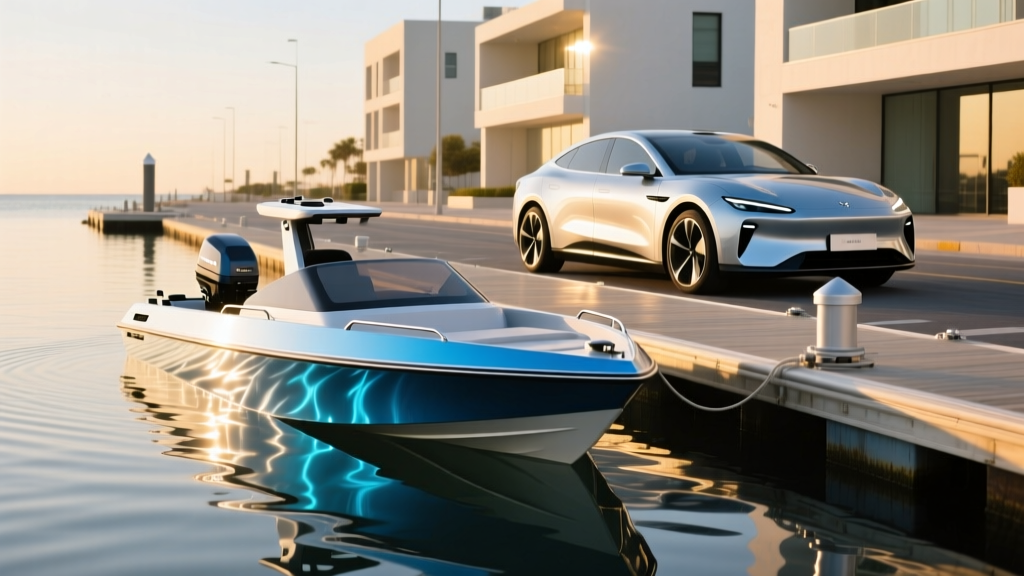
A small electric motor boat is a watercraft — typically a dinghy, pontoon, bass boat, or tender under 20 feet — powered by a battery-electric outboard or inboard motor instead of a gasoline engine. Unlike electric vehicles that benefit from a mature national charging infrastructure, electric boats exist in a far less standardized ecosystem. Battery packs range from 2 kWh to 15 kWh depending on the vessel, and motors typically produce between 3 kW and 20 kW (roughly 4 to 27 horsepower equivalent).
Popular brands in this space include Torqeedo, ePropulsion, and Flux Marine, with complete packages (boat + motor + battery) starting around $8,000 for a basic electric dinghy and climbing past $45,000 for a well-equipped electric pontoon. For context, a comparable gas-powered 10 HP outboard setup costs roughly $3,000–$5,000 less upfront.
It's critical to understand that kW (kilowatts) measures power output — how strong the motor is — while kWh (kilowatt-hours) measures battery capacity — how much energy is stored. A 5 kW motor drawing from a 5 kWh battery will theoretically run at full power for one hour, but real-world usage at mixed throttle yields roughly 2–4 hours of operation, translating to 10–25 miles depending on hull type and water conditions.
Cost Breakdown: Electric Boat vs. Electric Vehicle
The financial comparison between a small electric motor boat and an EV is fundamentally different because they serve different purposes. Here's a concrete look at both:
| Category | Small Electric Motor Boat | Compact EV |
|---|---|---|
| Purchase Price (base) | $12,000–$35,000 | $33,000–$42,000 |
| Federal Tax Credit (§30D) | Not eligible | Up to $7,500 (income/MSRP/sourcing rules apply) |
| Annual "Fuel" / Electricity | $50–$150 (seasonal use) | $500–$800 (daily driving) |
| Annual Maintenance | $100–$300 (winterization, prop, battery storage) | $200–$400 (tires, cabin filter, fluid top-offs) |
| Insurance (annual) | $200–$500 | $1,200–$2,000 |
| 5-Year Total (estimated) | $15,500–$40,000 | $38,500–$51,000 (before credit) / $31,000–$43,500 (after credit) |
| Daily Utility | Recreational only (20–60 days/year for most owners) | Daily transportation (300+ days/year) |
The EV's cost advantage becomes clear when you factor in daily utility and the IRS §30D federal tax credit, which can reduce the effective purchase price by up to $7,500 — subject to buyer income caps ($150K single / $300K joint), MSRP limits ($55K cars / $80K SUVs and trucks), and battery critical-mineral sourcing requirements. Electric boats receive no comparable federal incentive, though some states offer modest clean-marine rebates.
Range, Charging, and Real-World Limitations
Range is where the comparison gets stark. A 2026 compact EV like the Chevrolet Equinox EV offers an EPA-rated 315 miles from its 85 kWh (usable) battery pack, with DC fast charging at up to 150 kW — reaching 10–80% state of charge in roughly 28 minutes. Real-world highway driving at 70 mph typically yields 260–280 miles, and cold-weather operation can reduce that by 15–25%.
A small electric motor boat with a 5 kWh battery offers roughly 15–20 miles at cruising speed (5–7 knots), dropping to 8–12 miles if you push to wide-open throttle. There is no "DC fast charging" standard for small boats: you recharge via a standard 120V household outlet (Level 1 equivalent, adding roughly 1–2 kWh per hour) or a 240V shore-power connection if your dock supports it. A full recharge from empty takes 3–8 hours depending on battery size and outlet type.
| Metric | Small Electric Boat (5 kWh) | Gas Outboard Boat (6 gal tank) | Compact EV (85 kWh) | Gas Compact Car (13 gal tank) |
|---|---|---|---|---|
| Usable Range | 10–20 miles | 40–80 miles | 260–315 miles (real-world/EPA) | 350–450 miles |
| Recharge/Refuel Time | 3–8 hours (120V/240V) | 5 minutes | 28 min (DC fast 10–80%) / 8 hrs (L2 home) | 5 minutes |
| Energy/Fuel Cost per Trip | $0.50–$1.50 | $12–$25 | $3–$8 (home charging) | $30–$45 |
| Infrastructure Availability | Limited (shore power at select marinas) | Widespread (marinas, gas docks) | Growing (home L2 + public DC networks) | Ubiquitous |
The practical takeaway: electric boats are viable for short, predictable loops — a trip across a lake, a couple hours of fishing, or tendering from a mooring to shore. They are not suitable for long-distance cruising, open-water passages, or situations where you might need extended runtime against wind or current. EVs, by contrast, can handle cross-country road trips with planned DC fast-charging stops.
Common Misconceptions — Myth vs. Fact
| Myth | Fact |
|---|---|
| "Electric boats are just as practical as EVs." | Electric boats have 1/20th the range, no fast-charging network, and serve a recreational niche. EVs replace daily transportation; electric boats replace weekend gas outboards. |
| "You can charge an electric boat at any marina." | Most marinas offer 120V or 30-amp/50-amp shore power, but connectors, adapters, and billing vary wildly. Dedicated marine EV-style charging stations are extremely rare as of 2026. |
| "Electric boat batteries last forever." | Marine lithium batteries (typically NMC chemistry) degrade with cycles and calendar age. Expect 70–80% capacity retention after 5–7 years with proper storage. Replacement packs cost $2,000–$6,000. |
| "If I buy an electric boat, I'll get a federal tax credit." | The §30D Clean Vehicle Credit applies only to on-road vehicles meeting IRS sourcing and MSRP requirements. Electric boats, off-road vehicles, and golf carts are excluded. |
| "An electric motor boat will save me as much as an EV." | Boating is seasonal and low-mileage. Even eliminating all gas costs saves most owners $200–$600/year. An EV used daily saves $800–$1,200/year on fuel alone. |
Real-World Ownership Considerations
Before investing in either, honestly assess your situation:
Home charging access: For an EV, a Level 2 home charger (240V, 7–11 kW) is nearly essential for convenient daily use. Installation typically costs $500–$2,000 depending on panel capacity and run length — a 200-amp panel upgrade can add $1,500–$3,000. For an electric boat, you need access to shore power at your dock or a way to bring the battery home for charging. If your marina doesn't offer dedicated charging circuits, you're limited to slower 120V charging or removing the battery pack.
Climate: EV batteries lose 15–30% of range in freezing temperatures, though a heat pump (standard on many 2026 models) mitigates this. Marine lithium batteries face similar cold-weather performance loss and must be stored in a climate-controlled environment during winter to prevent damage — a consideration gas boat owners don't face to the same degree.
Driving/boating patterns: The average American drives 13,500 miles/year (fueleconomy.gov), making an EV's daily savings substantial. The average recreational boater logs 100–300 miles/year on the water. The financial case for electrification scales with usage.
Resale and depreciation: EVs have stabilized in depreciation as the market matures, with mainstream models retaining 50–60% of value at 5 years. Electric boats remain a niche market; resale values are less predictable and depend heavily on brand reputation and battery health.
Decision Framework: Which Should You Buy First?
Choose an Electric Vehicle First If:
- You commute daily and want to eliminate gas costs ($800–$1,200/year savings)
- You have access to home Level 2 charging or can install it
- You qualify for the §30D tax credit (check IRS eligibility rules for income, MSRP, and battery sourcing requirements)
- You need a vehicle for daily transportation, not just recreation
- You drive more than 10,000 miles/year
Choose a Small Electric Motor Boat If:
- You own waterfront property or have a permanent slip with shore-power access
- You boat frequently (40+ days/year) on a lake, calm river, or protected harbor
- You value silent operation and zero exhaust fumes (especially for fishing or swimming)
- Your typical outing is under 15 miles round-trip
- You already have reliable daily transportation and this is a lifestyle upgrade
Choose Both If:
- Your household budget supports a primary EV and a recreational electric boat
- You can charge both at home (EV on a Level 2 circuit, boat battery on a standard outlet)
- Your combined annual savings on gas (road + water) justify the dual investment
What a First-Time EV Buyer Should Know (Even If You're Boat-Shopping)
If you're researching a small electric motor boat, you're likely already interested in electrification. The battery technology, charging principles, and ownership habits overlap significantly with EVs. Here's what transfers:
- kWh is your fuel tank. Whether it's a 5 kWh boat battery or an 85 kWh EV pack, more kWh means more range. Always check the usable capacity, not the gross figure.
- Charge curves matter. Just as EV fast charging slows above 80% state of charge to protect battery health, marine chargers taper as the pack fills. The last 20% can take as long as the first 80%.
- Storage kills batteries. Leaving a lithium pack at 100% or 0% for months degrades it faster than storing at 50–60%. This applies to your boat battery in winter and your EV if you travel frequently.
- Warranties vary widely. EV battery warranties are federally mandated to at least 8 years/100,000 miles (per NHTSA emissions-related warranty guidance). Marine battery warranties are typically 2–3 years with no federal minimum — read the fine print.
Frequently Asked Questions
Can I charge a small electric motor boat using a solar panel?
Yes, but slowly. A typical portable marine solar panel produces 100–200 watts, adding roughly 0.5–1 kWh per day in good sun. That extends range by 1–3 miles — useful for trickle-charging a moored boat but not a primary charging strategy.
Do electric boats require winterization?
Less than gas boats (no engine coolant, fuel stabilizer, or lower-unit gear oil), but the battery must be removed, stored at 50–60% charge, and kept in a dry, temperature-stable environment above freezing. The motor and hull still need standard off-season care.
Is a small electric motor boat eligible for any tax incentives?
Not at the federal level. The §30D Clean Vehicle Credit applies exclusively to on-road motor vehicles. Some states and local utility districts offer rebates for electric marine equipment — check your state energy office or utility provider for current programs.
How long do electric boat batteries last before replacement?
With proper care (avoiding full discharge, storing at partial charge, keeping dry and cool), expect 7–10 years of usable service before capacity drops below 70–80%. Replacement NMC marine battery packs cost $2,000–$6,000 depending on capacity. LFP (lithium iron phosphate) marine packs are emerging and offer longer cycle life but lower energy density — meaning more weight for the same range.
Should I buy an EV or an electric boat if I can only afford one?
For nearly all buyers, the EV delivers more financial and practical value. Daily transportation savings, federal tax credits, and mature charging infrastructure make the EV a rational primary purchase. The electric boat is a compelling secondary investment for waterfront lifestyles.