The Short Answer on Scooty Electric Options
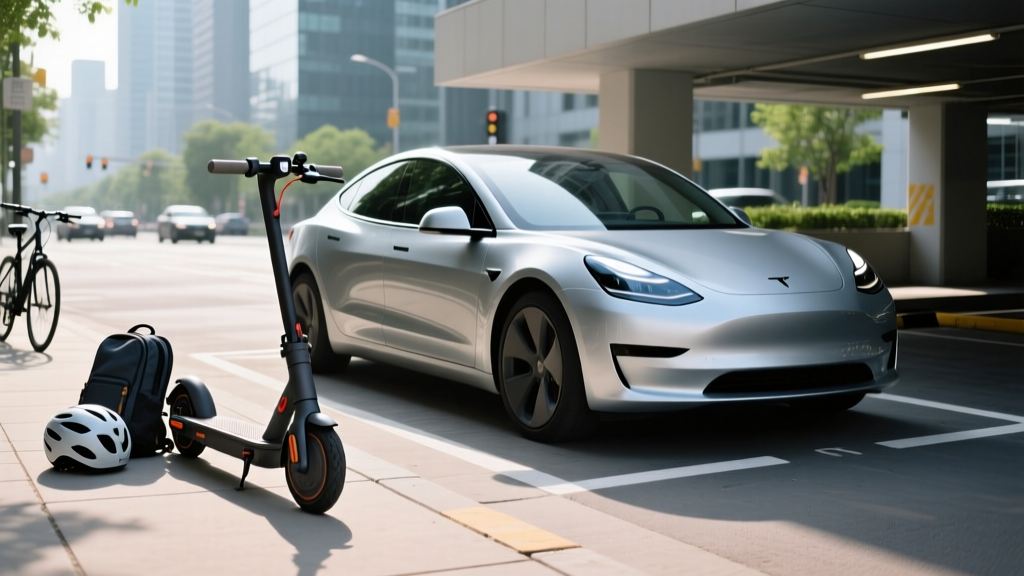
If you're searching for a scooty electric vehicle for daily commuting, you're likely weighing lightweight electric scooters and mopeds against full-size electric cars. Here's the practical truth: electric scooters (typically 1-4 kWh batteries, 25-75 mile range, $1,500-$6,000 purchase price) make sense for solo urban trips under 15 miles in fair weather. Full-size EVs (58-100+ kWh batteries, 230-350+ mile EPA range, $30,000-$55,000 before credits) handle year-round commuting, highway driving, passenger and cargo needs, and cold weather. Your decision hinges on trip distance, climate, passenger needs, and whether you have secure parking with charging access.
What "Scooty Electric" Actually Covers
The term "scooty electric" spans a wide category of lightweight electric two-wheelers — from low-speed neighborhood scooters to highway-capable electric maxi-scooters. At AutoEdgeView, our core focus is electric and hybrid automobiles, but because many buyers cross-shop these options, it's worth breaking down exactly what you get at each tier and where a full EV becomes the more practical choice.
Electric scooters and mopeds generally fall into three tiers:
- Low-speed electric scooters (under 2,000W motor, 1-2 kWh battery): 20-35 mph top speed, 15-30 mile range, $1,200-$3,000. Examples: NIU MQI+, Segway E22.
- Mid-range electric mopeds (3,000-5,000W, 2-4 kWh): 45-60 mph, 35-60 mile range, $3,500-$6,000. Examples: NIU NQi GT, Super73 RX.
- Maxi electric scooters (7,000-12,000W, 5-8 kWh): 60-80+ mph, 60-100 mile range, $8,000-$18,000. Examples: Zero SR/S (classified as motorcycle), BMW CE 04 (~$12,000, ~80 mile range).
Compare that to a compact EV like the 2026 Chevrolet Equinox EV (85 kWh usable battery, 319-mile EPA range, ~$33,600 MSRP before incentives) or the 2026 Hyundai Kona Electric (64.8 kWh, 261-mile EPA range, ~$32,975 MSRP). These vehicles carry 15-85x more battery energy, offer weather protection, and qualify for federal incentives that scooters do not.
Real Cost Comparison: Electric Scooter vs. Compact EV
Numbers drive this decision. Below is a five-year ownership cost breakdown comparing a mid-range electric scooter (representative $4,500 model) with a compact EV (representative $33,000 model, like the Equinox EV or Kona Electric) for a 12-mile round-trip commute, 250 workdays per year.
| Cost Category | Electric Scooter ($4,500) | Compact EV ($33,000) | Gas Compact Car ($25,000) |
|---|---|---|---|
| Purchase Price | $4,500 | $33,000 | $25,000 |
| Federal Tax Credit (§30D) | $0 (not eligible) | Up to $7,500* | $0 |
| Effective Purchase | $4,500 | ~$25,500 | $25,000 |
| Annual Energy Cost | ~$45/yr ($225 total) | ~$480/yr ($2,400 total) | ~$1,200/yr ($6,000 total) |
| Annual Maintenance | ~$100/yr ($500 total) | ~$300/yr ($1,500 total) | ~$700/yr ($3,500 total) |
| Annual Insurance | ~$200/yr ($1,000 total) | ~$1,500/yr ($7,500 total) | ~$1,300/yr ($6,500 total) |
| Registration/Taxes (5yr) | ~$150 | ~$1,500 | ~$1,200 |
| 5-Year Total | ~$6,375 | ~$38,400 | ~$42,200 |
| Cost Per Mile | ~$0.43 | ~$2.56 | ~$2.81 |
*Federal §30D EV tax credit eligibility depends on buyer income caps ($150K single/$300K joint), vehicle MSRP caps ($55K cars/$80K SUVs/trucks), battery sourcing requirements, and point-of-sale transfer rules. Scooters and motorcycles do not qualify for §30D. Always verify current-year rules at IRS.gov. Source: Energy costs based on fueleconomy.gov MPGe data and EIA electricity averages.
The scooter wins on pure cost by a wide margin — but this table assumes fair-weather riding, no passengers, no cargo beyond a backpack, and no highway travel. Add a second vehicle for days the scooter can't serve, and the math changes significantly.
Range, Charging, and Real-World Practicality
This is where the comparison gets nuanced. An electric scooter's small battery charges quickly on a standard 120V outlet (Level 1), which is a genuine advantage for apartment dwellers who can't install a Level 2 home charger. But that same small battery means brutal range loss in cold weather and headwinds.
| Metric | Electric Scooter (4 kWh) | Compact EV (65-85 kWh) | Gas Compact Car |
|---|---|---|---|
| Advertised Range | 40-60 miles | 261-319 miles (EPA) | 350-450 miles |
| Real-World Highway Range | 25-40 miles | 220-280 miles | 300-400 miles |
| Cold-Weather Loss (20°F) | 30-50% range reduction | 20-30% range reduction | Minimal |
| Full Charge Time (120V) | 3-5 hours | 40-60+ hours (impractical) | N/A (5-min refuel) |
| Full Charge Time (240V L2) | N/A (most don't support) | 7-10 hours | N/A |
| DC Fast Charge (10-80%) | Not available | 18-35 min (100-200 kW peak) | N/A |
| Home Charging Access Needed | Standard outlet works | Level 2 strongly recommended | No (gas stations) |
The Cold-Weather Reality
Small lithium-ion batteries on electric scooters suffer disproportionately in cold weather. At 20°F, expect a 4 kWh scooter battery to deliver 20-28 real miles instead of its rated 50. The battery chemistry (typically NMC cells in scooters) loses efficiency, and there's no thermal management system like you'd find in a modern EV with a heat pump. Compact EVs like the Equinox EV and Hyundai Ioniq 5 use active battery thermal management and heat pumps that mitigate cold-weather loss to roughly 20-30%.
Charging Access: The Deciding Factor for Many
One genuine advantage of a scooty electric option: you can charge it from a standard 120V household outlet in 3-5 hours. If you live in an apartment without EV charging infrastructure, this may be your only practical electrified option. A Level 2 home charger installation for a full EV costs $500-$2,500 depending on electrical panel capacity, and some apartment complexes or older homes simply can't support one without a costly panel upgrade ($2,000-$5,000).
However, if you do have access to Level 2 charging at home or work, a compact EV refuels overnight at roughly $0.12-$0.16/kWh nationally (about $8-$14 for a full charge on a 65 kWh battery) and eliminates the need for gas station visits entirely.
Common Misconceptions: Facts vs. Myths
| Myth | Fact |
|---|---|
| "Electric scooters are just as green as EVs" | Per mile, scooters use less energy, but their batteries have shorter lifespans (500-1,000 cycles vs. 1,500-3,000+ in cars), and manufacturing impact per kWh is similar. A scooter replaced every 3-4 years vs. an EV lasting 12-15 years changes the lifecycle math. |
| "I don't need a license or insurance for an electric scooter" | Varies by state. Many states require a motorcycle endorsement (M1/M2) for scooters over 30 mph or 1,500W. Insurance is often legally required and always recommended. Check your state DMV. |
| "A 60-mile-range scooter handles a 30-mile commute" | Not reliably. Highway speeds, headwinds, hills, cold weather, and battery aging all reduce range. Real-world usable range is typically 60-75% of advertised. Plan for 35-45 real miles from a "60-mile" scooter. |
| "EVs are too expensive compared to scooters" | Upfront, yes. But a $33,000 compact EV after a potential $7,500 federal credit effectively costs ~$25,500 — and replaces the need for a second vehicle, provides year-round utility, and carries 4-5 passengers safely. |
| "EV batteries need replacing every few years" | Modern EV batteries are warrantied for 8 years/100,000 miles (federally mandated minimum) and data shows most retain 85-90%+ capacity at 100K miles. Scooter batteries typically last 3-5 years before significant degradation. |
Safety and Legal Considerations
This is the category where full EVs hold an overwhelming advantage. According to NHTSA data, motorcyclists and scooter riders face roughly 24x the fatality risk per mile traveled compared to passenger car occupants. Electric scooters lack crumple zones, airbags, stability control, and the structural protection of a vehicle. They also expose riders to weather, road debris, and visibility issues.
Modern compact EVs come standard with ADAS features like automatic emergency braking, lane-keeping assist, blind-spot monitoring, and rear cross-traffic alert — systems that are classified as SAE Level 1 or Level 2 driver assistance. These features measurably reduce crash rates. A scooter offers none of this protection.
For commuters who share roads with highway-speed traffic, this safety differential is significant. If your route includes roads with 45+ mph speed limits, a full EV is a substantially safer choice.
Decision Framework: Which Should You Choose?
Choose an Electric Scooter If:
- Your one-way commute is under 12 miles on roads with speed limits under 45 mph
- You live in a mild climate (rarely below 35°F during commute months)
- You have no regular passenger or cargo needs
- You lack access to Level 2 charging but have a standard 120V outlet
- You already own a car for longer trips and need a low-cost second option
- Your total budget for this vehicle is under $6,000
Choose a Compact EV If:
- Your commute includes highway driving or exceeds 15 miles one way
- You experience winters with regular sub-40°F temperatures
- You carry passengers, groceries, or cargo regularly
- You can install or access Level 2 charging at home or work
- You want a single vehicle that handles all driving needs year-round
- Safety features and crash protection are priorities
- You qualify for the §30D federal tax credit (income, MSRP, and sourcing requirements)
Consider a PHEV If:
- You want electric-only commuting (25-45 miles) but need gas range for road trips
- You can't reliably charge at home but can plug in at work
- You live in a cold climate where EV range loss concerns you
Frequently Asked Questions
Do electric scooters qualify for the federal EV tax credit?
No. The IRS §30D clean vehicle tax credit applies only to four-wheeled vehicles meeting specific battery capacity, sourcing, MSRP, and buyer income requirements. Electric scooters, mopeds, and motorcycles are not eligible. Some states or local utilities offer separate rebates for electric two-wheelers — check your state energy office or utility provider.
How long does an electric scooter battery last before replacement?
Most mid-range electric scooter batteries (NMC lithium-ion) last 500-1,000 full charge cycles before degrading to 70-80% capacity. At daily charging, that's roughly 2-4 years of practical use before noticeable range loss. Replacement batteries cost $400-$1,500 depending on the model. By comparison, EV traction batteries are warrantied for 8 years/100,000 miles at minimum 70% capacity retention.
Can I ride an electric scooter on the highway?
Generally no. Most electric scooters under 5,000W top out at 45-60 mph, which is unsafe and often illegal on highways with 65+ mph speed limits. Maxi-scooters like the BMW CE 04 can reach 75 mph and are street-legal on highways, but they cost $12,000+ and still lack the safety, range, and weather protection of an EV.
What's the cheapest practical EV for commuting in 2026?
The most affordable new EVs in 2026 include the Chevrolet Equinox EV (~$33,600 MSRP, 319-mile range), Nissan Leaf (~$28,140, 212-mile range for SV Plus), and Hyundai Kona Electric (~$32,975, 261-mile range). After the potential $7,500 federal credit (if eligible), effective prices can drop to $20,640-$26,100 — competitive with gas compacts, though insurance and registration add cost. Always verify current-year eligibility at IRS.gov.
Is an electric scooter practical year-round?
In most of the U.S., no. Rain, snow, ice, extreme heat, and cold all make scooter commuting uncomfortable or dangerous. Riders in Southern California, South Florida, or Phoenix may ride 10-12 months per year. Most other regions get 6-8 practical months, meaning you'll still need a car or alternative transit for a significant portion of the year.