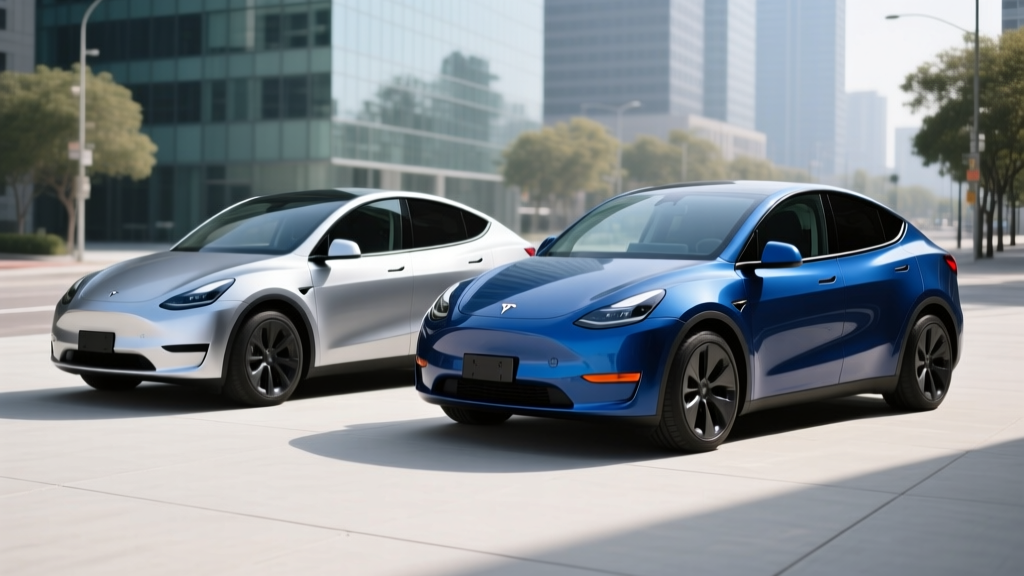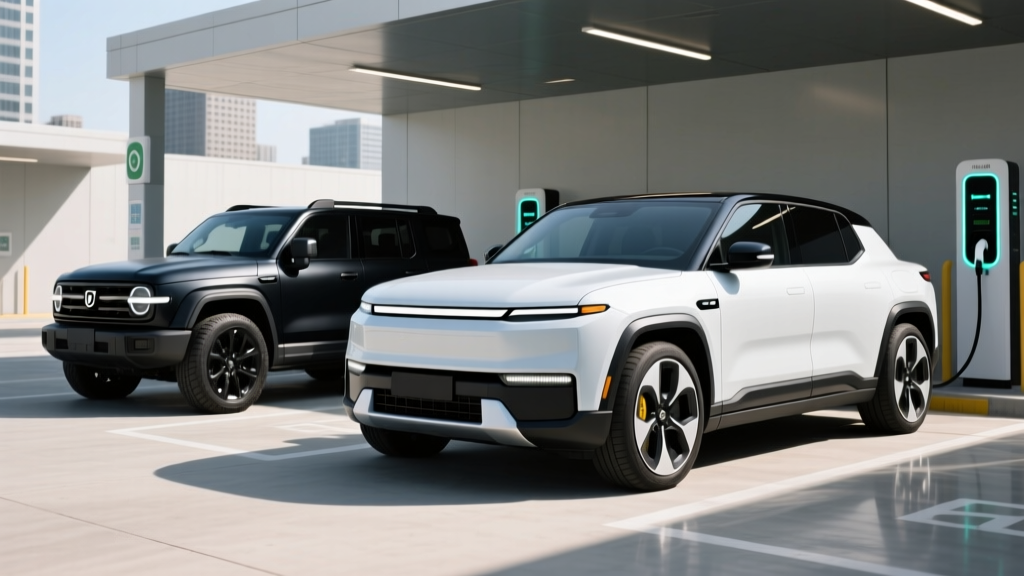
The Compact Crossover Showdown: Rivian R3 vs R2 at a Glance
Rivian's lineup is expanding fast, and two models are drawing the most cross-shopping attention: the mid-size R2 and the subcompact R3. Both ride on Rivian's second-generation skateboard platform, both promise accessible pricing, and both target buyers who want adventure-ready electric utility without the R1S sticker shock. But they serve fundamentally different use cases.
The R2, launching first, is a two-row mid-size SUV aimed squarely at Tesla Model Y and Hyundai Ioniq 5 territory. The R3 is a smaller, more urban-friendly crossover that slots below it in both size and price. If you're weighing the Rivian R3 vs R2, the decision hinges on how much space, range, and towing you need — and how much you're willing to pay for it.
Below, we break down every spec that matters: EPA range, battery capacity, DC fast-charging curves, real-world efficiency, pricing after the §30D federal tax credit, and five-year ownership costs. All figures reflect the latest available 2026 model-year data and preliminary manufacturer estimates where final EPA certification is pending.
Side-by-Side Spec Table: Rivian R2 vs R3
| Specification | Rivian R2 (Standard AWD) | Rivian R3 (Standard FWD) |
|---|---|---|
| EPA Range (est.) | ~330 miles | ~280 miles |
| Battery Capacity (usable) | ~92 kWh (NMC) | ~68 kWh (NMC) |
| Peak DC Fast Charge | ~220 kW | ~175 kW |
| 10–80% DC Charge Time | ~22 min | ~24 min |
| Level 2 Charge Rate | 11.5 kW | 11.5 kW |
| 0–60 mph | ~4.5 sec (dual motor) | ~6.0 sec (single motor FWD) |
| Horsepower | ~450 hp | ~280 hp |
| Efficiency (est. MPGe) | ~110 MPGe combined | ~120 MPGe combined |
| Cargo Volume (rear seats up) | ~34 cu ft | ~22 cu ft |
| Towing Capacity | ~4,500 lbs | ~1,500 lbs |
| Starting MSRP (est.) | $45,000 | $35,000 |
| Battery/Powertrain Warranty | 8 yr / 175,000 mi | 8 yr / 175,000 mi |
Note: R2 specs reflect Rivian's published estimates for the 2026 launch model. R3 specs are preliminary — the R3 is announced for late 2026/early 2027 production. Final EPA certification figures may differ. Source: Rivian R2 official page.
Range and Charging: Real-World Expectations
R2: EPA est. ~330 mi → Expect ~265–290 mi at sustained 75 mph highway speeds; ~230–250 mi in sub-30°F cold weather.
R3: EPA est. ~280 mi → Expect ~225–245 mi highway; ~195–215 mi in cold weather.
The R2's larger 92 kWh NMC battery gives it a meaningful range advantage on paper and in practice. On a 300-mile road trip in mild conditions, the R2 should arrive with a comfortable buffer. The R3, with its smaller 68 kWh pack, will require more strategic charging stops on longer routes — particularly in winter or mountainous terrain where energy consumption climbs.
Where the R3 partially closes the gap is efficiency. Its lighter curb weight (est. ~4,000 lbs vs. ~4,800 lbs for the R2) and available front-wheel-drive configuration deliver better MPGe in city and suburban driving. If your typical commute is under 40 miles round-trip, the R3's real-world range covers it easily with a nightly Level 2 top-up.
Charging Speed and Network Access
Both vehicles are expected to ship with the NACS (North American Charging Standard) connector natively, giving them full access to the Tesla Supercharger network — currently the most reliable and widespread DC fast-charging infrastructure in the U.S. This is a significant advantage over CCS-only vehicles that still depend on Electrify America or EVgo for long-distance travel.
The R2 peaks at approximately 220 kW on a capable 350 kW Supercharger V4 stall, adding roughly 180 miles in 15 minutes under ideal battery preconditioning. The R3 peaks at ~175 kW. While the R3's smaller battery means it reaches 80% in roughly the same time (~24 minutes), the sustained charge curve matters: both vehicles will taper significantly above 80% SoC. If you regularly charge to 90%+ at DC stations, add 10–15 minutes to either estimate.
For home charging, both support 11.5 kW Level 2 on a 48-amp circuit (60-amp breaker). A full overnight charge from 10% takes about 7 hours for the R2 and 5 hours for the R3. Budget $800–$1,500 for a professional Level 2 home installation (equipment + electrician + permit), with the high end applying if your panel needs an upgrade to 200 amps.
Performance, Capability, and Daily Driving
The R2's dual-motor AWD powertrain produces an estimated 450 hp and delivers a 0–60 mph time around 4.5 seconds — brisk enough to merge confidently and pass without drama. Rivian's torque vectoring and adjustable air suspension (available on higher trims) give it legitimate off-road chops: over 11 inches of ground clearance, approach/departure angles suited for trail use, and a wading depth that exceeds most competitors.
The R3 takes a different approach. Its single-motor FWD layout (AWD expected as an option) prioritizes efficiency and urban maneuverability. At ~6.0 seconds to 60 mph, it's adequate for highway merging but won't thrill. The trade-off is a tighter turning radius, easier parking in cramped city spots, and lower energy consumption per mile.
Towing is where the gap widens considerably. The R2's 4,500-pound rating handles a small camper trailer, a pair of dirt bikes, or a modest boat. The R3's 1,500-pound limit restricts it to a lightweight utility trailer or bike rack — it's simply not designed for heavy hauling.
Pricing, Tax Credits, and Total Cost of Ownership
| Rivian R2 | Rivian R3 | |
|---|---|---|
| Base MSRP (est.) | $45,000 | $35,000 |
| §30D Federal Tax Credit (max) | Up to $7,500 | Up to $7,500 |
| Effective Price After Credit | ~$37,500 | ~$27,500 |
| MSRP Cap Eligibility | SUV cap: $80,000 ✓ | SUV/crossover cap: $80,000 ✓ |
| Point-of-Sale Transfer | Available (dealer-registered) | Available (dealer-registered) |
Both models fall well under the §30D MSRP cap. Eligibility requires meeting income limits ($150K single / $300K joint AGI), battery critical-mineral and component sourcing thresholds, and purchasing new. The credit can be transferred to the dealer at point of sale as an instant discount. Rules are subject to change — verify current-year requirements at IRS.gov or consult a tax professional.
Five-Year Ownership Cost Differences
With the tax credit applied, the R3 undercuts the R2 by roughly $10,000 at purchase. But total cost of ownership involves more than the sticker price:
| Cost Factor (5-Year Est.) | Rivian R2 | Rivian R3 |
|---|---|---|
| Purchase Price (after credit) | $37,500 | $27,500 |
| Electricity (15K mi/yr, $0.14/kWh) | ~$3,200 | ~$2,700 |
| Insurance (avg. annual) | ~$2,100/yr | ~$1,700/yr |
| Maintenance (tires, cabin filter, fluid) | ~$1,800 | ~$1,400 |
| Estimated Depreciation (5 yr) | ~$15,000 | ~$10,000 |
| Total 5-Year Cost | ~$68,000 | ~$50,100 |
The R3's lower insurance premiums (smaller vehicle, lower repair-cost exposure) and reduced electricity consumption compound the initial price advantage. The R2's higher depreciation is typical for larger, more expensive EVs — though Rivian's brand loyalty and the R2's anticipated strong demand may mitigate this. These are estimates; actual costs vary by state, driving profile, and insurance carrier.
Category Winners: Where Each Model Excels
~330 mi EPA vs. ~280 mi. The R2's larger battery provides a decisive road-trip advantage, especially in cold weather.
220 kW peak vs. 175 kW. The R2 adds more miles per minute at a DC fast charger, critical for highway travel.
~120 MPGe vs. ~110 MPGe. Lighter weight and FWD give the R3 the edge in city and suburban energy use.
~$27,500 after credit. The R3 delivers the lowest entry price in Rivian's lineup and the lowest five-year cost.
34 cu ft cargo, 4,500-lb tow rating. The R2 handles gear, dogs, and trailers the R3 simply can't.
Shorter wheelbase, tighter turning circle, easier parking. The R3 is purpose-built for city dwellers.
AWD standard, air suspension, 11+ inches of clearance. The R2 carries forward Rivian's adventure DNA.
Both expected to ship with Rivian's latest ADAS suite (SAE Level 2 driver-assist), OTA updates, and the same infotainment platform.
Key Differences That Matter in Daily Life
Beyond the spec sheet, several practical differences shape the ownership experience:
- Passenger space: The R2 seats five comfortably with adult-friendly rear legroom. The R3's rear seats are better suited for children or shorter adults on longer trips.
- Roof rack & accessories: The R2 supports Rivian's modular roof rack system and is expected to offer a gear tunnel option. The R3's smaller roof limits cargo-hauling accessories.
- Home charging footprint: The R3's shorter length (est. ~170 inches vs. ~188 inches for the R2) makes it easier to fit in tight garages, particularly older homes with single-car bays.
- Production timing: The R2 enters production at Rivian's Normal, Illinois facility in 2026. The R3 is slated for late 2026 or early 2027 — if you need a vehicle sooner, the R2 has the timeline advantage.
- Resale outlook: The R2's broader utility and adventure positioning may hold stronger residual value, though the R3's lower entry price means less absolute depreciation in dollars.
Decision Framework: Which Rivian Should You Choose?
Choose the Rivian R2 if:
- You regularly drive more than 250 miles in a single day and want range buffer without strategic charging.
- You need to tow a trailer, camper, or boat (up to 4,500 lbs).
- You want genuine off-road capability with AWD and adjustable ride height.
- You have a family that needs comfortable seating for five adults and ample cargo space.
- You want the fastest possible DC charging for frequent road trips.
- Your budget accommodates ~$37,500 after the federal tax credit.
Choose the Rivian R3 if:
- Your daily commute is under 60 miles round-trip and you charge at home nightly.
- You live in a city or dense suburb where a smaller footprint matters for parking and garages.
- You want the most affordable entry into the Rivian ecosystem (under $28K after credit).
- You don't need to tow more than a light utility trailer or bike rack.
- You prioritize energy efficiency and lower insurance premiums over outright performance.
- This is a second vehicle or a commuter car, not your primary road-trip machine.
Final Recommendation
The Rivian R2 is the more versatile vehicle — it covers road trips, trails, towing, and family duty with genuine competence, and its ~330-mile range and NACS Supercharger access make it a legitimate one-car solution for most households. If your budget stretches to $37,500 after the credit and you value do-everything capability, the R2 is the stronger all-around pick.
The Rivian R3 is the smarter financial move for urban and suburban buyers who don't need the extra space or range. At ~$27,500 after the federal credit, it undercuts nearly every premium EV crossover on the market while still offering Rivian's build quality, software platform, and NACS charging access. If you're a city dweller, a two-car household, or simply budget-conscious, the R3 delivers more value per dollar.
Neither is the wrong choice — they're different tools for different jobs. Define your priorities, match them to the framework above, and you'll land on the right Rivian.
Frequently Asked Questions
Will both the R2 and R3 qualify for the full $7,500 federal tax credit?
Both are expected to qualify, but the §30D credit depends on battery component sourcing and critical-mineral requirements that can change annually. The buyer must also meet income limits ($150K single / $300K joint). Always verify current eligibility on IRS.gov before purchasing.
Can I charge the R2 or R3 at Tesla Superchargers?
Yes. Both are expected to ship with a native NACS charge port, granting direct access to Tesla's Supercharger network without an adapter. This is currently the most reliable DC fast-charging network in the U.S.
Is the R3 too small for a family?
It depends on family size and trip patterns. The R3 seats five, but the rear seat is tighter than the R2. For a family of four with young children, it works well. For five adults or frequent road trips with gear, the R2 is the better fit.
Which will hold its resale value better?
The R2 likely has the edge due to broader utility, higher towing capacity, and adventure positioning — traits that historically support stronger EV residuals. However, the R3's lower initial price means less absolute dollar depreciation even if the percentage is similar.
When can I actually buy each model?
The R2 is expected to begin deliveries in 2026 from Rivian's Normal, Illinois plant. The R3 is announced for late 2026 or early 2027 production. Reservations are open for both, but delivery timelines may shift based on demand and supply chain factors.
Do either have a front trunk (frunk)?
Rivian has confirmed the R2 will include a frunk. The R3's frunk availability has not been officially confirmed as of this writing — its smaller platform may limit front storage space.