Rivian R1T vs Ford F-150 Lightning: The Ultimate Electric Truck Showdown
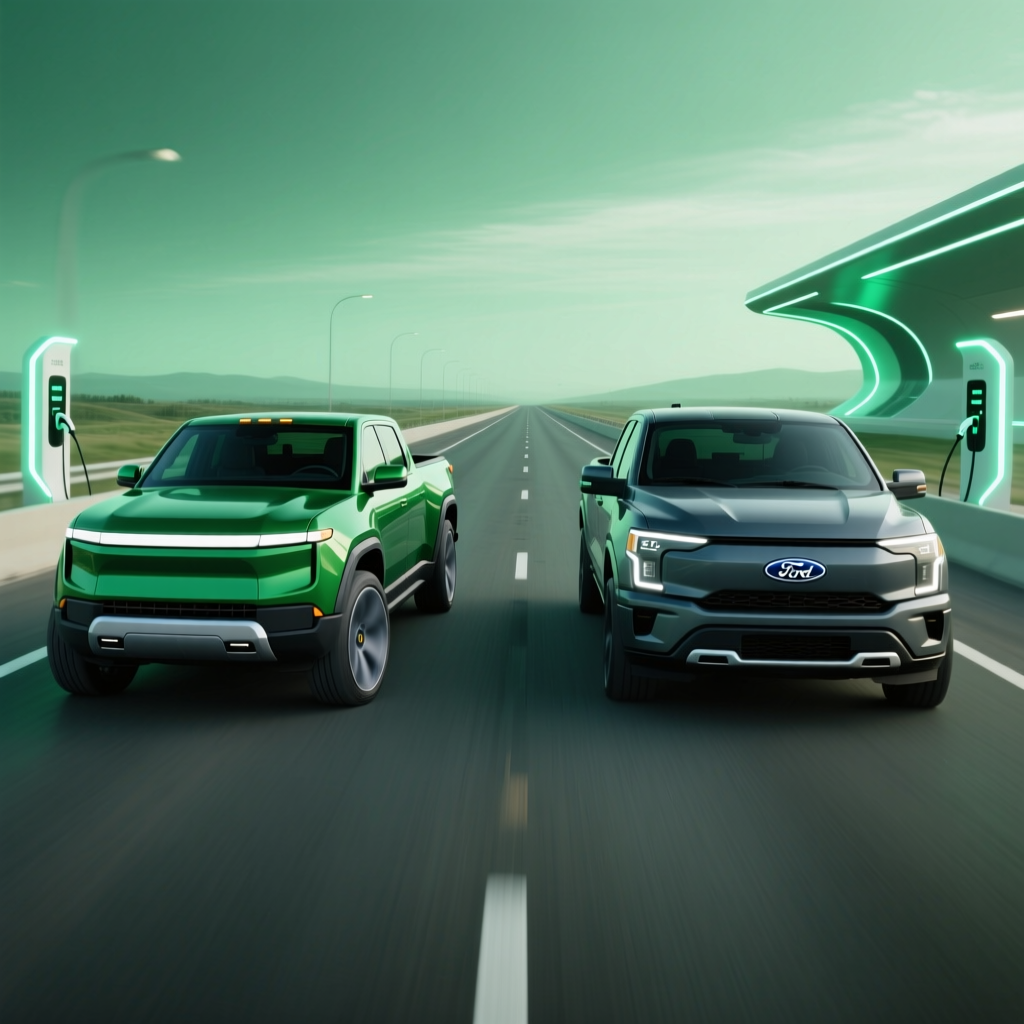
The electric truck revolution has delivered two standout contenders that couldn't be more different in philosophy yet equally compelling in execution. The Rivian R1T and Ford F-150 Lightning represent two distinct approaches to electrifying the pickup segment — one a ground-up adventure vehicle from an ambitious startup, the other a battery-powered evolution of America's best-selling truck. Choosing between them isn't simply a matter of comparing numbers on a spec sheet; it's about understanding which vision of electric truck ownership aligns with your lifestyle, priorities, and budget.
In this comprehensive comparison, we break down every critical dimension — from EPA-estimated range and charging speeds to interior space, technology, and real-world performance. Whether you're a weekend trail seeker, a contractor hauling gear, or a family looking for a capable daily driver, this head-to-head analysis will help you make an informed decision. For individual deep dives, check out our full Rivian R1T review and Ford F-150 Lightning review, or see how both trucks stack up in our best electric trucks rankings.
Overview: Two Philosophies, One Segment
The Rivian R1T launched as a premium, mid-size electric adventure truck designed from the ground up on a dedicated skateboard platform. Rivian positioned the R1T as a lifestyle vehicle — equally at home on a rugged mountain trail as it is pulling up to a curbside charger. Its quad-motor powertrain options, innovative Gear Tunnel storage, and sophisticated air suspension give it credentials that appeal to outdoor enthusiasts and tech-forward buyers alike. The R1T is smaller than a full-size truck but punches well above its weight in capability and refinement.
The Ford F-150 Lightning, by contrast, takes the proven formula of the F-150 — the best-selling vehicle in America for decades — and electrifies it. Ford's strategy was to make the transition to electric as seamless as possible, retaining the familiar F-150 proportions, cab configurations, and bed dimensions that loyal truck buyers expect. The Lightning is a full-size truck with a massive front trunk (frunk), available onboard power generation, and a price structure that undercuts the Rivian significantly at the entry level. It's a workhorse first, an EV second — and that's exactly what many buyers want.
Side-by-Side Specifications
Before diving into detailed analysis, here's a snapshot of how these two electric trucks compare on paper. Note that specifications reflect the most current configurations available and may vary by trim level.
| Specification | Rivian R1T | Ford F-150 Lightning |
|---|---|---|
| Vehicle Class | Mid-Size Pickup | Full-Size Pickup |
| Powertrain Options | Dual-Motor / Performance Dual-Motor / Quad-Motor | Dual-Motor (Standard & Extended Range) |
| Max Horsepower | Up to 1,025 hp (Quad-Motor) | Up to 580 hp (Extended Range) |
| Max Torque | Up to 1,198 lb-ft (Quad-Motor) | Up to 775 lb-ft |
| EPA-Estimated Range | Up to 410 miles (Max Pack) | Up to 320 miles (Extended Range) |
| Battery Capacity | Up to ~149 kWh (Max Pack) | Up to ~131 kWh (Extended Range) |
| Max DC Fast Charging | Up to 220 kW | Up to 150 kW |
| Towing Capacity | Up to 11,000 lbs | Up to 10,000 lbs |
| Payload Capacity | Up to 1,764 lbs | Up to 2,235 lbs |
| Bed Length | 4'6" (54 in) + Gear Tunnel | 5'5" (65 in) |
| Front Trunk (Frunk) | 11 cu ft | 14.1 cu ft |
| 0-60 mph | As quick as 2.5 seconds (Quad-Motor) | Approximately 3.8 seconds (Extended Range) |
| Starting MSRP | Approximately $69,900 | Approximately $54,995 |
| Warranty (Basic) | 5 years / 60,000 miles | 3 years / 36,000 miles |
| Battery Warranty | 8 years / 175,000 miles | 8 years / 100,000 miles |
For more detailed specifications and configuration guides, visit our electric truck specifications hub.
Range and Efficiency: How Far Can Each Truck Go?
Range anxiety remains one of the most common concerns for prospective EV buyers, and in the truck segment — where aerodynamics and weight work against efficiency — it's especially important to scrutinize real-world numbers alongside EPA estimates.
The Rivian R1T offers multiple battery configurations. The Standard Pack delivers an EPA-estimated range of approximately 270 miles, while the Large Pack pushes that figure to around 352 miles. The available Max Pack extends range to an EPA-estimated 410 miles, making the R1T one of the longest-range electric trucks on the market. According to fueleconomy.gov, the R1T Dual-Motor with the Large Pack achieves an EPA-estimated combined efficiency of approximately 2.0 kWh/mile, though real-world tests by independent reviewers have shown that highway-heavy driving at high speeds can reduce effective range by 15-25 percent — a common characteristic among large electric vehicles.
The Ford F-150 Lightning with the Standard Range battery delivers an EPA-estimated 240 miles, while the Extended Range battery bumps that figure to an EPA-estimated 320 miles. Independent Edmunds real-world range testing has shown the Lightning Extended Range achieving close to its EPA estimate in mixed driving conditions, though heavy towing can cut range dramatically — sometimes by more than 50 percent. This is a critical consideration for buyers who plan to tow frequently over long distances.
Verdict on Range: The Rivian R1T wins on maximum available range, particularly with the Max Pack option. If long-distance travel between charges is a priority, the R1T's 410-mile ceiling gives it a meaningful advantage. However, the Lightning's 320 miles is more than adequate for most daily driving and moderate road trips, especially given its lower price point.
Price and Value: What Does Each Truck Cost?
Pricing is where the Ford F-150 Lightning makes one of its strongest arguments. The Lightning's entry-level trim starts at approximately $54,995, making it one of the most accessible full-size electric trucks available. Mid-range trims like the XLT and Lariat climb into the $65,000–$75,000 range with the Extended Range battery, while the Platinum trim tops out near $95,000 fully loaded.
The Rivian R1T starts at approximately $69,900 for the Dual-Motor Standard configuration. Adding the Large Pack, Performance Dual-Motor, or Quad-Motor powertrain can push the price well above $90,000, and fully optioned Adventure builds with the Max Pack can approach or exceed $100,000. Rivian positions the R1T as a premium product, and its pricing reflects that positioning — there is no budget-oriented trim level.
When evaluating value, it's important to consider what's included at each price point. The R1T comes standard with features like adaptive air suspension, a comprehensive suite of driver-assistance technologies, and over-the-air software updates that continuously add new capabilities. The Lightning, particularly in its Pro and XLT trims, offers a more traditional truck experience with fewer standard luxury features but at a significantly lower cost of entry.
Both vehicles may qualify for federal and state EV incentives, which can meaningfully reduce the effective purchase price. Check our EV tax credits and incentives guide for the latest eligibility information.
Verdict on Price: The Ford F-150 Lightning is the clear winner on affordability and value, particularly for buyers who need a capable work truck without the premium price tag. The Rivian R1T justifies its higher cost with superior standard equipment, performance, and range options, but budget-conscious buyers will find the Lightning far more accessible.
Charging Speed: How Quickly Can Each Truck Recharge?
Fast-charging capability is crucial for road trips and for drivers who don't have access to home charging. Both trucks support DC fast charging, but their peak rates and charging curves differ significantly.
The Rivian R1T supports DC fast charging at rates up to 220 kW on models equipped with the Large Pack and Max Pack. Rivian claims the R1T can add approximately 140 miles of range in about 20 minutes under optimal conditions at a compatible charger. The charging curve is relatively aggressive, maintaining higher charge rates deeper into the session compared to many competitors. According to testing data from Car and Driver, the R1T's charging performance is among the best in the electric truck segment, though actual speeds depend heavily on battery temperature, state of charge, and charger capability.
The Ford F-150 Lightning supports DC fast charging at up to 150 kW for the Extended Range battery. Ford estimates a 15% to 80% charge in approximately 41 minutes at a 150 kW charger. While this is respectable, it trails the Rivian's peak charging rate noticeably. The Standard Range battery charges at up to 120 kW. On a Level 2 home charger, both trucks can fully recharge overnight, though the Lightning's larger battery in Extended Range form may require closer to 10-12 hours on a standard 48-amp home charger.
One notable advantage for the Lightning is Ford's integration with multiple charging networks through the FordPass app, providing access to tens of thousands of chargers nationwide. Rivian has also built its own Adventure Network of chargers positioned near popular outdoor destinations, supplementing access to third-party networks like Electrify America and EVgo.
Verdict on Charging: The Rivian R1T charges faster at its peak rate and adds range more quickly during DC fast-charging sessions. The Ford F-150 Lightning is adequate for most charging scenarios but takes noticeably longer on road trips. For buyers who frequently drive long distances, the R1T's charging advantage is meaningful.
Performance and Driving Dynamics
Electric motors deliver instant torque, and both of these trucks leverage that advantage to deliver performance that would have seemed absurd from a pickup truck just a few years ago.
The Rivian R1T Quad-Motor is a performance beast, producing up to 1,025 horsepower and 1,198 lb-ft of torque. The result is a 0-60 mph time of approximately 2.5 seconds — faster than many supercars. Even the Dual-Motor version, with around 533 horsepower, delivers a 0-60 time under 5 seconds. Beyond straight-line speed, the R1T shines in off-road capability. Its air suspension provides up to 14.9 inches of ground clearance, and the available Quad-Motor system enables true torque vectoring at each wheel, providing exceptional traction control on loose surfaces. Independent testing by Motor Trend has praised the R1T's composed on-road handling, noting that its lower center of gravity and independent suspension make it feel more like a performance SUV than a traditional truck.
The Ford F-150 Lightning with the Extended Range battery produces 580 horsepower and 775 lb-ft of torque, achieving a 0-60 mph time of approximately 3.8 seconds. That's genuinely quick for a full-size truck weighing over 6,000 pounds. The Lightning rides on a modified F-150 chassis with an independent rear suspension (a first for the F-150), which improves ride quality and handling compared to the live-axle setup in the gas-powered F-150. However, the Lightning is not designed as an off-road performance vehicle — it's competent on dirt roads and light trails, but it doesn't match the R1T's trail-riding capability. The Lightning's strength is its composed, comfortable highway demeanor and its ability to haul and tow with confidence.
Speaking of towing, the R1T is rated for up to 11,000 pounds, while the Lightning maxes out at 10,000 pounds with the Max Trailer Tow Package and Extended Range battery. Both trucks offer integrated trailer brake controllers and trailer-assist technologies, though real-world towing tests have shown that the Lightning's range drops more precipitously under heavy loads.
Verdict on Performance: The Rivian R1T is the performance king — faster, more agile, and far more capable off-road. The Ford F-150 Lightning is impressively quick and more comfortable as a cruiser, but it can't match the Rivian's dynamic breadth. For towing specifically, both are capable, but the R1T's slight edge in maximum capacity and superior range under load gives it the advantage.
Interior Space, Cargo, and Practicality
This is where the size difference between these two trucks becomes most apparent — and where buyer priorities will heavily influence the outcome.
The Ford F-150 Lightning is a full-size truck with a spacious SuperCrew cab that offers generous rear-seat legroom, making it comfortable for five adults on longer journeys. The 5.5-foot bed is a practical length for hauling lumber, furniture, or motorcycles, and the available onboard scales and tailgate work surface add utility. The Lightning's party piece is its enormous 14.1 cubic-foot frunk, which features a drain plug (making it a functional cooler), 120V outlets, and enough space to store tools, groceries, or camping gear securely. Ford's official specifications list the Lightning's payload capacity at up to 2,235 pounds, significantly more than the R1T.
The Rivian R1T is a mid-size truck, and its cabin reflects that — front seats are comfortable and well-bolstered, but the rear seat is tighter than the Lightning's, particularly for taller passengers on longer trips. The 4.5-foot bed is shorter than the Lightning's, which limits its utility for larger cargo. However, Rivian's ingenious Gear Tunnel — a lockable, climate-managed pass-through compartment behind the rear seats — adds approximately 11 cubic feet of secure, weatherproof storage that's ideal for skis, camping gear, or long items. Combined with the 11 cubic-foot frunk, the R1T offers creative storage solutions that partially compensate for its smaller bed. The available Camp Kitchen slide-out module is a unique option that transforms the Gear Tunnel into a full outdoor cooking station.
Both trucks feature modern, tech-forward interiors with large touchscreen infotainment systems. The R1T uses a 15.6-inch central display with Rivian's custom software, while the Lightning features a 15.5-inch portrait-oriented SYNC 4A touchscreen on higher trims. Both support wireless Apple CarPlay and Android Auto, though the Lightning's Ford system has a longer track record and more established third-party app support.
Verdict on Interior and Cargo: The Ford F-150 Lightning wins on sheer space — more rear-seat room, a longer bed, higher payload, and a larger frunk. The Rivian R1T compensates with clever solutions like the Gear Tunnel and Camp Kitchen, but if maximum utility and passenger comfort are your priorities, the Lightning is the more practical choice.
Technology, Safety, and Warranty
Both trucks are loaded with modern technology, but their approaches differ in meaningful ways.
The Rivian R1T features a fully digital instrument cluster, a expansive glass roof, and Rivian's Driver+ assistance system, which includes adaptive cruise control, lane-keeping assist, and highway driving assistance. Rivian's over-the-air (OTA) update system is one of the most robust in the industry, regularly adding new features, improving performance, and refining the user experience long after purchase. The R1T also features a unique gear guard system, using cameras to monitor the bed and Gear Tunnel for security. On the safety front, the R1T has earned top marks from the IIHS in multiple crash-test categories.
The Ford F-150 Lightning comes equipped with Ford's Co-Pilot360 suite of driver-assistance features, including automatic emergency braking, blind-spot monitoring, and rear cross-traffic alert. Available BlueCruise technology enables hands-free driving on pre-approved sections of divided highways — a feature that has been well-received in independent reviews. The Lightning also offers Pro Power Onboard, which turns the truck into a mobile generator capable of outputting up to 9.6 kW of power — enough to run power tools at a job site, supply backup power to a home during an outage, or run appliances while camping. This feature alone makes the Lightning uniquely valuable for contractors and homeowners in areas prone to power outages.
Warranty coverage is an area where Rivian pulls ahead. The R1T comes with a 5-year/60,000-mile basic warranty and an 8-year/175,000-mile battery warranty. The Lightning's basic warranty covers 3 years/36,000 miles, and its battery warranty covers 8 years/100,000 miles. Rivian's more generous battery warranty provides additional peace of mind for long-term ownership, though Ford's extensive dealer network offers convenience advantages for service and repairs that Rivian's smaller service footprint can't yet match.
Verdict on Technology and Warranty: This is close. The R1T wins on OTA sophistication and warranty coverage, while the Lightning's Pro Power Onboard and BlueCruise are standout features. For contractors and those who need mobile power, the Lightning's tech advantage is substantial. For tech enthusiasts who value continuous improvement and longer warranty protection, the R1T is the better pick.
The Verdict: Which Electric Truck Should You Buy?
After examining every critical dimension, the answer depends entirely on who you are and what you need from your truck.
Choose the Rivian R1T If:
- You prioritize performance, including off-road capability and acceleration
- You want maximum available range (up to 410 miles)
- You value fast DC charging for frequent road trips
- You're an outdoor enthusiast who would benefit from the Gear Tunnel and Camp Kitchen
- You prefer a premium, tech-forward ownership experience with robust OTA updates
- You want a longer battery warranty for peace of mind
Choose the Ford F-150 Lightning If:
- You need a full-size truck with a spacious rear seat and longer bed
- Budget is a primary concern and you want a lower starting price
- You need Pro Power Onboard for job-site power or home backup
- You prefer the familiarity and extensive service network of an established automaker
- Maximum payload capacity is important for your work or hobbies
- You want hands-free highway driving via BlueCruise
Both trucks are exceptional vehicles that have earned their places at the top of our best electric trucks rankings. The Rivian R1T is the driver's choice — faster, more capable off-road, and more innovative in its design. The Ford F-150 Lightning is the pragmatic choice — bigger, more affordable, and uniquely versatile thanks to features like Pro Power Onboard. Neither is objectively "better" than the other; they're simply optimized for different buyers.
If you're still undecided, consider scheduling test drives for both vehicles. The driving experience — from the R1T's sporty, planted feel to the Lightning's commanding, comfortable ride — often makes the decision clearer than any spec sheet can. And if you're exploring beyond these two, our EV comparison hub covers all the major electric trucks and SUVs on the market.
Frequently Asked Questions
Is the Rivian R1T bigger or smaller than the Ford F-150 Lightning?
The Rivian R1T is a mid-size pickup truck, making it smaller than the full-size Ford F-150 Lightning in nearly every exterior dimension. The R1T is shorter overall, has a shorter wheelbase, a shorter bed (4.5 feet vs. 5.5 feet), and less rear-seat legroom. However, the R1T compensates with creative storage solutions like the Gear Tunnel and a competitive frunk. If you regularly carry five adults or need a longer bed for work, the Lightning's full-size proportions provide a tangible advantage. If you prefer a truck that's easier to park and maneuver in urban environments, the R1T's smaller footprint is a benefit.
Which truck is better for towing: the Rivian R1T or the Ford F-150 Lightning?
The Rivian R1T has a slightly higher maximum towing capacity at 11,000 pounds compared to the Lightning's 10,000 pounds. Both trucks offer integrated trailer brake controllers and trailer-assist technologies. However, real-world towing tests by independent reviewers have shown that towing significantly impacts range for both vehicles — often reducing it by 30-50 percent depending on trailer weight, speed, and terrain. The R1T's available Max Pack, with its superior range, provides a larger buffer for towing scenarios, making it the more practical choice for those who plan to tow over longer distances between charges. For shorter towing jobs around town or to a nearby job site, either truck performs admirably.
Can the Ford F-150 Lightning power my home during an outage?
Yes. The Ford F-150 Lightning's available Pro Power Onboard system, combined with the Ford Intelligent Backup Power system (which requires a professionally installed home transfer switch), can supply up to 9.6 kW of power to your home during a power outage. Ford estimates that the Lightning can power an average home for up to three days on a full charge, or even longer with rationed usage. This is a unique feature that the Rivian R1T does not currently offer. The R1T does offer 120V outlets in its bed and Gear Tunnel for powering devices and tools, but it lacks the bidirectional home-power capability that makes the Lightning so appealing to homeowners in areas with unreliable grid power.
Which truck has better long-term reliability and service support?
This is a complex question. Ford has over a century of manufacturing experience and a vast network of dealerships nationwide, making it easy to find service almost anywhere. However, the Lightning's novel electric powertrain is still relatively new, and some early owners have reported software-related issues. Rivian, as a newer company, has a much smaller service footprint and has faced criticism for longer wait times for service appointments and parts. That said, Rivian's over-the-air update system can resolve many issues remotely, and its battery warranty (8 years/175,000 miles) is more generous than Ford's (8 years/100,000 miles). Long-term reliability data for both vehicles is still being accumulated, so checking our EV reliability ratings page for the latest owner-reported data is a wise step before purchasing.