The Quick Answer: RadRover Electric Bikes and Your EV Strategy
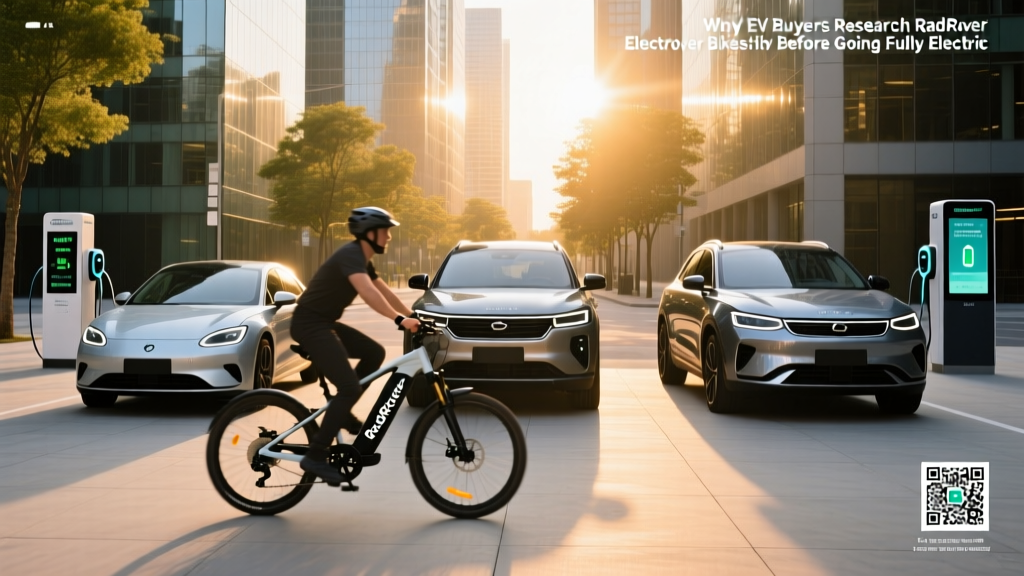
Bottom line: RadRover electric bikes (priced around $1,500–$2,000 with 45+ miles of pedal-assist range) serve as a practical micro-mobility complement to — or stepping stone before — a full electric vehicle purchase. They eliminate short commutes at roughly $0.002 per mile (electricity cost) versus $0.12–$0.15 per mile in a gas car. However, they are not a replacement for an EV if you need highway travel, weather protection, cargo capacity, or year-round commuting in cold climates. Use this guide to decide whether a RadRover e-bike, a full EV, or a combination of both makes financial sense for your driving patterns.
At AutoEdgeView, we focus on electric and smart vehicles — cars, trucks, SUVs, and the charging and battery ecosystems that support them. RadRover electric bikes fall outside our core coverage of four-wheeled EVs, but we regularly hear from readers asking how e-bikes factor into their broader electrification strategy. This guide addresses that question with the same data-driven rigor we apply to EV reviews.
RadRover E-Bikes: What You're Actually Getting
Rad Power Bikes' RadRover line (including the RadRover 6 Plus and updated models) is a fat-tire electric bike designed for mixed-surface riding — pavement, gravel, sand, and light trails. Here's what the numbers look like for a current-generation RadRover:
| Spec | RadRover 6 Plus (Representative) |
|---|---|
| Motor | 750W geared hub motor |
| Battery | 48V, 14 Ah (672 Wh), lithium-ion |
| Pedal-Assist Range | 28–45 miles (varies by assist level, terrain, rider weight) |
| Throttle-Only Range | ~20–25 miles |
| Top Speed (Class 2) | 20 mph (throttle or pedal-assist) |
| Charge Time (0–100%) | ~5–6 hours (standard 2A charger) |
| Weight | ~72 lbs |
| Price (MSRP) | ~$1,599–$1,999 |
A few practical notes from real-world use: the 672 Wh battery is small compared to even a plug-in hybrid (which typically carries 13–20 kWh), so you're looking at roughly $0.04–$0.08 per full charge at the US average electricity rate of ~$0.16/kWh. That's essentially negligible operating cost. However, expect real-world range to drop 20–30% in cold weather (below 40°F), and throttle-only riding at max speed will drain the battery closer to the 20-mile mark.
E-Bike vs. EV vs. Gas Car: A Cost and Use-Case Comparison
Where does a RadRover electric bike actually compete with a car? The answer depends entirely on your trip distances and infrastructure. Here's a side-by-side comparison for a hypothetical 10-mile one-way commute:
| Metric | RadRover E-Bike | Compact EV (e.g., Chevy Equinox EV) | Gas Car (30 MPG Combined) |
|---|---|---|---|
| Purchase Price | $1,599–$1,999 | $33,000–$43,000 (before credits) | $25,000–$32,000 |
| Per-Mile Energy Cost | ~$0.002 | ~$0.04 (home charging) | ~$0.12 (at $3.50/gal) |
| 10-Mi Commute Cost (One Way) | ~$0.02 | ~$0.40 | ~$1.20 |
| Annual Commute Cost (250 Days) | ~$10 | ~$200 | ~$600 |
| Insurance (Annual) | $0–$200 (optional) | $1,200–$2,000+ | $900–$1,500 |
| Maintenance (Annual) | $100–$300 | $300–$600 | $500–$1,000 |
| Weather Protection | None (rider exposed) | Full climate control | Full climate control |
| Cargo Capacity | ~50 lbs (with racks) | 3,000+ lbs | 1,000+ lbs |
| Highway Capable | No | Yes | Yes |
| Federal Tax Credit | None | Up to $7,500 (§30D, subject to eligibility) | None |
The e-bike wins on pure cost for short, fair-weather commutes. But the moment you need to carry groceries for a family, drive in rain or snow, travel more than 20 miles one way, or use a highway, a full EV or PHEV becomes necessary.
Real Costs of Ownership: E-Bike and EV Side by Side
Let's model a 5-year ownership scenario for someone who could either (A) buy a RadRover e-bike for commuting and keep their existing gas car for longer trips, or (B) replace the gas car entirely with a new EV.
| 5-Year Cost Category | Option A: RadRover + Existing Gas Car | Option B: New EV (e.g., Tesla Model Y RWD) |
|---|---|---|
| Vehicle Purchase | $1,799 (e-bike only) | $44,990 (MSRP, before credit) |
| Federal Tax Credit | $0 | Up to $7,500 (if eligible per IRS §30D rules) |
| Net Purchase | $1,799 | $37,490 (assuming full credit) |
| Energy/Fuel (5 Years, 10K mi/yr) | $3,250 (gas for non-commute trips) + $50 (e-bike) | $2,000 (home charging at $0.16/kWh) |
| Insurance (5 Years) | $5,000 (gas car policy) | $7,500–$10,000 (EV premiums typically 15–25% higher) |
| Maintenance (5 Years) | $3,000 (gas car) + $750 (e-bike) | $1,500–$2,500 (no oil changes, fewer brake replacements) |
| Estimated 5-Year Total | ~$13,849 | ~$48,490–$51,490 |
Key takeaway: Option A is dramatically cheaper in raw dollars — but only if your existing gas car is already paid off and reliable, and your commute is short and bikeable. Option B replaces the gas car entirely, eliminating tailpipe emissions and gasoline dependency but requiring a much larger upfront investment. The EPA's EV comparison tools can help you model your specific situation.
Common Misconceptions: E-Bikes and EVs
| Myth | Fact |
|---|---|
| "An e-bike can replace my car." | For some people with short, flat, fair-weather commutes — yes. For most US drivers who need highway access, cargo space, weather protection, or year-round reliability, an e-bike is a supplement, not a substitute. |
| "E-bikes charge from any outlet, so I don't need home charging for an EV." | E-bikes use small batteries (672 Wh) that charge fine on a standard 120V outlet in 5–6 hours. An EV battery (60–100 kWh) would take 40–80+ hours on a standard outlet. You need a Level 2 home charger (240V, 7–11 kW) for practical daily EV use. |
| "E-bikes qualify for the federal EV tax credit." | They do not. The IRS §30D credit applies to four-wheeled plug-in vehicles with a battery capacity of at least 7 kWh, a GVWR under 14,000 lbs, and meeting MSRP and income caps. E-bikes are excluded. Some states or local utilities offer e-bike rebates — check your jurisdiction. |
| "E-bike batteries last forever." | Expect 500–800 full charge cycles before significant degradation (roughly 2–4 years of daily use). A replacement battery costs $500–$700. Compare this to an EV battery, which is warrantied for 8 years/100,000 miles and typically retains 70–80% capacity after 150,000+ miles. |
| "Riding an e-bike is always safer than driving." | E-bike riders are vulnerable road users. According to NHTSA data, cyclist fatalities have been rising. Proper helmets, lights, reflective gear, and route selection are essential. EVs offer structural crash protection; e-bikes do not. |
Who Should Consider a RadRover E-Bike (And Who Shouldn't)
Choose a RadRover e-bike if:
- Your one-way commute is under 15 miles on surface streets (no highways)
- You live in a mild climate or are willing to ride only in fair weather
- You already own a car (gas or electric) for longer trips and bad weather
- You want to reduce fuel costs for short errands without a large capital outlay
- You have secure bike storage at home and work (theft is a major e-bike risk)
- You're physically comfortable riding a 72-lb fat-tire bike
Choose a full EV instead if:
- Your commute involves highways or exceeds 20 miles one way
- You need to carry passengers or significant cargo regularly
- You live in a region with harsh winters, heavy rain, or extreme heat
- You want a single vehicle that handles all your transportation needs
- You qualify for the federal §30D tax credit (up to $7,500) and/or state incentives, reducing the effective purchase price
- You can install a Level 2 home charger (typically $500–$2,000 for equipment and electrician)
Consider both if:
- You're a two-car household and can replace one gas car with an EV while using an e-bike for short solo commutes
- You want to maximize savings: the EV handles family trips and bad weather; the e-bike handles daily solo errands at near-zero cost
First-Time EV Buyer? What to Know Before You Decide
If you're researching RadRover electric bikes, you may also be exploring your first EV purchase. Here are the non-negotiable data points to check before buying any EV in 2026:
- Real-world range: EPA estimates are optimistic for highway and cold-weather driving. Expect 75–85% of EPA range at sustained highway speeds, and 60–70% in sub-freezing temperatures. A 300-mile EPA vehicle may deliver 210–250 miles in real winter highway conditions.
- Home charging access: If you can install a Level 2 charger (240V, 32–48 amps), daily EV ownership is seamless — you wake up with a full battery. If you rely solely on public charging, factor in higher per-kWh costs ($0.30–$0.60 at DC fast chargers) and time spent waiting.
- Charging speed matters: Look for peak DC fast-charge rates (in kW) and 10–80% charge times. A vehicle that peaks at 250 kW and charges 10–80% in 18 minutes is far more road-trip-friendly than one limited to 50 kW taking 60+ minutes.
- Tax credit eligibility is complex: The §30D credit has MSRP caps ($55,000 for sedans, $80,000 for SUVs/trucks), buyer income limits ($150K single / $300K joint), and battery-sourcing requirements that change annually. Always verify on irs.gov and consult a tax professional.
- Insurance costs more: EV insurance premiums run 15–25% higher than equivalent gas cars due to higher repair costs and battery replacement risk. Get quotes before purchasing.
- Battery warranty: Federal law mandates at least 8 years / 100,000 miles on the traction battery. Most manufacturers guarantee 70% capacity retention over that period.
Frequently Asked Questions
Do RadRover electric bikes qualify for any federal tax credits?
No. The IRS §30D Clean Vehicle Credit applies only to qualifying four-wheeled plug-in electric vehicles. E-bikes, e-scooters, and other micro-mobility devices are excluded from the federal credit. Some states, cities, and utility companies offer separate e-bike rebates or incentives — check your local programs.
How far can a RadRover e-bike really go on a single charge?
Rad Power Bikes advertises 28–45 miles of range using pedal assist. In real-world conditions — with hills, headwinds, heavier riders, cold weather, or frequent throttle use — expect 20–35 miles. Throttle-only riding at maximum assist drains the 672 Wh battery in roughly 20–25 miles.
Can I charge a RadRover e-bike battery from my car's 120V outlet?
Yes. The RadRover charger plugs into a standard 120V household outlet and draws roughly 2 amps (~240 watts). A full charge takes 5–6 hours. This is fundamentally different from EV charging: an EV battery is 100–150× larger and would take days on a standard outlet.
Is an e-bike a good way to "test" EV ownership before buying an electric car?
Partially. An e-bike teaches you about battery management, range planning, and electric propulsion — but it doesn't replicate the EV ownership experience of home Level 2 charging, DC fast charging on road trips, regenerative braking dynamics, or ADAS features. Think of it as adjacent experience, not a direct preview.
What's the total cost of owning a RadRover e-bike for 5 years?
Purchase ($1,600–$2,000), plus one likely battery replacement ($500–$700 around year 3–4), annual maintenance ($100–$300 for tires, brake pads, tune-ups), optional insurance ($100–$200/year), and negligible electricity costs (~$10–$20/year). Total 5-year cost: roughly $3,000–$4,500.
Should I buy a RadRover or an EV for commuting?
If your commute is under 15 miles, mostly flat, on surface streets, and you have an alternative vehicle for bad weather and long trips — the RadRover is dramatically cheaper. If you need highway access, weather protection, passenger space, or a single-vehicle solution — buy an EV. For many households, both make sense: the e-bike for daily solo errands, the EV for everything else.