Quick Answer: Is There a Prius EV?
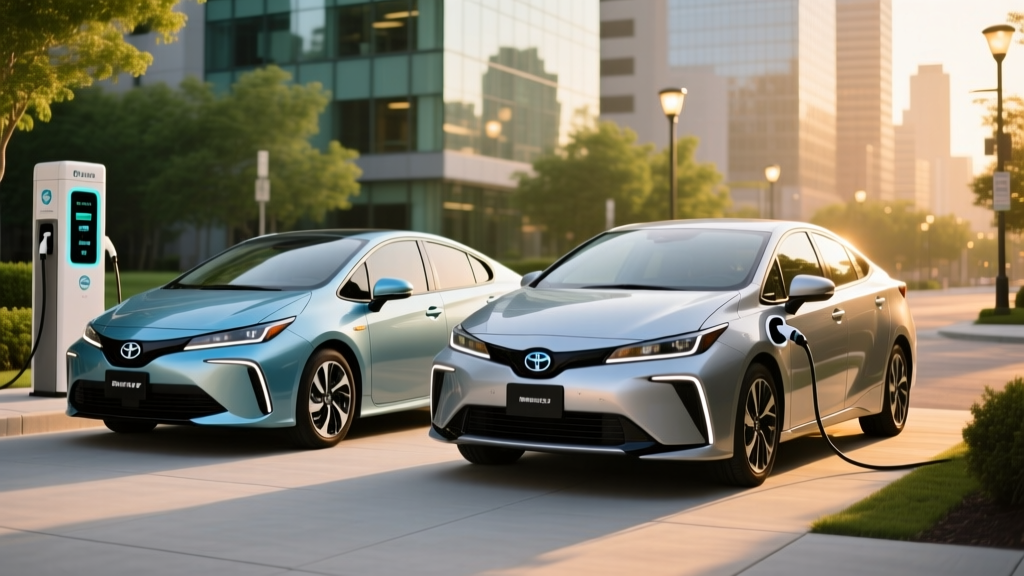
No — Toyota does not currently produce a fully electric Prius (BEV). If you're searching for a "Prius EV," what you'll actually find is the Toyota Prius Prime, a plug-in hybrid (PHEV) that pairs a 13.6 kWh lithium-ion battery with a 2.0L gas engine. The 2026 Prius Prime delivers an EPA-estimated 44 miles of electric-only range, up to 502 miles of total range, and starts at approximately $33,445 MSRP. For buyers wanting a pure-electric Toyota, the bZ4X crossover (EPA 252 miles) is the closest option in Toyota's lineup. Below, we break down exactly what the Prius Prime offers, how it compares to a full EV, and whether it's the right electrified vehicle for your situation.
Understanding the Prius Prime: A PHEV, Not a BEV
The confusion is understandable. The Prius has been synonymous with electrification since 2000, and as battery-electric vehicles (BEVs) grow in popularity, many shoppers naturally search for a "Prius EV." But Toyota's strategy for the Prius nameplate remains firmly plug-in hybrid.
The 2026 Toyota Prius Prime operates in two modes:
- EV Mode: Runs purely on battery power for up to 44 EPA-estimated miles (40 miles on the XSE Premium trim due to larger wheels and added weight). This covers most daily commutes without burning a drop of gasoline.
- Hybrid Mode: Once the battery depletes, the 2.0L four-cylinder engine and electric motors work together, delivering an EPA-estimated 48 MPG combined (52 MPG combined for the standard Prius hybrid, non-plug-in).
The combined output is 220 horsepower — a dramatic improvement over the previous-generation Prime's 121 hp. The 0-60 mph time drops to approximately 6.6 seconds, making this the quickest Prius ever sold.
| Specification | Prius Prime SE | Prius Prime XSE | Prius Prime XSE Premium |
|---|---|---|---|
| Battery Capacity | 13.6 kWh (lithium-ion) | ||
| EPA Electric-Only Range | 44 miles | 40 miles | 40 miles |
| Total Range (EV + Gas) | ~502 miles | ~468 miles | ~468 miles |
| Combined MPG (Hybrid Mode) | 52 MPG | 48 MPG | 48 MPG |
| MPGe (EV Mode) | 127 MPGe | 117 MPGe | 117 MPGe |
| Horsepower (Combined) | 220 hp | ||
| 0-60 mph | ~6.6 seconds | ||
| Level 2 Charge Time (0-100%) | ~4 hours at 3.3 kW | ||
| Starting MSRP | $33,445 | $36,695 | $40,365 |
| Powertrain Warranty | 5 years / 60,000 miles | ||
| Hybrid Battery Warranty | 10 years / 150,000 miles | ||
Source: EPA Fuel Economy — Toyota Prius Prime
Prius Prime PHEV vs. a Full EV: The Real-World Tradeoffs
Choosing between the Prius Prime and a pure-electric vehicle (like the Tesla Model 3, Hyundai Ioniq 6, or Toyota's own bZ4X) depends on your charging access, driving habits, and risk tolerance. Here's how they stack up on the factors that matter most.
| Factor | Prius Prime (PHEV) | Typical BEV (e.g., Tesla Model 3 LR) |
|---|---|---|
| Electric-Only Range | 40-44 miles | 330-363 miles (EPA) |
| Total Range | 468-502 miles | 330-363 miles (no gas backup) |
| Home Charging Requirement | Helpful but optional (120V works) | Essential for daily convenience |
| DC Fast Charging | Not available | 150-250 kW typical; 10-80% in 20-30 min |
| Level 2 Charging Speed | 3.3 kW (~4 hours for full charge) | 7.6-11.5 kW (~6-10 hours) |
| Cold-Weather Impact | Minimal (gas engine provides heat) | 20-35% range loss in freezing temps |
| Fuel/Energy Cost per Mile | ~$0.04/mi (EV mode) / ~$0.10/mi (gas) | ~$0.04/mi (home charging) |
| Maintenance | Oil changes, engine upkeep still required | No oil, fewer moving parts |
| Federal Tax Credit (§30D) | Up to $3,750 (battery sourcing dependent) | Up to $7,500 (sourcing + income rules apply) |
| Starting Price | ~$33,445 | ~$38,990 (Model 3 RWD) |
Real-World Range Reality Check
The Prius Prime's 44-mile EPA electric range assumes moderate temperatures, flat terrain, and speeds under 55 mph. In practice, expect 35-40 miles in warm weather and potentially 28-33 miles in freezing conditions when cabin heating draws additional power. Highway driving at 70+ mph will also reduce electric range to roughly 30-35 miles. However, unlike a BEV, range depletion simply triggers the gas engine — you're never stranded.
Cost of Ownership: Prius Prime vs. Gas Car vs. Full EV
The purchase price is only the beginning. Let's model five-year ownership costs for a realistic buyer driving 12,000 miles per year, charging at home when possible, and using gasoline for longer trips.
| Cost Category | Prius Prime PHEV | Toyota Camry (Gas) | Tesla Model 3 RWD (BEV) |
|---|---|---|---|
| Purchase Price (MSRP) | $33,445 | $28,490 | $38,990 |
| Est. Federal Tax Credit | $0 - $3,750* | $0 | $0 - $7,500* |
| Fuel/Energy (5 years) | $2,800 (mixed EV/gas) | $7,500 (gas at $3.50/gal, 32 MPG) | $3,000 (home charging at $0.14/kWh) |
| Maintenance (5 years) | $2,500 | $3,200 | $1,200 |
| Insurance (5 years, avg.) | $7,500 | $6,500 | $9,000 |
| Estimated Depreciation | $12,000 | $10,500 | $15,500 |
| Estimated 5-Year Total | $56,245 - $52,495 | $56,190 | $67,690 - $60,190 |
*Tax credit eligibility depends on battery sourcing requirements, buyer income caps (AGI ≤ $150K single / $300K joint for §30D), and MSRP caps. The Prius Prime's smaller battery and component sourcing may limit credit eligibility. Always verify current rules at IRS.gov and consult a tax professional.
The Prius Prime lands in a cost sweet spot: you save significantly on fuel compared to a pure gas vehicle, avoid the higher insurance premiums and steeper depreciation common with many BEVs, and keep a gas backup for road trips. The tradeoff is continued engine maintenance and the inability to fully eliminate gasoline from your life.
Charging the Prius Prime: What You Need to Know
One major difference between the Prius Prime and a full EV is charging simplicity — and limitation.
Level 1 (120V Household Outlet)
The Prime comes with a standard charging cable that plugs into any 120V outlet. A full charge takes approximately 10-11 hours. For most owners who plug in overnight, this is sufficient to replenish the 13.6 kWh battery each morning. No electrician required.
Level 2 (240V Home or Public)
Using a 240V Level 2 station (such as a home-installed ChargePoint Home Flex or public ChargePoint unit), the Prime charges at a maximum of 3.3 kW, reaching a full charge in about 4 hours. This is relatively slow compared to BEVs that accept 7.6-11.5 kW on Level 2, but given the Prime's small battery, 4 hours is practical.
DC Fast Charging
The Prius Prime does not support DC fast charging. There is no CCS, NACS, or CHAdeMO port. This is a deliberate engineering choice — the 13.6 kWh battery is small enough that Level 2 charging is adequate, and adding DC fast-charging hardware would increase cost and weight.
| Charging Level | Power (kW) | 0-100% Time | Equipment Needed |
|---|---|---|---|
| Level 1 (120V) | ~1.2 kW | ~10-11 hours | Included charging cable; standard outlet |
| Level 2 (240V) | 3.3 kW (max) | ~4 hours | 240V outlet or hardwired station; may need electrician |
| DC Fast Charging | N/A | N/A | Not supported |
If you don't have access to home or workplace charging, the Prius Prime still works well — you simply operate it as a very efficient hybrid, getting 48 MPG. This is a critical advantage over a full EV, where lacking home charging creates significant daily friction.
Federal Tax Credits and Incentives: The §30D Reality
The federal clean vehicle credit (§30D) offers up to $7,500 for qualifying new plug-in vehicles, but the Prius Prime faces specific limitations:
- Battery capacity threshold: The Prime's 13.6 kWh battery meets the minimum 7 kWh requirement for PHEVs.
- Critical minerals & battery sourcing: The credit is split into two halves ($3,750 each) based on critical mineral sourcing and battery component manufacturing requirements. As of the 2026 tax year, Toyota's supply chain sourcing determines how much of the credit the Prime qualifies for — this may be $0, $3,750, or the full $7,500. Check the latest DOE/FuelEconomy eligible vehicle list for current status.
- MSRP cap: PHEV cars (not SUVs/trucks) must have an MSRP ≤ $55,000. All Prius Prime trims qualify.
- Buyer income cap: Modified AGI must not exceed $150,000 (single) or $300,000 (married filing jointly).
- Point-of-sale transfer: Eligible buyers can transfer the credit to the dealer at purchase, reducing the out-of-pocket price immediately rather than waiting for tax filing.
Many Prius Prime buyers find the credit situation frustrating because it's less predictable than BEV credits. Confirm eligibility with your dealer and a tax professional before finalizing your purchase.
Common Misconceptions About the "Prius EV"
| Myth | Fact |
|---|---|
| "The Prius comes in a fully electric version." | Toyota has never produced a pure-electric Prius. The Prius Prime is a plug-in hybrid with 40-44 miles of electric range plus a gas engine. |
| "You need a home charger to own a Prius Prime." | You don't. A standard 120V outlet provides overnight charging. Without any plug-in charging, it operates as a 48 MPG hybrid. |
| "PHEVs are the worst of both worlds." | For drivers with short commutes and road-trip needs, PHEVs offer daily electric driving with zero range anxiety. The data shows PHEV owners who charge regularly use 30-60% less gasoline than gas-car owners. |
| "The Prius Prime battery will need expensive replacement." | Toyota warranties the hybrid battery for 10 years/150,000 miles. Real-world data from previous-gen Primes shows many batteries lasting 200,000+ miles with minimal degradation, thanks to the small, conservatively managed pack. |
| "I can DC fast-charge the Prime on road trips." | The Prime does not support DC fast charging. On road trips, it simply operates as a high-efficiency hybrid, refueling at any gas station in under 5 minutes. |
Decision Framework: Is the Prius Prime Right for You?
Choose the Prius Prime PHEV If:
- Your daily round-trip commute is under 40 miles and you can charge at home or work — you'll run on electricity most days.
- You take regular road trips (300+ miles) and don't want to plan around charging stations.
- You live in an area with limited public charging infrastructure — the gas engine eliminates range anxiety entirely.
- You experience cold winters where BEV range drops 20-35% — the Prime's gas engine provides heat without depleting electric range.
- Your budget is $33,000-$40,000 and you want to reduce fuel costs without a full BEV commitment.
- You're a first-time electrified vehicle buyer and want a low-risk transition from a conventional car.
Choose a Full EV (BEV) Instead If:
- You have reliable home Level 2 charging and want to eliminate gasoline entirely.
- Your daily driving regularly exceeds 44 miles and you'd rather not burn gas at all.
- You want DC fast charging for road trips (150-250 kW, 10-80% in 20-30 minutes).
- You want to minimize maintenance — no oil changes, spark plugs, or engine air filters.
- You qualify for the full $7,500 federal tax credit on a BEV, narrowing the price gap significantly.
- Reducing tailpipe emissions to absolute zero is a priority for you.
Choose the Standard Prius Hybrid (Non-Plug-In) If:
- You have no access to charging at home or work — the standard Prius gets 57 MPG combined with zero plug-in requirement.
- You want the lowest purchase price (starting ~$28,545) and simplest ownership experience.
- Your daily commute is long (60+ miles) and you'd rarely use the Prime's 44-mile electric range anyway.
Frequently Asked Questions
Will Toyota ever make a fully electric Prius?
Toyota has not announced a pure-electric Prius as of 2026. The company's strategy has been to offer the Prius as a hybrid and plug-in hybrid while using the bZ series (bZ4X, and upcoming models) for its fully electric lineup. Given the Prius brand's association with hybrid technology, a full-electric Prius would represent a significant strategic shift that Toyota has not signaled.
How much does it cost to charge a Prius Prime at home?
The 13.6 kWh battery, charged from empty to full, costs approximately $1.90 at the US average electricity rate of $0.14/kWh. That works out to roughly $0.04-$0.05 per mile in EV mode — about one-third the per-mile cost of gasoline at $3.50/gallon in a 32 MPG car.
Can I drive the Prius Prime on electricity only on the highway?
Yes, but with caveats. The Prime can sustain highway speeds (up to ~80 mph) in EV mode, but high-speed driving drains the battery significantly faster. Expect roughly 30-35 miles of electric range at 70 mph versus the EPA-rated 44 miles at mixed lower speeds. Once depleted, the gas engine engages seamlessly.
What happens if I never plug in the Prius Prime?
The car functions perfectly as a conventional hybrid, achieving approximately 48 MPG combined (SE trim). You lose the fuel-cost advantage of electric mode but gain nothing in terms of mechanical harm — the system manages battery health automatically. That said, not plugging in means you paid a premium over the standard Prius for capability you're not using.
How does the Prius Prime compare to the RAV4 Prime?
The RAV4 Prime offers 42 miles of electric range, 302 hp, AWD, and SUV cargo space — but starts at ~$43,690. The Prius Prime is lighter, more efficient (44 EV miles vs. 42), quicker to charge (smaller battery), and ~$10,000 cheaper. If you need cargo room and AWD, the RAV4 Prime wins. If efficiency and value are priorities, the Prius Prime is the better buy.
Does the Prius Prime qualify for HOV lane access?
This varies by state. California, for example, has historically offered Clean Air Vehicle decals for qualifying PHEVs, but the program has faced caps and changes. Check your state's DMV for current eligibility — in some states, PHEV HOV access has expired or been restricted to zero-emission vehicles only.
What is the Prius Prime's towing capacity?
The 2026 Prius Prime is not rated for towing. If towing is a requirement, consider the RAV4 Prime (1,500 lbs) or a full-electric SUV like the Hyundai Ioniq 5 (up to 2,300 lbs with the tow package).
Always verify specifications with Toyota's official Prius Prime page and confirm tax credit eligibility at IRS.gov before purchasing. Pricing, incentives, and model availability are subject to change.