The Short Answer on "Prius Electric"
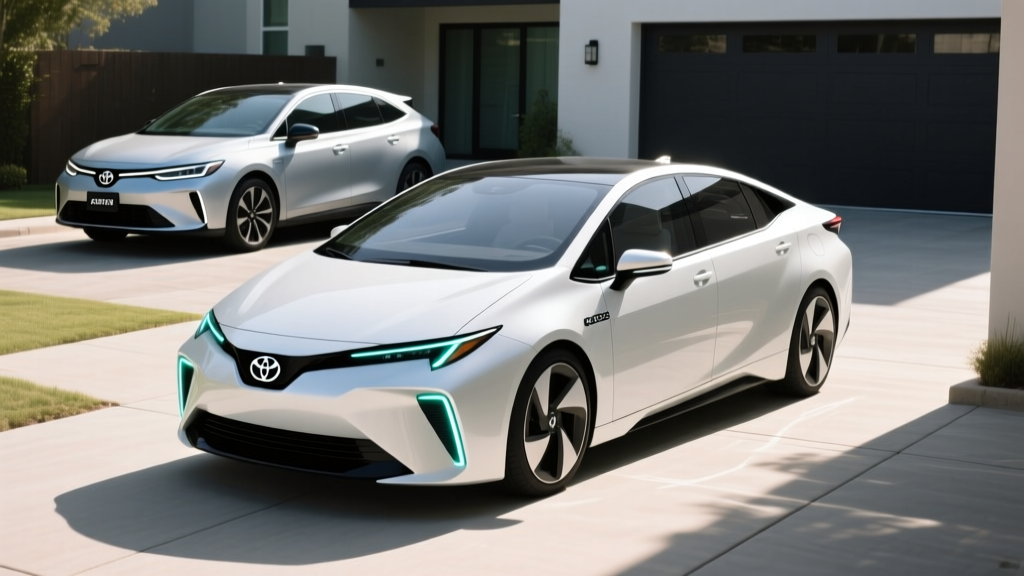
There is no fully electric (battery-electric) Toyota Prius as of the 2026 model year. Toyota offers the Prius Prime, a plug-in hybrid (PHEV) with up to 44 miles of electric-only range and a gasoline backup, alongside the standard Prius hybrid (HEV). If you specifically want a zero-tailpipe-emission, battery-only EV in the Prius price and size class, you'll need to look at competitors like the Chevrolet Bolt EV, Nissan Leaf, or Hyundai Kona Electric. The Prius Prime is the closest Toyota gets to an "electric Prius," and for many drivers, it's actually the smarter pick.
What the 2026 Prius Lineup Actually Offers
Toyota's 2026 Prius family comes in two flavors, and neither is a pure battery-electric vehicle (BEV):
| Spec | 2026 Toyota Prius (HEV) | 2026 Toyota Prius Prime (PHEV) |
|---|---|---|
| Powertrain | 2.0L 4-cyl hybrid | 2.0L 4-cyl plug-in hybrid |
| Combined Horsepower | 194 hp (AWD: 196 hp) | 220 hp |
| Electric-Only Range | N/A | 44 miles (EPA) |
| Battery Capacity | ~0.9 kWh (NiMH) | 13.6 kWh usable (Lithium-ion) |
| EPA Fuel Economy (hybrid mode) | 57 mpg combined (LE FWD) | 52 mpg combined (after battery depleted) |
| MPGe (EV mode, Prime) | N/A | 127 MPGe |
| 0-60 mph | ~7.0 sec | ~6.6 sec |
| Level 2 Charge Time (0-100%) | N/A | ~4 hours at 3.3 kW |
| Base MSRP | ~$28,350 | ~$33,450 |
| Federal Tax Credit (§30D) | Not eligible | Up to $3,750* |
| Hybrid Battery Warranty | 10 yr / 150,000 mi | 10 yr / 150,000 mi |
*Source: fueleconomy.gov. Tax credit amount depends on critical mineral and battery component sourcing per IRS §30D rules. Verify eligibility with a tax professional. The Prius Prime qualifies for a partial credit due to battery sourcing requirements; amounts vary by model year and production batch.
Prius Prime vs. a True EV: Which Fits Your Life?
The core question behind a "Prius Electric" search is whether you should buy a PHEV or go full BEV. The answer depends on your charging access, driving patterns, and risk tolerance for range limitations.
Choose the Prius Prime PHEV If:
- You lack reliable home charging. Apartment dwellers, street parkers, and those without a dedicated 240V outlet can still benefit from the Prime's 44-mile EV range by charging at work or public Level 2 stations — and never worry when charging isn't available.
- Your daily commute is under 40 miles round-trip. You'll drive almost entirely on electricity during the week, then use gas for weekend road trips with zero range anxiety.
- You regularly take long road trips. The Prius Prime's combined range exceeds 600 miles (electric + gas). A BEV like the Kona Electric (261-mile EPA range) requires DC fast-charging stops every ~200 real-world highway miles.
- You live in extreme cold. BEVs lose 20-30% of range in sub-freezing temperatures. The Prime's gas engine provides heat and eliminates cold-weather range cliff risk.
Choose a True BEV (Bolt, Kona Electric, etc.) If:
- You have Level 2 home charging. This is the single biggest factor. Waking up to a full battery every morning makes BEV ownership effortless and eliminates fuel station visits almost entirely.
- You want zero tailpipe emissions and minimal maintenance. No oil changes, no spark plugs, no exhaust system. BEVs have far fewer moving parts.
- You want maximum federal tax credits. Qualifying BEVs can receive the full $7,500 §30D credit (subject to MSRP, income, and sourcing caps), while the Prius Prime typically qualifies for a partial credit.
- Your daily driving is predictable and under 200 miles. Most modern BEVs handle this easily with range to spare.
Real Cost Breakdown: Prius Prime vs. Battery EV vs. Gas Car
Let's compare five-year ownership costs across the Prius Prime, a similarly priced BEV (2026 Hyundai Kona Electric SEL, ~$33,000 MSRP), and a conventional gas compact (2026 Honda Civic, ~$25,000 MSRP). All figures assume 15,000 miles/year, $0.14/kWh home electricity, $3.40/gallon regular unleaded, and the Prime driven 70% of daily miles in EV mode.
| Cost Category (5 Years) | Prius Prime PHEV | Kona Electric BEV | Honda Civic (Gas) |
|---|---|---|---|
| Purchase Price (MSRP) | $33,450 | $33,000 | $25,000 |
| Fed. Tax Credit (§30D est.) | −$3,750 | −$7,500 | $0 |
| Effective Purchase | $29,700 | $25,500 | $25,000 |
| Fuel/Energy (5 yr, 75k mi) | ~$3,800 | ~$3,150 | ~$7,650 |
| Maintenance (5 yr) | ~$2,200 | ~$1,400 | ~$3,500 |
| Insurance (5 yr avg.) | ~$8,500 | ~$9,200 | ~$7,800 |
| Est. Depreciation (5 yr) | ~$12,000 | ~$13,500 | ~$10,000 |
| Total 5-Year Cost | ~$56,200 | ~$52,750 | ~$53,950 |
Notes: Tax credit eligibility depends on buyer income (AGI ≤ $150k single / $300k joint for §30D), MSRP caps ($55k cars), and battery sourcing. Insurance for BEVs tends to run 10-15% higher than ICE equivalents per industry data. Maintenance for PHEVs includes oil changes; BEVs skip these entirely. Source for efficiency data: fueleconomy.gov.
Charging the Prius Prime: What You Need to Know
The 2026 Prius Prime uses a 13.6 kWh lithium-ion battery pack and accepts up to 3.3 kW on Level 2 AC charging. That means a full charge from empty takes roughly 4 hours. It does not support DC fast charging — a meaningful limitation if you were hoping to top up quickly on road trips. In practice, this rarely matters because the gas engine covers long-distance driving.
Level 1 (120V household outlet): Adds about 4 miles of range per hour. A full charge takes roughly 12-14 hours. Fine for overnight charging if your daily EV commute is under 30 miles.
Level 2 (240V, home wall charger): Adds roughly 11-12 miles of range per hour at 3.3 kW. Full charge in ~4 hours. A basic Level 2 home installation (charger + electrician + permit) typically runs $800-$2,000 depending on whether your electrical panel needs an upgrade.
Real-World EV Range Reality
The Prius Prime's 44-mile EPA electric range is achievable in mild weather with moderate speeds. Expect ~36-40 miles in cold weather (below 35°F) due to cabin heating draw, and ~38-42 miles at sustained highway speeds above 70 mph. For a 30-mile round-trip commute, you'll stay in EV mode almost year-round. For a 50-mile commute, the gas engine will kick in on longer days.
Common Misconceptions About a "Prius Electric"
| Myth | Fact |
|---|---|
| "Toyota makes a fully electric Prius." | No. The Prius Prime is a PHEV (plug-in hybrid). Toyota's only current mass-market BEV is the bZ4X crossover. |
| "The Prius Prime can DC fast charge." | Incorrect. It maxes out at 3.3 kW AC Level 2 — no CCS or NACS DC fast-charging capability. |
| "PHEVs are just gas cars with a tiny battery." | The Prime's 13.6 kWh pack and 220 hp combined output deliver genuine EV-first commuting. Most owners report using gas only on road trips. |
| "I'll save more with a full EV." | It depends. If you lack home charging, a BEV's public-charging costs (often $0.30-$0.50/kWh at DC stations) can exceed what you'd pay for gas in a Prius Prime. |
| "The hybrid battery will need expensive replacement." | Toyota warranties the hybrid battery for 10 years/150,000 miles. Real-world data shows Toyota hybrid batteries often last 150k-200k+ miles. Replacement (if needed out of warranty) runs $2,500-$4,000. |
Ownership Realities First-Time Buyers Overlook
Home charging is the make-or-break factor. If you can install a 240V Level 2 charger at home, both BEVs and the Prius Prime become dramatically more convenient and cheaper to run. If you can't, the Prius Prime is far more forgiving — you simply fill up at a gas station when the battery depletes.
Cold weather affects all electrified vehicles. BEVs lose 20-30% of range in freezing temperatures. The Prius Prime loses some EV range too, but the gas engine eliminates any stranding risk. If you live in northern climates with harsh winters, this is a genuine advantage for PHEVs.
Insurance costs more for electrified vehicles. Both BEVs and PHEVs typically carry higher premiums than equivalent gas cars — roughly 10-15% more for BEVs, 5-10% more for PHEVs — due to higher repair costs and battery replacement risk. Get quotes before buying.
Tax credit rules are specific and change frequently. The §30D federal credit has buyer income caps ($150,000 single / $300,000 joint AGI), vehicle MSRP caps ($55,000 for cars), and strict battery-sourcing requirements that change annually. The Prius Prime currently qualifies for a partial credit. Always verify current-year rules on irs.gov before relying on credit amounts in your budget.
Decision Framework: Should You Buy a Prius Prime or Go Full EV?
Your Electrified Vehicle Decision Path
- Can you install a Level 2 charger at home?
- YES → Do you take road trips over 250 miles more than 4x/year?
- YES → Prius Prime PHEV is your best fit.
- NO → A BEV (Kona Electric, Bolt, Model 3) saves more long-term.
- NO → Prius Prime PHEV — a BEV without home charging means frequent public-charging detours at higher per-kWh costs.
- YES → Do you take road trips over 250 miles more than 4x/year?
- Is your daily round-trip commute under 40 miles?
- YES → Prius Prime covers it entirely on electricity most days.
- NO → A BEV with 250+ miles of range avoids daily gas use entirely.
- Do you live where winters regularly drop below 25°F?
- YES → Prius Prime's gas backup eliminates cold-weather range risk.
- NO → BEV range loss is manageable; either option works.
Frequently Asked Questions
Will Toyota ever make a fully electric Prius?
Toyota has not announced a battery-electric Prius. The company has invested heavily in its "multi-pathway" strategy, offering hybrids, PHEVs, hydrogen fuel cells, and a limited BEV lineup (bZ4X). Industry analysts suggest a next-generation Prius could eventually go full electric, but nothing is confirmed for the 2027 model year. Toyota's hybrid sales remain extremely strong, reducing the urgency for an EV-only Prius.
How much does it cost to charge a Prius Prime at home?
The 13.6 kWh battery, charged from empty to full at the national average of $0.14/kWh, costs about $1.90 per charge. If you drive 40 EV miles daily and charge nightly, expect roughly $42/month in electricity for commuting — compared to about $95/month in gasoline for the same miles at 30 mpg and $3.40/gallon.
Does the Prius Prime qualify for the $7,500 federal tax credit?
No. Under current IRS §30D rules, the Prius Prime typically qualifies for a partial credit (approximately $3,750) due to battery component and critical mineral sourcing requirements. The full $7,500 credit requires meeting both the critical minerals and battery components thresholds. Eligibility also depends on your income (AGI caps apply) and the vehicle's MSRP (must be ≤ $55,000 for sedans). Always confirm with a tax professional before purchasing.
Is the Prius Prime better than a regular Prius hybrid?
If you can charge at home or work, yes — the Prime gives you 44 miles of smooth, quiet EV commuting with the safety net of a gas engine. It's also more powerful (220 hp vs. 194 hp). The trade-off is a higher purchase price (~$5,100 more at base MSRP) and slightly lower trunk space due to the larger battery. If you can never charge, the standard Prius HEV at 57 mpg combined is still one of the most efficient cars sold and costs less upfront.
What's the best EV alternative if I want a "Prius Electric"?
In the same price bracket ($30,000-$38,000), the strongest BEV alternatives include the Hyundai Kona Electric (261 mi EPA, ~$33,000, eligible for full $7,500 credit), the Chevrolet Bolt EV (259 mi EPA, ~$27,000 before credit, one of the cheapest new EVs available), and the Nissan Leaf (212 mi EPA on SV Plus, ~$30,000). All three are smaller crossovers rather than sedans, but they match or beat the Prius Prime on interior space and offer zero-emission driving with full federal credit eligibility.