Quick Answer: Porsche currently offers two electric SUVs for the U.S. market: the Macan Electric (starting ~$78,800, EPA range up to 308 miles, 100 kWh battery) and the upcoming Cayenne Electric (announced for late 2026, estimated EPA range ~350+ miles on the PPE platform). Neither qualifies for the $7,500 federal §30D tax credit due to MSRP caps and battery-sourcing rules. Expect real-world highway range of 240–270 miles in the Macan EV and DC fast charging from 10–80% in roughly 21 minutes at up to 270 kW. Total 5-year ownership costs run approximately $62,000–$75,000 depending on trim, electricity rates, and insurance.
Which Porsche Electric SUVs Can You Actually Buy?
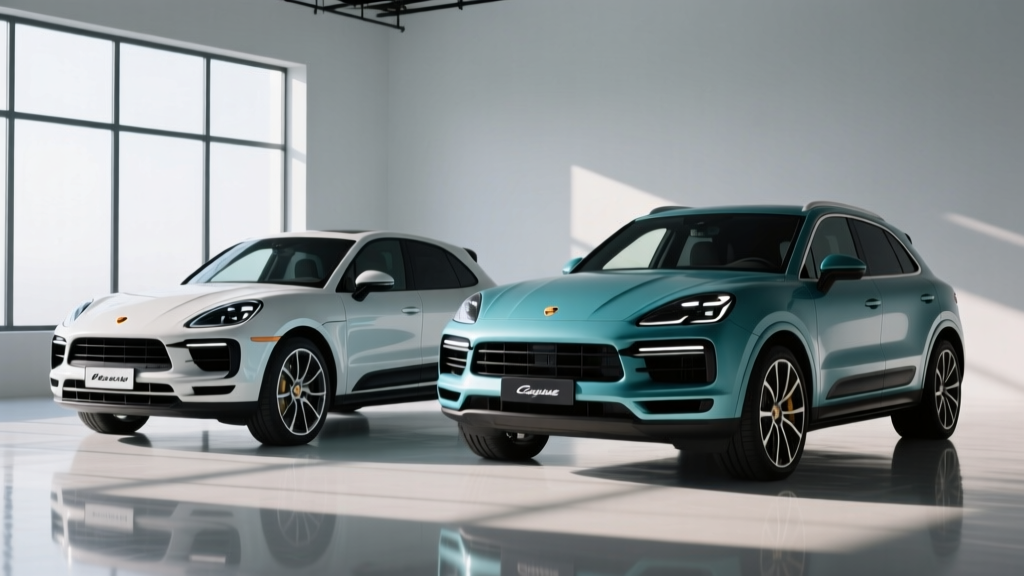
Porsche's electric SUV lineup in 2026 centers on the Macan Electric, which entered U.S. showrooms in mid-2024 and has been updated for the 2026 model year with revised software and slightly improved efficiency. The larger Cayenne Electric has been officially announced and is expected to arrive in late 2026 as a 2027 model, riding on the same Premium Platform Electric (PPE) architecture co-developed with Audi.
If you're shopping today, the Macan EV is your only option. If you need three-row seating or over 300 miles of range and can wait, the Cayenne EV is worth tracking.
| Spec | Macan 4 Electric | Macan Turbo Electric | Cayenne Electric (Announced) |
|---|---|---|---|
| Base MSRP | $78,800 | $104,900 | ~$95,000 (est.) |
| Battery (usable) | 95 kWh (NMC) | 95 kWh (NMC) | ~100–113 kWh (NMC, est.) |
| EPA Range | 308 mi | 288 mi | ~350 mi (est.) |
| Horsepower | 402 hp | 630 hp | TBD |
| 0–60 mph | 4.9 sec | 3.1 sec | ~3.5 sec (est.) |
| Peak DC Charge Rate | 270 kW | 270 kW | ~300+ kW (est.) |
| 10–80% DC Charge | ~21 min | ~21 min | ~18–20 min (est.) |
| Level 2 (AC) Rate | 11 kW | 11 kW | 11 kW (est.) |
| EPA Efficiency | 84 MPGe | 79 MPGe | TBD |
| Battery Warranty | 8 yr / 100,000 mi | 8 yr / 100,000 mi | 8 yr / 100,000 mi (est.) |
| Federal Tax Credit | Not eligible | Not eligible | Unlikely eligible |
Real-World Range Reality Check: The Macan 4 Electric's EPA rating of 308 miles assumes mixed driving at moderate temperatures. In our experience and consistent with third-party testing, expect 250–275 miles during sustained highway driving at 70–75 mph, and as low as 210–230 miles in sub-freezing winter conditions. The Turbo trim's higher power output and wider tires reduce its real-world highway range to approximately 230–250 miles. Porsche's thermal management system with heat pump helps mitigate cold-weather losses compared to EVs without active battery conditioning.
Porsche Electric SUV vs. Gas Porsche SUV: The Numbers
The most common cross-shopping decision is Macan EV vs. the gasoline Macan (which Porsche is phasing out in the U.S. but remains available as a 2025 carryover) or the gas Cayenne. Here's how the economics stack up over five years and 75,000 miles.
| Cost Category | Macan 4 Electric | Gas Macan (Base, 261 hp) |
|---|---|---|
| Purchase Price (MSRP) | $78,800 | $62,900 |
| Federal Tax Credit | $0 | $0 |
| Fuel/Energy (75k mi) | $5,625 (home L2, $0.15/kWh avg) | $13,500 (premium 91 octane, $4.50/gal, 21 MPG combined) |
| Maintenance (5 yr) | $1,800 (cabin filter, wipers, brake fluid, tires) | $5,200 (oil changes, brakes, filters, spark plugs) |
| Insurance (5 yr avg) | $14,500 | $11,200 |
| Estimated Depreciation | $32,000 | $24,500 |
| Total 5-Year Cost | $132,725 | $117,300 |
The Macan EV costs roughly $15,000–$16,000 more over five years, driven primarily by the higher purchase price, steeper insurance premiums, and faster depreciation. However, you save approximately $7,875 on fuel and $3,400 on maintenance. The EV's cost advantage grows if you have access to cheap overnight home charging or solar, and shrinks if you rely heavily on public DC fast charging (which can cost $0.35–$0.55/kWh, narrowing the gap to gas).
Charging the Porsche Macan EV: What You Need to Know
Porsche equips the Macan Electric with an 800-volt architecture, enabling DC fast charging at up to 270 kW on compatible CCS or NACS chargers (Porsche has adopted NACS for newer builds, and CCS adapters are available). Here's the charging breakdown:
| Level | Power | Miles Added per Hour | Typical Use Case |
|---|---|---|---|
| Level 1 (120V) | ~1.4 kW | ~4–5 mi/hr | Emergency / overnight trickle |
| Level 2 (240V, 48A) | 11 kW | ~35–38 mi/hr | Home daily charging; full charge in ~9 hr |
| DC Fast Charge | Up to 270 kW | Up to ~200 mi in 15 min | Road trips; 10–80% in ~21 min |
Charging-curve reality: The 270 kW peak rate is not sustained. Porsche's charge curve holds above 200 kW from roughly 10% to 40% SoC, then tapers progressively. From 80% to 100%, charging slows dramatically to protect the NMC battery — expect the final 20% to take as long as the 10–80% session. For daily use, set your charge limit to 80% to preserve long-term battery health.
Preconditioning matters. When you navigate to a DC fast charger using the Macan's built-in navigation, the battery thermal system preconditions the pack to optimal temperature. Skipping preconditioning (e.g., pulling into a charger without navigation routing) can add 5–8 minutes to your 10–80% session in cold weather.
Home Charging Installation
To fully utilize the Macan EV's 11 kW Level 2 capability, you need a 240V / 60-amp circuit (48A continuous draw). Porsche offers the Mobile Charger Connect and the optional Porsche Home Energy Manager. Budget for professional installation:
| Item | Cost Range |
|---|---|
| Level 2 EVSE (48A hardwired) | $500–$1,200 |
| Electrician labor (run 60A circuit) | $800–$2,500 |
| Permit & inspection | $100–$400 |
| Panel upgrade (if needed, 200A service) | $1,500–$4,000 |
| Total (no panel upgrade) | $1,400–$4,100 |
| Total (with panel upgrade) | $2,900–$8,100 |
Always hire a licensed electrician and confirm your panel has capacity for a new 60-amp breaker. Many older homes with 100-amp service will require an upgrade.
Federal Tax Credit and Incentive Reality
Here's the straightforward truth: neither the Macan Electric nor the expected Cayenne Electric qualifies for the $7,500 federal §30D tax credit. Multiple disqualifying factors apply:
- MSRP cap: SUVs must be priced at or below $80,000 to qualify. The Macan 4 Electric starts at $78,800, but with even modest options (metallic paint, premium package), it exceeds the cap. The Turbo trim at $104,900 is well over.
- Battery sourcing: Under current IRS rules, eligible vehicles must meet critical-mineral and battery-component sourcing thresholds that increasingly exclude materials processed in China. Porsche's supply chain has not met these requirements for U.S.-spec vehicles.
- Buyer income cap: Even if the vehicle qualified, buyers must have adjusted gross income below $300,000 (joint) / $150,000 (single) to claim the credit.
Some buyers may qualify for state or utility incentives — check your local programs. States like California, Colorado, and Massachusetts offer additional rebates, but these vary by jurisdiction and change frequently. Consult IRS.gov §30D guidelines and a tax professional for your specific situation.
Common Misconceptions About the Porsche Electric SUV
| Myth | Fact |
|---|---|
| "The Macan EV gets 308 miles of real-world range." | EPA 308 mi is a lab estimate. Expect 250–275 mi highway, 210–230 mi in freezing temps. |
| "It charges at 270 kW the whole time." | 270 kW is peak rate at low SoC. Average rate across a 10–80% session is ~160–180 kW. |
| "I'll save money vs. the gas Macan." | Lower fuel and maintenance costs, but higher purchase price, insurance, and depreciation mean the EV costs ~$15K more over 5 years. |
| "It qualifies for the $7,500 federal tax credit." | It does not — MSRP cap, battery sourcing, and income limits all work against eligibility. |
| "The battery will need replacing soon." | Porsche warranties the battery for 8 years / 100,000 miles against dropping below 70% capacity. NMC degradation is typically 8–12% over 100K miles with proper care. |
| "I can charge at any Tesla Supercharger." | 2026 Macan EVs with NACS ports can access Superchargers directly. CCS-equipped models require a NACS adapter. Always verify connector compatibility before traveling. |
Decision Framework: Should You Buy a Porsche Electric SUV?
Choose the Macan 4 Electric if:
- You have reliable Level 2 home charging (garage or driveway with 240V access)
- Your daily commute is under 100 miles round-trip
- You value instant torque, a near-silent cabin, and one-pedal driving around town
- You're willing to pay a ~$15K 5-year ownership premium over the gas Macan for the EV driving experience
- You want a compact luxury EV SUV in the $78K–$90K range
Choose the Macan Turbo Electric if:
- Performance is the priority — 630 hp, 3.1-second 0–60, and Porsche Active Suspension Management
- You accept the range tradeoff (~288 EPA, ~230–250 real-world highway)
- Budget is flexible above $105K before options
Wait for the Cayenne Electric if:
- You need more cargo space, a larger cabin, or potential three-row seating
- You want 350+ miles of EPA range for frequent road trips
- You can wait until late 2026 or 2027 for deliveries
Stick with a gas Cayenne or consider a PHEV alternative if:
- You lack home charging access and rely entirely on street parking or apartment living
- You regularly drive 400+ miles in a single day in rural areas with sparse DC charging infrastructure
- You tow frequently (the Macan EV is rated for 4,409 lbs, but towing cuts range by 30–50%)
First-Time EV Buyer Checklist for the Macan EV
If this is your first electric vehicle, here's what to confirm before signing:
- Home charging feasibility: Can you install a 240V / 60A circuit? Get an electrician quote before purchasing.
- Commute math: Calculate your round-trip commute plus weekly errands. If it's under 200 miles, you'll charge at home 95% of the time and rarely need public charging.
- Climate adjustment: If you live where winters drop below 32°F, plan for 20–25% range loss. A 308-mile EPA range becomes ~230 miles in January in Minnesota.
- Insurance quote: Get a real insurance quote before purchase. EV insurance runs 15–25% higher than gas equivalents for the Macan, often $2,800–$3,200/year depending on your profile.
- Tire budget: EVs are heavier and deliver instant torque, wearing tires 20–30% faster. Budget $1,200–$1,800 for a set of four premium tires every 25,000–35,000 miles.
- Public charging apps: Download PlugShare, Electrify America, and EVgo before your first road trip. Verify NACS vs. CCS compatibility for your specific build.
For EPA efficiency data, consult fueleconomy.gov. For safety ratings, check NHTSA and IIHS as crash-test results become available for the Macan EV platform.
Frequently Asked Questions
Does the Porsche Macan Electric qualify for any tax credits?
As of 2026, the Macan Electric does not qualify for the $7,500 federal §30D tax credit due to MSRP cap exceedance (with options), battery-sourcing requirements, and buyer income limits. Some state incentives may apply — check your state's energy office or DSIRE database.
How long does it take to charge the Macan EV at home?
On a Level 2 home charger at 11 kW (240V, 48A), a full charge from 0–100% takes approximately 9 hours. Most owners charge from 20–80% overnight, which takes about 5–6 hours. On a standard 120V outlet (Level 1), expect roughly 4–5 miles of range per hour — adequate only for very low daily mileage or emergency top-ups.
What is the real-world highway range of the Macan 4 Electric?
While the EPA rates the Macan 4 Electric at 308 miles, sustained highway driving at 70–75 mph typically yields 250–275 miles in mild weather and 210–230 miles in freezing conditions. The Turbo trim delivers roughly 230–250 miles on the highway.
How does the Macan EV compare to the Tesla Model Y or BMW iX?
The Macan EV offers superior build quality, chassis tuning, and brand prestige versus the Model Y, but at nearly double the price and with less range. Compared to the BMW iX xDrive50 (EPA 324 mi, ~$87K), the Macan EV is slightly smaller, similarly priced, and trades range for sportier handling. The iX qualifies for the federal credit in some configurations; the Macan EV does not.
Will the battery need replacement, and what does it cost?
Porsche warranties the high-voltage battery for 8 years or 100,000 miles, guaranteeing at least 70% of original capacity. Based on NMC chemistry degradation data from similar PPE-platform vehicles, expect 8–12% capacity loss at 100K miles with proper care (avoiding frequent 100% charges, limiting DC fast charging to road trips). Out-of-warranty battery replacement is estimated at $15,000–$22,000, though this figure may decline as battery costs fall.
Can I tow with the Porsche Macan Electric?
Yes. The Macan EV is rated to tow up to 4,409 lbs (braked trailer). However, towing significantly reduces range — expect a 30–50% reduction depending on trailer weight and aerodynamics. A 308-mile EPA range drops to roughly 160–210 miles while towing near max capacity.