Polestar 2 vs Tesla Model 3: The Complete Electric Sedan Comparison
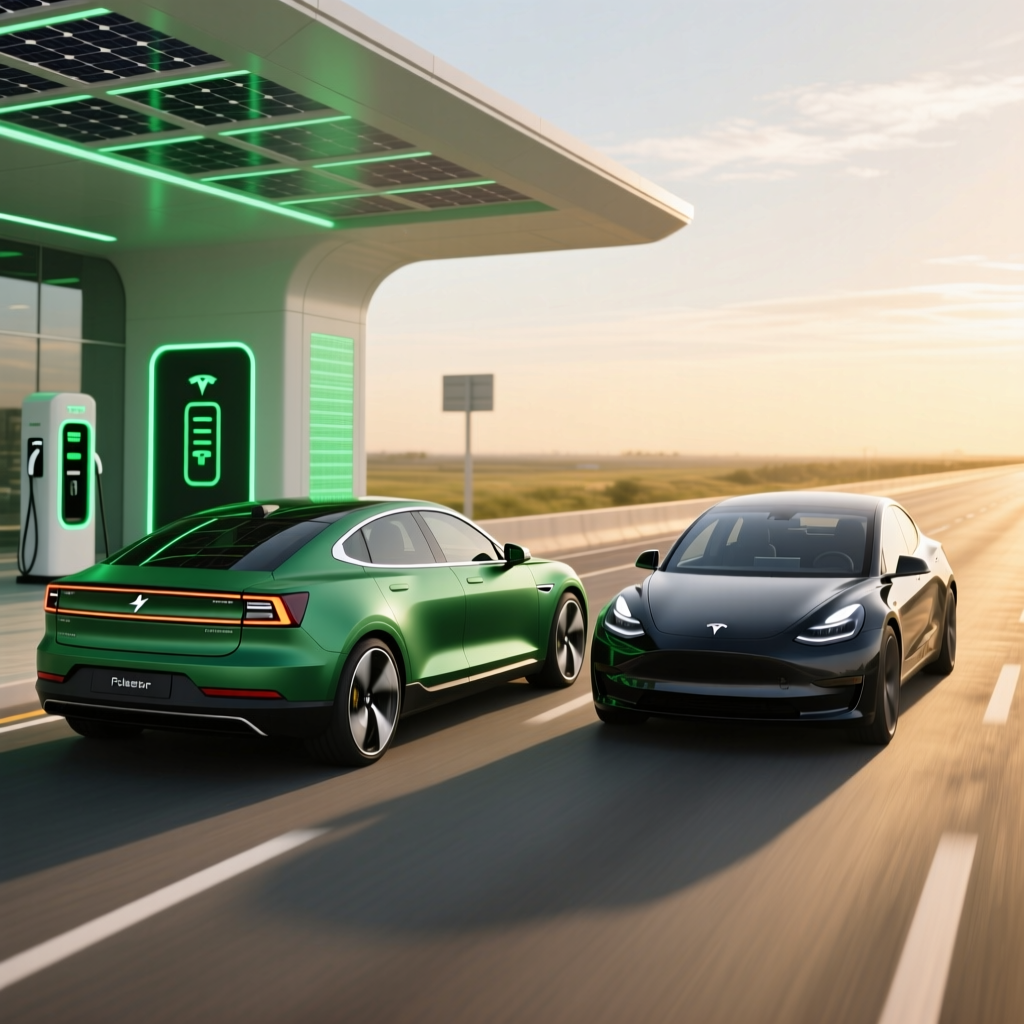
The electric sedan segment has grown into one of the most competitive spaces in the automotive world, and two nameplates consistently rise to the top of every shortlist: the Polestar 2 and the Tesla Model 3. Both are premium, all-electric sedans aimed at tech-savvy drivers who want a blend of performance, range, and Scandinavian or Silicon Valley design philosophy. But which one is right for you?
In this in-depth comparison, we put the Polestar 2 and Tesla Model 3 head to head across every category that matters — from EPA-estimated range and charging speed to interior quality, technology, and long-term value. Whether you are cross-shopping these two EVs or simply curious how they stack up, this guide will give you the clarity you need to make an informed decision.
For our individual takes on each vehicle, be sure to check out our Polestar 2 review and our Tesla Model 3 review. You can also see how they rank in our best electric sedans roundup.
Overview: Polestar 2 and Tesla Model 3 at a Glance
The Polestar 2 is the product of a Swedish-Chinese partnership between Volvo and Geely. It positions itself as a design-forward, driver-focused electric liftback with a minimalist Scandinavian interior and Google-based infotainment. Polestar targets buyers who appreciate understated luxury, build quality, and a more traditional automotive feel combined with EV innovation.
The Tesla Model 3 needs little introduction. As the vehicle that arguably brought electric cars into the mainstream, the Model 3 is Tesla's volume seller — a sleek, minimalist sedan built around a massive central touchscreen, over-the-air updates, and access to the Supercharger network. It appeals to tech enthusiasts, efficiency seekers, and anyone who wants maximum range per dollar.
Both vehicles are available in multiple trims with single-motor (rear-wheel drive) and dual-motor (all-wheel drive) configurations, as well as high-performance variants. They compete directly in price, size, and mission, making this one of the most compelling matchups in the EV world.
Side-by-Side Specification Comparison
| Specification | Polestar 2 (Long Range Dual Motor) | Tesla Model 3 (Long Range AWD) |
|---|---|---|
| Starting Price (approx.) | $49,000 – $53,000 | $47,000 – $51,000 |
| Drivetrain | Dual Motor AWD | Dual Motor AWD |
| Horsepower | 408 hp (up to 476 hp with Performance Pack) | ~384 hp |
| Torque | 487 lb-ft | ~377 lb-ft |
| 0–60 mph | 4.1 seconds (3.8 s with Perf. Pack) | 4.2 seconds |
| EPA-Estimated Range | 276 miles | 341 miles |
| Battery Capacity (usable) | ~75 kWh | ~75 kWh |
| Max DC Fast Charging | 205 kW | 250 kW |
| Charging Port | CCS (NACS adapter available) | NACS (native Tesla connector) |
| Cargo Volume | 14.4 cu ft (rear) + 1.4 cu ft (frunk) | 21.0 cu ft (rear) + 3.1 cu ft (frunk) |
| Seating Capacity | 5 | 5 |
| Warranty (Basic / Battery) | 4 yr / 50,000 mi & 8 yr / 100,000 mi | 4 yr / 50,000 mi & 8 yr / 120,000 mi |
Note: Specifications reflect the most current data available from fueleconomy.gov and manufacturer sources. Trims, pricing, and specs may vary by market and model year.
Range & Efficiency: Which EV Goes Farther?
Range is often the first metric EV shoppers look at, and this is where the Tesla Model 3 pulls ahead decisively. The Tesla Model 3 Long Range AWD carries an EPA-estimated range of approximately 341 miles, making it one of the most efficient electric sedans on the market. Tesla's industry-leading efficiency comes from a combination of aerodynamic optimization, a heat-pump-based thermal management system, and highly efficient powertrain software.
The Polestar 2 Long Range Dual Motor, by contrast, is rated at roughly 276 miles on a full charge. While that is perfectly adequate for most daily commutes and even longer road trips, it trails the Model 3 by about 65 miles — a difference you will notice on highway stretches between charging stops.
The single-motor variants of each vehicle shift the numbers somewhat. The Polestar 2 single-motor edition can reach closer to 300 miles in certain configurations, while the Model 3 Rear-Wheel Drive typically lands around 272 miles. Still, in the most popular dual-motor trims, Tesla holds a clear efficiency advantage.
In real-world testing by independent outlets, both vehicles tend to meet or come close to their EPA estimates in mixed driving. However, at sustained highway speeds of 75 mph or above, the Model 3's superior aerodynamic drag coefficient (approximately 0.219) gives it an edge over the Polestar 2's more upright, crossover-inspired silhouette.
Winner: Tesla Model 3 — for overall range and energy efficiency, the Model 3 remains the benchmark in this segment.
Price & Value: Getting the Most for Your Money
Pricing for both vehicles has fluctuated over time due to incentives, trim restructuring, and market conditions, but they remain closely matched. The Tesla Model 3 Long Range AWD typically starts in the mid-$40,000s, while the Polestar 2 Long Range Dual Motor generally starts in the upper-$40,000s to low-$50,000s depending on options.
Tesla's pricing strategy tends to be more streamlined — you choose a trim, pick a color and wheel option, and you are done. Polestar offers more à la carte packages (the Performance Pack, Plus Pack, Pilot Pack, etc.), which can push the price higher but also allow for more personalization.
When it comes to total cost of ownership, several factors come into play:
- Federal & state incentives: Both vehicles may qualify for federal EV tax credits depending on current regulations and your personal tax situation. Always verify eligibility before purchasing.
- Insurance: Insurance costs for both vehicles are comparable, though Tesla's in-house insurance program may offer competitive rates in certain regions.
- Maintenance: Both EVs require minimal routine maintenance compared to internal combustion vehicles. Tesla's mobile service network and over-the-air diagnostics can reduce service visits.
- Depreciation: Historically, Teslas have held strong resale value, though the used EV market is evolving rapidly. Polestar's depreciation curve has been steeper in some markets, which could benefit used buyers but hurt first owners.
For a broader look at value-oriented EVs, see our best EVs under $50,000 ranking.
Winner: Tesla Model 3 — slightly lower starting prices and strong efficiency give it a value edge, though Polestar's package-based approach offers more customization for those willing to pay.
Charging Speed & Charging Network Access
Charging speed and infrastructure access are critical to the EV ownership experience, and this category highlights one of Tesla's biggest advantages.
DC Fast Charging
The Tesla Model 3 supports peak DC fast-charging speeds of up to 250 kW on V3 Superchargers. In practice, this means you can add roughly 175 miles of range in about 15 minutes under optimal conditions. Tesla's Supercharger network is widely regarded as the most reliable and extensive fast-charging network, with thousands of stations across major highways and urban areas.
The Polestar 2 supports up to 205 kW on CCS-compatible DC fast chargers. A 10–80% charge takes approximately 30 minutes, which is competitive but slightly slower than the Model 3's peak capability. Polestar owners rely on third-party networks such as Electrify America, EVgo, and ChargePoint. While these networks have expanded significantly, they can be less reliable than Tesla's proprietary Supercharger network in some areas.
Charging Connector & Network Transition
An important development in the EV charging landscape is the industry-wide shift toward the North American Charging Standard (NACS), originally developed by Tesla. Polestar has announced plans to adopt NACS on future models and provide adapters for existing vehicles, which will eventually give Polestar 2 owners access to Tesla Superchargers. This transition is a major equalizer, though availability of adapters and full network integration may vary by region and timeline.
Home Charging
Both vehicles support Level 2 AC home charging. The Tesla Model 3 can accept up to 11.5 kW on a Wall Connector, while the Polestar 2 supports up to 11 kW on a compatible Level 2 charger. For overnight home charging, both will comfortably replenish a full battery in 7–9 hours.
Winner: Tesla Model 3 — faster peak charging speeds and unmatched Supercharger network access give Tesla a decisive edge, though the gap is narrowing as NACS adoption spreads.
Performance & Driving Dynamics
Both the Polestar 2 and Tesla Model 3 offer thrilling acceleration and confident handling, but they deliver very different driving experiences.
Acceleration & Power
The Polestar 2 Dual Motor produces 408 horsepower and 487 lb-ft of torque, launching to 60 mph in approximately 4.1 seconds. With the optional Performance Pack (which includes software-tuned output, Öhlins dampers, and Brembo brakes), output rises to 476 hp and the 0–60 time drops to around 3.8 seconds. The Polestar feels planted, composed, and genuinely engaging on twisty roads — a testament to its Volvo/CMA platform roots and chassis tuning by Polestar's engineering team.
The Tesla Model 3 Long Range AWD produces approximately 384 horsepower and hits 60 mph in about 4.2 seconds. The Model 3 Performance variant shaves that down to roughly 3.1 seconds with its dual-motor setup and track-oriented software modes. Tesla's instant torque delivery and low center of gravity make it feel explosively quick off the line.
Handling & Ride Quality
This is where the Polestar 2 distinguishes itself. Reviewers consistently praise its balanced chassis, communicative steering, and supple ride quality. The available Öhlins dual-flow dampers (included in the Performance Pack) are a standout feature rarely seen at this price point. The Polestar 2 feels like a premium European sport sedan that happens to be electric.
The Model 3's handling has improved with recent refreshes, offering sharper turn-in and better body control. However, its ride quality can feel firm over rough pavement, and some drivers find the steering artificially weighted. It is a capable performer, but it prioritizes efficiency and technology over driving engagement.
Winner: Polestar 2 — for drivers who value ride quality, steering feel, and traditional sport-sedan dynamics, the Polestar 2 is the more rewarding car to drive.
Interior Space, Comfort & Design
The interiors of the Polestar 2 and Tesla Model 3 reflect two fundamentally different philosophies of automotive design.
Design Philosophy
The Polestar 2 interior is a masterclass in Scandinavian minimalism. Materials include vegan upholstery (Polestar's "WeaveTech"), available Nappa leather, real wood or aluminum inlays, and a clean, layered dashboard. The 11.2-inch vertical touchscreen runs Android Automotive OS with built-in Google Maps, Google Assistant, and access to the Google Play Store. Physical controls for climate and volume complement the touchscreen, creating a user-friendly environment.
The Tesla Model 3 takes minimalism to an extreme. Nearly all vehicle functions — including glovebox release, mirror adjustment, and vent direction — are routed through the 15.4-inch central touchscreen. The refreshed Model 3 interior has improved significantly with ambient lighting, ventilated front seats, and higher-quality materials, but the near-total absence of physical buttons remains polarizing.
Space & Practicality
The Tesla Model 3 holds a notable advantage in cargo capacity. Its rear trunk offers approximately 21 cubic feet of space, plus a 3.1-cubic-foot frunk, for a combined total that significantly outpaces the Polestar 2. The Model 3's traditional sedan trunk opening is also quite wide and practical.
The Polestar 2's liftback design provides a wide opening and 14.4 cubic feet of rear cargo space, plus a small 1.4-cubic-foot frunk. The liftback's hatch-style opening makes loading bulky items easier in some scenarios, but total volume is noticeably less than the Model 3.
For rear-seat passengers, both vehicles offer adequate legroom and headroom for average-sized adults, though neither is particularly generous compared to midsize sedans. The Polestar 2's slightly higher roofline gives it a subtle edge in rear headroom, while the Model 3's longer wheelbase translates to marginally more legroom.
Winner: Tesla Model 3 — for cargo volume and overall practicality. However, the Polestar 2 earns high marks for interior material quality and ergonomic design.
Technology & Software
Technology is a core battleground for these two EVs, and each takes a distinct approach.
Infotainment
The Polestar 2 runs Android Automotive OS, developed in partnership with Google. This means native Google Maps navigation (with real-time traffic and integrated EV routing), Google Assistant voice control, and access to apps like Spotify, YouTube Music, and more through the Google Play Store. The system is responsive, intuitive, and benefits from Google's mapping expertise. Apple CarPlay is also available for iPhone users.
The Tesla Model 3 uses Tesla's proprietary operating system, which is widely considered the gold standard for EV infotainment. It features a highly responsive interface, excellent built-in navigation with Supercharger routing, a built-in dashcam and Sentry Mode, streaming media (Netflix, YouTube, Arcade games while parked), and a robust mobile app for remote vehicle control. Tesla does not support Apple CarPlay or Android Auto, which is a dealbreaker for some buyers.
Driver Assistance
Both vehicles offer advanced driver-assistance systems (ADAS):
- Polestar 2: The Pilot Pack includes adaptive cruise control, lane-keeping assist, and Pilot Assist (a hands-on semi-autonomous system). It also features a 360-degree camera, blind-spot monitoring, and cross-traffic alert. The system is competent and confidence-inspiring, though it does not attempt hands-off driving.
- Tesla Model 3: Tesla's Autopilot comes standard with adaptive cruise control and lane centering. The optional Enhanced Autopilot adds auto lane change, navigate on Autopilot, and Smart Summon. Full Self-Driving (FSD) capability is available as a premium add-on, offering traffic light and stop sign recognition, and city street driving features — though it remains a supervised system requiring driver attention at all times.
Tesla's software ecosystem is more expansive, with features like Sentry Mode, Dog Mode, over-the-air updates that regularly add new functionality, and a best-in-class mobile app. Polestar's Google-based system excels in navigation and voice control but receives less frequent feature updates.
Winner: Tesla Model 3 — for the breadth and depth of its software ecosystem, though Polestar's Google integration is excellent for navigation and everyday usability.
Warranty & Ownership Experience
Long-term peace of mind is essential when investing in an electric vehicle, and both manufacturers offer competitive warranty coverage.
| Warranty Category | Polestar 2 | Tesla Model 3 |
|---|---|---|
| Basic Vehicle Warranty | 4 years / 50,000 miles | 4 years / 50,000 miles |
| Battery & Drive Unit | 8 years / 100,000 miles | 8 years / 120,000 miles |
| Roadside Assistance | 4 years / unlimited miles | 4 years / 50,000 miles |
| Corrosion Warranty | 12 years / unlimited miles | Not specified |
Tesla holds a slight edge in battery warranty mileage (120,000 vs. 100,000 miles), which could matter for high-mileage drivers. Polestar counters with a generous 12-year corrosion warranty and unlimited-mile roadside assistance, reflecting its Volvo heritage.
In terms of the ownership experience, Tesla's direct-to-consumer sales model, mobile service fleet, and over-the-air diagnostics make it convenient for many owners. However, service center wait times can be long in high-demand areas. Polestar sells through a mix of direct online sales and Volvo-affiliated dealerships, which provides a more traditional purchase and service experience.
Winner: Tie — each brand has strengths. Tesla offers more battery warranty miles; Polestar provides a longer corrosion warranty and a dealership-backed service network.
The Verdict: Which EV Should You Choose?
After comparing every major category, here is our recommendation based on buyer type:
Choose the Tesla Model 3 if:
- Range is your top priority. With an EPA-estimated 341 miles, the Model 3 Long Range is one of the most efficient electric sedans available.
- You road-trip frequently. Tesla's Supercharger network remains the most reliable and extensive fast-charging ecosystem.
- You want cutting-edge software. Tesla's proprietary OS, mobile app, and over-the-air updates set the industry standard.
- Cargo space matters. The Model 3's trunk and frunk offer significantly more total volume.
- You value maximum efficiency per dollar. The Model 3 delivers more miles per kWh than almost any competitor.
Choose the Polestar 2 if:
- You prioritize driving dynamics. The Polestar 2's chassis tuning, available Öhlins dampers, and steering feedback deliver a more engaging, traditional sport-sedan experience.
- Interior quality and ergonomics matter to you. Scandinavian design, premium materials, and physical controls create a refined cabin environment.
- You prefer Google-native infotainment. Built-in Google Maps and Google Assistant offer a seamless, familiar experience.
- You want something distinctive. The Polestar 2 stands out in a sea of Teslas, with bold design and a unique brand identity.
- You prefer a dealership-supported service network. Polestar's affiliation with Volvo gives you access to established service infrastructure.
Both vehicles are outstanding choices that represent the best of the electric sedan segment. The Tesla Model 3 wins on range, efficiency, charging infrastructure, and technology breadth. The Polestar 2 wins on driving engagement, interior quality, and design character. Your ideal pick depends on which of those qualities you value most.
Ready to explore more? Browse our best electric sedans ranking, or read our Polestar 2 review and Tesla Model 3 review for deeper dives into each vehicle.
Frequently Asked Questions
Is the Polestar 2 more reliable than the Tesla Model 3?
Reliability data for both vehicles has been mixed across various surveys. The Polestar 2 benefits from Volvo's long history of safety engineering and build quality, and it has generally received favorable reliability scores from European testing bodies. The Tesla Model 3 has improved significantly in build quality with recent manufacturing updates, though some owners report intermittent issues with panel gaps, software glitches, and suspension components. Both vehicles have fewer moving parts than internal combustion cars, which generally translates to fewer mechanical failures over time. Checking the latest reliability surveys from sources like Consumer Reports is always recommended before purchasing.
Can I use Tesla Superchargers with a Polestar 2?
The answer depends on the charging standard your Polestar 2 was built with and the availability of adapters. Polestar has committed to adopting the NACS (North American Charging Standard) connector on future vehicles and providing adapters for existing CCS-equipped Polestar 2 models. Once an adapter is available and the Supercharger network is fully opened to non-Tesla vehicles in your region, Polestar 2 owners will be able to use Tesla Superchargers. In the meantime, Polestar 2 owners can use Electrify America, EVgo, ChargePoint, and other third-party DC fast-charging networks.
Which is better for families — the Polestar 2 or Tesla Model 3?
For families, the Tesla Model 3 has a practical edge thanks to its larger trunk (21 cu ft vs. 14.4 cu ft), slightly more rear legroom, and features like Sentry Mode (which records surroundings when parked) and Dog Mode (which maintains cabin temperature for pets). The Model 3's longer range also means fewer charging stops on family road trips. That said, the Polestar 2's liftback design makes loading strollers and bulky items easier in some cases, and its more traditional control layout may be easier for family members who are not tech-savvy. If you need even more space, consider looking at our best electric SUVs roundup for larger alternatives.
How do over-the-air updates compare between Polestar and Tesla?
Tesla is widely considered the leader in over-the-air (OTA) updates, regularly pushing new features, performance improvements, UI changes, and even entertainment options to its fleet. These updates can meaningfully change the vehicle's capabilities over time. Polestar also delivers OTA updates, primarily focused on software refinements, bug fixes, and occasional feature additions through Android Automotive OS. However, the frequency and scope of Polestar's updates are generally more modest compared to Tesla's ambitious update cadence. If having a car that continuously evolves with major new features is important to you, Tesla holds the advantage.