Quick Answer: Ola Electric in the USA
As of 2026, Ola Electric is not available for purchase in the United States. The Indian company — known for its S1 electric scooter line and planned electric car — does not sell vehicles through US dealerships, nor does it operate a ride-hailing or mobility service in the country. Ola Mobility's ride-hailing platform is confined primarily to India, Australia, and the UK. US buyers searching for "Ola Electric or Ola Mobility in the USA" will not find a purchasable product or active service. If you're exploring affordable EVs, several established alternatives with federal tax credit eligibility are worth considering instead.
What Is Ola Electric, and Why Are US Buyers Searching for It?
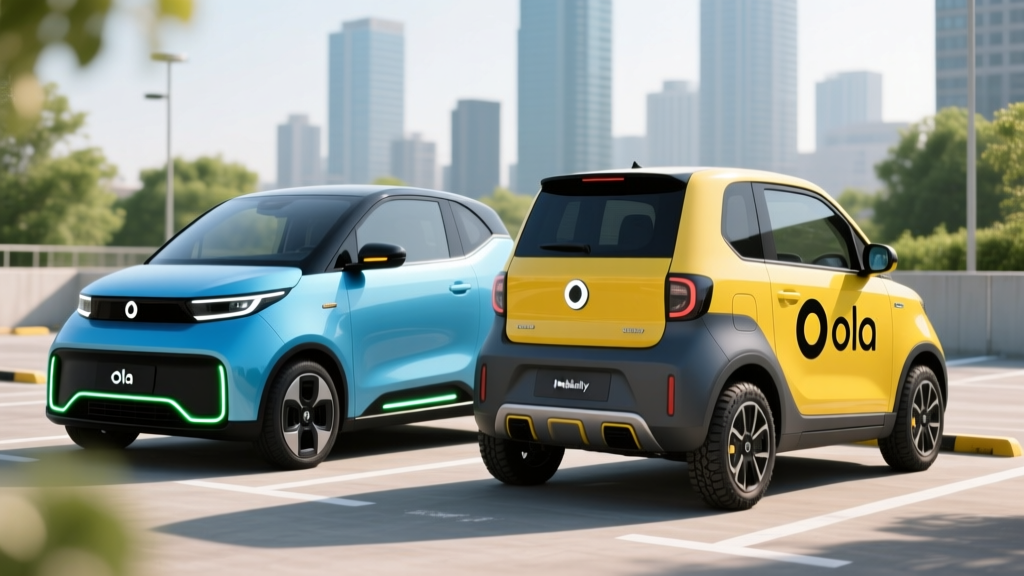
Ola Electric Mobility Pvt. Ltd., a spinoff of India's Ola ride-hailing giant, manufactures the Ola S1 series of electric scooters and has announced plans for an electric car (the Diamondhead concept, initially teased in 2024). The company operates one of the world's largest two-wheeler EV factories in Krishnagiri, Tamil Nadu, and has dominated India's electric scooter market with models priced around ₹1,20,000–₹1,50,000 (roughly $1,400–$1,800 USD at 2026 exchange rates).
The curiosity from US-based searchers typically stems from two angles:
- Affordable electric two-wheelers: Buyers looking for low-cost urban EVs hear about Ola's aggressive pricing and wonder about US availability.
- Ride-hailing expansion: Ola Mobility once competed with Uber globally and some users assume a US return may be underway.
Neither scenario is active. Ola has no announced timeline for US market entry for either its vehicles or its mobility platform. The company has been focused on scaling production in India and expanding into European and Southeast Asian markets for its scooters, but US homologation (meeting NHTSA, EPA, and DOT standards) for any Ola vehicle has not been confirmed.
Why Ola Electric Scooters Aren't Street-Legal in the US (Yet)
Even if you could import an Ola S1 Pro or S1 Air, you'd face significant regulatory barriers:
- NHTSA compliance: Electric scooters and motorcycles sold in the US must meet Federal Motor Vehicle Safety Standards (FMVSS). Ola's current lineup is certified under Indian CMVR standards, which differ substantially in lighting, braking, and crashworthiness requirements.
- EPA certification: While EVs produce no tailpipe emissions, imported vehicles still require EPA compliance documentation for onboard systems.
- No US dealership or service network: Parts availability, warranty service, and recall handling would be nonexistent.
- Insurance challenges: Most US insurers will not cover non-homologated vehicles, and registration at the DMV would likely be denied.
The same applies to Ola's announced electric car — even if it reaches production, it would require a full US-spec engineering program before American buyers could purchase one.
Better Alternatives: Affordable EVs Available in the US Right Now
If you were drawn to Ola because of its low price point or urban-friendly form factor, here are realistic alternatives across two categories: electric scooters/mopeds that are street-legal in the US, and affordable four-wheel EVs eligible for federal incentives.
US-Legal Electric Two-Wheelers
| Model | Type | Top Speed | Range (mi) | Price (MSRP) | US Availability |
|---|---|---|---|---|---|
| Niu MQi+ Sport | Electric moped | 28 mph | ~40 | $2,999 | Available via US dealers |
| Super73-S2 | E-bike (Class 3) | 28 mph | ~40-50 | $3,495 | Available direct + dealers |
| Vespa Elettrica | Electric scooter | 30 mph | ~46 | $7,499 | Available via Piaggio dealers |
| Zero FX | Electric motorcycle | 85 mph | ~46 city | $11,995 | Available via US dealers |
None of these match Ola's ~$1,500 price point, which reflects India's dramatically lower manufacturing and labor costs. US-legal electric two-wheelers with DOT certification typically start around $2,500 for quality models.
Affordable Four-Wheel EVs (2026 Models)
| Model | EPA Range | Battery (kWh) | Peak DC Charge (kW) | 0-60 mph | Base MSRP | §30D Credit Eligible |
|---|---|---|---|---|---|---|
| Chevrolet Equinox EV LT | 315 mi | 85 kWh (NMC) | 150 kW | 7.8 sec | $34,900 | Yes (subject to sourcing) |
| Hyundai Kona Electric SE | 261 mi | 64.8 kWh (NMC) | 100 kW | 7.2 sec | $32,975 | No (Korea assembly) |
| Nissan Leaf S | 149 mi | 40 kWh (NMC) | 50 kW (CHAdeMO) | 7.9 sec | $28,140 | No (Japan assembly) |
| Tesla Model 3 RWD | 272 mi | 60 kWh (LFP) | 170 kW | 5.8 sec | $38,990 | Yes (Fremont assembly) |
Source: fueleconomy.gov and manufacturer specifications. §30D eligibility depends on battery sourcing, buyer income caps ($150K single / $300K joint), and MSRP caps ($55K cars / $80K SUVs). Always verify current rules at IRS.gov.
Real Cost of EV Ownership vs. Gas: What the Numbers Show
Whether you were considering an Ola scooter or a full-size EV, the economics of electrified transport versus gasoline are the core decision. Here's a 5-year cost comparison using a mainstream EV (Chevrolet Equinox EV LT) versus a comparable gas compact SUV (Toyota RAV4 LE), both driven 12,000 miles/year:
| Cost Category | Chevy Equinox EV LT | Toyota RAV4 LE (Gas) |
|---|---|---|
| Purchase Price (MSRP) | $34,900 | $30,495 |
| Estimated §30D Credit | -$7,500 (if eligible) | $0 |
| Net Purchase Cost | $27,400 | $30,495 |
| Fuel/Energy (5 yrs, 60K mi) | $3,600 (home L2, $0.14/kWh avg) | $9,000 ($3.00/gal, 30 MPG) |
| Maintenance (5 yrs) | $1,500 (no oil, fewer brake jobs) | $4,200 (oil, filters, brakes, belts) |
| Insurance (5 yrs, avg) | $9,500 (EVs cost ~15-20% more) | $7,800 |
| Total 5-Year Cost | $42,000 | $51,495 |
Assumptions: national average electricity rate of $0.14/kWh, gas at $3.00/gal, home Level 2 charging. Insurance premiums for EVs are higher due to repair costs and battery replacement exposure. Source: AAA Your Driving Costs 2025 data methodology.
The EV wins on total cost primarily because of the federal tax credit and dramatically lower fueling costs. However, this assumes home charging access — a critical variable we'll address next.
What First-Time EV Buyers Must Know Before Purchasing
If your search for Ola Electric or Ola Mobility in the USA has redirected you toward buying your first EV, here are the non-obvious realities that spec sheets don't emphasize:
Home Charging Is the Make-or-Break Factor
Over 80% of EV charging happens at home. If you have a garage or driveway where a Level 2 charger (240V, 32-48A, delivering 7.7-11.5 kW) can be installed, EV ownership is seamless — you wake up every morning with a "full tank." Installation typically costs $800–$2,500 depending on whether your electrical panel needs an upgrade (a 200A panel is usually sufficient; older homes with 100A service may need a $2,000–$4,000 upgrade).
If you live in an apartment or rely on street parking, public DC fast charging becomes your primary fueling method. This is more expensive ($0.30–$0.50/kWh at networks like Electrify America or EVgo versus $0.14/kWh at home), adds time to your routine, and accelerates battery degradation if used exclusively.
EPA Range vs. Real-World Range
The EPA range sticker is tested under mixed driving conditions. Real-world results vary significantly:
- Highway driving at 75 mph: Expect 15–20% less than EPA. A 315-mile EPA rating yields roughly 250–270 miles at sustained highway speed.
- Cold weather (below 32°F): Range drops 20–35% depending on the vehicle and whether it has a heat pump. LFP batteries (like the Tesla Model 3 RWD) tend to lose more range in cold than NMC chemistries.
- DC fast charging taper: Peak charge rates (e.g., 150 kW) only apply between roughly 10–50% State of Charge. Above 80%, charging slows dramatically to protect the battery. A "10–80% in 30 minutes" spec is meaningful; a "peak 150 kW" headline number is not the sustained rate.
Battery Longevity Is Better Than Most Buyers Fear
Modern EV batteries (both LFP and NMC) are designed for 1,000–2,000+ full charge cycles before degrading to 80% capacity. That translates to 200,000–400,000 miles for most vehicles. Federal law mandates a minimum battery warranty of 8 years/100,000 miles. Most manufacturers warrant against degradation below 70% capacity during that period.
Common Misconceptions About EVs — Debunked with Data
| Myth | Fact |
|---|---|
| "EV batteries need replacing every 5 years" | Average annual degradation is 1.5–2.5%. At that rate, a battery retains ~85-90% capacity after 5 years. Full replacement is rare and typically costs $8,000–$18,000 out of warranty. |
| "EVs are worse for the environment than gas cars" | Even on coal-heavy grids, EVs produce fewer lifetime CO₂ emissions. On the average US grid, an EV emits roughly 60% less CO₂ per mile than a 25 MPG gas car over 150,000 miles (source: EPA). |
| "You can't take EVs on road trips" | The US now has over 60,000 public charging ports. Tesla's Supercharger network (open to NACS-equipped vehicles) and the expanding IONNA/ChargePoint corridor networks make cross-country travel viable, though it requires planning for 20-30 minute stops every 200-250 miles. |
| "EVs are all expensive" | Several 2026 EVs start below $35,000. With the §30D point-of-sale credit, effective prices can drop below $28,000 for qualifying buyers and vehicles. |
| "Charging takes too long" | Home Level 2 charging adds ~30-44 miles per hour of charging — more than enough to replenish daily driving overnight. DC fast charging delivers 10-80% in 18-35 minutes for most modern EVs. |
Decision Framework: Should You Buy an EV in 2026?
Use this framework to determine whether an EV, a PHEV, or a hybrid makes more sense for your situation:
Choose a full EV (BEV) if:
- You have reliable home or workplace Level 2 charging access.
- Your daily driving is under 100 miles round-trip (covers >90% of US commuters).
- You qualify for the §30D federal tax credit (income under $150K single / $300K joint; vehicle meets MSRP and sourcing requirements).
- You want the lowest per-mile fueling cost ($0.04–$0.06/mile on home electricity vs. $0.10–$0.14/mile for gas).
Choose a plug-in hybrid (PHEV) if:
- You can charge at home but frequently take trips exceeding 200 miles where charging infrastructure is sparse.
- You want 25–50 miles of electric-only range for commuting with gas-engine backup for road trips.
- Your household has only one vehicle and needs maximum flexibility.
Choose a conventional hybrid (HEV) if:
- You have no home charging access and no realistic prospect of installing it.
- You live in an area with limited public charging infrastructure.
- You want better fuel economy (45–55 MPG) without changing your fueling habits.
Wait on a full EV if:
- You live in an apartment with no charging and your city lacks reliable public DC fast charging.
- You regularly tow heavy loads (>5,000 lbs) — EVs lose 30-50% range when towing.
- Your budget is strictly under $25,000 and you cannot access the used-EV tax credit (§25E, up to $4,000 for vehicles under $25,000).
The Bottom Line on Ola Electric and the US Market
Ola Electric produces compelling products for the Indian market, and the company's aggressive pricing has understandably attracted global attention. However, there is no Ola Electric vehicle you can legally buy, register, or insure in the United States as of 2026, and Ola Mobility does not operate a US ride-hailing service.
For US buyers interested in affordable electrified transportation, the market offers increasingly competitive options — from $28,000 EVs with 250+ miles of range to DOT-legal electric scooters for urban commuting. The key decision factors remain unchanged: charging access, real-world range needs, total cost of ownership, and tax credit eligibility.
If Ola does eventually pursue US homologation for its vehicles, it would need to establish a dealer or direct-sales network, achieve NHTSA/EPA certification, and build a parts-and-service infrastructure — a multi-year undertaking with no announced timeline.
Frequently Asked Questions
Can I import an Ola S1 scooter to the United States?
Technically, you could attempt to import one, but it would not be street-legal. The Ola S1 does not meet US FMVSS standards, and registering it for road use at a state DMV would almost certainly be denied. It could potentially be used on private property only.
Is Ola Mobility (ride-hailing) available in any US city?
No. Ola Mobility exited most international markets outside India, Australia, and the UK several years ago. There is no Ola ride-hailing service operating in any US city as of 2026.
Will Ola Electric ever sell cars in the US?
Ola has announced plans to develop an electric passenger vehicle, but production has not begun and no US market entry has been announced. Any US launch would require full federal homologation, which typically takes 2–4 years after a vehicle is finalized for its home market.
What's the cheapest EV I can buy in the US in 2026?
The Nissan Leaf S starts at $28,140 with 149 miles of EPA range, though it is not eligible for the §30D credit due to Japan assembly. The Chevrolet Equinox EV LT at $34,900 (potentially ~$27,400 after the $7,500 credit) offers 315 miles of range and is the value leader among credit-eligible models.
How much does it cost to install a home EV charger?
A Level 2 home charger (hardwired, 48A) typically costs $500–$800 for the unit and $500–$1,700 for electrician labor and permits, totaling $1,000–$2,500 in most cases. If your home's electrical panel requires an upgrade from 100A to 200A service, add $2,000–$4,000. The federal §30C alternative fuel vehicle refueling property credit may cover up to 30% of installation costs (max $1,000) — check IRS.gov for current eligibility.