Quick Answer: Are Nissan Electric SUVs Worth It in 2026?
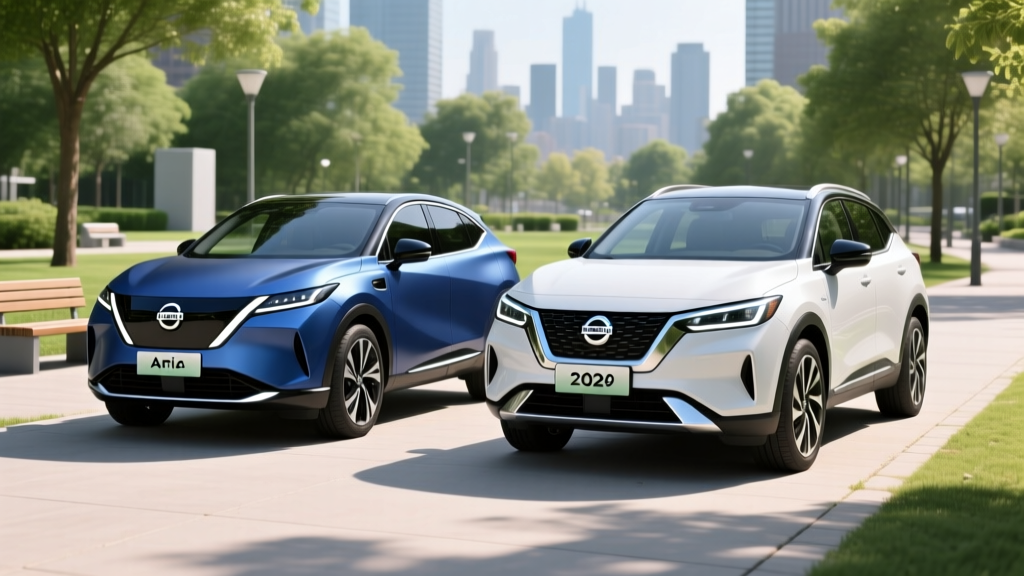
Nissan's primary electric SUV offering is the Ariya, a compact crossover with up to 304 miles of EPA range (FWD Long Range), starting around $39,590 before incentives. It competes directly with the Hyundai Ioniq 5, Ford Mustang Mach-E, and Tesla Model Y. For buyers who need AWD, the Ariya e-4ORCE delivers 389 hp and 272 miles of range from $42,890. However, the Ariya's peak DC fast-charge rate of 130 kW trails rivals hitting 200+ kW, meaning longer road-trip stops. If you primarily drive under 250 miles daily, can charge at home, and value a refined ride over class-leading charge speed, the Ariya is a strong pick. If you road-trip frequently or lack home charging, consider the faster-charging Ioniq 5 or the PHEV alternative like the Nissan Rogue Plug-In Hybrid.
The 2026 Nissan Ariya: Specs, Range, and Trim Breakdown
The Ariya is Nissan's flagship battery-electric SUV, built on the Alliance CMF-EV platform. For the 2026 model year, Nissan continues the lineup introduced in 2023 with minor packaging updates. Here are the exact figures buyers need:
| Spec | Venture+ (FWD) | Engage (FWD) | Empower+ (FWD) | Engage (e-4ORCE AWD) | Evolve+ (e-4ORCE AWD) | Platinum+ (e-4ORCE AWD) |
|---|---|---|---|---|---|---|
| EPA Range | 304 mi | 216 mi | 304 mi | 272 mi | 272 mi | 267 mi |
| Battery (usable) | 87 kWh (NMC) | 63 kWh (NMC) | 87 kWh (NMC) | 87 kWh (NMC) | 87 kWh (NMC) | 87 kWh (NMC) |
| Horsepower | 238 hp | 214 hp | 238 hp | 389 hp | 389 hp | 389 hp |
| 0-60 mph | ~7.5 sec | ~7.8 sec | ~7.5 sec | ~4.8 sec | ~4.8 sec | ~4.8 sec |
| Peak DC Charge | 130 kW | 130 kW | 130 kW | 130 kW | 130 kW | 130 kW |
| 10-80% DCFC | ~35 min | ~25 min | ~35 min | ~35 min | ~35 min | ~35 min |
| Level 2 (240V) | 7.2 kW | 7.2 kW | 7.2 kW | 7.2 kW | 7.2 kW | 7.2 kW |
| MPGe (combined) | 105 MPGe | 101 MPGe | 105 MPGe | 97 MPGe | 97 MPGe | 95 MPGe |
| Starting MSRP | $39,590 | $36,190 | $43,190 | $42,890 | $47,590 | $53,190 |
Source: fueleconomy.gov and Nissan USA. Prices exclude destination. MPGe and range vary by trim and options.
Real-World Range vs. EPA Sticker
The 304-mile EPA figure for FWD Long Range trims assumes a mix of city and moderate-speed driving. Expect ~250-270 miles in sustained 70+ mph highway driving, and ~220-240 miles in freezing temperatures (below 32°F) due to battery chemistry limitations and cabin heating demand. The Ariya uses a liquid-cooled NMC (nickel manganese cobalt) pack, which handles heat well but still loses 15-25% range in deep cold — a reality for all current lithium-ion EVs.
Charging the Ariya: Home and Public Network Reality
Charging speed is where the Ariya shows its age relative to newer rivals. At 130 kW peak DC fast charging, it charges noticeably slower than the Hyundai Ioniq 5 (240 kW), Kia EV6 (240 kW), or Tesla Model Y (250 kW). On a 350 kW Electrify America or EVgo station, the Ariya will peak around 130 kW and taper significantly above 80% State of Charge. A typical 10-80% session takes about 35 minutes on the 87 kWh pack.
| Charging Level | Power | Miles Added per Hour | Typical Use Case |
|---|---|---|---|
| Level 1 (120V household) | ~1.4 kW | ~4-5 mi/hr | Overnight top-up; not practical for daily full charges |
| Level 2 (240V home) | 7.2 kW | ~22-25 mi/hr | Daily home charging; full charge in ~11-12 hours (87 kWh) |
| DC Fast Charge | Up to 130 kW | ~200-250 mi/hr (peak) | Road trips; 10-80% in ~35 min |
Home charging access is critical. If you can install a Level 2 charger (240V, 32-40 amp circuit), the Ariya's 7.2 kW onboard charger adds roughly 22-25 miles per hour of charging — enough to fully replenish overnight. A typical Level 2 home installation runs $500-$2,000 depending on panel proximity and whether your electrical panel needs an upgrade (200-amp service recommended). Without home charging, relying solely on public DCFC at 130 kW means 35-minute stops every 200-250 miles — feasible but less convenient than rivals with faster charge rates.
The Ariya uses the CCS1 connector for DC fast charging and J1772 for Level 2. Nissan has confirmed future models will adopt NACS (Tesla's connector), but the 2026 Ariya remains CCS. This means you'll need a NACS-to-CCS adapter (~$200-250) to access Tesla Supercharger stalls that now open to non-Tesla vehicles via the North American Charging Standard.
Ariya vs. Gas and Hybrid SUVs: Cost Comparison
How does the Ariya stack up against the Nissan Rogue (gas) and the Nissan Rogue Plug-In Hybrid? Let's compare real ownership costs over 5 years and 75,000 miles:
| Cost Factor (5 yr / 75k mi) | Ariya Empower+ (EV) | Rogue SL (Gas AWD) | Rogue PHEV (AWD) |
|---|---|---|---|
| Base MSRP | $43,190 | $36,230 | ~$39,000 (est.) |
| Federal Tax Credit (§30D) | $0-$7,500* | $0 | $0-$3,750* |
| Effective Purchase Price | $35,690-$43,190 | $36,230 | $35,250-$39,000 |
| Fuel/Energy Cost | ~$3,750** | ~$8,400 | ~$5,100 |
| Maintenance | ~$1,200 | ~$3,500 | ~$2,800 |
| Insurance (avg) | ~$9,500 | ~$7,800 | ~$8,200 |
| 5-Year Total (est.) | $49,940-$57,440 | $55,930 | $51,350-$55,100 |
* §30D credit eligibility depends on MSRP caps (SUVs: $80,000), buyer AGI limits ($150K single / $300K joint), and battery critical-mineral sourcing. Verify at IRS.gov. Many Nissan Ariya trims have historically qualified for partial or full credit — check current sourcing compliance.
** Based on national avg electricity at $0.17/kWh and gas at $3.40/gal. Your costs vary by local utility rates and driving mix. EV energy cost assumes 80% home charging.
Key Takeaways from the Cost Breakdown
- The Ariya wins on fuel and maintenance — saving ~$4,650 on energy and ~$2,300 on maintenance vs. gas over 5 years. EVs have no oil changes, fewer brake replacements (regenerative braking reduces pad wear), and simpler drivetrains.
- Insurance is higher for EVs — typically 15-25% more than gas equivalents due to repair costs and battery replacement risk. Budget an extra ~$1,700 over 5 years.
- The tax credit is the swing factor. If you qualify for the full $7,500 (transferred at point of sale as a price reduction starting 2024), the Ariya becomes price-competitive with the gas Rogue immediately. Without it, the EV costs ~$7,000 more upfront.
- Resale value uncertainty. EV depreciation has been steeper than gas vehicles in 2023-2025, though this is stabilizing. Factor in potentially 5-10% more depreciation than a gas equivalent.
Federal Tax Credit: What Ariya Buyers Need to Know
The IRS §30D clean vehicle credit provides up to $7,500 for qualifying new EVs, but eligibility is complex and changes as manufacturers adjust battery sourcing. Here's the checklist for the 2026 tax year:
- MSRP cap: The Ariya qualifies as an SUV — the cap is $80,000 (all trims clear this).
- Buyer income cap: Modified AGI must not exceed $150,000 (single), $225,000 (head of household), or $300,000 (married filing jointly).
- Battery sourcing: At least 50% of critical minerals must be sourced from the US or a free-trade-agreement country (for $3,750), AND at least 50% of battery components must be manufactured or assembled in North America (for the other $3,750). These thresholds increase annually.
- Point-of-sale transfer: You can transfer the credit to the dealer at purchase, reducing the sale price directly — you don't need to wait until tax filing.
- Final assembly: Must occur in North America (the Ariya is assembled in Japan — this has historically disqualified it; verify current status before purchase).
Common Misconceptions About Nissan Electric SUVs
| Myth | Fact |
|---|---|
| "The Ariya charges as fast as any other EV." | At 130 kW peak, the Ariya charges ~45% slower than the Ioniq 5 or EV6 at 240 kW. A 10-80% session takes ~35 min vs. ~18 min for 800V rivals. |
| "EV batteries need replacing every few years." | Nissan warranties the Ariya's battery for 8 years/100,000 miles against capacity loss below ~66% (9 bars out of 12 on the capacity gauge). Real-world data shows NMC packs losing ~10-15% over 8 years with normal use. |
| "I'll save money immediately with an EV." | Without the tax credit, the Ariya costs more upfront and insurance is higher. Savings materialize over 3-5 years through lower fuel and maintenance costs — and only if you have access to affordable home electricity. |
| "The Ariya is made in America." | The Ariya is assembled in Tochigi, Japan. This has affected §30D tax credit eligibility. Always verify current qualification on fueleconomy.gov before purchasing. |
| "I can use Tesla Superchargers directly." | The Ariya uses CCS1. You need a NACS-to-CCS adapter (~$200-250) to access Tesla Superchargers that have opened to non-Tesla EVs. |
ProPilot Assist: What Nissan's Driver-Assist System Actually Does
The Ariya comes with ProPilot Assist 2.0 (on higher trims), which includes adaptive cruise control, lane centering, and hands-off driving on pre-mapped divided highways at speeds up to ~80 mph. However, this is SAE Level 2 automation — meaning you must remain attentive, keep your eyes on the road (monitored by a driver-facing camera), and be ready to take over instantly.
SAE Automation Level: Level 2 (Partial Driving Automation)
ProPilot Assist 2.0 is not self-driving. It is a hands-off, eyes-on driver-assistance system. The vehicle handles steering, acceleration, and braking under specific conditions, but the driver is legally and operationally responsible at all times. This is the same SAE level as Tesla Autopilot, Ford BlueCruise, and GM Super Cruise. Only Waymo and Zoox robotaxis operate at Level 4 (no driver required in defined areas).
In practice, ProPilot 2.0 works well on interstate highways and reduces fatigue on long trips. It does not handle city streets, construction zones, or unmapped roads. Expect it to disengage and hand control back to you when lane markings fade or road geometry becomes complex.
Decision Framework: Should You Buy the Nissan Ariya?
Choose the Nissan Ariya If:
- You can install a Level 2 home charger and your daily driving is under 200 miles.
- You prioritize ride comfort, cabin quietness, and build quality over class-leading charge speed.
- You qualify for the §30D tax credit (verify Japan assembly status and current sourcing rules).
- You want a proven brand with a large dealer network for service.
- You don't road-trip more than 4-5 times per year (or don't mind 35-min charge stops).
Consider Alternatives If:
- Frequent road trips: The Hyundai Ioniq 5 (240 kW charging, 10-80% in ~18 min) or Tesla Model Y (250 kW, Supercharger network) save you 15-20 minutes per stop.
- No home charging access: A PHEV like the Toyota RAV4 Prime (42 mi electric range + gas backup) or the Nissan Rogue PHEV eliminates public-charging dependence.
- Tight budget without tax credit: The gas Nissan Rogue AWD starts ~$7,000 less and may cost similar over 5 years if you don't qualify for §30D.
- Maximum range needed: The Tesla Model Y Long Range (330+ mi EPA) or Chevy Equinox EV (315+ mi) offer more buffer.
First-Time EV Buyer Checklist
If the Ariya is your first electric vehicle, here's what to prepare before purchase:
- Verify home charging feasibility. Get a quote from a licensed electrician for a 240V/40-amp circuit near your parking spot. Budget $500-$2,000 (more if your panel needs a 200-amp upgrade, which can add $1,500-$3,000).
- Check your electrical panel. The Ariya's 7.2 kW charger draws ~30 amps continuously. Your panel needs at least 200 amps of total service with spare capacity.
- Confirm §30D eligibility. Check fueleconomy.gov for the specific Ariya trim's current credit status. Have your tax professional verify your AGI eligibility.
- Download charging apps. Install PlugShare, EVgo, Electrify America, and ChargePoint before your first road trip. Know where chargers are along your common routes.
- Understand your utility rate. Some utilities offer off-peak EV charging rates (as low as $0.08-$0.12/kWh overnight). This can cut your "fuel" cost by 30-40% vs. standard rates.
- Budget for insurance. Get quotes before buying — EV premiums are typically 15-25% higher than gas equivalents.
- Plan for cold weather. If you live where winters drop below freezing, expect 15-25% range loss. Preconditioning the battery (using the Ariya's scheduled departure feature) while plugged in mitigates this and improves charging speed.
Frequently Asked Questions
Does Nissan make any other electric SUVs besides the Ariya?
As of 2026, the Ariya is Nissan's only fully electric SUV sold in the US. The Leaf is a hatchback (not an SUV), and Nissan offers the Rogue Plug-In Hybrid as an electrified SUV alternative with ~35 miles of electric-only range plus a gas engine for longer trips. Nissan has announced plans for additional EVs, but no other electric SUVs are currently on sale.
How long does the Ariya battery last, and what does replacement cost?
Nissan warranties the lithium-ion battery for 8 years/100,000 miles against defects and capacity loss below approximately 66% (shown as 9 of 12 bars on the battery health gauge). Real-world degradation data from similar NMC packs suggests you'll retain 85-90% capacity after 8 years with normal charging habits. Out-of-warranty battery replacement for the 87 kWh pack is estimated at $12,000-$18,000 based on current EV battery pricing, though costs continue to decline.
Is the Ariya good in snow and winter conditions?
The e-4ORCE AWD trims (389 hp, dual motors) provide excellent traction in snow, with torque vectoring that adjusts power to each wheel independently. However, like all EVs, expect 15-25% range loss in sustained sub-freezing temperatures. The Ariya does not have a heat pump (it uses resistive cabin heating), which increases energy draw in cold weather compared to EVs with heat pump systems.
Can I tow with the Nissan Ariya?
The Ariya is not rated for towing in the US market. If you need towing capability, consider the Ford Mustang Mach-E (up to 2,700 lbs with the trailer tow package) or the Hyundai Ioniq 5 (up to 2,300 lbs with AWD).
What's the cheapest way to own a Nissan electric SUV?
The most affordable entry point is the Ariya Engage FWD at $36,190 (63 kWh battery, 216 mi range). If you qualify for the full $7,500 §30D credit transferred at point of sale, the effective price drops to ~$28,690 — making it one of the most affordable electric SUVs available. However, the 216-mile range and smaller battery mean more frequent charging. The best value balance is the Venture+ FWD at $39,590 (304 mi range, 87 kWh), which becomes ~$32,090 with the full credit.