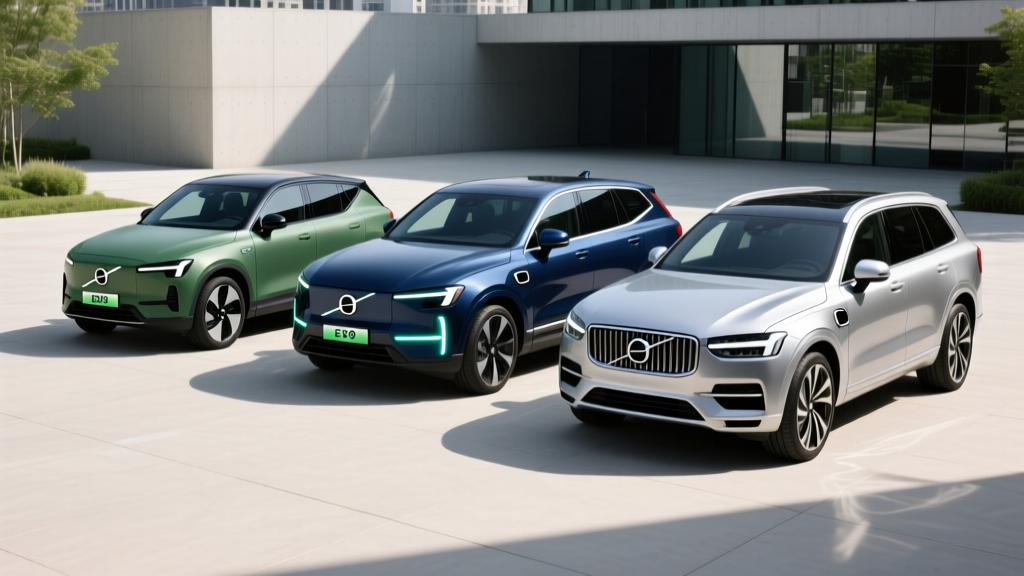
Which New Electric Volvo Should You Buy? The Quick Answer
If you want the most affordable entry into Volvo's EV lineup: The 2026 EX30 starts around $36,345 with up to 265 miles of EPA range and 250 kW peak DC fast charging — but interior space is tight and rear-seat comfort is compromised.
If you need a three-row family hauler: The 2026 EX90 delivers 310 miles EPA range, 250 kW charging, and Level 3-ready hardware starting at $76,695 — though real-world highway range drops to roughly 260-275 miles.
If charging access is uncertain: The XC90 Recharge plug-in hybrid gives you 32 miles of electric-only range plus a gas engine for $59,250, eliminating range anxiety while still enabling daily electric commuting.
The 2026 Volvo EV Lineup: Specs at a Glance
Volvo's transition to an all-electric brand by 2030 means its current lineup spans pure battery-electric vehicles (BEVs), plug-in hybrids (PHEVs), and one legacy mild-hybrid. Here's how the core models stack up on the numbers that matter.
| Spec | 2026 EX30 (Single Motor Plus) | 2026 EX30 (Twin Motor Ultra) | 2026 EX90 (Twin Motor) | 2026 XC90 Recharge (PHEV) |
|---|---|---|---|---|
| Powertrain Type | BEV | BEV | BEV | PHEV |
| Battery (usable) | 69 kWh (NMC) | 69 kWh (NMC) | 107 kWh (NMC) | 18.8 kWh (NMC) |
| EPA Range | 265 mi | 253 mi | 310 mi | 32 mi (EV only) |
| Horsepower | 272 hp | 421 hp | 496 hp | 455 hp combined |
| 0-60 mph | 5.1 sec | 3.4 sec | 4.7 sec | 5.0 sec |
| Peak DC Charge Rate | 153 kW | 250 kW | 250 kW | N/A (Level 2 only) |
| 10-80% DCFC Time | ~26 min | ~20 min | ~22 min | N/A |
| Level 2 Rate | 11 kW | 22 kW | 11 kW | 3.7 kW |
| EPA Efficiency | 111 MPGe | 98 MPGe | 84 MPGe | 55 MPGe / 27 MPG gas |
| Starting MSRP | $36,345 | $44,895 | $76,695 | $59,250 |
| Battery Warranty | 8 yr / 100,000 mi | 8 yr / 100,000 mi | 8 yr / 100,000 mi | 8 yr / 100,000 mi |
Sources: fueleconomy.gov, Volvo Cars USA. Specs reflect 2026 model year. Real-world range varies by temperature, speed, and terrain.
Real-World Range Reality Check: The EX90's 310-mile EPA rating assumes mixed driving at moderate temperatures. On a 75 mph highway run in 40°F weather, expect roughly 245-265 miles before needing to charge. The EX30 Single Motor holds up better in city driving due to its lighter weight, but highway efficiency drops noticeably above 70 mph. Always plan road trips around 200-220 miles between stops in winter conditions.
EV vs. Gas vs. PHEV: What Does a Volvo Actually Cost to Run?
The sticker price tells only part of the story. Let's compare a five-year ownership scenario for the EX30 Twin Motor against a comparably equipped gas-powered Volvo XC40 B5 (mild hybrid) and the XC90 Recharge PHEV.
| Cost Factor (5 Years / 75,000 mi) | EX30 Twin Motor (BEV) | XC40 B5 (Gas MHEV) | XC90 Recharge (PHEV) |
|---|---|---|---|
| Purchase Price (base MSRP) | $44,895 | $41,450 | $59,250 |
| Estimated Federal Tax Credit | Up to $7,500* | $0 | Up to $7,500* |
| Home Charging Install (Level 2) | $1,200-$2,500 | $0 | $1,200-$2,500 |
| Fuel/Energy Cost | ~$2,800 (home) / ~$4,500 (public) | ~$7,200 (gas) | ~$3,100 (mix EV + gas) |
| Maintenance | ~$1,500 | ~$3,200 | ~$2,800 |
| Insurance (avg) | ~$9,500 | ~$7,800 | ~$9,000 |
| 5-Year Total Cost of Ownership | ~$52,395-$57,895 | ~$59,650 | ~$69,150 |
*Federal §30D tax credit eligibility depends on MSRP caps ($55,000 for SUVs, $80,000 for SUVs/vans/pickups), buyer income limits ($150K single / $300K joint), and battery component/critical-mineral sourcing requirements. Verify current eligibility at IRS.gov. Point-of-sale transfer available at participating dealers.
The EX30 wins on running costs — energy and maintenance savings offset its slightly higher insurance premiums. But the PHEV XC90 Recharge only makes financial sense if you can charge at home nightly and drive under 35 miles on most days, using the gas engine for longer weekend trips.
Charging the New Electric Volvo: What You Need to Know
Volvo's 2026 BEVs use the North American Charging Standard (NACS) connector, granting native access to Tesla Superchargers (now open to non-Tesla EVs) as well as Electrify America, EVgo, and ChargePoint networks. Here's what charging actually looks like.
| Charging Level | Power | EX30 Twin Motor | EX90 Twin Motor | Best For |
|---|---|---|---|---|
| Level 1 (120V) | ~1.4 kW | ~3 mi/hr | ~3 mi/hr | Overnight trickle (PHEV only realistic) |
| Level 2 (240V) | 11-22 kW | ~30-60 mi/hr | ~28 mi/hr | Daily home charging |
| DC Fast Charge | 150-250 kW | 10-80% in ~20 min | 10-80% in ~22 min | Road trips |
Home charging installation is the hidden cost most buyers underestimate. A basic Level 2 setup (NEMA 14-50 outlet + 48-amp charger like the ChargePoint Home Flex) runs $1,200-$1,800 if your electrical panel has capacity. If you need a 200-amp panel upgrade — common in homes built before 2000 — add $1,500-$3,500. Always get a licensed electrician's assessment before purchase.
Common Volvo EV Misconceptions
| Myth | Fact |
|---|---|
| "The EX90 can drive itself." | The EX90 includes LiDAR hardware and Pilot Assist, but it is an SAE Level 2 system. You must keep hands on the wheel and eyes on the road at all times. Volvo has not activated any hands-free or driverless mode in the US. |
| "EV batteries need replacing every 5 years." | Volvo warranties its traction batteries for 8 years/100,000 miles with a 70% capacity retention threshold. NMC chemistry data from comparable platforms shows typical degradation of 8-12% over 100,000 miles — well within warranty. |
| "I'll save $7,500 no matter what." | The §30D credit requires the vehicle to meet critical-mineral and battery-component sourcing thresholds that change annually. The EX30's battery sourcing has been scrutinized — confirm eligibility with your dealer and IRS.gov before relying on the credit in your budget. |
| "Public charging is unreliable everywhere." | NACS Supercharger stations average 97%+ uptime. Non-Tesla networks like Electrify America have improved but still lag — plan road trips around Superchargers when possible. |
Volvo EX90 Deep Dive: The Flagship's Real-World Trade-offs
The EX90 is Volvo's technological showcase, and it shows in both capability and complexity. The 107 kWh NMC battery pack and dual-motor AWD system deliver confident acceleration and genuine long-distance range. But there are ownership nuances worth understanding.
Charging curve reality: The EX90 peaks at 250 kW but only sustains that rate between roughly 10-35% state of charge. From 35-60%, it tapers to ~175 kW, and above 80% it drops sharply to ~50 kW. That 10-80% time of ~22 minutes assumes you arrive at the charger with a preconditioned battery (the car does this automatically when a charger is set in the navigation). Without preconditioning in cold weather, add 5-10 minutes.
Cold-weather impact: In sustained sub-30°F driving, the EX90's range drops 20-30% compared to EPA. The heat pump (standard on the EX90) mitigates cabin energy draw, but battery chemistry itself loses efficiency in the cold. If you live in the upper Midwest or Northeast, plan for 220-250 miles of usable range in January.
The LiDAR question: Every EX90 ships with a roof-mounted LiDAR unit from Luminar, capable of detecting objects at 250 meters. However, this hardware is currently used only for enhanced safety (pedestrian detection, emergency braking) — not for any form of autonomous driving. Volvo has stated it will enable unsupervised autonomous driving "when legally and technically ready," but no timeline or pricing for that software unlock exists. You are paying for future-proofing that may or may not materialize during your ownership.
Volvo EX30: Affordable Entry, But Read the Fine Print
At $36,345, the Single Motor EX30 is one of the least expensive premium-brand EVs in the US market. But Volvo made cost-cutting decisions that affect daily livability.
The single-motor EX30 charges at 153 kW, not 250 kW. That means road-trip charging stops take roughly 26 minutes (10-80%) instead of 20. If you road-trip more than a few times a year, the Twin Motor's faster charging and AWD may justify the $8,550 premium.
Interior compromises: The EX30 has no traditional instrument cluster — all information lives on the center touchscreen. Rear seat legroom is 32.3 inches, tight for adults on longer trips. Cargo space is 11.1 cubic feet behind the rear seats, comparable to a subcompact hatchback. This is a city commuter and second car, not a family primary vehicle.
Google built-in: Both the EX30 and EX90 run Google's Android Automotive OS natively, with Google Maps, Google Assistant, and Play Store apps built in. Apple CarPlay is available but requires a wired connection on the EX30 (wireless on the EX90). The interface is clean but removes physical buttons for climate and volume — everything is touch or voice, which not every buyer will prefer.
Decision Framework: Which Volvo Fits Your Situation?
Choose the EX30 Single Motor if:
- You have home Level 2 charging and commute under 50 miles daily
- You want a premium badge under $40,000 (before incentives)
- This is a second vehicle or you rarely carry rear-seat passengers
- You road-trip fewer than 4-5 times per year
Choose the EX30 Twin Motor Ultra if:
- You need AWD for snow/rain climates
- You road-trip regularly and value the 250 kW charging speed
- You want the 3.4-second 0-60 performance
- Budget allows ~$45,000 before incentives
Choose the EX90 if:
- You need three rows and family-hauler cargo space
- You have home charging and a 200-amp electrical panel
- You want the latest ADAS hardware (LiDAR) even if features aren't fully activated
- Budget allows ~$77,000-$85,000 depending on trim
Choose the XC90 Recharge PHEV if:
- Home charging is uncertain or you live in an apartment without charger access
- Your daily commute is under 30 miles (covering most days on electric alone)
- You regularly drive 300+ miles where charging infrastructure is sparse
- You want the lowest risk profile during the EV transition
Frequently Asked Questions
Does the Volvo EX30 qualify for the $7,500 federal tax credit?
Eligibility depends on current §30D rules, which require the vehicle's battery to meet critical-mineral and component-sourcing thresholds that tighten each year. The EX30's battery has faced scrutiny over sourcing. Before purchasing, confirm eligibility directly with your dealer and check the latest list at IRS.gov. If eligible, you can transfer the credit to the dealer as a point-of-sale discount.
How long does it take to charge a Volvo EX90 at home?
From 10% to 100% on an 11 kW Level 2 home charger, the EX90's 107 kWh battery takes approximately 10-11 hours. Most owners charge overnight and never deplete below 20%, making a typical overnight session 6-8 hours. A 22 kW charger (requiring a 100-amp dedicated circuit) would cut that roughly in half, but most residential panels can't support that without an upgrade.
Is the Volvo EX90 self-driving?
No. The EX90 is equipped with SAE Level 2 driver-assistance technology (Pilot Assist). Despite having LiDAR hardware, the driver must remain fully engaged — hands on the wheel, eyes on the road. Only Level 4 robotaxi services like Waymo operate without a human driver, and those are not available in Volvo vehicles. Volvo has indicated future software updates may enable limited unsupervised driving, but nothing is active or available as of 2026.
What happens if the battery degrades significantly?
Volvo's battery warranty guarantees at least 70% capacity retention for 8 years or 100,000 miles, whichever comes first. If your battery falls below that threshold, Volvo will repair or replace it at no cost. NMC battery data from similar platforms suggests most owners see 8-12% degradation at 100,000 miles — well within the warranty buffer. Full battery replacement outside warranty would cost approximately $15,000-$22,000 depending on the model, though prices are declining yearly.
Can I charge a Volvo EV at Tesla Superchargers?
Yes. All 2026 Volvo BEVs (EX30, EX90) come equipped with the NACS connector, which is the same physical connector used by Tesla. You can charge at Tesla Superchargers that have been opened to non-Tesla vehicles (most US stations now support this via the Tesla app or built-in Plug & Charge). No adapter is needed.
How does Volvo's insurance cost compare to gas equivalents?
EV insurance typically runs 15-25% higher than comparable gas vehicles due to higher repair costs (battery replacement, specialized body shop requirements) and higher vehicle values. For the EX30, expect annual premiums of $1,700-$2,100 depending on your state, driving record, and coverage level. The EX90 may run $2,200-$2,800 annually. Shop quotes from EV-friendly insurers like Geico, Progressive, and Tesla Insurance before purchasing.