Quick Answer: Is a Motosikal EV Worth It in 2026?
A motosikal EV (electric motorcycle) makes financial sense for urban commuters riding 15–40 miles daily who can charge at home overnight. Expect 40–100 miles of real-world range from current models, Level 1 charging in 3–5 hours, and fuel savings of $400–$800 annually versus a comparable gas motorcycle. However, if you regularly tour 150+ miles, live in an apartment without charging access, or ride in sustained freezing temperatures, a gas motorcycle remains the more practical choice today.
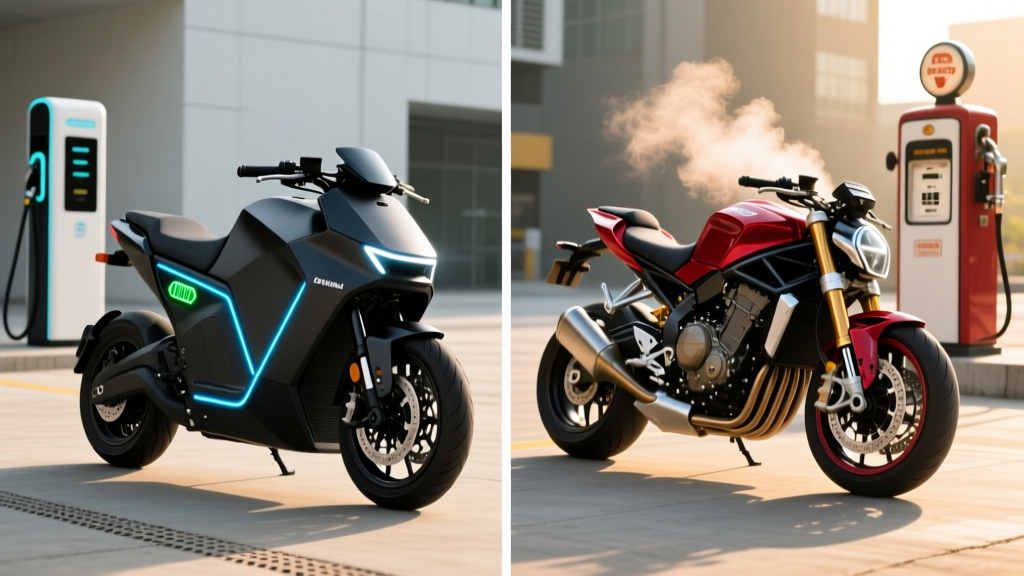
The keyword on riders' minds is motosikal ev — electric two-wheelers that swap internal combustion for a battery pack and electric motor. The category has matured considerably, with established brands like Zero Motorcycles, Energica, and LiveWire competing against value-focused imports. But the ownership equation for electric motorcycles differs sharply from electric cars, and buyers need clear data before committing.
What Exactly Is a Motosikal EV?
A motosikal EV is simply the Malay/Indonesian term for an electric motorcycle — a two-wheeled vehicle powered by a lithium-ion battery pack (measured in kWh, or kilowatt-hours of stored energy) and an electric motor (rated in kW, or kilowatts of power output). Unlike e-bikes or electric scooters with pedals, these are full motorcycles requiring a motorcycle license and registration.
Current mainstream models in 2026 cluster into three tiers:
- Urban commuters (3–7 kWh battery): 40–65 miles real-world range, 60–80 mph top speed, $5,000–$10,000 MSRP. Examples: NIU RQi, Super Soco TC Max.
- Mid-range street (8–14 kWh battery): 80–120 miles real-world range, 90–110 mph top speed, $12,000–$20,000 MSRP. Examples: Zero S/SR, LiveWire ONE.
- Premium performance (15–22 kWh battery): 130–180 miles real-world range, 120+ mph, $22,000–$35,000 MSRP. Examples: Zero SR/S, Energica Ego+.
One critical distinction: manufacturers often quote "city range" under ideal conditions (30 mph, flat terrain, 70°F). Real-world highway riding at 65–75 mph typically yields 60–75% of the stated city range. Cold weather (below 40°F) further reduces range by 15–30% due to battery chemistry limitations and the energy cost of heating.
Motosikal EV vs Gas Motorcycle: The Numbers
Here's how a mid-range electric motorcycle stacks up against a comparable 650cc gas motorcycle across the metrics that matter for ownership decisions:
| Metric | Electric (e.g., Zero SR) | Gas (e.g., Kawasaki Ninja 650) |
|---|---|---|
| Base MSRP | $18,995 | $8,399 |
| Fuel/Energy Cost per Mile | $0.02–$0.04 | $0.08–$0.12 |
| Real-World Range (mixed riding) | 95–110 mi | 180–220 mi |
| "Refuel" Time (full) | 3.5–5 hrs (Level 1, 120V) | 3 minutes at a gas station |
| Peak Power | 70 kW (~94 HP) | 50 kW (~67 HP) |
| 0–60 mph | 3.3 seconds | 4.1 seconds |
| Annual Maintenance | $50–$150 (tires, brake fluid) | $300–$600 (oil, filters, chain, valves) |
| Annual Fuel/Energy (5,000 mi) | $100–$200 | $400–$600 |
| Weight | 485–505 lbs | 410–430 lbs |
The upfront price gap is substantial — roughly $10,000–$11,000 in this segment. The annual savings on fuel and maintenance run approximately $500–$800. At that rate, it takes 12–20 years of riding to break even on the purchase premium, assuming 5,000 miles per year. This is where most motosikal EV buyers either commit (valuing performance, silence, zero tailpipe emissions, and minimal maintenance) or walk away (prioritizing range, refueling speed, and lower upfront cost).
Real-World Charging: What Motosikal EV Owners Actually Experience
Charging infrastructure for electric motorcycles is more limited than for electric cars. Most motosikal EV models charge using standard Level 1 (120V household outlet) as the primary method, with some supporting Level 2 (240V) or CCS DC fast charging as an upgrade.
| Charging Level | Power (kW) | 0–100% Time | Availability |
|---|---|---|---|
| Level 1 (120V household) | 1.3 kW | ~10–11 hours | Any standard outlet |
| Level 1 (with Charge Tank upgrade) | 3.3 kW | ~4.5 hours | Requires onboard charger upgrade (~$1,800) |
| Level 2 (240V, J1772 adapter) | 6.6 kW | ~2.5 hours | Home wallbox or public stations (adapter required) |
| DC Fast Charge (CCS) | Up to 25 kW | ~1 hour (0–95%) | Only on select premium models; limited station compatibility |
A critical reality: unlike electric cars with 150–350 kW DC fast charging capability, most electric motorcycles are limited to Level 1 or Level 2 charging. This means road-tripping on a motosikal EV requires careful planning — you need 2–4 hour stops for meaningful range recovery, making it impractical for long-distance touring without significant patience.
For daily commuting (30–40 miles round trip), overnight Level 1 charging from a standard garage outlet is sufficient. A 14 kWh battery charging at 1.3 kW adds roughly 1.3 kWh per hour, or about 8–10 miles of range per hour of charging. Over an 8-hour overnight session, that's 65–80 miles recovered — enough for most urban riders.
Total Cost of Ownership: 5-Year Breakdown
Let's model a realistic 5-year ownership scenario for a rider covering 5,000 miles annually:
| Cost Category | Motosikal EV (Zero SR class) | Gas 650cc Motorcycle |
|---|---|---|
| Purchase Price | $18,995 | $8,399 |
| Fuel/Energy (25,000 mi) | $750 | $2,500 |
| Maintenance (5 years) | $500 | $2,250 |
| Insurance (avg annual) | $1,800/yr × 5 = $9,000 | $1,200/yr × 5 = $6,000 |
| Tires (5 years) | $800 | $800 |
| Estimated Resale Value | -$8,000 | -$5,000 |
| Net 5-Year Cost | $22,045 | $15,149 |
The gas motorcycle still wins on pure economics over 5 years, primarily due to the lower purchase price. The EV's fuel and maintenance savings offset roughly $3,500, but insurance premiums for electric motorcycles tend to run 30–50% higher due to repair-cost uncertainty and battery replacement risk. Depreciation on electric motorcycles also tends to be steeper — early adopters bear the cost of a rapidly evolving market.
Where the math shifts: riders covering 10,000+ miles annually, those with access to free or subsidized workplace charging, and riders in regions with low electricity rates ($0.08–$0.10/kWh) see the gap narrow significantly. At 10,000 miles per year, fuel savings alone approach $800–$1,000 annually.
Battery Longevity: The $3,000 Question
The most common concern among prospective motosikal EV buyers is battery degradation and replacement cost. Here's what the data shows:
- Chemistry: Most premium electric motorcycles use NMC (nickel-manganese-cobalt) lithium-ion cells, chosen for high energy density. This means more range per pound, but slightly faster degradation than the LFP (lithium iron phosphate) chemistry used in some electric cars.
- Degradation rate: Expect 2–4% capacity loss per year under normal use. After 5 years, most owners report 80–90% of original capacity remaining.
- Warranty: Industry standard is 5 years/unlimited miles on the battery pack, with a capacity retention guarantee of 80%. Zero Motorcycles, for example, warranties their Z-Force battery for 5 years with no mileage cap.
- Replacement cost: If the battery fails outside warranty, replacement runs $3,000–$6,000 depending on the model and battery size. This is a significant expense that gas motorcycle owners never face.
Practical tip: Avoid regularly charging to 100% or draining to 0%. Keeping the battery in the 20–80% state-of-charge window dramatically extends cycle life. Many modern motosikal EV models include a "storage mode" or charge-limit setting for this purpose.
Common Motosikal EV Misconceptions
| Myth | Fact |
|---|---|
| "Electric motorcycles have no power" | Electric motors deliver instant torque. A Zero SR produces 70 kW (94 HP) and hits 60 mph in 3.3 seconds — faster than most 600cc supersports. |
| "You can charge at any EV station" | Most public DC fast chargers are designed for cars. Motorcycle compatibility is limited, and adapter requirements vary. Level 2 J1772 stations work with adapters. |
| "Batteries won't last and cost a fortune to replace" | Modern NMC packs last 100,000+ miles before reaching 80% capacity. Warranty covers premature failure. Replacement is costly ($3K–$6K) but rarely needed within a typical ownership period. |
| "They're completely silent and dangerous" | While quieter than gas bikes, electric motorcycles produce motor whine and tire/wind noise at speed. Many riders add an aftermarket sound generator for pedestrian awareness. |
| "You'll get a federal tax credit" | The §30D clean vehicle credit applies to four-wheeled vehicles. As of 2026, electric motorcycles do NOT qualify for the $7,500 federal EV tax credit. Some state incentives may apply — check your local energy office. |
Decision Framework: Should You Buy a Motosikal EV?
Choose a Motosikal EV If:
- Your daily round-trip commute is under 50 miles
- You have access to a standard 120V outlet (garage, carport, or dedicated outdoor outlet) for overnight charging
- You value instant torque, silent operation, and near-zero maintenance
- You ride primarily in urban or suburban environments
- You can absorb the higher upfront cost and plan to own the motorcycle 5+ years
- You want to reduce your carbon footprint (especially if your electricity comes from renewable sources)
Stick With a Gas Motorcycle If:
- You regularly ride 100+ miles in a single day or enjoy multi-day touring
- You live in an apartment or lack reliable overnight charging access
- You ride in sustained sub-40°F winter conditions where range loss compounds
- Upfront budget is a primary concern and you want the lowest purchase price
- You want maximum resale value predictability — the EV motorcycle market is still establishing depreciation patterns
- You ride in areas with limited or no public charging infrastructure
First-Time Motosikal EV Buyer Checklist
If you've decided an electric motorcycle fits your riding profile, here's what to verify before signing:
- Confirm your charging situation. Do you have a dedicated 120V outlet within cord reach of where you'll park? A 15-amp circuit is minimum; a 20-amp circuit is preferred for sustained overnight charging. Have a licensed electrician verify the circuit can handle continuous 1.3 kW draw for 8+ hours.
- Test the real range. Ask the dealer for a demo ride that includes highway-speed segments (60+ mph). The city-range figure on the spec sheet will overstate your actual experience by 25–40%.
- Verify the battery warranty in writing. Confirm the capacity retention threshold (80% is standard), the warranty duration, and whether it transfers to a second owner if you plan to sell.
- Check insurance quotes before purchasing. Electric motorcycle insurance varies widely by insurer. Get at least three quotes — some companies still lack actuarial data on EV motorcycles and price conservatively high.
- Research state/local incentives. While the federal §30D credit doesn't apply to motorcycles, some states and utility companies offer rebates for electric two-wheelers. Check the AFDC state incentive database for current programs in your area.
- Plan for tire costs. Electric motorcycles are heavier than gas equivalents and deliver instant torque, both of which accelerate rear tire wear. Budget for rear tire replacement every 5,000–8,000 miles rather than the 10,000–15,000 miles typical on gas bikes.
Frequently Asked Questions
How long does a motosikal EV battery last?
Under normal riding and charging habits, expect a modern NMC battery pack to retain 80%+ of its original capacity after 5 years or 50,000+ miles. Many packs exceed 100,000 miles before dropping below the 80% threshold. The key factors affecting longevity are charge habits (avoiding 100% and 0% SoC), temperature exposure (garage parking helps), and charge rate (Level 1 is gentler than frequent DC fast charging).
Can I charge a motosikal EV from a regular wall outlet?
Yes — this is the primary charging method for most electric motorcycle owners. A standard 120V / 15-amp household outlet delivers approximately 1.3 kW, which fully charges a 14 kWh battery in about 10–11 hours. This is sufficient for overnight charging if your daily riding is under 60 miles. Ensure the outlet is on a dedicated circuit and in good condition — avoid extension cords, which can overheat under sustained load.
Are electric motorcycles good in the rain?
Yes. Modern electric motorcycles are sealed to IP67 or equivalent standards for the battery and motor. Rain, puddles, and wet roads are not a concern for the electrical system. The primary riding consideration is the same as any motorcycle: reduced tire grip and longer braking distances on wet surfaces.
What happens if the battery dies mid-ride?
Unlike a gas motorcycle that can be push-started or refueled from a jerry can in minutes, a depleted electric motorcycle must be towed or trailered to a charging source. Most manufacturers provide roadside assistance for the first 1–2 years. Plan rides with a 15–20% range buffer, especially on unfamiliar routes.
Do electric motorcycles need oil changes?
No. Electric motorcycles have no engine oil, no oil filter, no spark plugs, no air filter, no clutch fluid, and no valve adjustments. Maintenance is limited to brake fluid changes (every 2 years), brake pad replacement, tire replacement, chain or belt maintenance, and cabin-air considerations. This translates to roughly $50–$150 per year in scheduled maintenance versus $300–$600 for a comparable gas motorcycle, per fueleconomy.gov's EV maintenance data.