The Quick Answer: Mooncool Electric Bikes vs. a Budget EV
If your daily commute is under 15 miles round-trip and you live in a climate with mild winters, a Mooncool electric bike (typically $1,000–$1,800, 25–45 miles of range per charge, ~$0.01/mile "fuel" cost) can replace most car trips at a fraction of the cost. But if you need year-round weather protection, cargo/passenger capacity, highway capability, or a commute exceeding 20 miles, an entry-level EV like the 2026 Chevrolet Equinox EV (EPA 319 mi, ~$33,000 before incentives) remains the practical choice. Mooncool e-bikes solve last-mile and short-commute needs; they don't replace a car — they replace car trips.
What Mooncool Electric Bikes Actually Offer (2026 Specs)
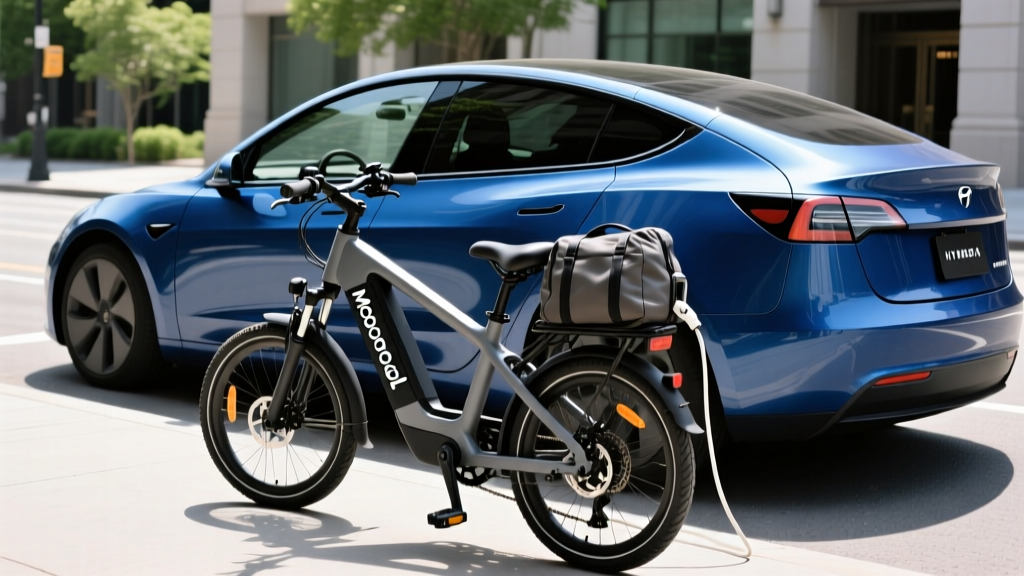
Mooncool manufactures a range of fat-tire and commuter electric bicycles sold primarily direct-to-consumer. While AutoEdgeView's core coverage is four-wheeled EVs, readers frequently ask whether an e-bike like a Mooncool can serve as a primary commuter vehicle. Here's what the current lineup delivers:
- Battery capacity: Typically 48V / 10.4–15 Ah (roughly 0.5–0.72 kWh usable — yes, that's kWh, the energy unit)
- Claimed range: 25–45 miles per charge depending on pedal-assist level, rider weight, and terrain
- Top speed: 20–28 mph (Class 2 or Class 3 e-bike, depending on model)
- Motor: 500W–750W hub motor (peak)
- Charge time: 4–6 hours on a standard 120V outlet (Level 1 equivalent, roughly 0.1–0.15 kW draw)
- Price range: $999–$1,799 MSRP depending on model
- Weight: 55–75 lbs
These are reasonable specs for urban and suburban commuting. But context matters — let's put them against a real car.
EV vs. Mooncool E-Bike: The Real Numbers
To give you a concrete comparison, we're stacking a Mooncool fat-tire commuter e-bike against the 2026 Chevrolet Equinox EV LT — one of the most affordable mainstream EVs available — and a comparable gas compact (2026 Honda Civic) as a baseline.
| Spec / Cost | Mooncool E-Bike (Fat Tire) | 2026 Chevy Equinox EV LT | 2026 Honda Civic (Gas Baseline) |
|---|---|---|---|
| Purchase Price | $1,399 | $33,600 MSRP | $25,550 MSRP |
| Federal Tax Credit (§30D) | Not eligible | Up to $7,500 (income/MSRP/sourcing rules apply — see IRS §30D) | |
| Effective Price After Credit | $1,399 | ~$26,100 (if eligible) | $25,550 |
| Range | 25–45 mi (real-world, pedal assist) | 319 mi EPA (expect ~250–270 mi highway, less in cold) | |
| Energy Capacity | ~0.67 kWh | 85 kWh usable (NMC) | |
| Fuel/Energy Cost per Mile | ~$0.008 (at $0.16/kWh avg) | ~$0.04 (at $0.16/kWh, 3.5 mi/kWh) | |
| Fuel Cost per Mile (Gas) | N/A | N/A | ~$0.12 (at $3.50/gal, 33 MPG combined) |
| Annual "Fuel" Cost (8,000 mi) | $64 | $320 | $960 |
| Insurance (Annual Avg) | ~$100–$250 (e-bike policy) | ~$1,600–$2,200 | ~$1,400–$1,800 |
| Maintenance (Annual) | ~$100–$200 (tires, brake pads, chain) | ~$300–$500 (cabin filter, tire rotation, fluid top-off) | ~$600–$900 (oil, filters, brakes, belts) |
| Top Speed | 28 mph (Class 3) | 115+ mph | 125+ mph |
| Weather Protection | None (rider exposed) | Full climate control | Full climate control |
| Cargo Capacity | ~50 lbs (with panniers/rack) | 26.4 cu ft (rear seats up) | 14.8 cu ft (trunk) |
| Passengers | 1 (some models: +1 child seat) | 5 | 5 |
Sources: fueleconomy.gov — 2026 Equinox EV; manufacturer spec sheets; AAA 2025 Your Driving Costs report.
Cost Breakdown: 5-Year Ownership Reality
Purchase price is only the start. Here's a five-year total cost of ownership (TCO) assuming 8,000 miles driven per year, a 12-month ownership pattern, and full federal tax-credit eligibility for the Equinox EV.
| 5-Year Cost Category | Mooncool E-Bike | Equinox EV (with $7,500 credit) | Honda Civic (Gas) |
|---|---|---|---|
| Purchase (net) | $1,399 | $26,100 | $25,550 |
| Fuel/Energy (5 yr) | $320 | $1,600 | $4,800 |
| Insurance (5 yr) | $875 | $9,500 | $8,000 |
| Maintenance (5 yr) | $750 | $2,000 | $3,750 |
| Depreciation (est.) | -$800 | -$12,000 | -$10,500 |
| 5-Year Total | ~$2,544 | ~$27,200 | ~$31,600 |
The e-bike wins on raw economics — but only if it can actually cover your trips. A $2,544 five-year cost is remarkable, yet it assumes you never need a car for groceries in the rain, a highway trip, or a passenger. Most households using an e-bike as a primary "vehicle" are in dense urban areas with mild climates (think San Diego, Austin, or Miami) and have access to a second car or rideshare for edge cases.
Real-World Ownership Considerations Most Buyers Overlook
Charging Access
Mooncool e-bikes charge from any standard 120V outlet in 4–6 hours — no Level 2 installation, no panel upgrade, no electrician visit. This is a genuine advantage over EVs, where home Level 2 charging installation typically costs $800–$2,500 (equipment + licensed electrician + permit) and may require a 200-amp panel upgrade ($1,500–$3,500 additional). If you rent an apartment or lack garage access, the e-bike's portability (carry the charger, plug in anywhere) is a major practical win.
Climate and Seasonality
Here's where e-bike commuting hits a wall for many buyers. Battery capacity drops 15–30% in temperatures below 40°F. A Mooncool rated for 40 miles at 70°F may deliver only 28–34 miles in January in Chicago. Add wind chill, rain, snow, and darkness (sunset at 4:30 PM in northern latitudes), and the practical commuting season for an e-bike in much of the U.S. shrinks to roughly April–October. An EV's enclosed, climate-controlled cabin operates year-round regardless of weather.
Safety and Infrastructure
E-bike fatalities have risen alongside adoption. The NHTSA and local DOTs are still developing dedicated e-bike infrastructure standards. Protected bike lanes are essential — riding a 55-lb e-bike at 25 mph alongside 45-mph traffic on roads without shoulders carries real risk that an enclosed vehicle with airbags and crumple zones does not. Factor in your local infrastructure honestly.
Driving Patterns
If your commute is 6 miles each way on surface streets with bike lanes, an e-bike is ideal. If it's 22 miles on a freeway interchange, it's not — e-bikes are legally limited to 20–28 mph and cannot use highways. Match the vehicle to your actual route, not your aspirational one.
Common Misconceptions: Myth vs. Fact
| Myth | Fact |
|---|---|
| "An e-bike can fully replace my car." | For 70%+ of U.S. households, no — cargo needs, passengers, highway trips, and weather make a car necessary for many trips. E-bikes replace trips, not vehicles, for most people. |
| "E-bikes don't need charging infrastructure." | They need a 120V outlet and 4–6 hours. That's easy at home but challenging if you park on the street or in a garage without outlets. |
| "EVs are too expensive compared to e-bikes." | Upfront, yes. But a $26,100 EV after credits replaces all driving needs year-round. The comparison only works if the e-bike covers all your trips. |
| "E-bike batteries last forever." | Lithium-ion e-bike batteries typically last 500–800 full charge cycles before degrading to ~80% capacity. At daily charging, that's roughly 2–3 years before noticeable range loss. Replacement: $300–$600. |
| "I'll save $30,000 by buying an e-bike instead of an EV." | You'll save on purchase price, but you still need a car for many trips. The real comparison is e-bike + used car vs. one new EV. |
Tax Credits and Incentives: What Applies Where
Mooncool electric bikes do not qualify for the federal §30D Clean Vehicle Credit — that credit applies to four-wheeled vehicles meeting battery-sourcing, MSRP, and buyer-income requirements. However, some states and municipalities offer e-bike rebates:
- Colorado: Various utility and city rebates of $100–$400 for e-bike purchases
- California: CARB e-bike incentive programs (income-based, up to $1,000 in some air districts)
- Employer commuter benefits: Some companies reimburse e-bike purchases under wellness or commuter programs
Check your local air district, utility, and employer — these incentives change frequently. For EV tax credit details, consult the IRS §30D page directly, as income caps ($150K single / $300K joint), MSRP limits ($55K sedans / $80K SUVs), and critical-mineral sourcing rules apply.
Decision Framework: Which Should You Choose?
Choose a Mooncool E-Bike If:
- Your round-trip commute is under 15 miles on surface streets with bike infrastructure
- You live in a mild climate (rarely below 40°F, minimal snow)
- You have secure, covered storage with a 120V outlet
- You already own or have access to a car for longer trips, bad weather, and cargo
- Your budget is under $2,000 and you want to eliminate fuel costs on daily commutes
- You value exercise (pedal-assist still involves pedaling)
Choose an EV (like the Equinox EV) If:
- Your commute exceeds 20 miles one way or includes highway driving
- You need year-round, all-weather transportation
- You carry passengers or significant cargo regularly
- You can install Level 2 home charging (or have reliable workplace/public charging)
- You qualify for the §30D credit, bringing effective price near or below a gas equivalent
- This will be your only vehicle
Choose Both (The Hybrid Household) If:
- You have a two-car household and can replace one car with an e-bike for fair-weather commuting
- You keep a used EV or PHEV for highway trips, winter days, and family hauling
- This combination often yields the lowest total household transportation cost
First-Time E-Bike Buyer Essentials
If you're leaning toward a Mooncool or similar e-bike, here's what experienced owners wish they'd known:
- Buy a quality lock: E-bike theft is rampant. Budget $80–$150 for a U-lock or chain rated for e-bikes (Abus, Kryptonite New York series).
- Get e-bike-specific insurance: Homeowners/renters policies often exclude e-bikes or cap coverage at $500. Dedicated e-bike insurance (Velosurance, Sundays) runs $100–$250/year for theft + liability.
- Plan for battery replacement: Budget $400–$600 for a replacement battery in years 3–4. Store the battery indoors, charged to ~60%, if the bike will sit unused for weeks.
- Know your class: Class 2 (20 mph, throttle) is legal on most bike paths. Class 3 (28 mph, pedal-assist only) may be restricted from multi-use trails. Check local ordinances.
- Test the weight: At 55–75 lbs, carrying a Mooncool up apartment stairs or onto a bus rack is a real workout. If you need to carry it regularly, consider a lighter commuter model.
Frequently Asked Questions
Can a Mooncool electric bike handle a 10-mile commute?
Yes. A 10-mile one-way commute (20 miles round-trip) is within the real-world range of most Mooncool models on pedal-assist level 2–3, leaving 5–20 miles of buffer. In cold weather (below 40°F), expect range to drop to roughly 18–28 miles round-trip — still sufficient, but with less margin.
How does e-bike charging cost compare to an EV?
An e-bike uses roughly 0.5–0.7 kWh per full charge (about $0.08–$0.11 at the U.S. average of $0.16/kWh). An EV like the Equinox uses ~25–30 kWh for a full charge (~$4.00–$4.80). Per mile, the e-bike costs roughly $0.008 vs. the EV's $0.04 — but the EV delivers 319 miles of range, weather protection, and highway capability for that cost.
Do Mooncool e-bikes qualify for any federal tax credits?
No. The federal §30D Clean Vehicle Credit applies only to four-wheeled motor vehicles meeting specific battery-sourcing, MSRP, and buyer-income criteria. E-bikes are classified as bicycles under federal law. Some state and local programs offer e-bike rebates — check your utility and air district.
Is an e-bike safer than a car for commuting?
No. Per mile traveled, e-bike riders face higher injury risk than occupants of modern vehicles with airbags, stability control, and advanced driver-assistance systems (ADAS). Protected bike lanes reduce but don't eliminate this risk. Always wear a helmet (consider a MIPS-rated model), use lights day and night, and ride defensively.
Should I buy an e-bike or a used EV as my first electrified vehicle?
If your budget is under $2,000 and your commute is short with bike infrastructure, the e-bike is the lower-risk entry point. If you need a single vehicle for all conditions and can spend $15,000–$25,000, a used EV (2022–2024 Bolt EV, Model 3, or Ioniq 5) offers far more versatility. The right answer depends entirely on your route, climate, and whether you have access to a second vehicle.