The Quick Verdict: Juniper Refines, Pre-Refresh Discounts
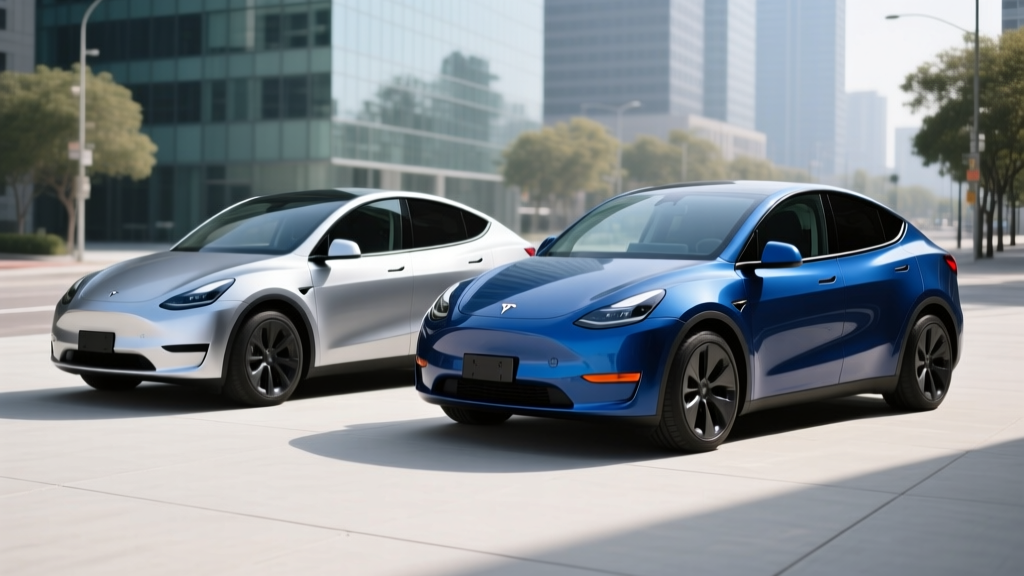
If you are weighing a Tesla Model Y new vs old — specifically the 2026 Juniper-refreshed Model Y against the pre-refresh 2024–2025 Long Range and Performance variants — the split is straightforward. The refreshed Juniper Model Y delivers a quieter cabin, updated interior materials, ambient lighting, a rear touchscreen, and a slightly retuned suspension. The pre-refresh Model Y, still widely available as remaining dealer stock and on the used market, often undercuts the Juniper by $3,000–$6,000 after incentives while retaining nearly identical battery hardware and powertrain efficiency.
Neither version is a slam-dunk universal winner. Your decision hinges on whether you prioritize interior refinement and the latest tech, or maximum value per dollar. Below, we break down every spec, real-world number, and ownership cost that matters.
Side-by-Side Spec Table: Juniper vs Pre-Refresh Model Y
| Spec | 2026 Juniper LR AWD | 2024 Pre-Refresh LR AWD |
|---|---|---|
| EPA Range | 320 miles | 310 miles |
| Battery (usable) | ~78.1 kWh (NMC) | ~78.1 kWh (NMC) |
| Efficiency | 122 MPGe / 27 kWh/100mi | 119 MPGe / 28 kWh/100mi |
| Peak DC Fast Charge | 250 kW | 250 kW |
| 10–80% DC Charge Time | ~25 min | ~27 min |
| Level 2 Charge Rate | 11.5 kW (44 mi/hr) | 11.5 kW (44 mi/hr) |
| 0–60 mph | 4.8 sec | 4.8 sec |
| Horsepower | 384 hp | 384 hp |
| Cargo Volume (rear seats up) | 30.2 cu ft | 30.2 cu ft |
| Cargo Volume (rear seats folded) | 72.1 cu ft | 76.2 cu ft |
| Base MSRP | $44,990 | $42,990 (original MSRP) |
| Battery/Drive Unit Warranty | 8 yr / 120,000 mi | 8 yr / 120,000 mi |
Sources: EPA Fuel Economy, Tesla spec sheets.
Range and Charging: Nearly Identical Hardware, Slight Software Gains
The most important takeaway for range and charging is that Tesla did not change the battery pack architecture with the Juniper refresh. Both the new and old Model Y Long Range use a ~78.1 kWh usable NMC (nickel-manganese-cobalt) battery supplied primarily by Panasonic and LG Energy Solution. The 10-mile EPA advantage on the Juniper comes from minor aero tweaks (revised front fascia, updated wheel designs), lower-rolling-resistance tire options, and a slightly more efficient heat pump calibration.
Both versions use the NACS (North American Charging Standard) connector natively, giving access to the full Tesla Supercharger network — currently over 18,000 stalls in North America. This remains a significant practical advantage over CCS-equipped competitors, though the gap is narrowing as Ford, Rivian, and others gain Supercharger access via adapters.
For Level 2 home charging, both versions accept 11.5 kW on a 48-amp circuit, adding roughly 44 miles of range per hour. An overnight charge from 20–80% takes about 5–6 hours on a Level 2 wall connector.
Performance, Ride, and Interior: Where the Refresh Actually Shows
Powertrain hardware is carryover. Both versions produce 384 hp from a dual-motor AWD setup and hit 0–60 mph in 4.8 seconds (Long Range). The Performance variant, where still available in pre-refresh form, does 0–60 in 3.5 seconds with 456 hp.
The meaningful differences are in ride quality and cabin experience:
- Suspension: The Juniper features retuned dampers and revised bushings that reduce low-frequency impacts over expansion joints. The pre-refresh Model Y was criticized for a firm, sometimes crashy ride — the Juniper is noticeably more compliant without sacrificing body control.
- NVH (Noise, Vibration, Harshness): Tesla added acoustic glass to the rear windows and additional sound-deadening material in the Juniper. Highway wind and road noise are measurably lower. This is the single most noticeable improvement on a test drive.
- Interior Materials: The Juniper gets ventilated front seats (previously heat only), textile dashboard trim replacing the plain vinyl, ambient lighting strips, and power-folding second-row seats. The pre-refresh interior is sparser — functional but austere.
- Rear Touchscreen: Juniper adds an 8-inch rear-seat touchscreen for climate and media control. The pre-refresh has no rear screen.
- Stalkless Design: Both current-production versions use steering-wheel-mounted turn signal buttons and a screen-based gear selector. If you are comparing against a 2023 or earlier pre-refresh, those still had a physical drive stalk.
Tech, Autopilot, and Software
Both versions run Tesla's current software stack, receive over-the-air updates, and include basic Autopilot (Traffic-Aware Cruise Control and Autosteer) as standard. Full Self-Driving (Supervised) remains an $8,000 option or $99/month subscription on both.
The Juniper uses Tesla's AI4 (Hardware 4) compute platform with higher-resolution cameras, which was also retrofitted into late-2024 pre-refresh production. Early 2023–2024 pre-refresh units may still carry HW3 cameras — verify hardware version if buying used, as HW3 will not support future vision improvements at the same fidelity.
Price, Tax Credits, and Total Cost of Ownership
This is where the comparison gets nuanced, because the pre-refresh Model Y is primarily available as remaining new-old stock, certified pre-owned, or on the used market — and the federal tax credit rules differ depending on how you buy.
| Factor | 2026 Juniper LR AWD (New) | 2024 Pre-Refresh LR AWD (Remaining New Stock) | 2023–2024 Pre-Refresh (Used) |
|---|---|---|---|
| Sticker / Asking Price | $44,990 | $39,990–$42,990 | $27,000–$35,000 |
| Federal §30D New EV Credit | Up to $7,500 (if eligible) | Up to $7,500 (if eligible) | N/A (used credit below) |
| Federal §25E Used EV Credit | N/A | N/A | Up to $4,000 (30% of sale price, capped) |
| Effective Price After Max Credit | ~$37,490 | ~$32,490–$35,490 | ~$23,000–$31,000 |
Tax credit eligibility is subject to IRS §30D and §25E rules including buyer income caps ($150K single / $300K joint for new; $75K single / $150K joint for used), MSRP caps ($80K for SUVs), and battery critical-mineral sourcing requirements. Credits may be transferred to the dealer at point of sale. Always verify current-year eligibility at IRS.gov and consult a tax professional.
5-Year Ownership Cost Breakdown
| Cost Category | 2026 Juniper LR AWD | 2024 Pre-Refresh LR AWD (New Stock) |
|---|---|---|
| Purchase Price (after credit) | $37,490 | $34,490 |
| Electricity (60K mi @ $0.14/kWh avg) | $2,268 | $2,352 |
| Insurance (avg annual) | $11,400 ($2,280/yr) | $10,800 ($2,160/yr) |
| Maintenance (tires, cabin filter, wipers) | $2,100 | $2,100 |
| Estimated Depreciation (5 yr) | ~$14,500 | ~$11,000 |
| Total 5-Year Cost | ~$67,758 | ~$60,742 |
The pre-refresh wins on pure cost. Lower purchase price, slightly lower insurance premiums (insurers price based on replacement cost), and less depreciation exposure since the steepest depreciation curve has already occurred on a discounted or used unit. The Juniper's ~1 kWh/100mi efficiency advantage saves roughly $84 over 60,000 miles — negligible against the $3,000+ purchase price gap.
Pros and Cons at a Glance
2026 Juniper Pros
- Significantly quieter cabin (acoustic glass, added insulation)
- Ventilated front seats standard
- Rear touchscreen for passengers
- Improved ride compliance
- Guaranteed AI4/HW4 camera hardware
- 10 additional miles EPA range
- Ambient lighting and textile dash trim
2026 Juniper Cons
- $2,000–$5,000 higher price than pre-refresh stock
- Steep depreciation in years 1–2 (new EV norm)
- Stalkless turn signals still polarizing
- No spare tire (tire repair kit only)
Pre-Refresh Pros
- $3,000–$6,000 lower effective price
- Same battery, powertrain, and Supercharger access
- Less depreciation risk (already depreciated)
- Physical drive stalk on 2023 and earlier models
- Widely available CPO with remaining warranty
Pre-Refresh Cons
- Noticeably more road and wind noise
- Firmer, less refined ride quality
- No ventilated seats, no rear screen
- May have HW3 cameras (2023 and earlier)
- Shorter remaining factory warranty period
Decision Framework: Which Model Y Should You Buy?
Choose the 2026 Juniper Model Y If:
- You commute 40+ miles daily and cabin quietness matters to you
- You regularly carry rear-seat passengers who will use the rear touchscreen
- You want ventilated seats for hot-climate driving
- You plan to keep the vehicle 5+ years and want maximum remaining warranty
- You prefer buying new with full factory warranty and the latest hardware guaranteed
- You qualify for the full $7,500 §30D credit, bringing the effective price to ~$37,490
Choose the Pre-Refresh Model Y If:
- Total cost of ownership is your top priority
- You can find remaining-new 2024 stock at $39,990–$42,990 with the same $7,500 credit eligibility
- You are open to certified pre-owned with 20,000–40,000 miles and remaining battery warranty
- You prefer a physical drive stalk (2023 and earlier models)
- You view the car primarily as transportation and the sparser interior does not bother you
- You want to minimize depreciation exposure by letting the first owner absorb it
Charging Network and Practical Ownership Considerations
Both versions benefit equally from Tesla's Supercharger network, which remains the most reliable and widespread DC fast-charging ecosystem in North America. According to Tesla's public data, the network averages over 99.9% uptime. For Juniper and pre-refresh owners alike, the in-car navigation automatically routes through Superchargers and preconditions the battery for optimal charge speed.
For home charging, both versions benefit identically from a Level 2 Tesla Wall Connector ($420 for the unit, $500–$1,500 for professional installation on a 60-amp circuit). If your home electrical panel is maxed out at 100 amps, budget an additional $1,500–$3,000 for a panel upgrade to 200 amps — this applies regardless of which Model Y version you choose.
Public charging reliability outside the Tesla network varies. Both versions can use Electrify America, EVgo, and ChargePoint stations via the native NACS plug (increasingly supported at non-Tesla networks) or a CCS-to-NACS adapter. Charge speeds at non-Tesla 150 kW stations will be limited by the station, not the vehicle.
Frequently Asked Questions
Is the Juniper Model Y battery different from the pre-refresh?
No. Both use a ~78.1 kWh usable NMC battery pack. The 10-mile EPA range increase on the Juniper comes from aerodynamic refinements, tire options, and heat pump calibration — not a larger or chemically different battery.
Can I get the federal tax credit on a used pre-refresh Model Y?
Possibly. The §25E used clean vehicle credit offers up to $4,000 (30% of the sale price, capped at $4,000) for eligible used EVs purchased from a dealer. Buyer income caps are lower ($75K single / $150K joint), the vehicle must be at least 2 model years old, and the sale price must be $25,000 or less. Verify eligibility at IRS.gov.
Does the pre-refresh Model Y still get software updates?
Yes. Tesla continues to push OTA updates to all Model Y vehicles. However, vehicles with HW3 cameras will not support all future vision features at the same fidelity as HW4/AI4 units. Confirm your hardware version in the Tesla app under Software → Additional Vehicle Information.
Which version has better resale value?
The pre-refresh has already absorbed its steepest depreciation, so its future resale curve will be flatter. The Juniper, as a newer and more expensive vehicle, will lose a larger absolute dollar amount in years 1–3. If you plan to sell within 3 years, the pre-refresh is the lower-risk financial choice.
Is the Juniper worth the $2,000–$5,000 premium?
For daily commuters covering significant highway miles, the NVH improvements and ventilated seats are tangible quality-of-life upgrades that justify the premium. For budget-focused buyers or those who primarily drive in the city at lower speeds, the pre-refresh delivers the same core EV experience at a meaningfully lower cost.