Quick Verdict: What Changed and Why It Matters
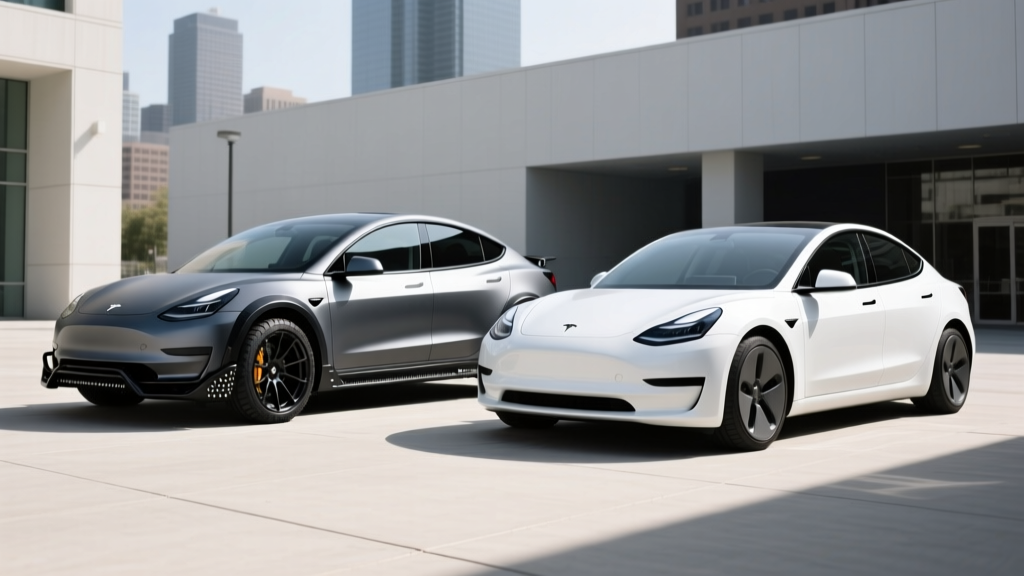
The Tesla Model 3 "Highland" refresh (introduced late 2023 for the 2024 model year and carried into 2026) is not a new car — it's a thorough re-engineering of the same platform. For buyers cross-shopping a new 2026 Model 3 against a certified pre-owned or remaining-stock pre-refresh Model 3 (2023 and earlier), the differences are substantial enough to shift the value equation depending on your priorities.
The Highland update brought a stiffer body structure, retuned suspension, acoustic glass, a rear touchscreen, ventilated front seats, ambient lighting, and revised exterior aero that nudged efficiency higher. What it did not change: the fundamental battery architecture, the motor lineup, or the Supercharger network advantage. Below, we break down every measurable difference so you can decide whether the refresh premium is worth it — or whether a pre-refresh Model 3 is the smarter buy.
Side-by-Side Specs: 2026 Model 3 Highland vs Pre-Refresh Model 3
| Spec | 2026 Model 3 Highland (Long Range AWD) | 2023 Model 3 Pre-Refresh (Long Range AWD) |
|---|---|---|
| EPA Range | 341 miles | 333 miles |
| Battery (usable) | ~79 kWh (NMC) | ~79 kWh (NMC) |
| Efficiency (MPGe combined) | 132 MPGe | 127 MPGe |
| Peak DC Fast Charge | 250 kW | 250 kW |
| 10–80% DC Charge Time | ~27 min | ~28 min |
| Level 2 Charge Rate | 11.5 kW (44 mi/hr) | 11.5 kW (44 mi/hr) |
| 0–60 mph | 4.2 seconds | 4.2 seconds |
| Horsepower | 346 hp | 346 hp |
| Cargo Volume | 23 cu ft | 23 cu ft |
| Base MSRP (Long Range AWD) | $47,740 | ~$47,740 (original MSRP) |
| Battery/Drive Unit Warranty | 8 yr / 120,000 mi | 8 yr / 120,000 mi |
Sources: EPA fueleconomy.gov, Tesla spec sheets.
Range and Efficiency: Small Gains, Real Impact
The Highland's 8-mile EPA advantage (341 vs 333) comes primarily from revised exterior aerodynamics — a reshaped front bumper, flush door handles that were already present but now sit in a smoother body-side profile, and new wheel options with lower drag coefficients. The battery pack itself is essentially the same ~79 kWh usable NMC unit.
On paper, 8 miles is negligible. In practice, the Highland's efficiency bump (132 MPGe combined vs 127 MPGe) translates to roughly 1–2 kWh less energy consumed per 100 miles. Over 15,000 annual miles, that's a savings of about $30–$50 per year at the national average electricity rate of ~$0.16/kWh. Meaningful over a decade, but not a deal-breaker.
Charging Speed: Identical Hardware, Slightly Better Curve
Both generations peak at 250 kW on a V3 Supercharger or comparable DC fast charger. Neither supports the 800V architecture that enables 350 kW+ charging on vehicles like the Hyundai Ioniq 5 or Porsche Taycan.
The Highland's revised thermal management software shaves roughly 1 minute off the 10–80% charge time in ideal conditions (~27 vs ~28 minutes). This difference is within the margin of variance you'd see from ambient temperature or state of charge alone. At a public charger, you won't notice the difference.
Both vehicles charge at 11.5 kW on Level 2 (240V), adding roughly 44 miles of range per hour. A full overnight charge from 10% on a home Level 2 unit takes about 7.5 hours for either car.
Ride Quality, Noise, and Interior: Where the Highland Actually Wins
This is the category where the Highland's improvements are most tangible — and hardest to capture in a spec table.
Highland Improvements
- Acoustic laminated glass on all windows — noticeably quieter at highway speed
- Frequency-selective dampers — smoother over expansion joints and potholes
- Stiffer body structure — reduced cowl shake and steering-column vibration
- Ventilated front seats — a welcome addition for warm climates
- Rear 8-inch touchscreen — climate and media control for back-seat passengers
- Ambient interior lighting — customizable color strips across the dash
- Redesigned center console — new materials, wireless charging pad repositioned
Pre-Refresh Trade-Offs
- More road and wind noise above 65 mph
- Firmer, more abrupt ride over sharp bumps
- No rear passenger screen — climate adjustments require reaching forward
- No ventilated seats (heated only)
- Same minimalist layout, but older material quality on console and door panels
- Turn-signal stalks present (Highland moved to steering-wheel buttons — polarizing)
The turn-signal change deserves a callout: The Highland eliminated the traditional turn-signal stalk, moving indicators to buttons on the steering wheel rim. Many owners find this unintuitive, particularly in roundabouts or when the wheel is turned. If this is a deal-breaker, the pre-refresh retains the conventional stalk.
Price, Tax Credits, and Total Cost of Ownership
| Factor | 2026 Model 3 Highland (Long Range AWD) | Used Pre-Refresh Model 3 (2021–2023) |
|---|---|---|
| Starting Price | $47,740 MSRP | $25,000–$35,000 (market dependent) |
| Federal Tax Credit (§30D) | Up to $7,500 (new vehicle) | Up to $4,000 (used EV credit, §25E) |
| Credit Delivery | Point-of-sale transfer available | Point-of-sale transfer available |
| Effective Price After Credit | ~$40,240 | ~$21,000–$31,000 |
| Annual Insurance (avg.) | $2,200–$2,800 | $1,800–$2,400 |
| Annual Electricity Cost (15k mi) | ~$550–$650 | ~$580–$680 |
| 5-Year Maintenance (est.) | ~$1,500 | ~$2,000–$3,500 |
5-Year Ownership Cost Estimate
| Category | 2026 Highland LR AWD | Used Pre-Refresh LR AWD (2022) |
|---|---|---|
| Purchase (after credit) | $40,240 | $27,000 |
| Insurance (5 yr) | $12,500 | $10,500 |
| Electricity (5 yr) | $3,000 | $3,200 |
| Maintenance & Repairs | $1,500 | $2,800 |
| Depreciation (est.) | −$16,000 | −$8,000 |
| Net 5-Year Cost | ~$41,240 | ~$35,500 |
The pre-refresh wins on pure cost. The Highland's advantage is warranty coverage (full factory warranty remaining), newer hardware, and the latest software features. Your calculus depends on whether the ~$5,700 five-year gap justifies the improvements in NVH, seats, and rear-seat tech.
Category-by-Category Verdict
Range
Winner: Highland
341 vs 333 EPA miles. Marginal, but real.
Charging Speed
Winner: Tie
Both peak at 250 kW, ~27–28 min 10–80%.
Ride & Comfort
Winner: Highland
Acoustic glass, retuned dampers, ventilated seats.
Interior Tech
Winner: Highland
Rear screen, ambient lighting, updated console.
Value / Price
Winner: Pre-Refresh (Used)
$10K–$15K less after credits.
Warranty Coverage
Winner: Highland
Full 8yr/120K battery + 4yr/50K bumper-to-bumper.
Performance
Winner: Tie
Same motors, same 4.2s 0–60.
Ergonomics
Winner: Pre-Refresh
Physical turn-signal stalk; less divisive.
Decision Framework: Which Model 3 Should You Buy?
Choose the 2026 Model 3 Highland if:
- You're buying new and want full factory warranty peace of mind
- Highway commuting is a daily reality and lower cabin noise matters to you
- You frequently carry rear passengers who'd benefit from their own climate/media screen
- You live in a warm climate where ventilated seats are a genuine quality-of-life upgrade
- You qualify for the full $7,500 new-EV credit and the effective price fits your budget
- You prefer the latest software features and don't mind the stalkless turn-signal design
Choose the Pre-Refresh Model 3 (used/CPO) if:
- Budget is your primary driver — the savings are substantial ($10K–$15K less)
- You prefer a traditional turn-signal stalk
- You're comfortable with a used vehicle and can inspect battery State of Health via the Tesla app
- Your daily commute is short enough that the 8-mile range difference is irrelevant
- You want to minimize depreciation hit (used EVs have already absorbed the steepest drop)
- You qualify for the used-EV credit (§25E) and meet its lower income thresholds
ADAS and Autopilot: Same Hardware Generation
Both the Highland and the pre-refresh (2022+) use Tesla's HW4 (Hardware 4) camera suite. Earlier pre-refresh models (2019–2021) may have HW3, which Tesla has stated will receive reduced FSD feature support going forward. If you're considering a used pre-refresh, verify the hardware generation — it's visible in the vehicle's Software menu.
The Highland's cameras are mounted in slightly revised positions with improved lens quality, offering marginally better low-light and rain performance. In practice, both systems perform identically on highway driving tasks. Neither is a reason to prefer one generation over the other unless you're looking at a pre-2022 car with HW3.
Frequently Asked Questions
Is the Model 3 Highland battery different from the pre-refresh?
No. Both use a ~79 kWh usable NMC battery pack with the same cell form factor and chemistry. The Highland's 8-mile EPA range advantage comes from aerodynamic and efficiency improvements, not a larger or more energy-dense battery. Battery degradation curves are expected to be similar — Tesla's warranty guarantees 70% capacity retention at 8 years or 120,000 miles for both.
Does the Highland charge faster on non-Tesla chargers?
No. Both vehicles peak at 250 kW on any CCS or NACS DC fast charger that can deliver it. The Highland does not support 800V-class charging (350 kW+). If fast-charging speed is your top priority, vehicles like the Hyundai Ioniq 5 or Kia EV6 (both 800V architecture, 10–80% in ~18 minutes) outperform either Model 3 variant.
Can I get the turn-signal stalk back on the Highland?
No. Tesla removed the physical stalk as part of the Highland redesign and has not offered it as an option. Some owners adapt within a few weeks; others find it persistently frustrating. If this feature is non-negotiable, the pre-refresh is your only Model 3 option.
Which Model 3 qualifies for the full $7,500 tax credit in 2026?
Credit eligibility depends on battery sourcing, which Tesla adjusts throughout the year. As of early 2026, the Long Range RWD typically qualifies for the full $7,500, while the Long Range AWD may qualify for $3,750 (half credit) depending on critical-mineral and component sourcing. Always check Tesla's current eligibility page and cross-reference with fueleconomy.gov's credit lookup tool before purchasing.
Is a certified pre-owned Model 3 a safe buy?
Tesla does not currently operate a traditional CPO program with extended warranties. Used Model 3s sold through Tesla come with the remainder of the original factory warranty. When buying privately or from a third-party dealer, request a battery State of Health reading from the Tesla Service Center or use third-party tools to verify degradation. Most 2021–2023 Model 3 packs show 5–10% degradation at 30,000–50,000 miles — well within warranty thresholds.
What about the Model 3 Performance?
The 2026 Model 3 Performance (Highland) produces 510 hp, hits 0–60 in 2.9 seconds, and carries an MSRP of $54,990. It includes track-mode hardware, adaptive dampers, and a unique interior. There is no direct pre-refresh comparison in this article because the Performance trim's powertrain was significantly updated. If you're considering the Performance variant, it warrants its own evaluation.