If you've searched for a mini jet boat electric and landed here, you're likely weighing a compact electric watercraft purchase against other big-ticket electrified options — or you're an EV owner curious whether the technology translates to the water. Here's the direct answer: mini electric jet boats in 2026 typically cost between $8,000 and $25,000, offer 45 to 90 minutes of continuous runtime on a full charge, and use lithium-ion battery packs ranging from 5 to 20 kWh. They are not eligible for the federal §30D EV tax credit, which applies only to highway-capable four-wheeled vehicles. If your goal is daily transportation savings, an electric car will deliver far more utility per dollar. If you want a compact, emission-free watercraft for a lake house or marina, the technology is real but the ownership math looks very different from a road-going EV.
What Exactly Is a Mini Electric Jet Boat?
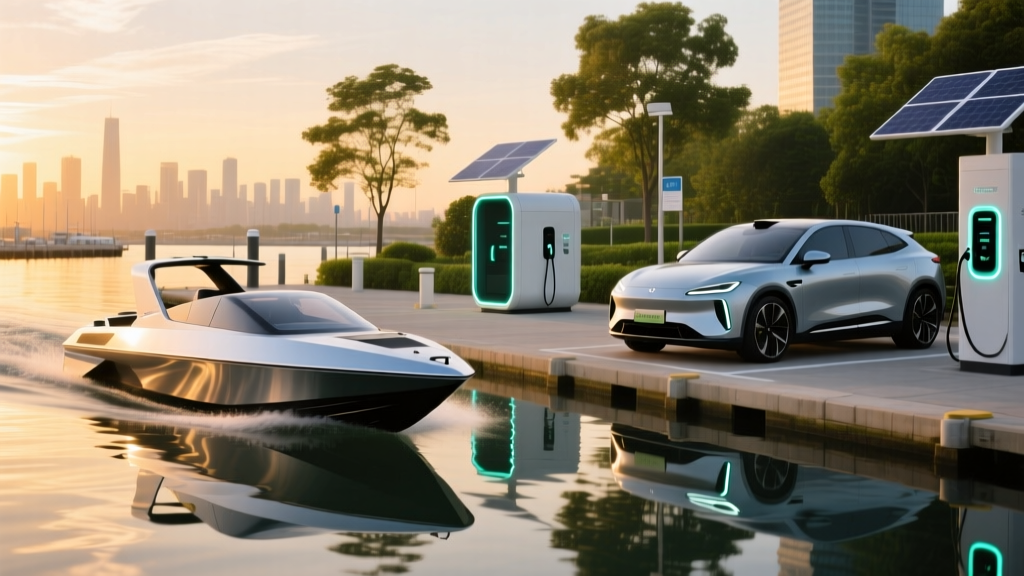
A mini electric jet boat is a small watercraft — usually 8 to 14 feet long — propelled by an electric motor driving a waterjet pump rather than a propeller. Brands like Rand X, Narke, and several emerging Chinese manufacturers offer models aimed at recreational riders, resort fleets, and lakefront homeowners. The appeal is straightforward: instant torque, near-silent operation, zero exhaust, and minimal maintenance compared to a gas outboard or inboard jet drive.
The battery packs in these craft are typically NMC (nickel manganese cobalt) lithium-ion cells housed in sealed, marine-grade enclosures. Usable capacities range from roughly 5 kWh on entry-level models up to 20 kWh on premium offerings. For reference, that's the energy equivalent of about 15 to 60 miles of driving in a typical electric car — but water resistance is far higher than rolling resistance, so runtime is measured in minutes, not miles.
Mini Electric Jet Boat vs. Gas Jet Boat: The Numbers
The most common question from first-time buyers is whether going electric on the water actually saves money. Below is a side-by-side comparison using representative 2026 models: a 12-foot electric jet boat with a 15 kWh pack versus a comparable 12-foot gas-powered jet boat with a 110 HP four-stroke engine.
| Factor | Electric (15 kWh) | Gas (110 HP 4-stroke) | |
|---|---|---|---|
| Purchase Price | $16,500 | $11,000 | |
| Fuel/Energy Cost per Hour | ~$1.80 (at $0.12/kWh, 15 kW avg draw) | ~$18.00 (at $3.80/gal, 4.7 GPH avg) | |
| Annual Fuel/Energy (80 hrs/yr) | $144 | $1,440 | |
| 5-Year Fuel/Energy Total | $720 | $7,200 | |
| Maintenance (5-Year) | ~$300 (impeller inspection, coolant) | ~$2,200 (oil, filters, winterization, spark plugs) | |
| Estimated Battery/Engine Replacement | Not expected in 5 yrs (1,000+ cycle life) | Potential top-end rebuild ~$1,500 | |
| 5-Year Total Cost of Ownership | ~$17,520 | ~$21,900 |
The electric boat breaks even on total cost around year four for a typical recreational user running 80 hours per season. Heavy users (150+ hours) will hit payback faster; light users (30 hours) may not recover the upfront premium within five years.
Range, Runtime, and the Real-World Battery Picture
Manufacturers advertise "up to 2 hours" of runtime, but that figure assumes low-speed cruising at roughly 10–15 mph. At wide-open throttle — which is how many riders actually use jet boats — expect runtime to drop to 35–50 minutes on a 15 kWh pack. This mirrors the EPA-vs-real-world gap we see in electric cars: the sticker number assumes an efficiency-optimized driving profile, while actual usage patterns are more demanding.
Cold-water and cold-air temperatures also affect performance. Lithium-ion cells lose roughly 10–15% of usable capacity when ambient temperatures drop below 40°F (4°C). If you boat in the shoulder seasons or northern latitudes, factor that into your planning.
Charging a Mini Electric Jet Boat: What's Required
Most mini electric jet boats ship with a standard 120V Level 1 charging cord that draws 1.2–1.5 kW. Charging a 15 kWh pack from empty to full on a household outlet takes approximately 10–12 hours — adequate for overnight turnaround if you boat once a day.
| Charging Level | Power (kW) | 0–100% Time | Typical Setup |
|---|---|---|---|
| Level 1 (120V) | 1.2–1.5 kW | 10–12 hours | Standard household outlet at dock or garage |
| Level 2 (240V) | 3.3–7.2 kW | 2.5–5 hours | Marina pedestal or home 240V circuit |
| Fast Charge (rare) | 15–25 kW (some models) | 35–50 min | Specialized marine DC charger; limited availability |
Some premium models support 240V Level 2 charging through a marine-grade shore power connection. If your marina or lake house already has a 240V/30A or 50A dock pedestal — common for larger boats — you can charge significantly faster with an adapter cable (typically $300–$600). Dedicated DC fast-charging infrastructure for small watercraft is essentially nonexistent outside of a few European marinas and resort fleets as of 2026.
Tax Credits, Incentives, and the §30D Reality
This is where many buyers get confused. The IRS §30D Clean Vehicle Credit applies to on-road, four-wheeled vehicles with a gross vehicle weight rating under 14,000 pounds. Electric boats, jet skis, ATVs, and other off-road or watercraft do not qualify for the federal EV tax credit — regardless of battery size or price.
For comparison, a 2026 electric vehicle like the Chevrolet Equinox EV (starting around $33,000) may qualify for the full $7,500 federal credit at point of sale, effectively dropping the price to ~$25,500 — and that's before state incentives. The tax credit math overwhelmingly favors electric cars over electric boats for buyers seeking financial return on an electrified purchase.
Ownership Considerations Most Buyers Overlook
Dock and Storage Charging Access
Unlike an EV parked in your garage, a boat lives at a dock, on a trailer, or in a slip. Charging infrastructure at marinas varies enormously. If your boat is trailered and stored at home, you can charge from a standard outlet overnight — no problem. If it lives in a wet slip, you'll need either a long, marine-rated shore power cable or a marina that provides electrical hookups at each slip. Confirm this before you buy.
Battery Degradation and Replacement Cost
Marine environments are harsh. Salt spray, vibration, and temperature swings accelerate wear. Quality marine battery packs use sealed, IP67-rated enclosures, but degradation still occurs. Expect roughly 5–8% capacity loss per year with typical recreational use (80–120 hours annually). A full battery pack replacement on a 15 kWh system runs $4,000–$7,000 depending on the manufacturer — a significant mid-life expense that gas boat owners don't face in the same way.
Insurance and Registration
Electric boat insurance premiums in 2026 are generally 10–20% higher than equivalent gas models, primarily due to higher replacement values and the specialized nature of battery repairs. Annual premiums for a $16,500 mini electric jet boat typically run $350–$550 depending on your state, boating history, and coverage level. Registration fees vary by state and are usually the same regardless of propulsion type.
Myths vs. Facts: Electric Jet Boats
| Myth | Fact |
|---|---|
| "Electric boats are as fast as gas ones." | Top speeds for 15 kWh models are typically 25–35 mph. Gas jet boats in the same class routinely hit 45–55 mph. |
| "You can charge anywhere at the dock." | Many marinas lack electrical hookups at individual slips. Verify before purchasing. |
| "No maintenance means zero costs." | Impellers wear, cooling systems need service, and hulls still require cleaning and antifouling. |
| "The battery will need replacing in 2–3 years." | Modern NMC marine packs are rated for 1,000–2,000 full cycles. At 80 hours/year, that's 10+ years before significant capacity loss. |
| "I'll get a $7,500 tax credit." | Electric watercraft do not qualify for the federal §30D credit. Check state/local programs instead. |
Decision Framework: Should You Buy a Mini Electric Jet Boat or an EV?
Buy a mini electric jet boat if:
- You already own a reliable car and want emission-free recreation on a lake or calm waterway
- You have confirmed charging access at your dock, marina, or trailer storage location
- Your use case is recreational cruising (not high-speed towing or long-distance runs)
- You value silent operation and zero exhaust fumes — especially important for swimming areas and wildlife zones
- You boat fewer than 120 hours per year and can accept the runtime limitations
Buy an electric vehicle instead (or first) if:
- You're looking to reduce daily transportation costs — an EV saves $1,000–$1,800/year in fuel for the average driver
- You want to leverage the §30D federal tax credit of up to $7,500
- You need 250+ miles of range and access to DC fast charging for road trips
- You don't yet have a reliable daily driver — an EV addresses a bigger slice of your carbon footprint and budget
Frequently Asked Questions
How fast does a mini electric jet boat go?
Most 2026 models with 10–20 kWh battery packs reach top speeds between 20 and 35 mph. Performance-oriented models with larger motors and packs can approach 40 mph, but runtime at those speeds drops sharply — often to 20–30 minutes. For comparison, a similarly sized gas jet boat with a 110–150 HP engine will typically reach 45–55 mph.
Can I use a mini electric jet boat in saltwater?
Some models are rated for saltwater use with additional corrosion protection, but most manufacturers recommend freshwater environments. Saltwater accelerates corrosion of electrical connections and motor components even with sealed systems. If you plan to use your boat in saltwater, confirm the manufacturer's warranty covers it — many do not.
How long do electric jet boat batteries last?
Quality NMC marine battery packs are rated for 1,000 to 2,000 full charge cycles before dropping to 80% of original capacity. At a typical 80 hours per year of recreational use, that translates to roughly 10–15 years of service before you'd notice meaningful range reduction. Budget $4,000–$7,000 for an eventual replacement.
Do I need a special license or registration for an electric jet boat?
Registration requirements are the same as for any motorized watercraft in your state — typically an annual or biennial fee through your state's parks, wildlife, or DMV office. No special license is required beyond any standard boater education certificate your state mandates. Electric propulsion does not change the regulatory classification.
Is an electric jet boat worth it compared to gas?
Financially, the break-even point is typically 3–5 years for a recreational user putting in 80+ hours per season. The real advantages are experiential: silent operation, no fuel smell, instant throttle response, and freedom from winterization routines (no engine oil, no fuel stabilizer). If those qualities matter to you and your use case fits the runtime envelope, the answer is yes. If you need extended high-speed running or tow sports capability, gas still wins.