Quick Answer: Is the Mercedes GLE Electric Worth It?
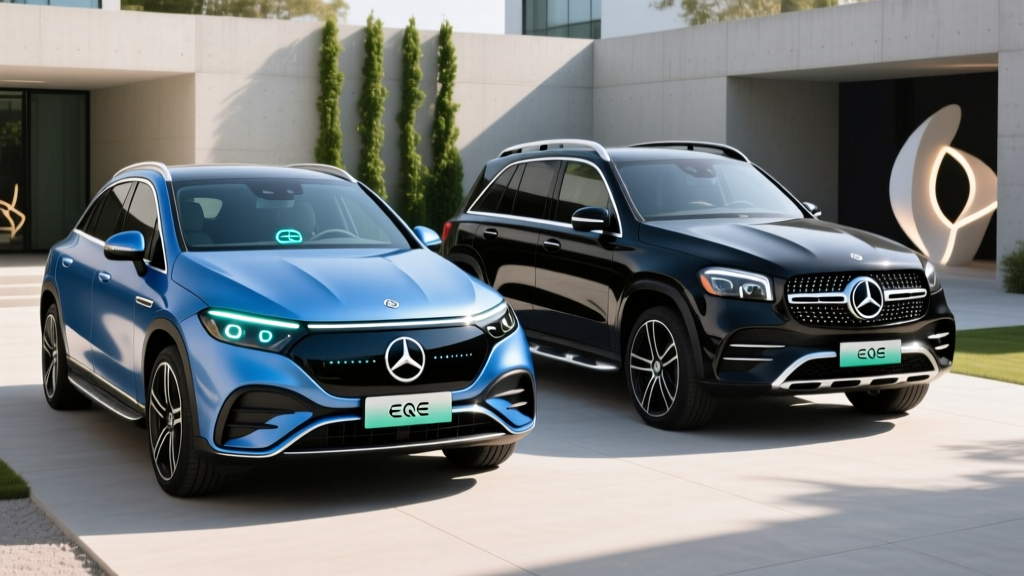
Mercedes-Benz does not sell a vehicle badged as the "GLE Electric." The closest electric equivalent in the Mercedes lineup is the 2026 EQE SUV, a midsize luxury electric SUV that competes in the same segment as the gas-powered GLE. The EQE SUV offers an EPA-estimated 305 miles of range (rear-wheel-drive EQE 350+), starts at approximately $77,900, and delivers 288 hp. Compared to the gas GLE 350 (starting ~$63,650, 25 MPG combined), the EQE SUV costs roughly $14,000 more upfront but saves $1,200–$1,800 annually in fuel and maintenance. The break-even point is roughly 8–11 years at current energy and gas prices, though federal and state incentives can shorten that timeline significantly. If you want a Mercedes electric SUV with three rows and GLE-equivalent size, you'll need to look at the larger EQS SUV or wait for the upcoming electric GLE based on the MMA platform, expected no earlier than 2027.
The GLE Electric Confusion: What Mercedes Actually Offers
Search for "GLE electric" and you'll find a tangle of forums, speculative renders, and outdated articles. Here's the reality as of the 2026 model year: Mercedes-Benz has not released an electrified GLE. The current GLE (V167 generation) is available only with internal combustion powertrains, including the GLE 350 (turbocharged 2.0L I-4, 255 hp), the GLE 450 (turbocharged 3.0L I-6 mild-hybrid, 375 hp), and various AMG variants. There is no GLE plug-in hybrid (PHEV) sold in the US market for 2026, though a PHEV variant exists in Europe.
Mercedes' electric SUV strategy has funneled buyers toward the EQE SUV (midsize, two rows) and the EQS SUV (full-size, three rows). The EQE SUV is the closest analog to the GLE in terms of price positioning and overall footprint, though it rides on Mercedes' dedicated EVA2 electric platform rather than the GLE's MHA2 architecture.
Mercedes has signaled that a true electric GLE — likely wearing an "EQG" or rebranded nameplate under the company's revised naming strategy — will arrive on the new MMA (Mercedes Modular Architecture) platform. As of early 2026, this vehicle is announced but not yet available, with preliminary details suggesting an 800V architecture, roughly 370 miles of range, and a starting price near $80,000. Until that vehicle reaches showrooms, the EQE SUV is your option.
2026 EQE SUV: Range, Battery, and Charging Specs
Understanding the EQE SUV's real-world capabilities requires looking past the EPA sticker. Here are the exact figures for the current model year:
| Specification | EQE 350+ SUV (RWD) | EQE 350 4MATIC SUV | EQE 500 4MATIC SUV |
|---|---|---|---|
| EPA Range | 305 miles | 279 miles | 270 miles |
| Battery (usable) | 90.6 kWh (NMC) | 90.6 kWh (NMC) | 90.6 kWh (NMC) |
| Horsepower | 288 hp | 288 hp (dual motor) | 402 hp (dual motor) |
| 0–60 mph | 6.4 sec | 6.4 sec | 4.5 sec |
| Peak DC Fast Charge | 170 kW | 170 kW | 170 kW |
| 10–80% DC Charge | ~32 min | ~32 min | ~32 min |
| Level 2 (AC) Charge Rate | 9.6 kW | 9.6 kW | 9.6 kW |
| Level 2 Full Charge Time | ~9.5 hours | ~9.5 hours | ~9.5 hours |
| MPGe (combined) | 89 MPGe | 82 MPGe | 79 MPGe |
| Starting MSRP | $77,900 | $80,900 | $97,900 |
| Battery Warranty | 8 yr / 100,000 mi | 8 yr / 100,000 mi | 8 yr / 100,000 mi |
Source: fueleconomy.gov, Mercedes-Benz USA specifications.
Real-World Range: What to Actually Expect
The EPA's 305-mile figure for the EQE 350+ is a blended estimate. In real-world driving, plan for:
- Highway cruising (70–75 mph): ~250–270 miles. The EQE SUV's aerodynamic drag and 5,500+ lb curb weight penalize efficiency at sustained speed.
- Cold weather (below 32°F): ~210–240 miles. The NMC battery loses capacity in cold temperatures, and cabin heating draws significant energy even with the standard heat pump.
- City/suburban driving: ~290–310 miles. Regenerative braking recovers energy in stop-and-go traffic, and the heat pump operates efficiently at moderate loads.
On a 300-mile road trip in mild weather with moderate terrain, you'll likely arrive with 30–50 miles of buffer. In winter or mountainous terrain, you should plan a mid-trip DC fast-charge stop.
Charging Curve Reality
The EQE SUV's peak charge rate of 170 kW is not sustained across the full session. Like all EVs, the charge curve tapers as the battery fills. Expect the following approximate timeline at a 175+ kW DC fast charger:
- 10–40% SoC: Peak ~170 kW (fastest segment)
- 40–60% SoC: ~130–150 kW (gradual taper)
- 60–80% SoC: ~80–110 kW (significant taper)
- 80–100% SoC: ~30–50 kW (trickle — avoid unless necessary)
For road trips, charging from 10% to 80% in ~32 minutes is practical. Charging beyond 80% adds minimal range for a disproportionate time cost — a common misconception among first-time EV buyers who try to "fill up" to 100% at every stop.
EQE SUV vs. Gas GLE: Cost of Ownership Head-to-Head
The upfront price gap between the EQE SUV and gas GLE is significant, but total cost of ownership (TCO) tells a more nuanced story. Below is a five-year comparison assuming 15,000 miles per year, national average electricity at $0.16/kWh, and national average gasoline at $3.50/gallon.
| Cost Category (5-Year) | 2026 EQE 350+ SUV | 2026 GLE 350 4MATIC |
|---|---|---|
| Purchase Price (MSRP) | $77,900 | $66,150 |
| Federal Tax Credit (§30D)* | $0–$3,750** | $0 |
| Net Purchase Cost | $74,150–$77,900 | $66,150 |
| Fuel / Energy (5 yr) | $5,700 | $10,500 |
| Maintenance (5 yr) | $1,800 | $4,200 |
| Insurance (5 yr est.) | $12,500 | $10,200 |
| Depreciation (5 yr est.) | $32,000 | $28,000 |
| Total 5-Year Cost | $126,150–$129,900 | $119,050 |
* Federal §30D tax credit eligibility depends on battery critical-mineral sourcing, buyer income caps ($150k single / $300k joint), and MSRP caps ($80,000 for SUVs). The EQE SUV's battery sourcing has partially qualified for $3,750 in recent years; verify current-year rules at IRS.gov.
** The full $7,500 credit requires meeting both critical-mineral and battery-component sourcing thresholds. Mercedes-Benz has faced challenges meeting these requirements due to supply chain dependencies.
| Metric | EQE 350+ SUV (EV) | GLE 350 4MATIC (Gas) | Winner |
|---|---|---|---|
| Fuel Cost per Mile | ~$0.076/mi | ~$0.14/mi | EV (46% savings) |
| Maintenance per Year | ~$360 | ~$840 | EV (57% savings) |
| Insurance per Year | ~$2,500 | ~$2,040 | Gas (18% cheaper) |
| 5-Year Depreciation | ~41% of MSRP | ~42% of MSRP | Roughly tied |
| 0–60 mph | 6.4 sec | 6.8 sec | EV (marginally) |
| Towing Capacity | Not rated | 7,700 lbs | Gas (by far) |
| Cargo Volume (rear seats up) | 52 cu ft | 63.8 cu ft | Gas |
| Third-Row Option | No | No (GLS for that) | Tied |
Where the EQE SUV Falls Short vs. the GLE
Honest accounting requires acknowledging what you give up:
- Towing: The gas GLE can tow up to 7,700 lbs. The EQE SUV is not rated for towing in the US market — a dealbreaker for boat or trailer owners.
- Cargo: The EQE SUV's sloping roofline and battery-pack packaging reduce cargo volume to 52 cu ft vs. the GLE's 63.8 cu ft.
- Road trip convenience: A gas GLE refuels in 5 minutes at any of the nation's 150,000+ gas stations. The EQE SUV requires 30+ minute DC fast-charge stops, and public charger reliability remains inconsistent outside major corridors.
- Off-pavement: The GLE's available 4MATIC AWD with off-road modes has no EV equivalent in the EQE lineup.
Home Charging: The Make-or-Break Factor
The single biggest ownership variable for the EQE SUV — or any EV — is whether you can charge at home. Here's what that looks like in practice:
| Item | Low Estimate | High Estimate | Notes |
|---|---|---|---|
| Level 2 Charger (hardware) | $400 | $750 | ChargePoint Home Flex, Wallbox Pulsar Plus, or Mercedes Wallbox |
| Electrician labor | $600 | $2,000 | Varies by distance from panel and wall type |
| Electrical permit | $50 | $250 | Required in most jurisdictions |
| Panel upgrade (if needed) | $1,500 | $4,000 | Required if panel lacks capacity for a 40A/50A circuit |
| Total (no panel upgrade) | $1,050 | $3,000 | Most homes with 200A service |
| Total (with panel upgrade) | $2,550 | $7,000 | Older homes with 100A or 150A panels |
At the EQE SUV's 9.6 kW Level 2 rate, a full charge from near-empty takes about 9.5 hours — easily accomplished overnight. Most owners charge from 20% to 80% daily, which takes roughly 5.5 hours and preserves long-term battery health. Always have a licensed electrician assess your panel before committing to a charger purchase.
If you cannot charge at home (apartment, street parking, HOA restrictions), the EQE SUV's ownership proposition weakens considerably. Public DC fast charging costs $0.30–$0.48/kWh on networks like Electrify America and EVgo — roughly double the cost of home charging — and requires 30–40 minutes per session. Weekly public charging adds inconvenience and can erase much of the fuel-cost advantage over gasoline.
Federal Tax Credit and Incentives: What Actually Applies
The federal §30D clean vehicle credit is the most misunderstood part of any EV purchase. Here's a 2026 checklist for the EQE SUV:
§30D Eligibility Checklist for the 2026 EQE SUV
- MSRP Cap: SUVs must have an MSRP ≤ $80,000. The EQE 350+ ($77,900) qualifies; the EQE 500 4MATIC ($97,900) does not.
- Buyer Income Cap: Modified AGI ≤ $150,000 (single), $225,000 (head of household), $300,000 (joint). Exceed these thresholds and you're ineligible.
- Battery Component Sourcing: Must be manufactured/assembled in North America to qualify for the $3,750 component portion. Mercedes' supply chain has struggled with this requirement.
- Critical Minerals Sourcing: Must be sourced from the US or an FTA partner to qualify for the $3,750 minerals portion. Partial qualification has applied in some model years.
- Point-of-Sale Transfer: Eligible buyers can transfer the credit to the dealer at purchase, reducing the out-of-pocket price immediately rather than waiting for a tax refund.
- Verification: Always check the current eligibility status at fueleconomy.gov before purchasing — sourcing rules change as supply chains shift.
Additionally, many states and utilities offer their own incentives. California's CVRP, Colorado's innovative motor vehicle credit, and various utility-company rebates for home charger installation can stack on top of federal credits. Check your state's energy office and your electric utility for current programs.
Common Misconceptions About the GLE Electric
| Myth | Fact |
|---|---|
| "There's a GLE EV I can buy right now." | There is not. The closest current option is the EQE SUV. A true electric GLE on the MMA platform is announced but not expected before 2027. |
| "The EQE SUV gets 305 miles no matter how I drive." | The 305-mile EPA figure is a blended estimate. Highway driving at 75 mph yields ~250–270 miles; cold weather can drop it to ~210–240 miles. |
| "I'll save $7,500 on taxes." | Federal credit eligibility for the EQE SUV is partial ($0–$3,750) due to battery sourcing rules, and only if you meet income and MSRP caps. Verify before buying. |
| "EV batteries need replacing every few years." | Mercedes warranties the EQE SUV battery for 8 years/100,000 miles against degradation below 70% capacity. Real-world NMC data shows ~10–15% degradation over 150,000 miles with normal use. |
| "Charging takes too long for road trips." | A 10–80% DC fast charge takes ~32 minutes — roughly the time for a meal stop. The issue is charger availability and reliability, not charge speed itself. |
| "Electricity is always cheaper than gas." | At home ($0.16/kWh national avg), yes — about 46% cheaper per mile. On public DC fast chargers ($0.35–$0.48/kWh), the savings narrow to 10–20%, and in some markets, public charging costs nearly as much as gasoline. |
Decision Framework: Should You Buy the EQE SUV or Wait?
Choose the 2026 EQE SUV If:
- You have reliable home charging (Level 2 installed or installable).
- You drive under 300 miles per day and take road trips fewer than 6 times per year.
- You don't need towing capacity or maximum cargo volume.
- You want a luxury electric SUV now and are comfortable with a ~$74,000–$78,000 net purchase price.
- Your typical commute is under 80 miles round-trip, meaning you'll rarely use public chargers.
Choose the Gas GLE 350 If:
- You tow a trailer, boat, or camper (up to 7,700 lbs).
- You frequently drive 300+ miles in a single day or travel in regions with sparse DC fast-charging infrastructure.
- You cannot install a home Level 2 charger.
- You need maximum cargo volume (63.8 cu ft) for gear, dogs, or equipment.
- You want a lower upfront purchase price and don't mind higher ongoing fuel and maintenance costs.
Wait for the Electric GLE (MMA Platform) If:
- You want a true GLE-size electric SUV with the latest 800V architecture and ~370 miles of projected range.
- You're not in a rush to buy and can wait until late 2027 or 2028 for availability.
- You want Mercedes' next-generation MB.OS infotainment and improved driver-assist features.
- You expect battery pricing to continue declining, potentially lowering the MSRP gap vs. gas models.
First-Time EV Buyer: What You Must Know Before Signing
If the EQE SUV (or any EV) would be your first electric vehicle, internalize these practical realities:
- Plan your charging before you buy the car. Get an electrician quote for a Level 2 home charger installation. If your home can't support one, reconsider — or confirm reliable public charging within 5 minutes of your home.
- Set your charging habits early. Charge to 80% daily, not 100%. For NMC batteries, sustained 100% state-of-charge accelerates degradation. Use the vehicle's built-in charge-limit setting.
- Precondition the battery before DC fast charging. The EQE SUV's navigation system will automatically precondition the battery when you route to a charger. This warms the pack and enables peak charge rates. Skipping preconditioning can add 10+ minutes to your charge session.
- Download the relevant charging apps before your first road trip. Mercedes me Charge, PlugShare, and the network-specific apps (Electrify America, EVgo) are essential for locating and activating chargers. Not all chargers accept credit cards directly.
- Insurance will likely be higher. EV insurance premiums run 15–25% above comparable gas vehicles due to higher repair costs and parts pricing. Get a quote before purchasing to avoid surprises.
- Tires wear faster. The EQE SUV's 5,500+ lb weight and instant torque accelerate tire wear. Budget for tire replacement every 25,000–35,000 miles rather than the 45,000–60,000 miles typical of lighter gas SUVs.
Frequently Asked Questions
Will Mercedes make an electric GLE?
Yes. Mercedes-Benz has confirmed that an electric successor to the GLE is in development on the new MMA (Mercedes Modular Architecture) platform. It is expected to feature 800V charging capability and approximately 370 miles of range. However, it has not been officially unveiled and is not expected in US showrooms before 2027 at the earliest. Until then, the EQE SUV is the closest electric alternative.
Does the EQE SUV qualify for the $7,500 federal tax credit?
Likely not the full amount. The EQE 350+ SUV's MSRP ($77,900) falls under the $80,000 SUV cap, and eligible buyers meeting income thresholds may qualify for a partial credit of $3,750 depending on current-year battery sourcing compliance. The EQE 500 4MATIC exceeds the MSRP cap entirely. Always verify current eligibility at IRS.gov before purchase.
How long does it take to charge the EQE SUV at home?
On a Level 2 home charger (9.6 kW, 240V/40A), a full charge from near-empty takes approximately 9.5 hours. Most owners charge from 20% to 80% overnight, which takes about 5.5 hours and is gentler on long-term battery health. A standard 120V outlet (Level 1) adds only about 3–4 miles of range per hour and is impractical as a primary charging method for a 90.6 kWh battery.
What is the real-world range of the EQE SUV in winter?
In sustained cold weather (below 32°F), expect 210–240 miles from the EQE 350+ SUV. Cold temperatures reduce NMC battery capacity by 15–25%, and cabin heating draws significant energy even with the standard heat pump. Preconditioning the cabin while plugged in mitigates some of this loss.
Is the EQE SUV bigger or smaller than the GLE?
The EQE SUV is slightly smaller overall. It is about 5 inches shorter in length and offers 52 cu ft of cargo volume vs. the GLE's 63.8 cu ft. Interior passenger space is comparable, but the EQE's sloping roofline reduces rear headroom and cargo practicality. If you need GLE-class space in an electric Mercedes, the larger EQS SUV (three rows, ~$104,400 starting) is the current option.
How does the EQE SUV compare to the BMW iX or Audi Q8 e-tron?
The BMW iX xDrive50 offers more range (EPA 324 miles), faster DC charging (up to 200 kW), and slightly more cargo space, starting at ~$87,250. The Audi Q8 e-tron offers EPA 285 miles, 170 kW DC charging, and a more conventional SUV shape, starting at ~$75,600. The EQE SUV sits between them on price and range but trails the iX on charging speed. All three face the same partial tax-credit limitation due to battery sourcing.