The Quick Verdict: Two Very Different Luxury EV Philosophies
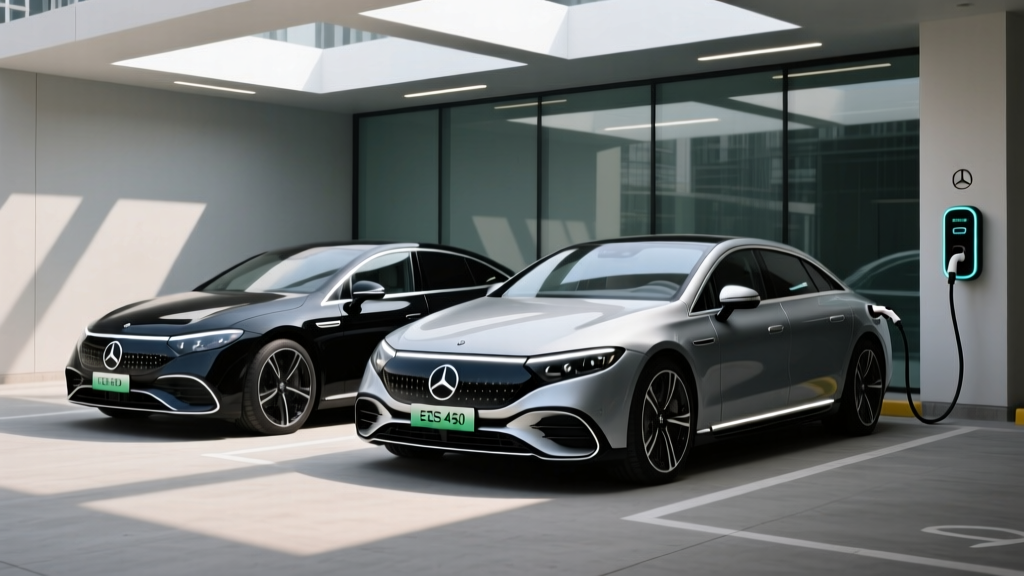
The 2026 Mercedes-Benz EQS sedan lineup forces buyers into a choice that goes deeper than badges. The rear-wheel-drive EQS 450+ prioritizes maximum EPA range and a lower entry price, while the dual-motor, all-wheel-drive EQS 580 4MATIC trades roughly 30 miles of range for 175 additional horsepower, sub-4-second acceleration, and a more planted chassis. Both share the same 118 kWh (usable) NMC battery pack, the same hyperscreen-laden interior, and the same 200 kW DC fast-charging ceiling. The question isn't which is better in a vacuum — it's which aligns with how you actually drive.
Side-by-Side Spec Table: EQS 450+ vs EQS 580 4MATIC
| Specification | 2026 EQS 450+ | 2026 EQS 580 4MATIC |
|---|---|---|
| Drivetrain | RWD (single motor) | AWD (dual motor) |
| Horsepower | 355 hp | 536 hp |
| Torque | 419 lb-ft | 631 lb-ft |
| 0-60 mph | 5.9 sec | 3.9 sec |
| Battery (usable) | 118 kWh NMC | 118 kWh NMC |
| EPA Range | 390 mi | 360 mi |
| Efficiency (MPGe) | 97 MPGe combined | 88 MPGe combined |
| kWh/100 mi | 35 | 38 |
| Max DC Fast Charge | 200 kW | 200 kW |
| 10-80% DC Charge | ~31 min | ~31 min |
| Level 2 (AC) Rate | 9.6 kW | 9.6 kW |
| Connector | CCS1 (NACS adapter avail.) | CCS1 (NACS adapter avail.) |
| Cargo Volume | 22 cu ft | 22 cu ft |
| Curb Weight | 5,600 lbs | 5,888 lbs |
| Starting MSRP | $105,550 | $127,900 |
| Battery Warranty | 10 yr / 155,000 mi | 10 yr / 155,000 mi |
Sources: EPA fueleconomy.gov, Mercedes-Benz USA. Specs reflect 2026 model year.
Range and Efficiency: The 450+ Advantage Is Real but Narrow
The EQS 450+ earns its 390-mile EPA estimate through a single rear motor, lower curb weight (288 lbs less than the 580), and the inherent efficiency of driving one axle. At 97 MPGe combined and 35 kWh/100 mi, it's one of the most efficient large luxury sedans on the market. The EQS 580 4MATIC returns 360 miles EPA — a 30-mile gap that sounds modest on paper but compounds on long highway stretches.
EQS 450+: EPA 390 mi — expect ~320-340 mi in mixed highway driving at 70-75 mph; ~270-290 mi in freezing temperatures with cabin heat.
EQS 580 4MATIC: EPA 360 mi — expect ~290-310 mi highway; ~245-265 mi in freezing conditions. The AWD system's added mass and parasitic drag from the front motor are the culprits.
On a 300-mile road trip in 40°F weather, the 450+ arrives with roughly 40-50 miles of buffer remaining, while the 580 may require a brief top-up stop. For owners in Sun Belt states who rarely see freezing temperatures, the gap narrows to roughly 20-25 real-world miles — less consequential than it appears.
Charging Speed: Identical Hardware, Same Curve
Both trims share the same 400-volt architecture and 200 kW DC fast-charging peak. With preconditioning enabled (the navigation system activates it automatically when you route to a charger), both models hit peak charge rate quickly and sustain it through roughly 40% state of charge before tapering.
The 10-80% charge takes approximately 31 minutes for both, which is competitive but not class-leading. The Hyundai Ioniq 6 and Porsche Taycan (with its 800V architecture) outpace the EQS here. The 450+ does gain a slight edge in miles added per minute due to its higher efficiency — roughly 2.8 mi/min vs 2.5 mi/min for the 580 at peak rate.
On Level 2 AC at 9.6 kW, a full 0-100% charge takes about 12.5 hours for both. This is standard for overnight home charging; plan on plugging in each evening if you're depleting more than 50% of the pack daily.
Network note: The EQS still ships with a CCS1 inlet. Mercedes offers a NACS adapter for Tesla Supercharger access, which significantly expands your fast-charging options on road trips. The Electrify America and EVgo networks remain the primary CCS-native options. Always verify charger availability via the Mercedes me app or PlugShare before long trips.
Performance and Driving Dynamics
This is where the 580 4MATIC justifies its $22,350 premium. With 536 hp and 631 lb-ft of instant torque, it rockets to 60 mph in 3.9 seconds — sports-sedan territory in a 5,888-pound luxury barge. The dual-motor AWD system provides torque vectoring that makes the car feel smaller than it is, particularly on twisty canyon roads or wet highway on-ramps.
The 450+ is no slouch at 5.9 seconds to 60 — quicker than most gas-powered luxury sedans — but it lacks the relentless surge of the 580. The single-motor RWD layout also means less traction confidence in rain and snow, though the standard traction control is well-calibrated.
390 mi EPA, 97 MPGe, 35 kWh/100 mi. The efficiency king for long-distance commuters and road-trippers who prioritize fewer charging stops.
536 hp, 3.9 sec 0-60, AWD grip. For buyers who want S-Class acceleration with silent electric thrust and all-weather confidence.
Price, Tax Credits, and Ownership Costs
The pricing gap between these two trims is substantial, and the federal tax credit situation makes it even more important to run the numbers carefully.
| Cost Factor | EQS 450+ | EQS 580 4MATIC |
|---|---|---|
| Base MSRP | $105,550 | $127,900 |
| Federal §30D Credit | $0 (exceeds $55K sedan MSRP cap) | $0 (exceeds $55K sedan MSRP cap) |
| Typical State Incentives | Varies ($0-$2,000) | Varies ($0-$2,000) |
| Est. Annual Insurance | ~$3,400 | ~$3,900 |
| Annual Charging Cost (12K mi) | ~$504 (home, $0.12/kWh) | ~$547 (home, $0.12/kWh) |
| 5-Year Fuel + Insurance | ~$19,520 | ~$22,235 |
| Maintenance (5-yr est.) | ~$1,800 | ~$1,800 |
Critical tax credit note: Under current IRS §30D rules, new EVs classified as sedans must have an MSRP at or below $55,000 to qualify for the up-to-$7,500 federal credit. Both EQS trims far exceed this cap. Neither qualifies. Some states offer separate rebates — check your state energy office — but the federal incentive is off the table for both.
The 580's higher insurance premium (~$500/year more) reflects its greater replacement cost and higher performance classification. Over five years, the total ownership gap between the two trims widens to roughly $25,000+ when you combine the MSRP difference, insurance delta, and slightly higher energy costs.
Interior, Technology, and Daily Usability
Both trims share the same cabin, which means the MBUX Hyperscreen — a 56-inch curved glass panel spanning the entire dashboard — is standard or available on both. The 12.8-inch OLED central touchscreen, 12.3-inch driver cluster, and optional 12.3-inch passenger display create one of the most visually impressive EV interiors in production.
Where the 580 pulls ahead is in standard equipment. The 580 4MATIC includes features that are optional or unavailable on the 450+:
- Rear-axle steering (up to 10°) for tighter turning circles
- Standard MBUX Interior Assistant with gesture control
- Heated and ventilated rear seats (standard vs. optional on 450+)
- Burmester 4D surround sound with 15 speakers (vs. standard 9-speaker system)
- Active ambient lighting with 64 colors (expanded from base)
Both models share the 22 cu ft trunk (no frunk, due to the HEPA filtration system occupying the front compartment). Rear-seat space is generous but compromised by the sloping roofline — taller passengers may find headroom tight compared to the boxier EQS SUV.
ADAS note: Both trims come with Mercedes' Driver Assistance Package, which includes Active Distance Assist DISTRONIC (adaptive cruise), Active Steering Assist, and Active Lane Change Assist. This is SAE Level 2 — the driver must remain attentive with hands on or near the wheel at all times. Mercedes' DRIVE PILOT (Level 3, conditional automation in traffic jams up to 40 mph) remains limited to specific approved highways in Nevada and California and requires a subscription. Do not confuse Level 2 assist with autonomous driving.
Rear-axle steering, premium audio, and more standard luxury features. The 580 feels like a complete S-Class successor; the 450+ requires option boxes to reach parity.
$22,350 less for 95% of the cabin experience, 30 more miles of range, and nearly identical charging. The rational choice for spec-driven buyers.
Real-World Ownership: What the Sticker Doesn't Tell You
After extensive analysis and owner reports, here are the non-obvious factors that separate these two trims in daily life:
Charging curve taper: Both models peak at 200 kW but only sustain that rate between roughly 10-40% SoC. From 40-80%, the rate drops to 100-130 kW. This means the second half of your 10-80% charge takes noticeably longer than the first. On road trips, plan stops around 20-25 minutes for meaningful range recovery, not the 15-minute marketing ideal.
Cold-weather charging: In sub-freezing temperatures, preconditioning is essential. Without it, the 200 kW peak may be limited to 100-120 kW until the battery warms. Always navigate to your charger using the MBUX system to trigger automatic preconditioning.
Tire wear: The 580's AWD system and 631 lb-ft of torque accelerate tire wear, particularly on the rear axle. Budget for replacement tires every 25,000-30,000 miles vs. 35,000-40,000 miles on the 450+. At $300-400 per tire for the EQS-spec rubber, this adds $400-800 over five years.
Depreciation: Luxury EVs have experienced steep depreciation curves. The 450+ holds value marginally better due to its lower starting price and broader buyer appeal (range-focused buyers outnumber performance seekers in this segment). Expect both to retain roughly 45-50% of MSRP after three years, based on current market trends.
Decision Framework: Which EQS Fits Your Life?
Choose the EQS 450+ if:
- You commute 60+ miles daily and want maximum range buffer
- You live in a warm climate where cold-weather range loss is minimal
- You prioritize lower purchase price and operating costs
- You rarely drive in snow or heavy rain
- You don't need sub-4-second acceleration for daily satisfaction
- You plan to option the car conservatively and keep MSRP impact low
Choose the EQS 580 4MATIC if:
- You live in a region with frequent rain, snow, or ice and need AWD traction
- You regularly carry rear-seat passengers who benefit from the standard luxury features
- You want S-Class-level performance (3.9 sec 0-60) with zero emissions
- You value rear-axle steering for parking ease in tight urban environments
- You plan to keep the car 5+ years and want maximum standard equipment without dealer option negotiations
- Performance driving on winding roads is part of your routine
Frequently Asked Questions
Does either the EQS 450+ or EQS 580 qualify for the $7,500 federal tax credit?
No. Under IRS §30D guidelines, new sedans must have an MSRP at or below $55,000 to be eligible. Both EQS trims far exceed this cap. Some state-level incentives may apply — check your state's energy office or DSIRE database for local programs.
Can I charge the EQS at Tesla Superchargers?
Yes, with the Mercedes-provided NACS adapter. The EQS ships with a CCS1 inlet, but the adapter enables access to Tesla's Supercharger network (V3 stalls at 150 kW, V4 at 250 kW — though the EQS is capped at its 200 kW maximum). This significantly expands road-trip charging coverage, particularly in rural corridors where Electrify America stations are sparse.
How does the EQS compare to the Tesla Model S in range and charging?
The EQS 450+ (390 mi EPA) trails the Model S Long Range (~405 mi EPA) slightly, but the EQS 580 (360 mi) falls further behind the Model S Plaid (~396 mi). On charging, the Model S maintains access to the full Supercharger network natively (NACS connector) and benefits from Tesla's broader infrastructure. The EQS counters with a more luxurious interior, quieter ride, and more comprehensive warranty (10 yr/155,000 mi battery vs. Tesla's 8 yr/150,000 mi).
Is the EQS battery LFP or NMC chemistry?
Both EQS trims use NMC (nickel manganese cobalt) chemistry, which offers higher energy density than LFP but requires more careful charge management. Mercedes recommends keeping daily charging to 80% and only charging to 100% for long trips. The 118 kWh usable capacity includes a buffer to protect against deep degradation — expect roughly 5-8% capacity loss over 100,000 miles based on current NMC longevity data.
What's the real cost to charge an EQS at home vs. public DC fast chargers?
At the US average residential electricity rate of ~$0.16/kWh (per EIA data), a full 118 kWh charge costs roughly $18.88 at home. On public DC fast chargers (averaging $0.35-0.48/kWh), that same charge runs $41-57. The 450+ owner driving 12,000 miles/year spends approximately $504 charging at home annually; the 580 owner spends about $547. Both are dramatically cheaper than a comparable gas sedan at $2,400+/year in fuel.
Which EQS is cheaper to insure?
The 450+ typically costs $400-600 less per year to insure due to its lower replacement value and lower performance classification. Average annual premiums run ~$3,400 for the 450+ and ~$3,900 for the 580, though rates vary significantly by ZIP code, driving record, and insurer. Always get quotes for both trims before committing.