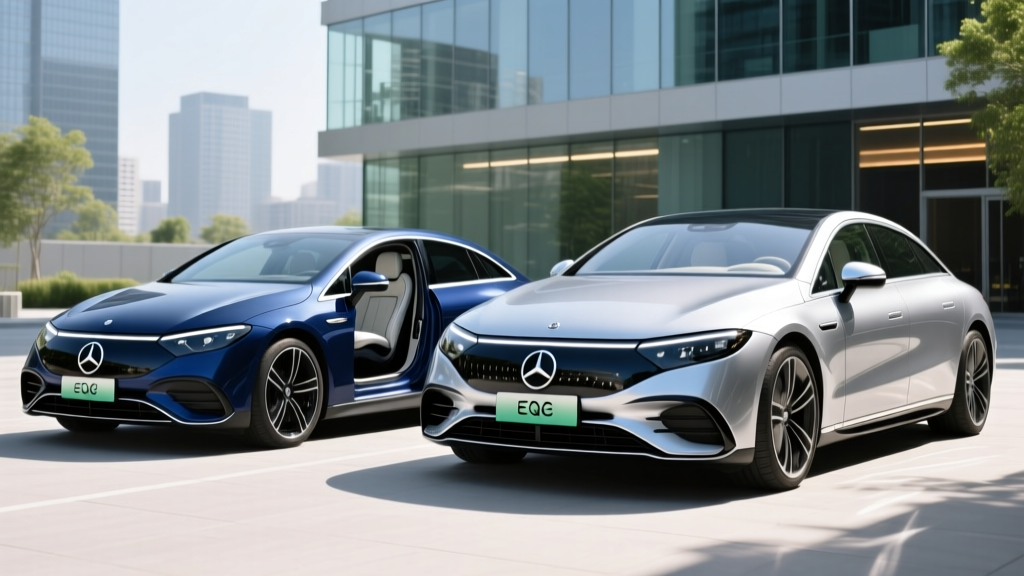
Quick Answer: Mercedes currently offers two all-electric sedans in the US: the midsize EQE (starting ~$76,000, up to 305 miles EPA range) and the flagship EQS (starting ~$105,000, up to 390 miles EPA range). Both use 90.6 kWh usable NMC battery packs and support 170 kW DC fast charging. Neither qualifies for the federal §30D tax credit due to MSRP caps and battery-sourcing rules. The EQE is the practical luxury choice; the EQS is for buyers prioritizing maximum range and rear-seat comfort. Real-world highway range drops 15–25% below EPA estimates for both.
Mercedes Electric Sedan Lineup at a Glance
Mercedes-Benz has committed heavily to electrification, and its sedan strategy centers on two dedicated EV platforms. The EQE targets the E-Class buyer transitioning to electric, while the EQS serves as the S-Class electric equivalent. Both ride on Mercedes' EVA (Electric Vehicle Architecture) platform, share battery and powertrain DNA, and compete against the Tesla Model S, BMW i5/i7, and Lucid Air.
For 2026, the lineup remains focused on these two sedan nameplates. The EQE Sedan fills the midsize luxury segment, while the EQS Sedan anchors the full-size luxury tier. SUV variants (EQE SUV, EQS SUV) exist but fall outside this sedan-focused guide.
| Spec | 2026 EQE 350+ | 2026 EQE 350 4MATIC | 2026 EQS 450+ | 2026 EQS 450 4MATIC |
|---|---|---|---|---|
| EPA Range | 305 mi | 277 mi | 390 mi | 345 mi |
| Battery (usable) | 90.6 kWh (NMC) | 90.6 kWh (NMC) | 108.4 kWh (NMC) | 108.4 kWh (NMC) |
| Horsepower | 288 hp | 288 hp | 355 hp | 355 hp |
| 0–60 mph | 6.2 sec | 5.8 sec | 5.9 sec | 5.3 sec |
| Peak DC Charge Rate | 170 kW | 170 kW | 200 kW | 200 kW |
| 10–80% DCFC Time | ~32 min | ~32 min | ~31 min | ~31 min |
| Level 2 Rate (AC) | 9.6 kW | 9.6 kW | 11 kW (optional 22 kW) | 11 kW (optional 22 kW) |
| MPGe (combined) | 94 MPGe | 86 MPGe | 97 MPGe | 90 MPGe |
| Base MSRP | ~$76,050 | ~$79,050 | ~$105,550 | ~$108,550 |
| Battery Warranty | 10 yr / 155,000 mi | 10 yr / 155,000 mi | 10 yr / 155,000 mi | 10 yr / 155,000 mi |
Sources: fueleconomy.gov, Mercedes-Benz USA press specifications. Real-world range and charge times vary by temperature, terrain, and preconditioning.
Real-World Range: What the EPA Sticker Doesn't Tell You
EPA vs. Real World: The EQS 450+ posts an impressive 390-mile EPA estimate, but expect ~310–340 miles on the highway at 70–80 mph. In cold weather (below 32°F), range can drop an additional 15–25%, bringing the EQS 450+ down to roughly 260–290 miles in winter highway driving. The EQE 350+ (305 EPA) realistically delivers 240–270 miles highway in moderate temps and 200–230 in cold conditions.
Mercedes equips both models with sophisticated thermal management systems, including a standard heat pump that recovers waste heat from the drivetrain to warm the cabin — reducing the range penalty of winter heating compared to resistive heaters. Preconditioning the battery while plugged in (via the Mercedes me app) is critical for preserving range and achieving peak DC charge rates in cold weather.
The EQS achieves its range advantage partly through exceptional aerodynamics: a drag coefficient of just 0.20, one of the lowest of any production car. The EQE sits at 0.22 Cd — still excellent, but the shorter wheelbase and smaller battery mean fewer total electrons and slightly more aero compromise.
Charging Speed and Infrastructure Reality
Neither the EQE nor EQS leads the luxury segment in DC fast charging. The EQS peaks at 200 kW and the EQE at 170 kW — respectable but behind the Lucid Air (up to 300 kW+ on 900V architecture) and Porsche Taycan (up to 270 kW on 800V). In practice, Mercedes' charge curve is relatively flat through the mid-SoC range, meaning sustained rates are competitive even if peak numbers aren't class-leading.
A typical 10–80% session takes about 31–32 minutes at a capable 350 kW charger (the car will only draw what it can accept). On older 50–150 kW stations common in many markets, expect 45–70 minutes for the same session.
Home charging is where ownership makes or breaks. Both sedans accept 9.6–11 kW on Level 2 AC, meaning a full charge from near-empty takes roughly 9–11 hours on a 48-amp home charger. For daily driving of 40–60 miles, an overnight Level 2 session replenishes the battery easily. A 240V/48A home charger installation typically costs $800–$2,500 depending on panel proximity and local permit requirements.
The EQS offers an optional 22 kW onboard charger (requires three-phase power, uncommon in US residences), which is mostly relevant for European buyers or those with commercial-grade electrical service.
Cost of Ownership: Mercedes Electric Sedan vs. Gas Equivalent
The purchase decision hinges on total cost, not just sticker price. Here's how the EQE and EQS stack up against their gas-powered counterparts over five years and 75,000 miles of driving.
| Cost Factor (5 yr / 75k mi) | EQE 350+ ($76k) | E 350 Gas (~$60k) | EQS 450+ ($106k) | S 500 Gas (~$118k) |
|---|---|---|---|---|
| Purchase Price | $76,050 | $60,500 | $105,550 | $118,300 |
| Federal Tax Credit (§30D) | $0 (MSRP & sourcing) | N/A | $0 (MSRP & sourcing) | N/A |
| Fuel / Energy | ~$4,200 | ~$9,400 | ~$3,900 | ~$10,200 |
| Maintenance | ~$1,800 | ~$4,500 | ~$2,000 | ~$5,200 |
| Insurance (est. avg) | ~$14,000 | ~$11,500 | ~$16,500 | ~$14,000 |
| Est. Depreciation | ~$30,000 | ~$24,000 | ~$42,000 | ~$47,000 |
| 5-Year Total | ~$96,050 | ~$85,900 | ~$127,950 | ~$147,700 |
Key takeaways:
- Energy savings are real: At $0.14/kWh national average and 2.8–3.0 miles/kWh efficiency, the EQE costs roughly $0.05/mile to "fuel" vs. $0.13/mile for the E 350 on premium gas. Over 75,000 miles, that's a $5,200 advantage.
- Maintenance is lower: No oil changes, no transmission fluid, fewer brake replacements (regen braking preserves pads). Mercedes EVs still require cabin filter changes, brake fluid flushes, and tire rotations, but annual costs run 50–60% less than gas equivalents.
- Insurance is higher: EV insurance premiums run 15–25% higher due to repair complexity and parts cost. Budget accordingly.
- Depreciation is the wildcard: Luxury EVs have experienced steeper depreciation than gas counterparts in recent years. The EQE and EQS are no exception. This is the single biggest cost risk.
- Tax credit gap: Neither model qualifies for the $7,500 federal §30D credit under current rules — the EQS exceeds the $55,000 sedan MSRP cap, and the EQE's battery sourcing and MSRP put it outside eligibility as well. Always verify current rules at IRS.gov.
First-Time EV Buyer: What You Must Know Before Signing
If you're coming from a gas Mercedes and considering your first EV, several realities shape daily ownership:
Home charging is nearly essential. Public-only charging is feasible but adds 30–60 minutes of weekly errand time and costs 2–3x more per kWh than home electricity. If you live in an apartment or condo without charger access, weigh this carefully before committing. Mercedes includes one year of complimentary charging at Electrify America (typically 400–500 kWh), which helps with the transition period.
Cold weather changes the equation. If you live in the northern US, plan for 20–30% range reduction in sustained sub-freezing temperatures. The EQE 350+'s 305-mile EPA range becomes roughly 215–245 miles in January highway driving in Minneapolis or Boston. For most commutes this is fine; for long winter road trips, plan charging stops accordingly.
Charging speed isn't just about peak kW. A 170 kW peak rate means nothing if the charger you visit regularly tops out at 50 kW. Use apps like PlugShare or A Better Routeplanner to map your common routes and verify that 150+ kW chargers exist along them. Mercedes' built-in navigation with active route planning will precondition the battery for DC charging when a fast charger is set as your destination — this is critical for achieving advertised charge times.
Tire costs are higher. EVs are heavy (the EQS weighs over 5,600 lbs) and deliver instant torque. Expect tire wear 15–25% faster than on comparable gas sedans. Budget $1,200–$2,000 for a set of premium tires every 25,000–35,000 miles.
| Common Misconception | Fact |
|---|---|
| "I'll save $7,500 on the federal tax credit." | Neither the EQE nor EQS qualifies under current §30D rules due to MSRP caps and battery sourcing requirements. Always check IRS.gov for current eligibility. |
| "The EQS goes 390 miles no matter what." | 390 miles is the EPA combined estimate. Highway driving at 75 mph yields ~310–340 miles. Cold weather drops this further to ~260–290 miles. |
| "I can charge on any outlet." | A standard 120V outlet (Level 1) adds only ~3–4 miles per hour — roughly 36–48 miles overnight. This is insufficient for most daily needs. A 240V Level 2 charger is strongly recommended. |
| "EV batteries need replacing every few years." | Mercedes warranties the battery for 10 years/155,000 miles against degradation below 70% capacity. Real-world NMC data suggests 10–15% degradation over 100,000 miles with normal use. |
| "Mercedes Drive Pilot makes it self-driving." | Drive Pilot is a Level 3 system approved only in Nevada and California, limited to 40 mph on specific highways in traffic jams. The driver can disengage but must be ready to resume. This is not full self-driving. |
Charging Levels: What You'll Actually Use
| Level | Power | Connector | Miles Added per Hour | Use Case |
|---|---|---|---|---|
| Level 1 | 1.2–1.9 kW | Standard 120V | 3–5 mi/hr | Emergency / trickle top-up |
| Level 2 | 7.2–11 kW | J1772 (NACS adapter available) | 22–35 mi/hr | Daily home / workplace charging |
| DC Fast | 50–200 kW | CCS1 (NACS via adapter) | 150–400 mi in 30 min | Road trips, rapid top-ups |
For 2026, Mercedes provides a NACS adapter for Tesla Supercharger access, expanding the available DC fast-charging network significantly. The native port on both sedans is CCS1. Tesla's Supercharger network (now open to non-Tesla EVs via adapter) adds thousands of reliable 150–250 kW stations to your route options.
Decision Framework: Which Mercedes Electric Sedan Is Right for You?
Choose the EQE 350+ if:
- You want a luxury electric sedan under $80,000
- Your daily commute is under 60 miles and you have home Level 2 charging
- You value agility and a smaller footprint (190.6" length vs. 207.3" for the EQS)
- You don't need the backseat to double as a limousine
Choose the EQS 450+ if:
- Maximum range is your top priority (390 EPA / ~320 real-world highway)
- You regularly carry rear-seat passengers who expect S-Class comfort
- Budget is flexible above $100,000
- You take road trips of 300+ miles and want fewer charging stops
Choose neither and consider a PHEV instead if:
- You lack reliable home or workplace charging
- You frequently drive 400+ mile routes in regions with sparse DC fast-charging infrastructure
- You want electric commuting but gas flexibility — the Mercedes S 580e PHEV offers ~30 miles of electric range with no range anxiety
Look at competitors if:
- Charging speed is paramount: the Lucid Air Grand Touring (516 mi EPA, 300+ kW charging) leads the segment
- Tax credit eligibility matters: the BMW i5 eDrive40 (~$71k MSRP) may qualify depending on sourcing updates
- You want sportier dynamics: the Porsche Taycan sacrifices range for handling and 800V charging architecture
Frequently Asked Questions
Does the Mercedes EQE or EQS qualify for any tax credits?
As of 2026, neither model qualifies for the federal §30D clean vehicle credit. The EQS exceeds the $55,000 sedan MSRP cap, and the EQE does not meet current battery critical-mineral and component sourcing thresholds. Some states offer separate EV rebates or HOV lane access — check your state's energy office or IRS.gov for current rules. Consult a tax professional before relying on credit eligibility.
How long does it take to charge a Mercedes EQE or EQS at home?
On a 240V/48A Level 2 home charger (~11.5 kW), the EQE (90.6 kWh) charges from 10–100% in roughly 8–9 hours. The EQS (108.4 kWh) takes about 10–11 hours. Most owners plug in nightly and wake up with a full battery. A typical 40-mile daily commute uses about 13–15 kWh, which replenishes in under 90 minutes on Level 2.
Is Mercedes Drive Pilot self-driving?
No. Drive Pilot is a Level 3 system (per SAE classification) approved only in Nevada and California, operating at speeds up to 40 mph on qualifying divided highways in heavy traffic. The driver may look away from the road but must be prepared to resume control within seconds when prompted. It is not a Level 4 or 5 autonomous system and does not replace attentive driving in most conditions.
What happens if the battery degrades?
Mercedes warranties the high-voltage battery for 10 years or 155,000 miles, guaranteeing it will retain at least 70% of original capacity. Real-world NMC degradation data from similar platforms suggests 8–12% capacity loss over 100,000 miles with normal charging habits (avoiding frequent 100% charges and DC fast charging when possible). Out-of-warranty battery replacement for the EQE/EQS platform is estimated at $18,000–$28,000, though module-level repair may reduce this significantly.
Can I use Tesla Superchargers with a Mercedes EQE or EQS?
Yes. Mercedes provides a CCS-to-NACS adapter (or it can be purchased separately for ~$200–$250). This grants access to Tesla's Supercharger network, which in 2026 includes over 25,000 stalls in North America. Charging speed is limited to the car's peak acceptance rate (170 kW EQE, 200 kW EQS), but network reliability and coverage are significantly expanded.
How does the EQE compare to the Tesla Model S?
The Model S Long Range offers 402 miles EPA range, faster DC charging (250 kW peak), and a lower starting price (~$79,990). The EQE counters with superior interior material quality, a quieter cabin, Mercedes' MBUX infotainment, and more traditional luxury sedan styling. The Model S wins on efficiency and range; the EQE wins on build quality and ride refinement. Neither qualifies for the federal tax credit at current MSRPs.