Lucid Gravity vs Tesla Model X: The Ultimate Luxury Three-Row EV Comparison
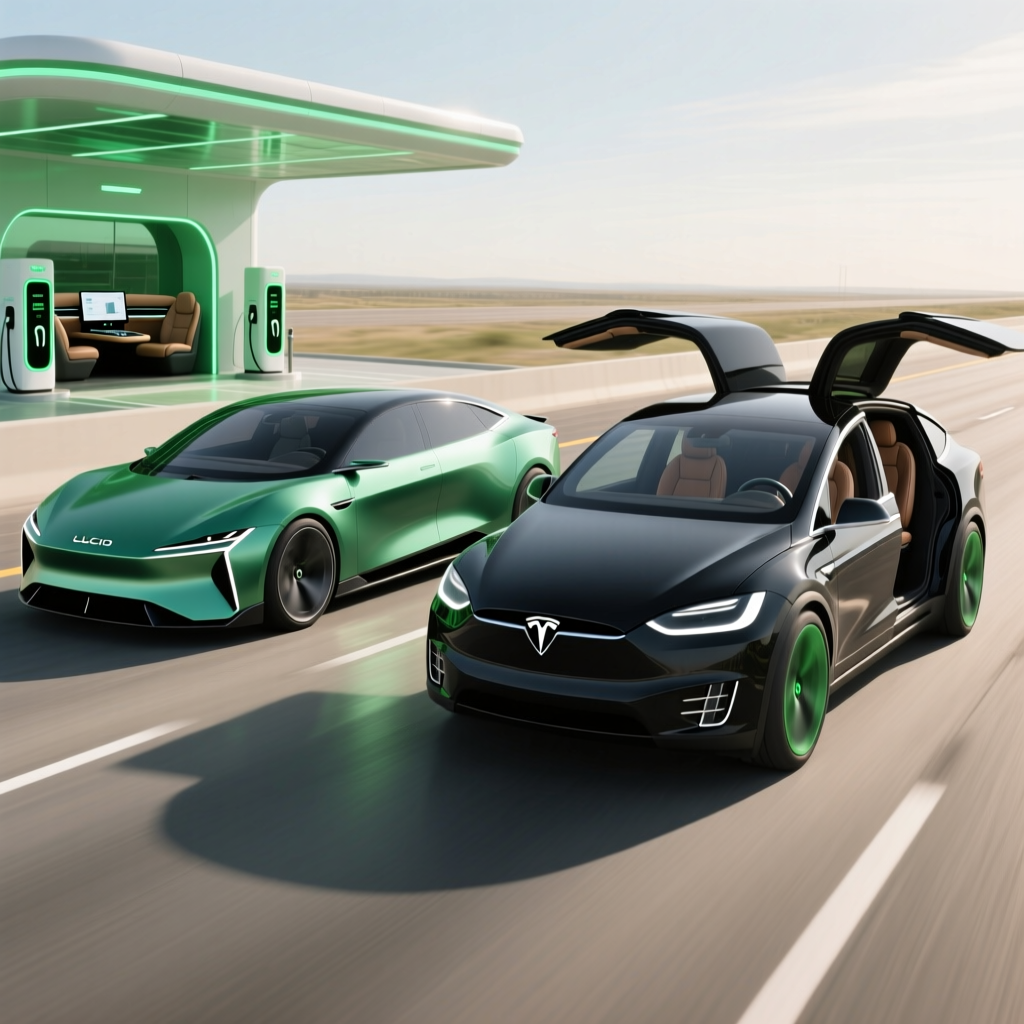
The luxury three-row electric vehicle segment represents the pinnacle of modern automotive engineering, blending family-hauling practicality with supercar-rivaling performance and cutting-edge technology. For a long time, the Tesla Model X stood virtually alone in this exclusive space, offering falcon-wing doors, blistering acceleration, and access to the industry-leading Supercharger network. However, the automotive landscape has evolved, and the highly anticipated Lucid Gravity has entered the arena to challenge the incumbent. Built on the acclaimed engineering foundation of the Lucid Air sedan, the Gravity promises to redefine what a luxury electric SUV can be.
Choosing between these two heavyweights requires a deep dive into their respective philosophies. Tesla prioritizes software integration, minimalist design, and raw, unadulterated speed. Lucid, on the other hand, focuses on hyper-efficiency, spacious interior packaging, and a more traditional, albeit highly luxurious, approach to driving dynamics and comfort. In this comprehensive comparison, we break down every critical category to help you decide which vehicle deserves a spot in your garage. For more options in this segment, be sure to explore our roundup of the best luxury EV SUVs and our guide to the best three-row EVs on the market.
Side-by-Side Specification Comparison
Before diving into the nuanced differences in driving experience and interior packaging, it is essential to look at the raw numbers. The following table compares the top-tier dual-motor and tri-motor configurations of both vehicles to provide a baseline understanding of their capabilities.
| Feature | Lucid Gravity (Grand Touring AWD) | Tesla Model X (Dual Motor AWD) |
|---|---|---|
| Estimated EPA Range | Up to 440 miles | Up to 320 miles |
| Peak Horsepower | 800+ hp | 670 hp (Plaid: 1,020 hp) |
| 0-60 mph Acceleration | ~3.5 seconds | 3.8 seconds (Plaid: 2.5 seconds) |
| Peak Charging Speed | 300+ kW (900V Architecture) | 250 kW (V3 Supercharger) |
| Maximum Towing Capacity | 6,000 lbs | 5,000 lbs |
| Maximum Cargo Volume | 112 cubic feet | 88 cubic feet |
| Seating Capacity | Up to 7 Passengers | Up to 7 Passengers |
Range & Efficiency
When it comes to electrical efficiency and maximum range, Lucid Motors has established itself as the undisputed industry leader, and the Gravity is no exception. The Lucid Gravity Grand Touring boasts an astonishing estimated EPA range of up to 440 miles on a single charge. This remarkable feat is achieved through Lucid’s proprietary 900-volt electrical architecture, incredibly compact and lightweight drive units, and a meticulously optimized aerodynamic profile. The Wunderbox battery management system ensures that energy is deployed with minimal thermal loss, making the Gravity one of the most efficient large SUVs ever built. You can verify the latest EPA ratings to see how it stacks up against the broader market.
The Tesla Model X, while still highly capable, relies on older, albeit continuously refined, battery packaging and a 100-kilowatt-hour battery pack. The dual-motor Model X achieves an estimated EPA range of around 320 miles. While 320 miles is more than sufficient for the vast majority of daily commutes and road trips, it falls significantly short of the Gravity’s marathon capabilities. Tesla’s advanced heat pump system does an excellent job of preserving range in cold weather, but the sheer physical efficiency of Lucid’s powertrain gives the Gravity a massive advantage for drivers who frequently undertake long-distance highway travel or live in areas with sparse charging infrastructure.
Pricing & Value
Pricing in the luxury EV segment is highly dependent on trim levels, optional packages, and software subscriptions. The Tesla Model X Dual Motor typically starts at a premium price point, often exceeding $80,000 before destination fees and options. Upgrading to the tri-motor Plaid variant pushes the price well into the six-figure territory. Furthermore, unlocking Tesla’s Full Self-Driving (FSD) capability requires a substantial upfront purchase or a monthly subscription, adding to the total cost of ownership.
The Lucid Gravity is positioned to offer a slightly more accessible entry point for a luxury three-row SUV, with the base Pure trim aiming for a more aggressive MSRP, while the Grand Touring trim sits in direct competition with the Model X Dual Motor. Lucid includes its advanced DreamDrive Pro driver-assistance suite as standard equipment on higher trims, eliminating the need for expensive software add-ons. When factoring in the standard luxury features, the superior range, and the included ADAS technology, the Gravity presents a compelling value proposition for buyers seeking maximum capability without the need to navigate a complex options list. For a deeper dive into the cost of ownership, check out our full Lucid Gravity review and Tesla Model X review.
Charging Speed & Infrastructure
Charging speed is where Lucid’s 900V+ architecture truly shines. The Gravity is capable of accepting peak charging rates of over 300 kW at compatible DC fast chargers. In real-world testing, this translates to adding up to 200 miles of range in just 15 minutes. The high-voltage system allows the battery to accept massive amounts of current without overheating, maintaining a high charging curve for a longer duration compared to 400V systems. For a comprehensive look at how different architectures affect charging, read our EV charging guide.
Tesla’s Model X peaks at around 250 kW when plugged into a V3 Supercharger. While slightly slower on paper, Tesla holds a distinct advantage in infrastructure. The proprietary Supercharger network is widely regarded as the most reliable, ubiquitous, and seamless charging ecosystem in the world. However, the gap is rapidly closing. Both the Lucid Gravity and the Tesla Model X utilize the North American Charging Standard (NACS) connector. This means the Gravity will have native, plug-and-play access to the Supercharger network, effectively neutralizing Tesla’s historical infrastructure advantage and giving Lucid owners the best of both worlds: superior peak charging speeds and the most reliable network.
Performance & Driving Dynamics
Performance in the luxury three-row segment is a tale of two distinct philosophies. The Tesla Model X Plaid is a technological marvel, utilizing a tri-motor setup to produce a mind-bending 1,020 horsepower. It rockets from 0 to 60 mph in a supercar-rivaling 2.5 seconds. Even the standard Dual Motor variant is exceptionally quick, hitting 60 mph in 3.8 seconds. Tesla’s air suspension provides a comfortable ride, but the vehicle’s heavy curb weight and steering tuning can make it feel somewhat detached on winding canyon roads.
The Lucid Gravity takes a more refined, balanced approach to performance. With over 800 horsepower in the Grand Touring AWD configuration, it achieves a 0-60 mph time of approximately 3.5 seconds. While it may not beat the Model X Plaid in a drag race, the Gravity’s driving dynamics are tuned for sophisticated grand touring. The sophisticated multi-link front and rear suspension, combined with a lower center of gravity and advanced torque vectoring, allows the Gravity to carve through corners with surprising agility for its size. Additionally, the Gravity boasts a superior towing capacity of 6,000 pounds compared to the Model X’s 5,000-pound limit, making it the better choice for those who need to haul boats or large trailers.
Interior Space, Comfort & Cargo
Interior packaging is arguably the most significant differentiator between these two SUVs. The Tesla Model X is famous for its Falcon Wing rear doors, which provide a dramatic entrance and make loading car seats easier in tight parking spaces. However, the sloping roofline and high floor compromise interior volume. The third row in the Model X is strictly reserved for small children, offering minimal legroom and headroom for adults. Cargo space is also limited by the rear motor and suspension geometry, yielding around 88 cubic feet with the seats folded.
The Lucid Gravity was designed from the ground up to maximize interior volume without sacrificing exterior aesthetics. Thanks to the compact nature of Lucid’s drive units, the cabin is pushed outward, creating a massive interior footprint. The Gravity’s third row can comfortably accommodate adults on long journeys, offering generous legroom, headroom, and dedicated climate controls. Furthermore, the Gravity offers a class-leading 112 cubic feet of cargo space with the rear seats folded flat. The front trunk (frunk) is also significantly larger than the Model X’s, easily swallowing golf bags or large luggage. The use of Epicurean leather, sustainable wood trims, and a panoramic glass roof that extends over the third row creates an airy, lounge-like atmosphere that the Model X simply cannot match.
Technology & Infotainment
Tesla has long been the benchmark for automotive software, and the Model X continues to impress with its minimalist, screen-centric interior. The 17-inch cinematic display is incredibly responsive, featuring a custom AMD Ryzen processor that handles gaming, navigation, and media with zero lag. The optional Yoke steering wheel offers an unobstructed view of the road, though it remains a polarizing choice for some drivers. Tesla’s Autopilot and Full Self-Driving software are continuously updated over the air, providing some of the most advanced semi-autonomous highway driving features available.
Lucid approaches technology with a focus on driver ergonomics and visual splendor. The Gravity features the 34-inch 6K Clearview Cockpit, a stunning curved glass display that appears to float above the steering wheel. This design provides immense data density without requiring the driver to look away from the road. Below the main canopy sits a secondary retractable touchscreen for climate controls, media, and vehicle settings, offering a blend of tactile and digital interfaces. Lucid’s DreamDrive Pro system utilizes a robust suite of LiDAR, radar, and cameras to provide highly accurate driver assistance. Additionally, the Gravity’s 21-speaker Surreal Sound system with Dolby Atmos support provides an audiophile-grade listening experience that rivals Tesla’s excellent 22-speaker setup.
Warranty & Ownership Costs
Both manufacturers offer competitive warranty packages that align with industry standards for premium electric vehicles. The Lucid Gravity and Tesla Model X both feature a 4-year/50,000-mile basic vehicle limited warranty and an 8-year/100,000-mile battery and drive unit warranty. This provides peace of mind for long-term ownership and protects against the most expensive potential repairs.
Where they differ is in the service experience. Tesla boasts a massive global network of Service Centers and a highly effective Mobile Ranger fleet that can perform many repairs in your driveway. Lucid, being a newer and smaller automaker, is still expanding its physical service footprint. However, Lucid has invested heavily in mobile service units and partnerships with certified collision centers to ensure owners are not left stranded. As Lucid’s production volume scales, its service network is expected to mature rapidly, but Tesla currently holds the advantage in sheer service accessibility.
The Verdict: Which Luxury Three-Row EV is Right for You?
The choice between the Lucid Gravity and the Tesla Model X ultimately comes down to your priorities regarding interior space, range, and brand ecosystem. The Tesla Model X remains the ultimate choice for tech-obsessed buyers who prioritize blistering straight-line acceleration (especially in Plaid trim), the unmatched convenience of the Supercharger network, and the theatrical flair of the Falcon Wing doors. It is a fantastic vehicle for tech enthusiasts who view their car as a rolling software platform.
However, the Lucid Gravity emerges as the superior luxury family hauler. It completely outclasses the Model X in terms of usable third-row passenger space, overall cargo volume, and electrical efficiency. With its 440-mile range, 900V fast-charging capabilities, and a more refined, traditional luxury interior, the Gravity is designed for families who frequently take long road trips and demand true seven-passenger comfort. If you value sophisticated driving dynamics, unmatched range, and a spacious, lounge-like cabin, the Lucid Gravity is the definitive winner in this luxury three-row EV showdown.
Frequently Asked Questions
Which luxury three-row EV has more usable cargo space?
The Lucid Gravity offers significantly more usable cargo space than the Tesla Model X. With the rear seats folded flat, the Gravity provides up to 112 cubic feet of cargo volume, compared to the Model X’s 88 cubic feet. Additionally, the Gravity features a much larger front trunk (frunk) due to the compact size of Lucid’s front drive unit, making it far more practical for hauling luggage, sporting equipment, and groceries.
Is the Tesla Model X Plaid faster than the Lucid Gravity?
Yes, in terms of raw straight-line acceleration, the Tesla Model X Plaid is faster. The tri-motor Plaid produces 1,020 horsepower and achieves a 0-60 mph time of just 2.5 seconds. The Lucid Gravity Grand Touring, while incredibly quick with over 800 horsepower and a 3.5-second 0-60 mph time, is tuned more for balanced grand touring dynamics and sustained highway efficiency rather than absolute drag-strip dominance.
Do both vehicles support the NACS charging standard?
Yes, both the Lucid Gravity and the current generation Tesla Model X utilize the North American Charging Standard (NACS) connector. This is a massive advantage for Lucid owners, as it grants the Gravity native, plug-and-play access to Tesla’s vast and highly reliable Supercharger network without the need for bulky adapters, while still allowing access to third-party CCS networks via adapters if necessary.
Which SUV offers better third-row passenger comfort?
The Lucid Gravity is the clear winner for third-row passenger comfort. The Model X features a sloping roofline and a high floor pan that severely limits legroom and headroom, making its third row suitable only for small children. The Gravity was engineered with a focus on interior volume, offering a spacious third row with ample headroom, legroom, and dedicated climate controls that can comfortably accommodate adults on long-distance road trips.