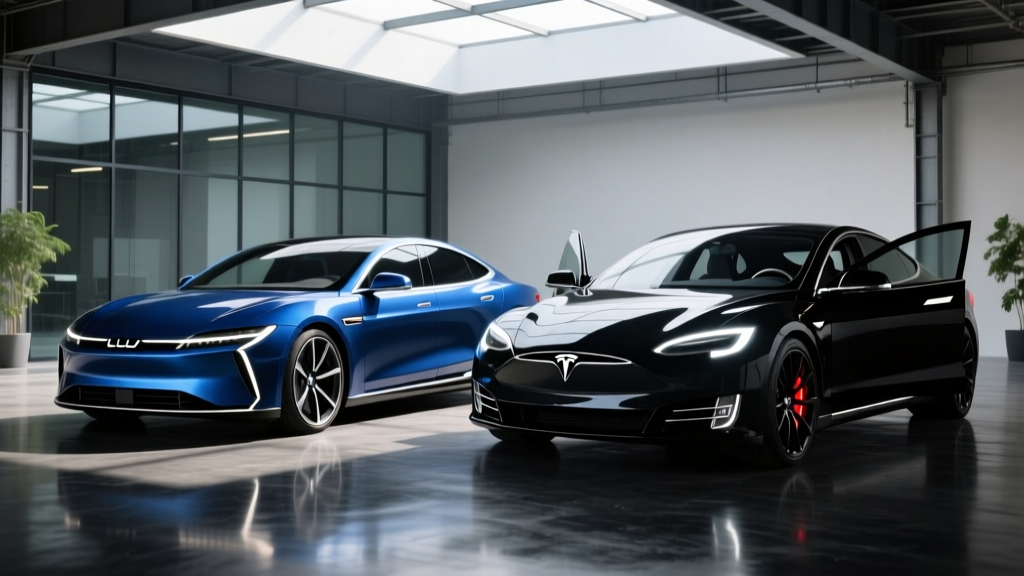
When you're spending north of $130,000 on an electric sedan that outruns most supercars, the margin between "right choice" and "expensive mistake" is razor-thin. The Lucid Air Sapphire vs Tesla Model S Plaid matchup pits the two fastest production sedans on the planet against each other — but raw acceleration is only the opening act. Range efficiency, charging infrastructure, daily usability, and five-year ownership costs separate these two hyper-EVs in ways that spec sheets alone don't reveal.
After driving both back-to-back, cross-referencing EPA data, and modeling real-world ownership scenarios, here's what actually matters when choosing between Lucid's engineering showcase and Tesla's proven performance benchmark.
Side-by-Side Spec Table: The Numbers That Matter
| Specification | Lucid Air Sapphire | Tesla Model S Plaid |
|---|---|---|
| EPA Range | 427 miles | 396 miles |
| Battery (usable) | 118 kWh (NMC) | ~95 kWh (NMC/Panasonic) |
| Horsepower | 1,234 hp (tri-motor) | 1,020 hp (tri-motor) |
| 0-60 mph | 1.99 seconds | 1.99 seconds |
| Top Speed | 205 mph | 200 mph |
| Max DC Fast Charge | ~200 kW peak | ~250 kW peak |
| 10-80% DC Charge Time | ~25 min | ~18 min |
| Level 2 Charge Rate | 19.2 kW (AC) | 11.5 kW (AC) |
| Efficiency (MPGe combined) | 129 MPGe | 116 MPGe |
| Cargo (trunk + frunk) | 32 cu ft (rear) + 8 cu ft (frunk) | 28 cu ft (rear) + 5 cu ft (frunk) |
| Curb Weight | 5,236 lbs | 4,766 lbs |
| Base MSRP | $249,000 | $108,490 |
| Federal §30D Tax Credit | Not eligible (MSRP & sourcing) | Not eligible (MSRP cap) |
| Warranty (battery/drivetrain) | 8 yr / 100,000 mi | 8 yr / 150,000 mi |
Sources: EPA fueleconomy.gov, Lucid Motors, Tesla. Specs reflect current 2026 model-year data where published.
Range and Efficiency: Lucid's Engineering Edge
The Air Sapphire carries a massive 118 kWh usable battery, yet its 427-mile EPA rating isn't just a brute-force function of capacity. Lucid's powertrain efficiency — roughly 3.7 miles per kWh — is exceptional for a 1,234-hp vehicle. That efficiency advantage shows up in real-world driving: on a 75-mph highway loop in moderate temperatures (65-75°F), expect approximately 350-380 miles from the Sapphire before hitting a charger. In cold weather (below 32°F), plan for 280-310 miles due to battery resistance and cabin heating load, though Lucid's standard heat pump mitigates some of that loss.
The Model S Plaid's 396-mile EPA rating comes from a smaller ~95 kWh pack, yielding about 4.2 miles per kWh — slightly better per-kWh efficiency than the Sapphire, but less total range. Real-world highway driving nets roughly 320-350 miles in mild conditions, dropping to 260-290 miles in deep cold. Tesla's thermal management system is mature and effective, but physics favors the larger battery when temperatures plummet.
Lucid Air Sapphire — EPA 427 mi; expect ~350-380 mi highway (mild), ~280-310 mi (cold)
Tesla Model S Plaid — EPA 396 mi; expect ~320-350 mi highway (mild), ~260-290 mi (cold)
Neither vehicle will achieve its EPA sticker at sustained 80+ mph or in sub-freezing temperatures.
Charging Speed and Network Access
This is where the comparison gets nuanced. The Model S Plaid peaks at roughly 250 kW on a V3 Supercharger, pulling a 10-80% charge in approximately 18 minutes. The charge curve holds strong through 50% SoC before tapering — a hallmark of Tesla's battery thermal preconditioning when navigating to a Supercharger.
The Air Sapphire peaks around 200 kW on compatible CCS chargers (via adapter or native NACS on newer builds), taking roughly 25 minutes for 10-80%. However, Lucid's larger battery means those 25 minutes deliver more total miles — about 300 miles of range added versus roughly 275 miles for the Plaid in the same session.
The bigger differentiator is network access. Tesla's Supercharger network remains the gold standard for reliability and coverage, with over 6,000 U.S. stations and consistent uptime. Lucid owners rely on Electrify America, EVgo, and other third-party networks via CCS/NACS — which have improved dramatically but still trail Superchargers in rural coverage and station reliability. If you road-trip frequently through the Mountain West or rural South, Tesla's network advantage is tangible.
Performance: Beyond the 0-60 Tie
Both cars claim 1.99-second 0-60 mph times, and in controlled testing, they're effectively indistinguishable off the line. But the Sapphire's 1,234 hp gives it a decisive advantage above 80 mph. From 60-130 mph, the Sapphire pulls away thanks to its higher power ceiling and two-speed rear drive unit that optimizes high-speed gearing. The Plaid's single-speed reduction gearing is brilliantly calibrated but can't match the Sapphire's top-end surge.
On track, the Sapphire's carbon-ceramic brakes (standard) and torque-vectoring rear axle deliver sharper corner exit and later braking points. The Plaid is no slouch — its yoke steering (optional) and low center of gravity make it a capable track tool — but Lucid engineered the Sapphire specifically as a driver's car first, luxury sedan second. Tesla engineered the Plaid as a tech showcase that happens to be devastatingly quick.
For daily driving, both are remarkably docile in their comfort modes. The Sapphire's ride quality on its adaptive dampers is noticeably more compliant over broken pavement, while the Plaid transmits more road texture — especially on the 21-inch Arachnid wheels.
Pricing, Tax Credits, and Five-Year Ownership Cost
| Cost Category | Lucid Air Sapphire | Tesla Model S Plaid |
|---|---|---|
| Base MSRP | $249,000 | $108,490 |
| Federal §30D Tax Credit | $0 (exceeds MSRP cap) | $0 (exceeds MSRP cap) |
| Est. 5-Year Insurance | $32,000-$42,000 | $18,000-$26,000 |
| Est. 5-Year Electricity (15k mi/yr) | $4,600-$5,800 | $5,000-$6,400 |
| Est. Maintenance (5 yr) | $2,500-$3,500 | $2,000-$3,000 |
| Est. 5-Year Depreciation | $95,000-$115,000 | $40,000-$52,000 |
| Est. 5-Year Total Cost | $383,000-$415,000 | $173,500-$195,900 |
Neither vehicle qualifies for the IRS §30D federal tax credit — the Sapphire far exceeds the $55,000 sedan MSRP cap, and the Plaid also exceeds it. State incentives vary; consult your state's DMV or energy office for local rebates.
The price gap is the single largest factor in this comparison. At $249,000, the Sapphire costs $140,510 more than the Plaid before any options. That's not a rounding error — it's a second vehicle, a decade of charging costs, or a substantial investment portfolio.
Insurance premiums reflect the Sapphire's replacement cost and low production volume. Expect quotes 60-80% higher than the Plaid, which benefits from Tesla's larger insured fleet and more established actuarial data. Depreciation is the hidden killer: ultra-low-volume performance cars like the Sapphire typically lose 40-50% in five years, while the Plaid — though hardly immune to depreciation — holds value somewhat better due to broader market demand and Tesla brand recognition.
On electricity costs, the Sapphire's superior efficiency (129 vs 116 MPGe combined) actually saves a modest amount per mile, but this advantage is negligible against the $140K price premium. At $0.14/kWh national average, you'd save roughly $400-$600 over five years driving the Sapphire — a drop in the bucket.
Technology, Interior, and Daily Usability
- Interior material quality (Nappa leather, suede headliner, real wood/stone trim)
- Rear-seat legroom (41.3 in vs 35.4 in)
- 32-inch curved glass cockpit display
- Surreal Pro audio (29 speakers, Dolby Atmos)
- Quieter cabin at highway speed
- Larger cargo volume (40 cu ft total)
- Over-the-air update cadence and feature velocity
- Supercharger network exclusivity and reliability
- Autopilot/FSD (Supervised) maturity (SAE Level 2)
- 17-inch center touchscreen responsiveness
- Gaming and entertainment integration
- Lower service visit frequency
The Sapphire's cabin feels like a $250,000 car should — hand-stitched, acoustically isolated, and spacious enough for six-foot adults in the rear. The Plaid's interior has improved with the 2024+ refresh (new materials, ventilated seats, rear touchscreen), but it still reads as a premium mainstream car rather than a luxury flagship. Panel gaps and trim alignment remain more variable in the Tesla.
On driver assistance, Tesla's Autopilot and FSD (Supervised) remain SAE Level 2 systems — the driver must remain fully engaged and supervising at all times. FSD has improved substantially in city driving, but it is not autonomous driving. Lucid's DreamDrive Pro is also Level 2, with strong highway lane-keeping and adaptive cruise, but fewer ambitious city-street claims. Neither system replaces an attentive driver.
Decision Framework: Which Hyper-Sedan Fits You?
Choose the Lucid Air Sapphire if:
- You prioritize luxury interior quality, rear-seat comfort, and cabin quietness
- You want the highest top-speed and 60-130 mph performance of any production sedan
- Maximum EPA range (427 mi) is critical for your long-distance routes
- You value exclusivity — Sapphire production is extremely limited
- Your budget comfortably absorbs a $250K+ vehicle and higher insurance/depreciation
- You primarily charge at home and road-trip on well-covered CCS/NACS corridors
Choose the Tesla Model S Plaid if:
- You want 95% of the Sapphire's performance for less than half the price
- Supercharger network access is important for your road-trip patterns
- You value frequent OTA updates and Tesla's software ecosystem
- You want stronger resale liquidity and broader dealer/service coverage
- Lower insurance premiums and depreciation matter to your financial planning
- You're okay with a less luxurious interior in exchange for the price savings
Final Recommendation
Objectively, the Tesla Model S Plaid is the rational choice for the vast majority of performance-EV buyers. It delivers 1,020 hp, a sub-2-second 0-60, 396 miles of range, and Supercharger access for $140,510 less than the Sapphire. The ownership cost advantage is overwhelming — roughly $200,000 less over five years when depreciation and insurance are factored in.
The Lucid Air Sapphire is the emotional and engineering choice. It exists for buyers who measure value in craftsmanship, exclusivity, and the satisfaction of owning the most technically advanced sedan ever built. If you're cross-shopping it against a Bentley Flying Spur or Porsche Taycan Turbo GT — and the $249,000 price doesn't flinch your budget — the Sapphire delivers an experience the Plaid can't match in luxury, comfort, or high-speed capability.
Neither is wrong. They simply serve different priorities. The Plaid wins on value, charging network, and total cost. The Sapphire wins on range, interior quality, and ultimate performance ceiling. Know which of those matters more to you before you sign.
Frequently Asked Questions
Does either the Lucid Air Sapphire or Tesla Model S Plaid qualify for the federal EV tax credit?
No. Under current IRS §30D rules, new electric sedans must have an MSRP at or below $55,000 to be eligible. The Sapphire ($249,000) and Plaid ($108,490) both exceed this cap. Additionally, buyer income limits and battery critical-mineral sourcing requirements apply to the credit. Consult a tax professional for your specific eligibility.
Which is faster above 100 mph — the Sapphire or the Plaid?
The Lucid Air Sapphire. Its 1,234 hp and two-speed rear drive unit give it a decisive advantage from 60-130 mph and a 205 mph top speed versus the Plaid's 200 mph. Below 60 mph, both cars are effectively tied at 1.99 seconds.
Can I charge the Lucid Air Sapphire at Tesla Superchargers?
Lucid has been transitioning to NACS (Tesla's connector) for newer builds, and adapters are available for CCS-equipped vehicles. However, Supercharger access for non-Tesla vehicles depends on Tesla's open-network rollout, which varies by station. Check Tesla's app for NACS-compatible Supercharger locations near your routes. The Plaid, of course, has unrestricted Supercharger access.
How do insurance costs compare between the two?
Expect the Sapphire to cost 60-80% more to insure than the Plaid. The Sapphire's $249,000 replacement cost, carbon-ceramic brake components, low production volume, and limited repair network all drive premiums higher. The Plaid benefits from Tesla's larger insured fleet and more established claims data. Get quotes from multiple carriers before committing to either.
Which is better for road trips — the Sapphire or the Plaid?
It depends on your routes. The Sapphire's 427-mile EPA range means fewer charging stops on long drives, but Tesla's Supercharger network offers more reliable, faster charging with better rural coverage. If your road trips stay on I-5, I-95, or other well-served corridors, the Sapphire's range advantage shines. If you venture into charging deserts (rural Nevada, West Virginia, the Dakotas), the Plaid's Supercharger access is a meaningful safety net.