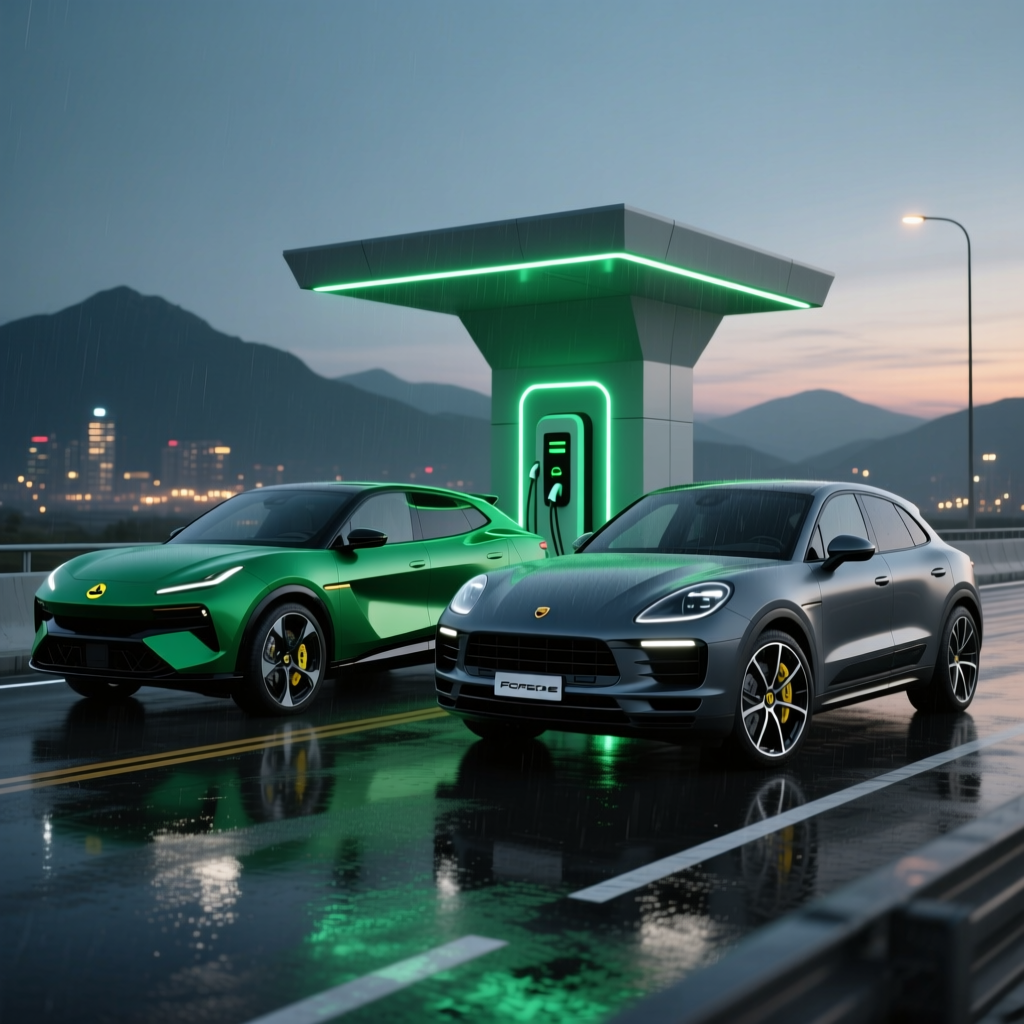
The transition to electric mobility has completely redefined the performance SUV segment. No longer bound by the mechanical constraints of heavy internal combustion engines and complex drivetrains, automakers are now leveraging instant torque, low centers of gravity, and advanced software to create vehicles that defy physics. At the absolute pinnacle of this new era sit two formidable contenders: the Lotus Eletre and the Porsche Macan Electric. Both promise supercar-rivaling acceleration, luxury appointments, and cutting-edge technology, but they approach the formula from vastly different philosophies.
In this comprehensive head-to-head comparison, we will dissect every aspect of these high-voltage heavyweights. Whether you are drawn to the avant-garde, hyper-SUV styling of the Lotus or the refined, driver-focused heritage of the Porsche, our detailed breakdown will help you decide which electric performance SUV deserves a spot in your garage. For more insights on the segment, be sure to check out our rankings of the best electric SUVs currently on the market.
Overview: Two Visions of Electric Performance
The Lotus Eletre represents a radical departure for the historic British sports car brand. Billed as a 'hyper-SUV,' the Eletre is unapologetically bold, massive, and packed with aerodynamic trickery. It is designed to shock the senses, utilizing an 800-volt architecture, active aerodynamics, and a heavily digitized cabin to position itself as a tech-forward luxury cruiser with the soul of a track car. It is a statement piece that demands attention on every corner.
Conversely, the Porsche Macan Electric is the evolution of a proven formula. Building on the legacy of its combustion-engine predecessor, the electric Macan utilizes the Volkswagen Group's Premium Platform Electric (PPE) to deliver a more traditional, yet thoroughly modernized, luxury experience. It prioritizes tactile feedback, steering precision, and everyday usability, wrapping its cutting-edge 800-volt powertrain in a sleek, familiar silhouette that appeals to driving purists who want daily practicality.
Side-by-Side Specification Comparison
| Feature | Lotus Eletre (Base / R) | Porsche Macan Electric (4 / Turbo) |
|---|---|---|
| Battery Capacity | 112 kWh (Usable) | 100 kWh (Gross) / ~95 kWh (Usable) |
| EPA Estimated Range | ~250 - 300 miles | ~280 - 300 miles |
| Peak Horsepower | 603 hp / 905 hp | 402 hp / 630 hp |
| 0-60 mph Acceleration | 4.5 sec / 2.9 sec | 4.9 sec / 3.1 sec |
| Architecture | 800-Volt | 800-Volt |
| Max DC Fast Charging | Up to 350 kW | Up to 270 kW |
| Drivetrain | Dual Motor AWD | Dual Motor AWD |
Range & Efficiency
When spending six figures on a performance EV, range anxiety should ideally be a thing of the past. Both the Eletre and the Macan Electric utilize massive battery packs to ensure substantial distance between charges, but their efficiency profiles differ due to their distinct aerodynamic and weight characteristics.
The Lotus Eletre houses a colossal 112 kWh battery pack. Despite its aggressive aero features, the Eletre's sheer size and weight mean that efficiency takes a slight hit compared to sleeker sedans. According to official EPA ratings and real-world testing, the base Eletre achieves roughly 250 to 280 miles of range, while the more powerful R variant sees a slight dip due to its aggressive tire compound and performance tuning. However, Lotus includes sophisticated thermal management systems that keep the battery in its optimal temperature window, preserving range even during spirited driving sessions.
The Porsche Macan Electric utilizes a 100 kWh battery (with roughly 95 kWh usable). Thanks to the PPE platform's focus on efficiency, an active rear spoiler, and adjustable air suspension that lowers the vehicle at highway speeds, the Macan Electric manages to extract impressive mileage from its pack. The Macan 4 easily surpasses 280 miles on the EPA cycle, with some independent test data suggesting it can push past 300 miles in conservative, real-world highway driving. For buyers prioritizing road-trip capability without frequent stops, the Macan holds a slight edge in overall efficiency.
Performance & Driving Dynamics
This is the battleground where both brands have staked their reputations. The Lotus Eletre and Porsche Macan Electric both feature dual-motor all-wheel-drive setups, but the way they deliver their power to the pavement feels distinctly different.
The Lotus Eletre, particularly in its range-topping R guise, is a brute. With up to 905 horsepower on tap, it launches to 60 mph in a mind-bending 2.9 seconds. But straight-line speed is only half the story. Lotus has equipped the Eletre with an advanced air suspension system, continuous damping control, and active rear steering. The result is a vehicle that actively fights its own mass, cornering with a flatness that seems impossible for an SUV of its stature. The steering is lightning-quick, though some purists note it feels slightly synthetic compared to a traditional hydraulic setup. For a deep dive into its track capabilities, read our full Lotus Eletre review.
The Porsche Macan Electric, specifically the Turbo variant, produces up to 630 horsepower and hits 60 mph in 3.1 seconds. While it trails the Lotus in peak output, the Porsche shines in its chassis communication and steering feel. Porsche's engineers have mastered the art of making an electric vehicle feel analog. The available rear-axle steering and Porsche Torque Vectoring Plus (PTV+) allow the Macan to pivot around corners with the agility of a hot hatch. The brake pedal feel, often a weak point in heavy EVs due to regenerative blending, is remarkably linear and confidence-inspiring in the Macan. If driving engagement and tactile feedback are your top priorities, the Porsche remains the benchmark.
Charging Speed & Infrastructure
Both vehicles benefit from 800-volt electrical architectures, which allows for significantly faster DC fast charging and reduced heat generation compared to older 400-volt systems. This makes them both excellent choices for frequent road trippers and earns them spots on our list of the fastest-charging EVs.
The Lotus Eletre boasts a peak charging capability of up to 350 kW. When connected to a compatible ultra-fast charger, the Eletre can replenish its massive 112 kWh battery from 10% to 80% in approximately 20 minutes. Lotus has also engineered the battery to accept high charge rates for a longer portion of the charging curve, meaning you spend less time waiting at the plug and more time on the road.
The Porsche Macan Electric peaks at around 270 kW. While this number is lower on paper than the Lotus, Porsche's charging curve is exceptionally well-managed. The Macan can also achieve a 10% to 80% charge in roughly 21 minutes. Furthermore, Porsche's integration with the Electrify America network (and other major providers globally) often results in a more seamless plug-and-charge experience, with fewer authentication hiccups at the charger. Both SUVs support AC home charging at up to 11 kW (with optional 22 kW onboard chargers available in certain markets), ensuring a full overnight top-up is easily achievable.
Interior Space & Cargo
Step inside the Lotus Eletre, and you are immediately struck by the sheer scale and theatricality of the cabin. Lotus employs a 'lightness' design philosophy, utilizing negative space and floating elements to make the large cabin feel airy. The dashboard is dominated by a massive 15.1-inch OLED infotainment screen that folds away when not in use, accompanied by a slim digital instrument cluster and a dedicated passenger display. The rear seat offers limousine-like legroom, and the cargo area is generous, easily swallowing luggage for a family vacation. However, the sheer width of the Eletre can make navigating tight urban parking garages a stressful endeavor.
The Porsche Macan Electric offers a more intimate, driver-centric environment. The cabin is a masterclass in ergonomic luxury, featuring a curved 12.6-inch digital instrument cluster, a 10.9-inch central touchscreen, and an optional 10.9-inch passenger screen integrated seamlessly into the dashboard. The materials are quintessential Porsche—supple leather, carbon fiber, and brushed aluminum. While the rear seat is comfortable for two adults, it lacks the cavernous legroom of the Lotus. Cargo space is adequate for daily duties and weekend getaways, and the Macan includes a front trunk (frunk) for additional storage, a feature notably absent in the Eletre due to its complex front HVAC and LiDAR packaging.
Technology & Infotainment
Technology is where the Lotus Eletre attempts to redefine the segment. The most striking feature is its deployable LiDAR system. The Eletre features multiple LiDAR sensors that pop out from the roofline and wheel arches when advanced driver assistance systems (ADAS) are engaged, providing a 360-degree, high-definition map of the vehicle's surroundings. The infotainment system, powered by Unreal Engine, offers stunning 3D graphics and deep customization, though it can present a steep learning curve for new users.
The Porsche Macan Electric takes a more conservative but highly effective approach to technology. The latest iteration of Porsche Communication Management (PCM) is intuitive, responsive, and features excellent voice recognition. While it lacks the theatrical LiDAR arrays of the Lotus, the Macan's suite of cameras and radars provides highly capable adaptive cruise control and lane-keeping assistance. Porsche also includes an augmented reality head-up display that projects navigation arrows directly onto the windshield, a feature that enhances safety and convenience without overwhelming the driver with screen-based distractions.
Pricing & Warranty
Entering the luxury EV space requires a significant financial commitment. The Lotus Eletre generally commands a higher starting price, reflecting its larger battery, standard air suspension, and exotic hyper-SUV positioning. As you move up to the R trim and add bespoke customization options from the Lotus Exclusive program, the price can easily eclipse that of high-end supercars. Lotus offers a competitive battery and vehicle warranty, though its smaller dealership network compared to legacy brands may impact long-term service convenience.
The Porsche Macan Electric starts at a more accessible price point, particularly in its base and Macan 4 trims, making it a compelling entry into the brand's electric lineup. However, Porsche's infamous options list means that checking boxes for premium leather, advanced suspension, and upgraded audio can quickly inflate the final sticker price. Porsche's warranty coverage is standard for the luxury segment, but the brand's extensive global dealer network and proven reliability in build quality offer immense peace of mind for long-term ownership. For more tips on navigating luxury EV purchases, consult our comprehensive EV buying guide.
The Verdict: Which Electric SUV is Right for You?
Choosing between the Lotus Eletre and the Porsche Macan Electric ultimately comes down to your personal automotive philosophy and lifestyle needs.
Choose the Lotus Eletre if: You want a head-turning, avant-garde statement vehicle that prioritizes cutting-edge technology, massive interior space, and brute-force acceleration. The Eletre is for the tech-obsessed extrovert who views their vehicle as an extension of their digital lifestyle and isn't afraid of a massive footprint.
Choose the Porsche Macan Electric if: You are a driving purist who values steering feel, chassis communication, and everyday usability. The Macan is for the traditionalist who wants the thrill of a sports car combined with the practicality of an SUV, all wrapped in a timeless, understated luxury package that excels on both the canyon road and the daily commute.
Frequently Asked Questions
Which SUV has better real-world range, the Eletre or the Macan?
While the Lotus Eletre has a larger physical battery, the Porsche Macan Electric generally achieves better real-world efficiency. The Macan's superior aerodynamics, lighter weight, and highly optimized PPE platform allow it to squeeze more miles out of every kilowatt-hour, making it the better choice for long-distance highway cruising without frequent charging stops.
Can I use Tesla Superchargers with the Lotus Eletre or Porsche Macan Electric?
Both vehicles utilize the CCS (Combined Charging System) standard in North America and Europe. As the industry shifts toward the NACS (North American Charging Standard) pioneered by Tesla, adapters are becoming available, and future iterations or software updates may enable native access to the Tesla Supercharger network. Always check the latest charging network compatibility updates from the manufacturers.
How does the regenerative braking compare between the two?
The Porsche Macan Electric offers a more natural and progressive regenerative braking feel, closely mimicking the engine braking of a traditional combustion vehicle. The Lotus Eletre provides stronger, more aggressive regeneration settings that allow for true one-pedal driving in heavy traffic, though some drivers find the transition between regen and friction brakes to be slightly less seamless than in the Porsche.
Which vehicle holds its value better over time?
Historically, Porsche vehicles exhibit some of the strongest residual values in the luxury automotive market. While the EV market as a whole is currently experiencing fluctuating depreciation rates due to rapid tech advancements and price cuts, the Macan Electric's strong brand equity and widespread dealer support give it a distinct advantage in long-term value retention over the more niche Lotus Eletre.