The Quick Answer: Little Electric Boats Aren't Daily Drivers
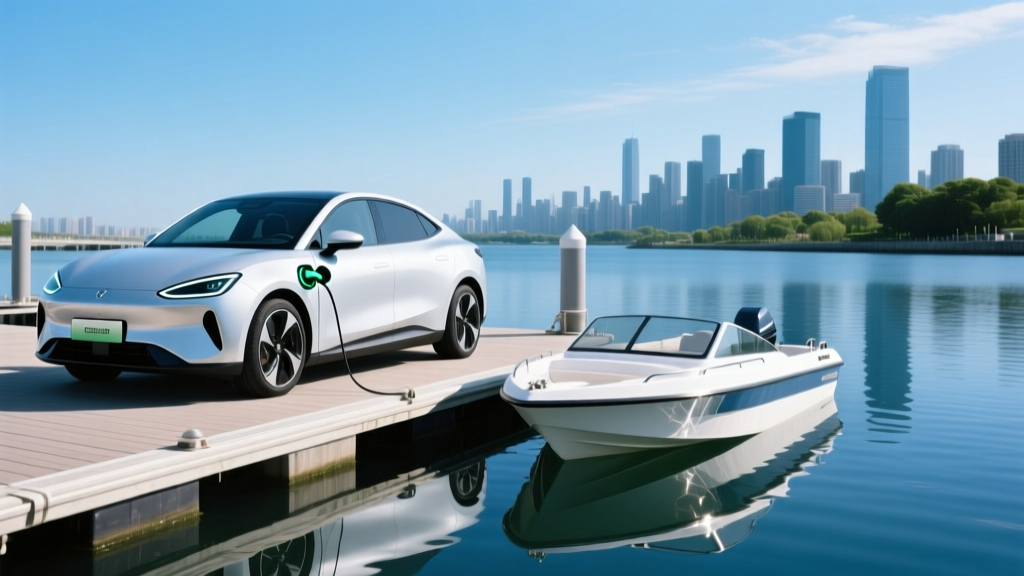
Little electric boats — compact electric-powered watercraft from brands like Torqeedo, ElectraCraft, and Flux Marine — are recreational lake and canal vessels, not commuter vehicles. They typically offer 2-6 kWh battery packs, run $8,000-$35,000, and deliver 1-4 hours of runtime at cruising speed. They cannot replace a car. If you're shopping for electrified daily transportation, a battery-electric vehicle (BEV) like the 2026 Chevrolet Equinox EV (EPA 319 miles, ~$33,000 base) or a plug-in hybrid (PHEV) like the Toyota RAV4 Prime (42 miles electric-only, 38 MPG combined) will serve you far better. This guide breaks down where little electric boats fit in an electrified lifestyle and how their ownership economics compare to EVs you actually drive to work.
What Are Little Electric Boats — and What They're Not
The term "little electric boats" generally refers to small electric-powered watercraft under 20 feet: pontoon boats, dinghies, fishing skiffs, and canal cruisers equipped with electric outboard motors or integrated electric drivetrains. Popular options in 2026 include:
- Torqeedo Cruise 10.0 outboard: 48V system, ~10 kW peak output, paired with Power 48-5000 battery (5 kWh, LFP chemistry), approximately $11,500 for motor + battery
- Flux Marine eOutboard (announced for broader retail): 70 hp equivalent, targeting ~40 kWh battery packs for larger runabouts
- ElectraCraft 182 Entertainment Cruiser: integrated electric pontoon, 48V system, 4-6 kWh battery, base price approximately $28,000-$34,000
- Small inflatable dinghies with Torqeedo Ultralight or Travel series: 1-3 kWh, $2,500-$5,500 total package
These are weekend toys. They do not have highway capability, climate control, cargo space for groceries, or the range to commute. If your search for "little electric boats" stems from wanting any form of electric transportation, let's redirect that energy toward vehicles that actually solve daily mobility.
Cost Comparison: Electric Boat vs Electric Car vs Gas Car
To put little electric boats in perspective, here's a concrete cost breakdown comparing a typical electric pontoon against popular EVs and a gas-powered compact SUV over five years of ownership.
| Category | Electric Pontoon Boat (~$30K) | 2026 Chevy Equinox EV 2LT (~$36K) | 2026 Toyota RAV4 Gas (~$32K) |
|---|---|---|---|
| Purchase Price (MSRP) | $30,000 | $36,000 | $32,000 |
| Federal Tax Credit (§30D) | $0 (not a road vehicle) | Up to $7,500* | $0 |
| Effective Purchase | $30,000 | ~$28,500 | $32,000 |
| Annual Energy/Fuel Cost | ~$80/yr (40 outings × $2/charge) | ~$540/yr (12,000 mi @ $0.135/kWh) | ~$1,560/yr (12,000 mi @ 28 MPG, $3.64/gal) |
| 5-Year Energy/Fuel Total | $400 | $2,700 | $7,800 |
| Maintenance (5 yr) | ~$600 (winterization, impeller) | ~$1,200 (cabin filter, tires, fluid) | ~$3,500 (oil, brakes, filters, belts) |
| Insurance (5 yr est.) | ~$2,500 (marine policy) | ~$7,500 (auto EV premium) | ~$6,000 (auto gas) |
| 5-Year Total Cost | ~$35,500 | ~$39,900 | ~$49,300 |
*§30D credit eligibility depends on MSRP caps ($55K SUVs / $25K sedans for new vehicles as of 2026 IRS rules), buyer income limits ($300K MFJ / $150K single), and battery critical-mineral sourcing requirements. Verify at irs.gov before purchasing. Point-of-sale transfer is available through registered dealers.
The boat costs less over five years only because it's used far less. Per hour of use, the electric boat is actually more expensive than the EV — but it's not solving the same problem.
Where Little Electric Boats Make Sense (and Where They Don't)
Electric boats shine in narrow use cases:
- No-wake lakes and canals where gas motors are restricted or banned
- Silent operation for fishing, wildlife observation, or residential waterfronts
- Zero local emissions — no fuel spills, no exhaust on the water
- Minimal maintenance compared to gas outboards (no carburetor, no winter fuel stabilizer, no lower-unit gear oil changes on direct-drive systems)
They fall short where you need:
- Range and speed — a 5 kWh Torqeedo system might push a 14-foot skiff at 5 knots for 90 minutes; that's roughly 12.5 nautical miles before you need a 6-8 hour shore-power recharge
- All-weather capability — battery performance drops noticeably in cold water (below 50°F), and these boats have no cabin heating
- Towing or heavy loads — electric outboards under 15 kW struggle with planing hulls carrying more than 2-3 passengers
- Fast refueling — there is no marine equivalent of DC fast charging; you're tethered to a 120V or 240V dock outlet
Common Misconceptions About Electric Boats and EVs
| Myth | Fact |
|---|---|
| "Electric boats are just like electric cars — same technology" | Marine electric systems use similar lithium chemistries (mostly LFP for safety) but lack regenerative braking, thermal preconditioning, and DC fast charging. Battery packs are also far smaller (2-10 kWh vs 60-100 kWh in cars). |
| "I can charge an electric boat at a Tesla Supercharger" | No. Marine batteries charge via shore-power AC (Level 1 or Level 2 equivalent) through onboard chargers. No standardized DC fast-charging connector exists for recreational boats. |
| "If I buy an electric boat, I'll save gas money" | You'll save fuel cost per outing, but a boat doesn't replace car trips. Your gas car still burns fuel for commuting. An EV or PHEV is what actually cuts your transportation fuel bill. |
| "EVs don't work in cold weather" | EVs lose 15-30% range in sub-freezing temps (EPA data), but heat pumps and battery preconditioning on 2026 models mitigate this. A 300-mile EPA EV still delivers 220+ real-world winter miles — plenty for most commutes. |
If You Want Electric Transportation, Here's What to Actually Buy
Your daily transportation dollars are better spent on a road-legal electrified vehicle. Here's a decision framework based on your real-world driving pattern:
Choose Your Electrified Path
- IF you drive under 40 miles/day, have home Level 2 charging access, and rarely road-trip over 250 miles → Buy a BEV (e.g., 2026 Tesla Model 3 Long Range, EPA 363 mi, ~$42,000; or Hyundai Ioniq 5, EPA 303 mi, ~$42,500). You'll spend ~$0.04/mile on electricity vs ~$0.13/mile on gas.
- IF you drive 20-40 miles/day, have home charging, but take frequent long road trips or live in a charging-desert region → Buy a PHEV (e.g., 2026 Toyota RAV4 Prime, 42 mi electric-only, 38 MPG combined after depletion, ~$45,000). You get electric commuting with gas backup.
- IF you cannot charge at home (apartment, street parking) and public DC charging is sparse → Buy an HEV (e.g., 2026 Toyota Camry Hybrid, 52 MPG combined, ~$30,000). No plug needed, still cuts fuel cost ~40% vs a gas-only car.
- IF you want a weekend electric boat and an EV → budget separately. The boat is a toy; the car is your transportation investment.
Real-World Ownership Considerations First-Time EV Buyers Overlook
Whether you came here looking at little electric boats or are genuinely EV-curious, these are the practical realities that spec sheets don't emphasize:
Home Charging Is the Make-or-Break Factor
Over 80% of EV charging happens at home. A Level 2 home charger (240V, 32-48 amps / 7.7-11.5 kW) adds 25-44 miles of range per hour and costs $800-$2,500 installed by a licensed electrician, depending on panel capacity and conduit run length. If your home has a 100-amp panel, you may need a $1,500-$3,000 panel upgrade to 200 amps. Without home charging, EV ownership becomes significantly less convenient — you're reliant on public Level 2 and DC fast chargers, which cost 2-4× more per kWh than home electricity.
Charging Speed Is About Sustained kW, Not Peak kW
A 2026 Hyundai Ioniq 5 can peak at 240 kW on a DC fast charger, but that peak lasts only from roughly 10-45% state of charge. Above 80%, charging tapers sharply — the 80-100% portion can take as long as 10-80%. Plan road-trip stops around 10-80% charges for maximum efficiency: ~18 minutes on a 350 kW-capable station.
Cold Weather Is Real — But Manageable
At 20°F, expect 15-30% EPA range reduction depending on whether the vehicle has a heat pump (more efficient) or resistive heater. Preconditioning the battery while plugged in at home mitigates this and preserves long-term battery health. LFP-chemistry batteries (used in base Tesla Model 3 and some other 2026 models) tolerate cold somewhat better than NMC but have lower energy density overall.
Battery Longevity Isn't the Boogeyman Marketing Made It
Modern EV batteries are warrantied for 8 years / 100,000 miles (federally mandated minimum) with a capacity-retention threshold of 60-70% depending on manufacturer. Real-world data from fueleconomy.gov and owner surveys show most 2020-era EVs retain 88-93% capacity after 100,000 miles. Full battery replacement on a mainstream EV runs $10,000-$20,000 out of warranty — expensive, but rare before 150,000+ miles.
The Bottom Line: Budget for Both — But Prioritize the Car
Little electric boats are a legitimate and growing niche for waterfront recreation. A Torqeedo-powered skiff or an ElectraCraft pontoon is a wonderful thing on a calm lake on a Saturday morning. But if your search for electric boats reflects a broader interest in going electric, direct that budget toward a road-legal EV first. The transportation savings, tax incentives, and daily utility of an electric car will pay for a small electric boat within a few years of fuel and maintenance savings.
Can I claim the federal EV tax credit on an electric boat?
No. The IRS §30D Clean Vehicle Credit applies only to road-legal four-wheeled vehicles meeting specific battery-sourcing, MSRP, and buyer-income requirements. Marine vessels, motorcycles, e-bikes, and off-road vehicles do not qualify.
Do electric boats need special insurance?
Yes. Marine insurance is separate from auto insurance and typically covers hull damage, liability on the water, and wreck removal. Expect $400-$800/year for a small electric pontoon or skiff, varying by state, waterway, and boat value.
How long does it take to charge a small electric boat?
Most small electric boats charge from a standard 120V outlet (Level 1 equivalent) at roughly 0.5-1.5 kW, meaning a 5 kWh battery takes 4-8 hours to fully recharge. Some systems support 240V shore power, cutting that to 2-3 hours. There is no DC fast-charging infrastructure for recreational boats.
What's the real range of a 2026 EV in mixed driving?
EPA estimates assume a mix of city and highway driving at moderate temperatures. In real-world highway driving at 70+ mph, expect 85-90% of the EPA sticker. In sub-freezing weather with cabin heat, expect 70-85%. A 2026 Tesla Model 3 Long Range (EPA 363 mi) typically delivers 310-325 mi on a warm-weather highway trip and 260-290 mi in winter conditions.
Is an electric boat cheaper to own than a gas boat?
Per outing, yes — electricity costs roughly $1-3 for a full charge vs $15-30 in gas for equivalent runtime on a small craft. But electric boats have higher upfront costs, limited range, and slower "refueling." For frequent use on small, no-wake lakes, electric wins. For open water, longer distances, or towing sports, gas outboards remain more practical.