Quick Answer: Are Levy Electric Scooters a Viable EV Alternative?
Levy electric scooters are lightweight, foldable, last-mile commuter vehicles — not a replacement for a full battery-electric vehicle (BEV). They cost between $500 and $1,200, offer 10–22 miles of real-world range per charge, and weigh under 40 lbs. If your daily commute is under 15 miles round-trip and you can combine the scooter with public transit or store it under a desk, a Levy scooter can eliminate car fuel and parking costs for that leg. For highway travel, passenger hauling, cargo, or all-weather commuting, a budget EV like the 2026 Nissan Leaf ($29,990 MSRP) or Chevrolet Equinox EV ($33,600 MSRP) remains the practical choice. Below, we break down the exact numbers.
What Are Levy Electric Scooters?
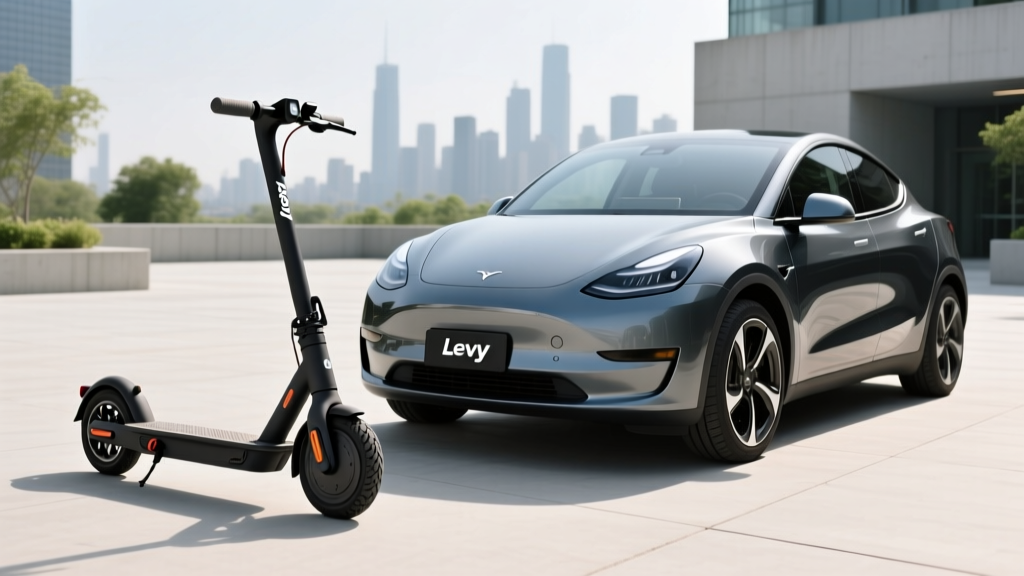
Levy is a New York-based micromobility brand that sells consumer electric kick-scooters designed for urban commuting. Unlike shared-fleet scooters from Lime or Bird, Levy scooters are personal-ownership units you charge at home or the office. The current lineup includes three core models:
- Levy Classic: 350W motor, ~10-mile real-world range, 18 mph top speed, ~27 lbs, ~$549 MSRP.
- Levy Plus: 350W motor with larger battery, ~15-mile real-world range, 18 mph top speed, ~30 lbs, ~$749 MSRP.
- Levy Elite: 700W motor, ~22-mile real-world range, 22 mph top speed, ~37 lbs, ~$1,099 MSRP.
All models feature a swappable battery design — a key differentiator. You can purchase a second battery (~$199) and swap it in seconds, effectively doubling range without waiting for a charge. Batteries are lithium-ion (NMC chemistry), typically 36V with capacities ranging from ~7.5 Ah (270 Wh) on the Classic to ~15 Ah (540 Wh) on the Elite. For context, that 540 Wh battery holds roughly the same energy as charging a smartphone 25 times — a fraction of even a small EV's 60 kWh traction battery. Remember: Wh and kWh measure energy capacity; the scooter's motor W rating (350W–700W) measures power output.
Levy Scooters vs. a Budget EV: The Numbers Side by Side
To give you a grounded comparison, we've stacked the Levy Elite against the 2026 Nissan Leaf S — one of the most affordable new BEVs on the US market. These are fundamentally different vehicle classes, but the data reveals where each makes sense.
| Spec | Levy Elite (Scooter) | 2026 Nissan Leaf S (BEV) |
|---|---|---|
| MSRP | $1,099 | $29,990 (before incentives) |
| EPA / Real-World Range | ~22 mi (no EPA rating; mfg. est.) | EPA 212 mi; ~170–190 mi real-world highway |
| Battery Capacity | 540 Wh (0.54 kWh), NMC | 60 kWh usable, NMC |
| Top Speed | 22 mph | ~95 mph (electronically limited) |
| 0–20 mph | ~4.5 sec | 0–60 mph in ~7.4 sec |
| Charge Time (standard outlet) | ~4–5 hours (120V) | ~10 hours Level 1 (120V, 1.4 kW) |
| Fast Charging | Not available | CCS DC fast charge: peak ~100 kW, 10–80% in ~40 min |
| Weight | ~37 lbs | ~3,650 lbs |
| Cargo / Passengers | 1 rider, backpack only | 5 passengers, ~23 cu ft cargo |
| Weather Suitability | Fair weather only (IPX4 splash resistance) | All-weather, climate-controlled cabin |
| Registration / Insurance | Not required in most states | Required; avg. EV insurance ~$1,800–$2,400/yr |
| Federal Tax Credit (§30D) | Not eligible | Up to $7,500 if eligible (see IRS sourcing rules) |
Real Cost of Ownership: Scooter vs. EV vs. Gas Car
Here's where Levy scooters shine — but only within their use-case envelope. We've modeled a 5-year ownership cost for a 10-mile daily commute (2,500 miles/year) across all three options.
| Cost Factor (5 Years) | Levy Elite | 2026 Nissan Leaf S | 2026 Toyota Corolla LE (Gas) |
|---|---|---|---|
| Purchase Price | $1,099 | $29,990 | $23,500 |
| Federal Tax Credit | $0 | Up to –$7,500* | $0 |
| Net Purchase | $1,099 | $22,490 | $23,500 |
| Energy / Fuel (12,500 mi total) | ~$75 (electricity at $0.15/kWh) | ~$525 (home charging avg.) | ~$1,625 (gas at $3.40/gal, 33 MPG) |
| Insurance (5 yr) | $0 (not required) | ~$10,500 | ~$7,500 |
| Maintenance | ~$150 (tires, brake pads) | ~$1,200 | ~$2,800 |
| Battery Replacement Reserve | ~$200 (spare battery) | Under warranty (8 yr/100k mi) | N/A |
| Total 5-Year Cost | ~$1,524 | ~$34,715 | ~$35,425 |
*§30D credit eligibility depends on MSRP caps, buyer income limits, and battery critical-mineral sourcing requirements. Verify current-year rules at IRS.gov. The Leaf's eligibility has varied by model year — confirm before purchase.
Charging Realities: What First-Time Owners Should Know
Levy scooters charge from a standard 120V wall outlet using an included power brick — no electrician, no 240V circuit, no permit required. This is a significant advantage for apartment dwellers or anyone without access to home EV charging infrastructure.
Common Misconceptions: Scooter vs. EV Charging
| Myth | Fact |
|---|---|
| "I need a special charger for an electric scooter." | Levy scooters use a standard 120V plug. Full charge in 4–5 hours from any wall outlet. |
| "EVs and scooters charge the same way." | EVs benefit from Level 2 (240V, 7–11 kW) home chargers costing $500–$2,000 installed, or DC fast chargers (50–350 kW). Scooters max out at ~100W from a wall plug. |
| "A scooter's range is the same in winter." | NMC lithium-ion batteries lose 20–35% range below 40°F. Expect ~14–17 miles from the Levy Elite in cold weather vs. ~22 miles at 70°F. |
| "I can ride a Levy scooter on the highway." | Top speed is 22 mph. These are designed for bike lanes and low-speed urban roads, not roads with speed limits above 35 mph. |
| "The battery will die in a year." | Levy NMC batteries are rated for ~500 full charge cycles before degrading to ~80% capacity. At one full cycle daily, that's roughly 1.5–2 years before noticeable range loss. Swappable batteries mitigate this. |
Who Should Buy a Levy Scooter — and Who Shouldn't?
Actionable Decision Framework
Choose a Levy electric scooter if:
- Your one-way commute is under 10 miles on bike-friendly or low-speed roads.
- You combine it with transit (bus/train) for the longer leg of your trip.
- You need to carry it upstairs, into an office, or onto a train (37 lbs is manageable).
- You want near-zero fuel and insurance costs and can't justify a $30K+ vehicle purchase.
- You live in a region with 8+ months of mild weather per year.
Choose a budget EV (Leaf, Equinox EV, Bolt) if:
- You regularly travel over 25 miles one-way or need highway-speed capability.
- You carry passengers, groceries, or child seats.
- You commute in rain, snow, or extreme heat regularly.
- You need year-round reliability regardless of temperature.
- You qualify for the §30D federal tax credit, which can reduce a $30K EV to ~$22.5K effective cost.
Consider a plug-in hybrid (PHEV) if:
- You want electric-only commuting (25–45 miles on models like the Toyota RAV4 Prime) but also need 400+ mile gas range for road trips.
- You have no reliable DC fast-charging access for longer trips.
Real-World Ownership Considerations
Before you order, weigh these practical realities that spec sheets don't highlight:
Safety: Electric scooters offer zero crash protection. The NHTSA does not crash-test scooters, and injury rates from e-scooters have risen sharply since 2019 — emergency room visits related to micromobility exceeded 100,000 annually by 2023 according to CPSC data. A helmet is non-negotiable; wrist guards and knee pads are strongly recommended. This is a fundamentally different risk profile than a 3,600-lb EV with airbags, crumple zones, and IIHS-rated crash safety.
Legality: Scooter regulations vary by state and city. Most jurisdictions limit e-scooters to 15–20 mph on bike paths and prohibit sidewalk riding. Some states require a driver's license; others don't. Check your local DMV before purchasing.
Theft: A 37-lb scooter is an easy theft target. Budget for a quality U-lock ($40–$80) and consider renter's or homeowner's insurance riders for coverage.
Longevity vs. a vehicle: A well-maintained EV will last 150,000+ miles over 10–15 years. A Levy scooter's practical lifespan is 3,000–5,000 miles before major components (battery, motor, tires) need replacement. On a cost-per-mile basis, the scooter still wins for short commutes — but it's a consumable product, not a long-term asset.
Frequently Asked Questions
Does the Levy scooter qualify for any federal tax credits?
No. The IRS §30D Clean Vehicle Credit applies only to four-wheeled vehicles with a gross vehicle weight rating under 14,000 lbs that meet battery-sourcing and MSRP caps. Electric scooters and e-bikes do not qualify. Some states and utilities offer micromobility rebates — check your local programs.
How does the Levy Elite's range compare to riding in cold weather?
The 22-mile rated range assumes moderate temperatures (65–75°F) and flat terrain at moderate speed. In temperatures below 40°F, expect a 20–35% reduction — so roughly 14–17 miles. Wind, hills, and riding at top speed further reduce range. If your cold-weather commute exceeds 7 miles each way, the Elite may not be sufficient without a spare battery swap.
Can I charge a Levy scooter at my workplace?
Yes. The included charger plugs into any standard 120V outlet. The swappable battery design is ideal for office charging — pop the battery out, bring it to your desk, and charge it while you work. A full charge draws roughly 0.54 kWh, costing about $0.08 at average US electricity rates ($0.15/kWh).
Is a Levy scooter cheaper than taking public transit?
It depends. A monthly transit pass averages $75–$130 in major US cities. Over 5 years, that's $4,500–$7,800. A Levy Elite at $1,099 plus $75 in electricity is dramatically cheaper — but only if the scooter fully replaces your transit need. Many commuters use both: the scooter for the first/last mile and transit for the middle leg.
How does Levy compare to other scooter brands like Segway or Xiaomi?
Levy's key advantage is the swappable battery — most competitors (Segway Ninebot, Xiaomi) have integrated batteries requiring you to bring the entire scooter near an outlet. Levy also offers US-based customer support and replacement parts. However, Segway's Ninebot Max G2 offers a longer ~25-mile range at ~$899 with integrated suspension. Your choice depends on whether swappable batteries or raw range/suspension matter more for your route.