Quick Answer: Lectra Electric Bikes vs. Electric Cars
Lectra electric bikes are lightweight, low-speed electric motorcycles built by a niche American manufacturer — not a mass-market EV. If your goal is ultra-low-cost commuting (under 15 miles round-trip, fair weather), a Lectra e-bike can cost under $5,000 and use pennies of electricity per charge. But if you need highway capability, weather protection, cargo space, passenger seating, or year-round transportation, a used or new electric car (starting around $28,000 after incentives) is the practical choice. The two solve fundamentally different problems.
What Are Lectra Electric Bikes?
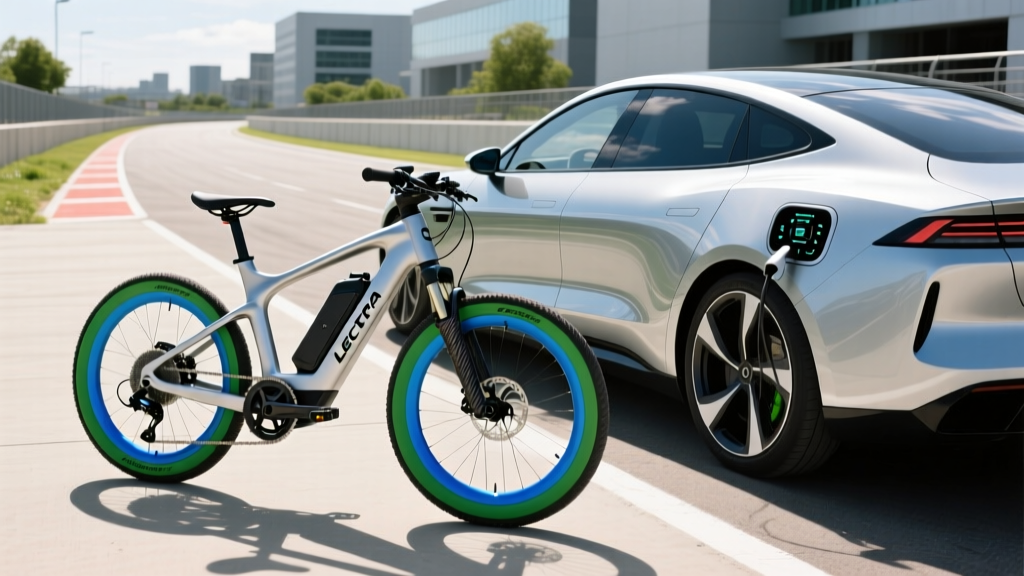
Lectra is a small U.S.-based manufacturer that has produced limited runs of electric motorcycles and electric bicycles since the late 1990s. Unlike major EV brands (Tesla, Hyundai, Ford) or mainstream e-bike companies (Rad Power, Trek, Specialized), Lectra operates at a boutique scale. Their vehicles typically feature:
- Top speeds: 30–55 mph depending on model (classified as low-speed motorcycles or electric mopeds in many jurisdictions)
- Range: 20–40 miles per charge under ideal conditions
- Battery: Small lithium or lead-acid packs, typically 1–3 kWh usable capacity
- Charging: Standard 120V household outlet (Level 1 equivalent), 3–6 hours for a full charge
- Price: Approximately $3,000–$6,000 depending on model and battery configuration
Lectra's appeal is simplicity and low operating cost. But for anyone researching a primary vehicle purchase, the limitations are significant. Let's put this in context against what a modern electric car offers in 2026.
Lectra E-Bike vs. Electric Car: The Numbers
Here's how a typical Lectra electric bike compares to a 2026 entry-level electric car (using the Chevrolet Equinox EV 2LT as a representative benchmark):
| Specification | Lectra Electric Bike (Typical) | 2026 Chevrolet Equinox EV 2LT |
|---|---|---|
| Base MSRP | ~$4,000–$6,000 | $33,600 (before incentives) |
| EPA Range | Not EPA-rated; ~20–40 mi est. | 319 miles (EPA) |
| Battery Capacity | ~1–3 kWh | 85 kWh usable (NMC) |
| Top Speed | 30–55 mph | 110+ mph |
| 0–60 mph | N/A (cannot reach 60 mph) | ~7.5 seconds |
| Charging (0–100%) | 3–6 hrs (120V outlet) | ~9.5 hrs Level 2; 10–80% DC in ~22 min at 150 kW |
| Highway Capable? | No (most models) | Yes |
| Passengers | 1 (some models: 2) | 5 |
| Cargo | Minimal (backpack/small bag) | 26.4 cu ft (rear seats up) |
| Weather Protection | None | Full climate control with heat pump |
| Federal Tax Credit (§30D) | Not eligible | Up to $7,500 (subject to income, MSRP, and sourcing rules) |
| Safety Ratings (NHTSA/IIHS) | Not crash-tested | NHTSA 5-star rated |
The gap is stark. A Lectra e-bike is essentially a neighborhood-speed electric vehicle, while a modern EV like the Equinox offers full highway range, fast DC charging, crash protection, and climate control. The question is which one matches your actual needs.
Real Costs: Purchase, Charging, and Ownership
Let's break down the total cost picture for both options over a 5-year period, assuming 30 miles of daily commuting, 5 days a week (~7,800 miles/year).
| Cost Category | Lectra E-Bike | 2026 Chevy Equinox EV | 2026 Gas Compact (Baseline) |
|---|---|---|---|
| Purchase Price | $5,000 | $33,600 | $28,000 |
| Federal Tax Credit | $0 | Up to –$7,500 (if eligible) | $0 |
| Effective Purchase | $5,000 | ~$26,100 | $28,000 |
| Annual "Fuel" Cost | ~$45/yr (electricity) | ~$470/yr (home charging at $0.14/kWh) | ~$1,250/yr (gas at $3.30/gal, 30 MPG) |
| 5-Year Fuel Total | ~$225 | ~$2,350 | ~$6,250 |
| Annual Insurance | ~$150–$300/yr | ~$1,400–$1,800/yr | ~$1,200–$1,500/yr |
| 5-Year Insurance | ~$1,125 | ~$8,000 | ~$6,750 |
| Maintenance (5 yr) | ~$200 | ~$500 | ~$2,500 |
| 5-Year Total Cost | ~$6,550 | ~$36,950 | ~$43,500 |
The Lectra wins on raw cost — but only because it's a fundamentally different class of vehicle. You're comparing a $5,000 low-speed bike to a $33,600 five-passenger crossover. The EV costs more upfront but delivers highway capability, safety, weather protection, and cargo space the Lectra simply cannot.
Key ownership note on the federal tax credit: The §30D credit of up to $7,500 is not automatic. Per IRS rules, eligibility depends on your modified adjusted gross income (caps: $150K single / $300K joint), the vehicle's MSRP (under $55K for cars, $80K for SUVs/trucks), and battery critical-mineral and component sourcing requirements. The credit can be transferred to the dealer at point of sale as an instant discount. Always verify current-year eligibility on irs.gov or with a tax professional before relying on it.
Real-World Ownership: What First-Time EV Buyers Must Know
Whether you're considering a Lectra e-bike or a full-size electric car, these practical factors determine whether ownership actually works for you:
Home Charging Access
This is the single biggest factor in EV satisfaction. If you have a garage or driveway with access to a standard 120V outlet, even a Lectra e-bike can charge overnight. For a full-size EV, a Level 2 home charger (240V, 7–11 kW) is strongly recommended — it adds roughly 25–40 miles of range per hour of charging, versus 3–5 miles per hour on a standard outlet.
Home Level 2 installation typically costs $800–$2,500 (equipment + licensed electrician + permit), but can rise to $3,000–$5,000 if your electrical panel needs an upgrade from 100A to 200A service. If you live in an apartment or lack dedicated parking with electrical access, public charging becomes your primary fueling method — which is more expensive ($0.30–$0.50/kWh at DC fast chargers) and less convenient.
Climate and Range Loss
Electric vehicles lose range in cold weather — typically 15–30% at freezing temperatures (32°F / 0°C) compared to EPA estimates. This affects both a Lectra's already-limited 30-mile range (dropping it to ~20 miles) and a full EV's 319-mile range (dropping to ~225–270 miles). Full EVs mitigate this with battery thermal management and heat pumps; Lectra bikes generally lack active thermal systems.
Driving Patterns
A Lectra e-bike works if your commute is under 15 miles each way, on surface streets, in fair weather. If you need to merge onto a 65 mph highway, drive in rain or snow, carry groceries or children, or take road trips — you need a full-size vehicle. Be honest about your actual driving, not the idealized version.
Decision Framework: Which Electric Vehicle Is Right for You?
Use this if/then guide to narrow your choice:
- Choose a Lectra-style e-bike if: Your commute is under 15 miles round-trip, entirely on local roads under 45 mph, you live in a mild climate, you already own a car for longer trips, and your primary goal is minimizing cost.
- Choose a used EV (e.g., 2022–2024 Chevy Bolt, Nissan Leaf) if: You need a real car but your budget is under $20,000, you have home Level 2 charging, and your daily driving is under 100 miles. The used-EV tax credit (§25E) offers up to $4,000 on qualifying pre-owned EVs priced under $25,000.
- Choose a new EV (e.g., Equinox EV, Hyundai Ioniq 5, Tesla Model Y) if: You need highway range, passenger/cargo capacity, year-round usability, and you qualify for the §30D federal credit. Budget $26,000–$45,000 after incentives.
- Choose a PHEV (e.g., Toyota RAV4 Prime, Chrysler Pacifica Hybrid) if: You want 30–42 miles of electric-only commuting but also need the flexibility of a gas engine for road trips or lack reliable home charging. PHEVs eliminate range anxiety while still cutting daily fuel costs.
- Stick with a gas car if: You lack any charging access (no home, no workplace), regularly drive 300+ miles in rural areas with sparse charging infrastructure, or your budget is under $18,000 and you need a reliable daily driver now.
Common Misconceptions About Small EVs vs. Full-Size EVs
| Myth | Fact |
|---|---|
| "An electric bike is just as green as an electric car." | Both produce zero tailpipe emissions, but upstream electricity generation matters. A Lectra uses ~1–3 kWh per charge vs. 60–85 kWh for a full EV. However, a full EV replaces gas-car miles at scale — a 319-mile EV replacing a 25 MPG gas car saves roughly 3.2 metric tons of CO₂/year (based on the U.S. average grid mix per EPA calculations). An e-bike's impact is smaller because it replaces fewer car-miles. |
| "Small electric vehicles qualify for the $7,500 tax credit." | The §30D Clean Vehicle Credit applies only to four-wheeled vehicles with a gross vehicle weight rating (GVWR) under 14,000 lbs that meet battery sourcing requirements. Electric bicycles and low-speed motorcycles do not qualify. The separate §25E used-EV credit also requires a four-wheeled vehicle. |
| "I don't need a full-size EV — an e-bike covers all my trips." | Check your actual driving log. Most Americans drive 37+ miles per day on average (FHWA data), and that's an average — some days are far longer. An e-bike with a 30-mile range and no weather protection cannot handle grocery runs in the rain, airport trips, or weekend drives. |
| "EV batteries need replacing every few years, so cheap is better." | Modern EV batteries (NMC and LFP chemistries) are warrantied for 8 years/100,000 miles at minimum (federally mandated) and typically retain 85–90% capacity after 100,000 miles. Small e-bike batteries, especially lead-acid or lower-tier lithium, may degrade significantly in 2–4 years with daily deep cycling. |
| "Charging an EV is just as hard as charging an e-bike." | An e-bike charges from any 120V outlet in 3–6 hours — simple. A full EV needs a 240V Level 2 circuit for practical daily home charging (adding ~30 miles of range per hour). However, modern EVs also support DC fast charging at 150–350 kW, adding 150–250 miles in 20 minutes on a road trip. An e-bike has no fast-charging capability. |
When a Lectra E-Bike Makes Sense — and When It Doesn't
A Lectra electric bike is a reasonable purchase in a narrow set of circumstances:
- You already own a car and want a secondary vehicle for short, fair-weather errands
- You live in a warm, dry climate (Southern California, Arizona, Florida)
- Your commute is under 10 miles each way on roads with speed limits of 35–45 mph
- You have secure, covered parking with access to a standard outlet
- You're comfortable with motorcycle-style exposure (helmet, gear, no crash structure)
It does not make sense if:
- This would be your only vehicle
- You need to drive on highways or in heavy, fast-moving traffic
- You live in a region with cold winters, frequent rain, or snow
- You carry passengers, children, or significant cargo
- You're counting on federal tax incentives to reduce the purchase price
Frequently Asked Questions
Does Lectra still manufacture electric bikes in 2026?
Lectra has historically operated as a very small-scale, direct-order manufacturer. Availability, model lineup, and lead times can vary significantly. If you're considering a purchase, contact the manufacturer directly for current pricing, specs, and delivery timelines. Do not assume inventory is readily available as it would be from a major OEM.
Can I claim a tax credit on an electric bike or electric motorcycle?
The federal §30D Clean Vehicle Credit applies to four-wheeled plug-in vehicles meeting specific battery sourcing and MSRP requirements. Electric bicycles and most electric motorcycles do not qualify. Some states and localities offer separate e-bike rebates or incentives — check your state energy office or Alternative Fuels Data Center for local programs.
What's the cheapest practical electric car I can buy in 2026?
The most affordable new EVs in 2026 include the Chevrolet Equinox EV (starting ~$33,600, eligible for up to $7,500 in federal credits) and the Nissan Leaf (starting ~$28,140, though credit eligibility varies by battery sourcing). On the used market, a 2022–2023 Chevy Bolt EV can be found for $16,000–$20,000 and may qualify for the §25E used-EV credit of up to $4,000. All of these offer 200+ miles of EPA range, highway capability, and real crash protection.
How much does it cost to charge an EV at home vs. an e-bike?
At the U.S. average residential electricity rate of ~$0.16/kWh (per EIA data), charging a Lectra e-bike's 2 kWh battery costs roughly $0.32 per full charge. Charging a 85 kWh EV battery from empty to full costs about $13.60 — but you'll rarely charge from zero. A typical daily top-up of 30 miles (~9 kWh) costs about $1.44. Both are dramatically cheaper than gasoline, but the EV's absolute cost is higher because it's moving 4,000+ lbs at highway speeds versus a ~150 lb bike at neighborhood speeds.
Is a PHEV a better compromise than an e-bike + gas car combo?
For most one-car households, yes. A plug-in hybrid like the Toyota RAV4 Prime (42 miles electric-only range, 38 MPG combined on gas) gives you electric commuting for daily errands and a gas engine for road trips — all in one vehicle. You avoid the insurance, registration, and parking hassle of maintaining two separate vehicles. The trade-off is higher upfront cost ($43,000+ MSRP) versus an e-bike, but you gain year-round, all-weather, highway-capable transportation.
What should I check before buying any electric vehicle?
Regardless of whether it's an e-bike or a full EV, verify: (1) your home charging situation — do you have access to a dedicated circuit? (2) your real daily mileage — track it for two weeks before buying. (3) your climate — cold weather reduces range 15–30%. (4) total cost of ownership, not just sticker price — include insurance, charging, and maintenance. (5) the battery warranty — for full EVs, federal law requires a minimum 8-year/100,000-mile battery warranty. For e-bikes, ask the manufacturer directly about battery replacement cost and expected lifespan.