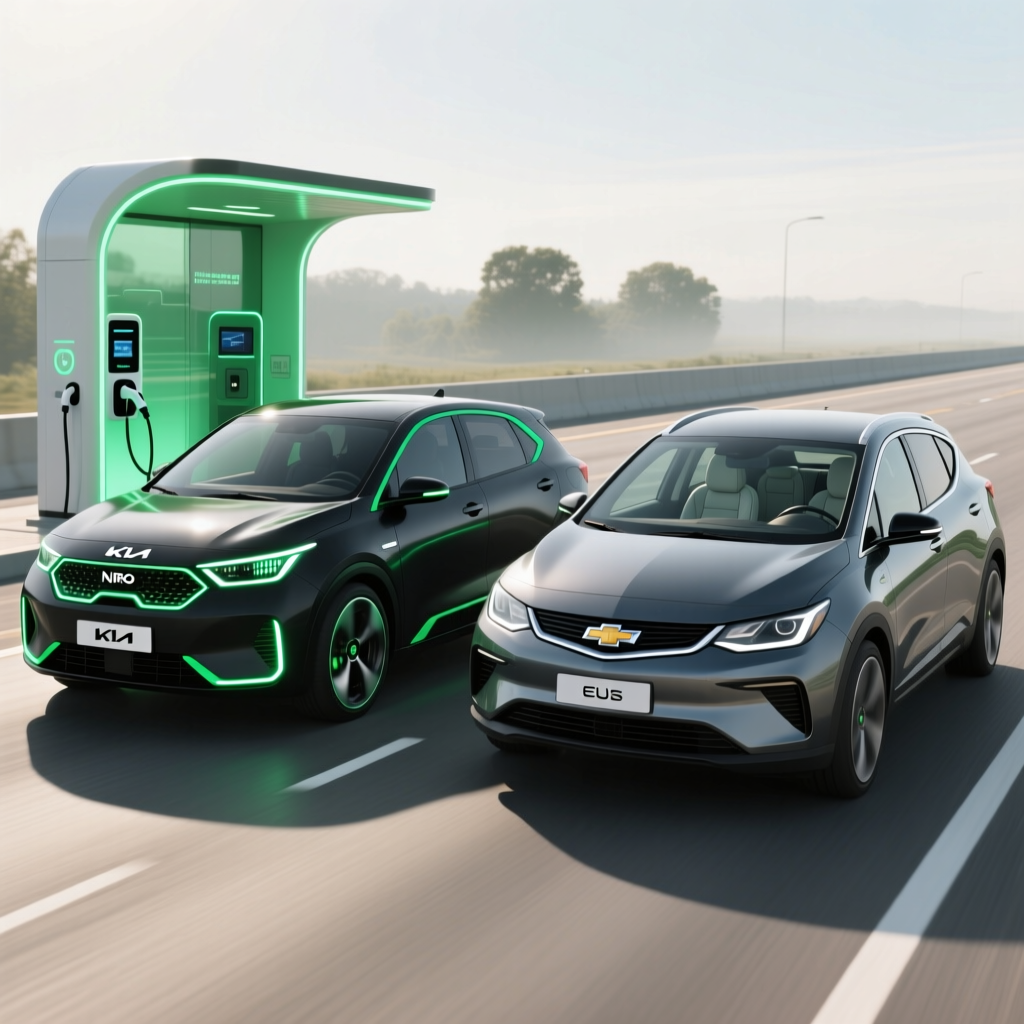
Kia Niro EV vs. Chevrolet Bolt EUV: The Ultimate Budget Electric SUV Showdown
Shopping for an affordable electric vehicle that doesn't sacrifice practicality? The Kia Niro EV and the Chevrolet Bolt EUV consistently rank among the most compelling budget-friendly electric SUVs on the market. Both offer impressive range, usable cargo space, and a price tag that undercuts most competitors — but which one delivers the better overall value?
In this comprehensive head-to-head comparison, we break down every critical category — from EPA-estimated range and charging speeds to interior room, technology, and warranty coverage — so you can make an informed decision. Whether you're a daily commuter, a small family, or a first-time EV buyer, this guide will help you determine which of these two affordable electric crossovers deserves a spot in your driveway.
For a broader look at the segment, check out our Best Budget Electric SUVs ranking to see how these two stack up against the rest of the field.
Overview: Kia Niro EV & Chevrolet Bolt EUV at a Glance
The Kia Niro EV is a purpose-built electric crossover that slots into Kia's growing electrified lineup. It rides on a dedicated platform shared with the Hyundai Kona Electric and offers a blend of car-like driving dynamics, generous cargo volume, and a well-appointed interior. Kia positions the Niro EV as a practical, no-nonsense electric vehicle for buyers who want everyday usability without the premium price tag of larger electric SUVs.
The Chevrolet Bolt EUV (Electric Utility Vehicle) is the stretched, more spacious sibling of the Bolt EV hatchback. Built on GM's BEV2 platform, the Bolt EUV adds rear-seat legroom, a slightly raised ride height, and SUV-inspired styling to the Bolt formula. It has earned a reputation as one of the most affordable long-range electric vehicles ever sold in the United States, making it a perennial favorite among budget-conscious EV shoppers.
Both vehicles target the same buyer: someone who wants real-world range above 230 miles, a comfortable cabin, and a starting price well below the average new-vehicle transaction price. Let's dig into the numbers.
Side-by-Side Specification Comparison
| Specification | Kia Niro EV | Chevrolet Bolt EUV |
|---|---|---|
| EPA-Estimated Range | 239 miles | 247 miles |
| Battery Capacity | 64.8 kWh | 65 kWh |
| Motor Output | 201 hp / 291 lb-ft torque | 200 hp / 266 lb-ft torque |
| Drivetrain | Front-Wheel Drive | Front-Wheel Drive |
| DC Fast Charging (Max) | ~85 kW (10–80% in ~45 min) | ~55 kW (10–80% in ~60 min) |
| AC Level 2 Charging | 11 kW (onboard charger) | 11.5 kW (onboard charger) |
| Cargo Volume (Behind Rear Seats) | 18.4 cu-ft | 16.3 cu-ft |
| Cargo Volume (Seats Folded) | 53.0 cu-ft | 56.9 cu-ft |
| Rear Legroom | 38.4 inches | 39.1 inches |
| Starting MSRP (Approx.) | ~$39,600 | ~$28,800 (post-price cut) |
| EPA Efficiency | 113 MPGe combined | 115 MPGe combined |
| Warranty (Powertrain) | 10 years / 100,000 miles | 5 years / 60,000 miles |
Sources: EPA Fuel Economy, manufacturer specifications. Figures reflect the latest available model data and may vary by trim.
Range & Efficiency: Which EV Goes Farther on a Charge?
Range anxiety remains one of the biggest hurdles for first-time EV buyers, and both the Kia Niro EV and Chevrolet Bolt EUV deliver numbers that should satisfy most daily driving needs.
Chevrolet Bolt EUV Range
The Bolt EUV carries a 65 kWh lithium-ion battery pack and achieves an EPA-estimated 247 miles of range. That figure places it near the top of the budget EV segment and makes it viable for road trips with minimal planning. In independent real-world testing conducted by outlets like Edmunds and Car and Driver, the Bolt EUV has consistently met or slightly exceeded its EPA rating in mixed driving conditions — a testament to GM's efficient powertrain calibration.
Efficiency is rated at 115 MPGe combined, which translates to roughly 29 kWh per 100 miles. For context, that means a full charge costs approximately $4–$6 depending on local electricity rates, making the Bolt EUV extraordinarily cheap to "fuel."
Kia Niro EV Range
The Niro EV uses a slightly larger 64.8 kWh battery and delivers an EPA-estimated 239 miles of range. While that's eight miles short of the Bolt EUV, the difference is negligible in real-world use — roughly one extra day of commuting for most drivers. The Niro EV posts 113 MPGe combined, nearly identical to its Chevrolet rival.
Where the Niro EV gains an edge is in cold-weather performance. Independent tests have shown that Kia's battery thermal management system helps preserve range more effectively in freezing temperatures compared to the Bolt EUV's passive cooling approach. If you live in a northern climate, this could translate to 15–20 additional usable miles during winter months.
Range Verdict: The Bolt EUV wins on paper by a slim margin, but the Niro EV's superior cold-weather performance makes this category essentially a tie for most buyers. For more on maximizing your EV range, see our guide on how to get the most range from your electric vehicle.
Price & Value: The Bottom-Line Battle
This is where the comparison gets dramatic.
Chevrolet Bolt EUV Pricing
Chevrolet made headlines by slashing the Bolt EUV's starting price to approximately $28,800 for the base LT trim — a figure that made it one of the least expensive long-range electric vehicles available anywhere. Even when equipped with the optional DC fast-charging package, leather seats, and the top-trim Premier package, a fully loaded Bolt EUV typically stays under $40,000.
At that price point, the Bolt EUV competes not only with other EVs but also with mainstream gasoline-powered compact SUVs. When you factor in lower fuel and maintenance costs, the total cost of ownership becomes remarkably compelling. Additionally, the Bolt EUV has historically qualified for federal and state EV incentives, further reducing the effective purchase price. Be sure to check the EPA's incentive database for current eligibility.
Kia Niro EV Pricing
The Kia Niro EV starts at approximately $39,600 for the Wind trim and climbs to around $46,000 for the fully loaded GT-Line. That's a significant premium over the Bolt EUV — roughly $10,000 at the base level.
However, the Niro EV justifies part of that premium with standard features that the Bolt EUV charges extra for. The base Niro EV includes DC fast charging, a larger touchscreen, wireless Apple CarPlay and Android Auto, heated front seats, and Kia's full suite of advanced driver-assistance systems (ADAS). When you equip the Bolt EUV to a similar specification level, the price gap narrows to approximately $5,000–$6,000.
Value Verdict: The Chevrolet Bolt EUV is the undisputed champion of affordability. If budget is your primary concern, the Bolt EUV is nearly impossible to beat. However, buyers who prioritize standard equipment and are willing to pay more upfront will find the Niro EV's value proposition more compelling over the long haul. Browse our best electric SUVs under $40,000 list for additional options in this price range.
Charging Speed: DC Fast Charging & Level 2 Compared
Charging speed directly impacts the convenience of EV ownership, especially for road trips and drivers without home charging access.
DC Fast Charging
The Kia Niro EV supports DC fast charging at up to approximately 85 kW via a CCS Combo connector. In optimal conditions, it can charge from 10% to 80% in roughly 45 minutes. While that's not class-leading compared to vehicles built on 800-volt architectures, it's respectable for the price point and sufficient for highway rest-stop top-ups.
The Chevrolet Bolt EUV, on the other hand, maxes out at approximately 55 kW on DC fast chargers. A 10%–80% session takes closer to 60 minutes. More critically, DC fast charging was initially offered only as a paid option on lower trims, though Chevrolet eventually made it standard on newer models. Always verify that a specific used or new Bolt EUV includes the DC fast-charging capability before purchasing.
For a deeper dive into public charging networks, read our guide to the best EV charging networks.
Level 2 (AC) Charging
Both vehicles perform admirably on Level 2 chargers, which are the most common type found at homes, workplaces, and public destinations. The Niro EV's 11 kW onboard charger and the Bolt EUV's 11.5 kW unit deliver a full charge from empty in approximately 7 hours — ideal for overnight charging at home on a 240-volt outlet or dedicated wallbox.
Charging Verdict: The Kia Niro EV wins this category decisively. Its faster DC charging capability means less time spent at highway rest stops, and the standard inclusion of fast charging on every trim eliminates the guesswork that sometimes accompanies Bolt EUV purchases.
Performance & Driving Dynamics
Neither the Niro EV nor the Bolt EUV is a performance vehicle, but electric motors deliver instant torque that makes both feel surprisingly quick in city driving.
Acceleration & Power
The Kia Niro EV produces 201 horsepower and 291 lb-ft of torque from its front-mounted permanent-magnet synchronous motor. The 0–60 mph sprint takes approximately 7.0 seconds, which is brisk enough for confident highway merging and passing.
The Chevrolet Bolt EUV delivers 200 horsepower and 266 lb-ft of torque, resulting in a 0–60 time of roughly 7.3 seconds. The difference is minimal in everyday driving, though the Niro EV's extra torque is noticeable when accelerating from a stoplight or climbing steep grades.
Ride Quality & Handling
The Niro EV benefits from a slightly more sophisticated suspension tuning. Its multi-link rear axle provides better composure over rough pavement and through corners compared to the Bolt EUV's torsion-beam rear setup. Steering feel in the Kia is weighted naturally and offers more feedback, making it the more engaging choice on winding roads.
The Bolt EUV prioritizes comfort over sportiness. Its softer suspension absorbs bumps well at low speeds but can feel floaty during aggressive lane changes or on undulating highways. The steering is light and easy for parking maneuvers but lacks the precision of the Kia's setup.
Both vehicles are front-wheel drive only, which limits their appeal in regions with heavy snowfall. Neither offers an all-wheel-drive variant, so buyers in harsh-winter climates should consider dedicated winter tires regardless of which vehicle they choose.
Performance Verdict: The Kia Niro EV holds a slight advantage in acceleration, torque, and overall driving refinement. The Bolt EUV is perfectly adequate for commuting but doesn't engage the driver the way the Niro EV can. For more on EVs that prioritize driving enjoyment, see our best EVs for driving enthusiasts roundup.
Interior Space, Comfort & Cargo Practicality
As crossover-styled vehicles, both the Niro EV and Bolt EUV offer more room than typical compact hatchbacks. But there are notable differences in how that space is distributed.
Passenger Room
The Bolt EUV's longer wheelbase translates to a meaningful advantage in rear-seat legroom. At 39.1 inches, rear passengers enjoy limousine-like space that rivals midsize sedans. Headroom is also generous, and the rear doors open wide for easy child-seat installation.
The Niro EV offers 38.4 inches of rear legroom — still very comfortable for adults on long trips, but slightly tighter than the Chevy. Front-seat comfort is excellent in both vehicles, with supportive seats and good visibility. The Niro EV's cabin uses higher-quality soft-touch materials on the dashboard and door panels, while the Bolt EUV leans more heavily on hard plastics — a consequence of its lower price point.
Cargo Volume
Behind the rear seats, the Niro EV provides 18.4 cubic feet of cargo space compared to the Bolt EUV's 16.3 cubic feet. Fold the rear seats down, and the Bolt EUV fights back with 56.9 cubic feet versus the Niro EV's 53.0 cubic feet. The Chevy's boxier roofline and longer load floor make it better suited for hauling bulky items like furniture or camping gear.
Both vehicles include a modest under-floor storage area in the cargo bay, though neither offers a front trunk (frunk) — a missed opportunity given that some competitors in the segment now include one.
Interior Verdict: It depends on your priorities. The Bolt EUV wins for rear-seat space and maximum cargo volume, making it the better choice for families. The Niro EV offers a more premium cabin feel and slightly more cargo room with the rear seats in use, appealing to couples and solo drivers who value material quality.
Technology, Safety & Infotainment
Infotainment Systems
The Kia Niro EV features a 10.25-inch touchscreen with wireless Apple CarPlay and Android Auto, built-in navigation, and a digital instrument cluster. The interface is intuitive, responsive, and includes physical shortcut buttons for climate and volume — a usability advantage over touch-only systems. Higher trims add a premium Harman Kardon audio system and a head-up display.
The Chevrolet Bolt EUV comes with an 8-inch touchscreen running Chevrolet's Infotainment 3 system. Wireless Apple CarPlay and Android Auto are standard, and the system is straightforward to use. However, the smaller screen and lower resolution feel dated compared to the Kia's setup. A 6-speaker audio system is standard, with a 7-speaker Bose upgrade available on the Premier trim.
Driver-Assistance & Safety
Both vehicles come loaded with ADAS features, but Kia is more generous with standard equipment. The Niro EV includes the following as standard on every trim:
- Forward collision-avoidance assist with pedestrian & cyclist detection
- Lane keeping assist & lane following assist
- Blind-spot collision-avoidance assist
- Rear cross-traffic collision-avoidance assist
- Adaptive cruise control with stop-and-go
- Safe exit warning
The Bolt EUV includes Chevy Safety Assist as standard, which covers:
- Automatic emergency braking with pedestrian detection
- Lane keep assist with lane departure warning
- Following distance indicator
- Automatic high beams
- Forward collision alert
Adaptive cruise control, blind-spot monitoring, and rear cross-traffic alert are available on higher Bolt EUV trims but are not standard on the base LT. This is a key differentiator: the Niro EV provides comprehensive safety tech regardless of trim level, while the Bolt EUV requires upgrading to access certain features.
Both vehicles have earned strong crash-test ratings. The Bolt EUV received a Top Safety Pick designation from the IIHS, and the Niro EV has achieved similarly strong results in global crash-testing protocols.
Technology Verdict: The Kia Niro EV delivers a more modern, feature-rich tech experience with a larger screen, standard wireless smartphone integration, and a more comprehensive suite of standard safety features. The Bolt EUV covers the basics well but requires higher trims to match the Kia's equipment list.
Warranty & Long-Term Ownership
Long-term peace of mind is a critical factor for EV buyers, especially given concerns about battery degradation and expensive out-of-warranty repairs.
Kia backs the Niro EV with one of the best warranties in the industry:
- 5-year / 60,000-mile limited warranty
- 10-year / 100,000-mile powertrain warranty (including battery)
- 10-year / 100,000-mile battery warranty (covers degradation below 70% capacity)
Chevrolet provides the following coverage for the Bolt EUV:
- 3-year / 36,000-mile limited warranty
- 5-year / 60,000-mile powertrain warranty
- 8-year / 100,000-mile battery warranty (covers degradation below 60% capacity)
Kia's warranty is substantially longer and more comprehensive. The 10-year powertrain coverage is double what Chevrolet offers, and Kia's battery warranty guarantees 70% capacity retention compared to Chevrolet's 60% threshold. For buyers planning to own their vehicle for a decade or more, this difference is significant.
Warranty Verdict: Kia wins this category by a wide margin. If long-term ownership cost and peace of mind are top priorities, the Niro EV's warranty coverage is difficult to match at any price point. Learn more in our guide to EV warranties explained.
Final Verdict: Which Budget EV Should You Buy?
Both the Kia Niro EV and the Chevrolet Bolt EUV are excellent electric vehicles, but they serve slightly different buyers.
Choose the Chevrolet Bolt EUV If:
- Budget is your top priority. The Bolt EUV's rock-bottom starting price makes EV ownership accessible to more people than almost any other vehicle on the market.
- You need maximum rear-seat room. Families with rear-facing child seats or tall teenagers will appreciate the Bolt EUV's class-leading rear legroom.
- You want the longest range per dollar. At 247 miles of EPA-estimated range and a sub-$30,000 starting price, the Bolt EUV delivers unmatched range value.
- You primarily charge at home. If you rarely use DC fast chargers, the Bolt EUV's slower fast-charging speed won't affect your daily routine.
Choose the Kia Niro EV If:
- You want more standard features. The Niro EV includes DC fast charging, adaptive cruise control, blind-spot monitoring, and a larger touchscreen at the base trim level.
- Long-term ownership matters. Kia's industry-leading 10-year warranty provides unmatched peace of mind.
- You take road trips regularly. Faster DC charging means less time waiting at highway chargers.
- Cabin quality is important. The Niro EV's interior materials, sound insulation, and overall refinement feel a class above the Bolt EUV.
- You live in a cold climate. Better battery thermal management translates to better real-world winter range.
Ultimately, the Chevrolet Bolt EUV is the best value pick, offering extraordinary range and practicality at a price that makes going electric an easy financial decision. The Kia Niro EV is the best overall pick for buyers willing to spend more for a more refined, better-equipped, and better-warranted vehicle.
Ready to explore more options? Visit our complete EV reviews hub for in-depth analysis of every electric vehicle on the market, or check our best electric SUVs rankings to compare additional models.
Frequently Asked Questions
Is the Kia Niro EV worth the extra cost over the Chevrolet Bolt EUV?
It depends on your priorities. The Niro EV offers faster DC charging, a more premium interior, more standard safety features, and a significantly better warranty. If those attributes matter to you and fit your budget, the additional cost is justified. However, if you simply want the most affordable long-range EV available, the Bolt EUV is hard to beat. Many buyers find that equipping the Bolt EUV to a comparable trim level narrows the price gap considerably, making the decision even closer.
Which vehicle charges faster at home?
Both vehicles are very similar when it comes to Level 2 (home) charging. The Bolt EUV's 11.5 kW onboard charger is marginally faster than the Niro EV's 11 kW unit, but the real-world difference is negligible — roughly 15–20 minutes for a full charge. Either vehicle will fully recharge overnight on a standard 240-volt Level 2 home charger. For tips on setting up home charging, see our complete home EV charger guide.
How do the Kia Niro EV and Bolt EUV perform in cold weather?
All electric vehicles experience range loss in cold temperatures, typically between 20% and 40% depending on severity. The Niro EV has an advantage here thanks to its more advanced battery thermal management system, which actively warms the battery pack to maintain efficiency. The Bolt EUV relies on a less sophisticated system, which can result in greater range loss and slower charging speeds in freezing conditions. If you live in a region with harsh winters, the Niro EV is the more reliable cold-weather companion.
Do the Kia Niro EV and Chevrolet Bolt EUV qualify for federal tax credits?
Federal tax credit eligibility for electric vehicles is subject to change based on current legislation, manufacturer sales volumes, and vehicle sourcing requirements. Historically, both vehicles have been eligible for some form of federal incentive, but the specific amount and qualification criteria vary. We recommend checking the official EPA fuel economy website and consulting with your tax professional to determine current eligibility. Many states also offer additional rebates and incentives that can further reduce the purchase price.