Quick Answer: Is the Kia K4 Electric?
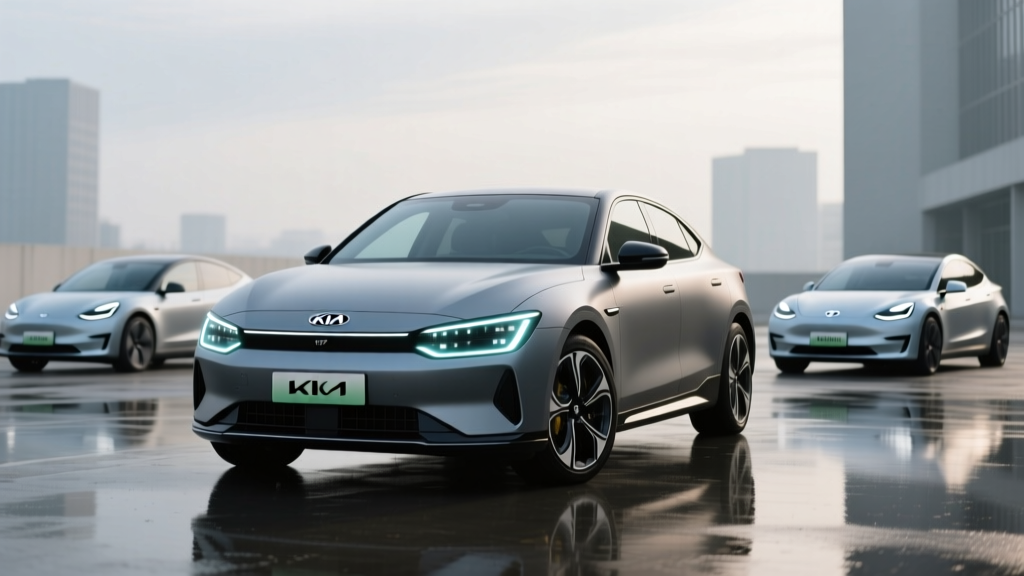
No, the 2026 Kia K4 is not an electric vehicle. It is a compact sedan offered exclusively with gasoline powertrains: a 2.0-liter naturally aspirated four-cylinder (147 hp) and a 1.6-liter turbocharged four-cylinder (190 hp). Kia has not announced a battery-electric (BEV) or plug-in hybrid (PHEV) variant of the K4. If you want a Kia sedan with an electric or electrified powertrain, you'll need to look at the Kia EV6 (all-electric) or wait for potential future hybrid offerings.
The Kia K4 replaced the Forte as Kia's entry-level compact sedan, debuting with bold fastback styling and a tech-heavy interior that punches above its price class. But with so many new cars offering electrified options, a common question among EV-curious shoppers is whether the K4 can be had with a plug. Here's the full breakdown of what's under the hood, what it costs to run, and which Kia models actually deliver an electric experience.
2026 Kia K4 Powertrain Lineup: Gas Only (For Now)
The 2026 K4 comes in two distinct powertrain configurations, neither of which includes any form of electrification — no 48-volt mild-hybrid system, no traditional hybrid, and certainly no plug.
| Spec | 2.0L I4 (LX, EX) | 1.6L Turbo (GT-Line, GT) |
|---|---|---|
| Engine | 2.0L naturally aspirated I4 | 1.6L turbocharged I4 |
| Horsepower | 147 hp | 190 hp |
| Torque | 132 lb-ft | 195 lb-ft |
| Transmission | CVT (IVT) | 8-speed automatic |
| EPA Fuel Economy (City/Hwy/Combined) | 30 / 40 / 34 MPG | 26 / 34 / 29 MPG |
| Fuel Tank | 12.4 gallons | 12.4 gallons |
| Estimated Total Range | ~421 miles | ~360 miles |
| Starting MSRP (2026) | ~$22,990 | ~$27,490 |
The 2.0L with the continuously variable transmission (Kia calls it an IVT) is the efficiency play, returning a solid 34 MPG combined per EPA estimates on fueleconomy.gov. The 1.6T sacrifices some efficiency for meaningfully more punch, with 190 hp making highway merging and passing effortless compared to the base engine's leisurely acceleration.
Neither engine includes a hybrid assist. This is notable because competitors like the Toyota Corolla (available as a hybrid returning an EPA-estimated 50+ MPG combined) and the Honda Civic (offering a hybrid variant) have moved to electrify their compact sedan lineups. Kia has kept the K4 strictly conventional.
Kia K4 vs. Going Electric: The Cost and Practicality Gap
If you're asking "is the Kia K4 electric?" you're likely weighing whether to buy this gas sedan or step up to an EV. Here's how the numbers actually compare over a realistic ownership period.
| Cost Category | 2026 K4 2.0L EX | 2026 EV6 Light RWD |
|---|---|---|
| Base MSRP | ~$24,590 | ~$42,900 |
| Federal Tax Credit (§30D) | $0 | Up to $7,500* |
| Effective Purchase Price | ~$24,590 | ~$35,400 |
| Fuel/Energy (60,000 mi) | ~$5,880 (at $3.35/gal, 34 MPG) | ~$3,150 (home charging at $0.14/kWh) |
| Maintenance (5 yr) | ~$2,500 | ~$900 |
| Insurance (5 yr est.) | ~$7,500 | ~$9,000 |
| 5-Year Total (excl. depreciation) | ~$40,470 | ~$48,450 |
*Federal tax credit eligibility under IRS §30D depends on buyer income limits, vehicle MSRP caps, battery component sourcing, and critical mineral requirements. Verify current-year rules at irs.gov. Point-of-sale transfer available at participating dealers.
The K4 wins on upfront cost by roughly $10,800 even after the EV6's potential tax credit. But the EV6 claws back $2,730 in fuel savings and $1,600 in maintenance savings over five years. The EV's insurance premium is typically higher — roughly $1,500 more over five years — which partially offsets the fuel advantage.
The breakeven math: If you drive 12,000 miles per year and charge primarily at home, the EV6's energy and maintenance savings total about $4,330 over five years. That doesn't close the purchase-price gap, but it narrows it. The equation shifts in the EV's favor if gas prices rise, if your state offers additional rebates, or if you drive significantly more than 12,000 miles annually.
Why Kia Didn't Make the K4 Electric (And What That Means for You)
Kia's electrification strategy is channeled through its dedicated EV lineup — the EV6, EV9, and upcoming models built on the Hyundai Motor Group's E-GMP platform. The K4 sits on a conventional front-wheel-drive architecture optimized for cost efficiency, which keeps the starting price under $23,000.
Adding a hybrid system would push the K4's price closer to $28,000-$30,000, eroding the value proposition that defines this segment. Toyota can offer the Corolla Hybrid at a competitive price because of its enormous global production volume; Kia has made a strategic choice to keep the K4 affordable and gas-only while directing EV investment into dedicated models.
What this means practically: If your budget tops out around $25,000-$27,000 and you need a new sedan, the K4 is one of the most feature-rich options in its class. You won't get electrification, but you will get a 10.25-inch digital cluster, wireless Apple CarPlay/Android Auto, and a comprehensive suite of ADAS features (Kia calls it Highway Driving Assist, which is a Level 2 SAE driver-assist system — it requires your hands on the wheel and eyes on the road at all times).
Real-World Ownership: K4 Gas Costs vs. Your Driving Patterns
The EPA rates the K4 2.0L at 34 MPG combined, but real-world fuel economy depends heavily on your driving mix:
- Mostly city driving (stop-and-go): Expect ~27-29 MPG. The CVT helps, but frequent idling and acceleration hurt efficiency.
- Mostly highway driving (65-75 mph): Expect ~36-39 MPG. The K4 is aerodynamically efficient at steady speeds.
- Cold climates (below 30°F): Expect a 10-15% reduction, dropping to ~29-31 MPG combined. Engine warm-up cycles and winter fuel blends reduce efficiency.
- Mixed commuting (the typical driver): Expect ~32-34 MPG combined, close to the EPA sticker.
At 34 MPG and $3.35 per gallon (the national average as of early 2026), you're spending roughly $0.099 per mile on fuel. Over 12,000 miles per year, that's $1,182 in annual fuel cost for the 2.0L model.
Compare that to an EV charged at home at $0.14/kWh: the EV6 consumes about 27 kWh per 100 miles (or 0.27 kWh/mi), which works out to $0.038 per mile — or $454 per year for 12,000 miles. That's a $728 annual fuel savings for the EV.
But here's the critical caveat: this assumes reliable home charging access. If you live in an apartment without charging, rely on public DC fast chargers (which often cost $0.35-$0.50/kWh), or live in a region with expensive electricity (California averages ~$0.28/kWh), the EV's fuel advantage shrinks significantly. At $0.45/kWh public charging rates, the EV6 costs about $0.122 per mile — nearly matching the K4's gas cost.
Want a Kia With a Plug? Your Actual Electric and Hybrid Options
If you were hoping the K4 was electric, here are the Kia models that actually deliver electrification in the 2026 model year:
| Model | Type | EPA Range / MPG | Starting MSRP | §30D Credit Eligible |
|---|---|---|---|---|
| Kia EV6 Light RWD | BEV (77.4 kWh, NMC) | 232 mi range / 134 MPGe | ~$42,900 | Yes (verify sourcing) |
| Kia EV6 GT-Line AWD | BEV (77.4 kWh, NMC) | 274 mi range / 117 MPGe | ~$52,200 | Yes (verify sourcing) |
| Kia Niro EV | BEV (64.8 kWh, NMC) | 239 mi range / 113 MPGe | ~$40,875 | Yes (verify sourcing) |
| Kia Niro PHEV | PHEV (11.1 kWh + 1.6L) | 33 mi electric + 48 MPG gas | ~$35,590 | Up to $3,750* |
| Kia EV9 | BEV (3-row, 100 kWh) | 304 mi range / 89 MPGe | ~$56,900 | Yes (verify sourcing) |
| Kia Sportage PHEV | PHEV (13.8 kWh + 1.6L T) | 34 mi electric + 35 MPG gas | ~$40,590 | Up to $3,750* |
| Kia Sorento PHEV | PHEV (13.8 kWh + 1.6L T) | 32 mi electric + 34 MPG gas | ~$51,790 | Up to $3,750* |
*PHEV credit amount depends on battery capacity and §30D sourcing requirements. Always verify at fueleconomy.gov for the latest eligible vehicle list.
The closest analog to the K4 in Kia's electrified lineup is the Niro EV — a compact crossover with 239 miles of EPA range and a practical hatchback shape. It starts about $18,000 higher than the K4, but after a potential $7,500 federal credit, the gap narrows to roughly $10,500. The Niro PHEV is a compelling middle ground: 33 miles of electric-only range covers most commutes, and the gas engine eliminates range anxiety for longer trips.
K4 Charging Myth vs. Fact: Clearing Up the Confusion
| Common Misconception | The Reality |
|---|---|
| "The K4 has a hybrid version I can't find." | No hybrid or PHEV K4 exists for 2026. The K4 is gasoline-only. Kia offers hybrids in the Niro, Sportage, and Sorento lineups. |
| "The K4 is basically the same as the EV6 but cheaper." | They share no platform. The K4 uses a conventional FWD steel unibody; the EV6 uses the dedicated E-GMP skateboard platform with a rear-mounted battery and RWD/AWD configurations. |
| "I can convert the K4 to electric." | EV conversions are technically possible but cost $15,000-$30,000+, void all factory warranties, and are not street-legal in many states without extensive recertification. Not practical. |
| "Kia is going electric, so the K4 will get a battery option soon." | Kia has committed to 14 EV models globally by 2030, but these are dedicated EVs, not electrified versions of existing gas models. A K4 EV variant has not been announced. |
| "The K4 qualifies for the EV tax credit." | The §30D Clean Vehicle Credit applies only to BEVs and PHEVs meeting battery sourcing, MSRP, and buyer income requirements. Gas-only vehicles do not qualify. |
Should You Buy the K4 or Go Electric? A Decision Framework
Choose the Kia K4 (Gas) If:
- Your budget is firm at $22,000–$28,000. The K4 is one of the best-equipped new cars at this price point, with standard wireless CarPlay, a 12.3-inch available touchscreen, and Kia's full Highway Driving Assist suite.
- You don't have access to home or workplace charging. Without a Level 2 charger at home, EV ownership means relying on public infrastructure — which adds time, cost, and unpredictability.
- You drive fewer than 10,000 miles per year. Low annual mileage means fuel savings from an EV are modest and won't offset the higher purchase price within a typical ownership period.
- You live in an area with extreme cold (sub-zero winters). EVs lose 20-40% of range in very cold weather. The K4's gas engine is unaffected by temperature, and its cabin heat is essentially free (waste heat from the engine).
- You regularly take road trips over 400 miles. The K4's ~420-mile range and 3-minute gas fill-ups still beat EVs for cross-country convenience, especially in regions with sparse DC fast-charging infrastructure.
Choose a Kia EV (EV6, Niro EV) If:
- You have Level 2 home charging (240V). This is the single biggest factor in EV satisfaction. Waking up to a full "tank" every morning eliminates range anxiety for daily driving.
- You drive 12,000+ miles per year. Higher mileage amplifies the per-mile fuel savings, making the EV's higher upfront cost pay back faster.
- You qualify for the full $7,500 federal tax credit. This requires meeting income caps ($150K single / $300K joint), MSRP caps ($55K sedans), and battery sourcing rules. Verify at irs.gov and ask your dealer about point-of-sale transfer.
- You want lower maintenance costs. No oil changes, no spark plugs, no transmission fluid, and regenerative braking extends brake pad life to 80,000+ miles in many cases.
- You value instant torque and quiet operation. The EV6 delivers 350 lb-ft of torque from 0 RPM and accelerates to 60 mph in about 5.1 seconds (RWD) — significantly quicker than any K4 variant.
Consider a Kia PHEV (Niro PHEV, Sportage PHEV) If:
- Your commute is under 30 miles round-trip and you have home charging — you'll run on electricity most days but keep the gas engine for weekend road trips.
- You want to reduce emissions without committing fully to an EV or you're not confident in your local charging infrastructure.
- You're in a cold climate where EV range loss is a real concern but you still want some electric driving for short trips.
Frequently Asked Questions
Will Kia ever release a hybrid or electric K4?
Kia has not announced any electrified K4 variant. The company's EV roadmap focuses on dedicated electric models (EV6, EV9, and future E-GMP vehicles). A K4 hybrid is possible in future model years as competitors pressure the segment, but nothing is confirmed for 2026 or 2027.
Is the Kia K4 a good car despite not being electric?
Yes — the K4 earns strong marks for its class. It offers one of the most spacious rear seats in the compact segment, a modern dual-screen interior, standard wireless phone integration, and Kia's Highway Driving Assist (SAE Level 2 adaptive cruise + lane centering). The 2.0L is adequate for commuting; the 1.6T is genuinely fun. It's a strong value pick in a segment where many rivals now exceed $28,000 to start.
How does the K4's fuel economy compare to an EV's MPGe?
The K4 2.0L returns 34 MPG combined. The EV6 Light RWD is rated at 134 MPGe combined. MPGe (miles per gallon equivalent) converts electrical energy into the energy equivalent of a gallon of gasoline (33.7 kWh = 1 gallon). In practical terms, the EV6 uses about $0.04/mile in electricity vs. the K4's $0.10/mile in gasoline — a 60% reduction in energy cost per mile.
Does the Kia K4 have any electric features like regenerative braking?
No. The K4 uses a conventional 12-volt electrical system with an alternator, like any other gas car. It does not have regenerative braking, a high-voltage traction battery, or any form of electric motor assist. The only "electrified" feature is its standard electronic power steering and electronic stability control, which are universal in modern vehicles.
What Kia sedan is electric?
Kia does not currently offer a fully electric sedan. The EV6 is marketed as a crossover/coupe despite its low-slung profile. The closest Kia to an electric sedan is the EV6, which offers 232-310 miles of EPA range depending on trim. If sedan body style is essential, you'd need to look outside Kia — the Tesla Model 3, Hyundai Ioniq 6, and BMW i4 are electric sedans in various price brackets.
Can I get a tax credit for buying the Kia K4?
No. The federal §30D Clean Vehicle Credit applies exclusively to plug-in electric vehicles (BEVs and PHEVs) that meet specific battery sourcing, MSRP, and buyer income requirements. The gas-only K4 does not qualify. Some states offer separate incentives for fuel-efficient vehicles, but these are uncommon for conventional gas cars. Check your state's DMV or energy office for local programs.