Kia EV6 vs Hyundai Ioniq 5: The Ultimate Sibling Rivalry in the EV World
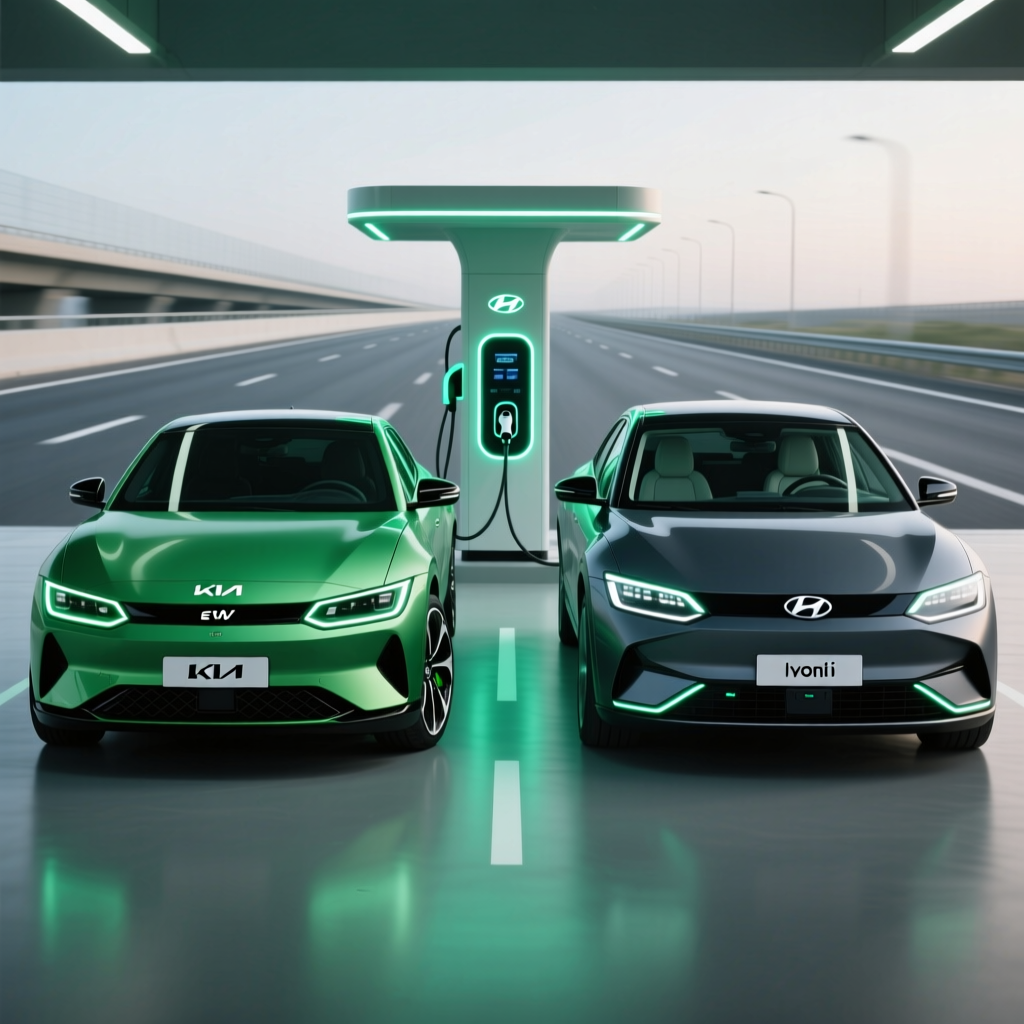
When Hyundai Motor Group launched its dedicated Electric-Global Modular Platform (E-GMP), it gave birth to two of the most compelling electric vehicles on the market: the Kia EV6 and the Hyundai Ioniq 5. Built on the same underpinnings, sharing battery packs, powertrains, and core technology, these two EVs are essentially siblings — yet they target distinctly different personalities and priorities. Choosing between them is less about finding the "better" car and more about discovering which one aligns with your driving style, aesthetic preferences, and daily needs.
In this comprehensive comparison, we break down every critical category — from range and charging speed to interior space and warranty coverage — so you can make a confident decision. If you want a deeper dive into either model individually, check out our full Kia EV6 review and our complete Hyundai Ioniq 5 review. You can also see how both stack up against the broader market in our best electric SUVs rankings.
Overview: Two Paths from One Platform
The Kia EV6 and Hyundai Ioniq 5 share the E-GMP architecture, which was engineered from the ground up for battery-electric propulsion. This platform supports both rear-wheel-drive and all-wheel-drive configurations, accommodates battery packs ranging from approximately 58 kWh to 77.4 kWh of usable capacity, and features an 800-volt electrical architecture that enables ultra-fast DC charging.
The Hyundai Ioniq 5 takes a retro-futuristic design approach with its pixel-inspired LED lighting, sharp geometric lines, and a spacious cabin that maximizes the flat-floor benefits of the E-GMP platform. It positions itself as a practical, family-friendly crossover with a strong emphasis on comfort and interior versatility.
The Kia EV6, by contrast, leans into a sportier, more aggressive aesthetic. Its sleek fastback-crossover silhouette, pronounced fenders, and performance-oriented tuning give it a more dynamic character. Kia markets the EV6 across a broader spectrum — from efficient daily commuters to the high-performance GT variant that challenges sports cars.
Despite their shared DNA, these two vehicles deliver remarkably different experiences behind the wheel and in daily ownership. Let's examine exactly how they compare across every dimension that matters.
Side-by-Side Specification Comparison
| Specification | Kia EV6 (Long Range RWD) | Hyundai Ioniq 5 (Long Range RWD) |
|---|---|---|
| Platform | E-GMP | E-GMP |
| Battery (usable) | 77.4 kWh | 77.4 kWh |
| EPA Range | Up to 310 miles | Up to 303 miles |
| Power (RWD) | 225 hp / 168 kW | 225 hp / 168 kW |
| Torque (RWD) | 258 lb-ft | 258 lb-ft |
| Power (AWD) | 320 hp | 320 hp |
| 0-60 mph (RWD) | ~7.2 seconds | ~7.4 seconds |
| 0-60 mph (AWD) | ~4.5 seconds | ~4.5 seconds |
| Max DC Charging | ~235 kW | ~235 kW |
| 10-80% DC Fast Charge | ~18 minutes | ~18 minutes |
| Wheelbase | 114.2 inches | 118.1 inches |
| Overall Length | 184.3 inches | 182.7 inches |
| Cargo Volume (rear seats up) | 24.4 cu ft | 27.2 cu ft |
| Cargo Volume (rear seats folded) | 50.2 cu ft | 59.3 cu ft |
| Frunk Volume | 0.7 cu ft | 0.85 cu ft (RWD) / 0.43 cu ft (AWD) |
| Towing Capacity | 2,300 lbs (AWD) | 2,300 lbs (AWD) |
| Vehicle-to-Load (V2L) | Standard (interior & exterior) | Standard (interior & exterior) |
| Starting MSRP (approx.) | Mid-$40,000s | Mid-$40,000s |
| Warranty (basic/powertrain) | 5 yr/60,000 mi & 10 yr/100,000 mi | 5 yr/60,000 mi & 10 yr/100,000 mi |
Note: Specifications reflect the most current data available from EPA ratings and manufacturer sources. Exact figures may vary by trim level and configuration.
Range & Efficiency: A Marginal Difference
Both the Kia EV6 and Hyundai Ioniq 5 utilize the same 77.4 kWh battery pack in their Long Range configurations, yet the EV6 holds a slight edge in EPA-rated range. The EV6 Long Range RWD achieves up to 310 miles of EPA-estimated range, while the Ioniq 5 Long Range RWD is rated at up to 303 miles. This seven-mile difference is negligible in real-world driving and can easily be eclipsed by factors like tire choice, weather conditions, and driving habits.
When equipped with all-wheel drive, both vehicles see their range drop, as expected. The EV6 AWD typically achieves around 282 miles of EPA-estimated range, while the Ioniq 5 AWD lands in a similar neighborhood at approximately 260-290 miles depending on trim and wheel size. Independent testing by outlets such as Edmunds has shown that both vehicles tend to meet or slightly exceed their EPA range estimates in mixed driving conditions — a welcome contrast to some competitors that fall short of their ratings.
In terms of efficiency measured in miles per kWh, both vehicles perform admirably. The EV6's slightly more aerodynamic profile gives it a small advantage on the highway, while the Ioniq 5's boxier shape can create marginally more drag at higher speeds. However, the difference is small enough that efficiency alone should not be the deciding factor.
For a broader look at how these two compare to the competition in the range department, see our best long-range electric vehicles roundup.
Price & Value: Closely Matched, With Nuances
Pricing for the Kia EV6 and Hyundai Ioniq 5 starts in remarkably similar territory, with base models for both vehicles beginning in the mid-$40,000 range. As you climb the trim ladder, both vehicles push into the low-to-mid $50,000s for fully loaded AWD configurations, before reaching the EV6 GT's significantly higher price point for those seeking maximum performance.
Where the two diverge is in their trim strategy and standard equipment:
- Hyundai Ioniq 5 tends to include more features as standard equipment on lower trims, making the entry-level models feel well-equipped. Features like heated front seats, a power-adjustable driver's seat, and Hyundai's suite of driver-assistance technologies often come standard.
- Kia EV6 structures its trims to emphasize sportier aesthetics and performance enhancements as you move up. The GT-Line trim adds aggressive body styling, larger wheels, and sport-tuned suspension elements that the Ioniq 5 doesn't offer in equivalent trims.
Both vehicles have historically qualified for various federal and state EV incentives, though eligibility can change based on battery sourcing requirements and your personal tax situation. Always verify current incentive availability through fueleconomy.gov before making a purchase decision.
When it comes to overall value, the choice often comes down to which brand's feature packaging aligns better with your priorities. If you want the most equipment for the least money at the entry level, the Ioniq 5 has a slight edge. If you're willing to spend a bit more for sport-oriented styling and dynamics, the EV6 delivers compelling value in its mid-to-upper trims.
Charging Speed: The 800-Volt Advantage
One of the most significant advantages both the Kia EV6 and Hyundai Ioniq 5 share over many competitors is their 800-volt electrical architecture. While most mainstream EVs use 400-volt systems, the E-GMP platform's 800V setup enables dramatically faster DC fast-charging speeds when paired with compatible chargers.
Both vehicles can accept up to approximately 235 kW of peak DC charging power, allowing them to charge from 10% to 80% in roughly 18 minutes under optimal conditions at a 350 kW charger. This is among the fastest charging times in the mainstream EV segment and represents a meaningful advantage for road-trippers and frequent travelers.
Real-world charging tests conducted by independent reviewers consistently show both vehicles performing nearly identically at the charger. The charging curve — how quickly the battery accepts power at different state-of-charge levels — is virtually the same, since both use identical battery management systems.
On Level 2 AC charging, both vehicles accept up to 10.9 kW, which can fully replenish the battery from empty in approximately seven to eight hours. This is standard for the segment and works well for overnight home charging.
Both vehicles also come equipped with a Vehicle-to-Load (V2L) feature, which allows you to use the car's battery to power external devices through a standard outlet adapter. This capability can power camping equipment, tools at a job site, or even serve as a backup power source for essential home appliances during an outage. The V2L function outputs up to 3.6 kW, which is more than sufficient for most consumer electronics and small appliances.
For a deeper understanding of charging infrastructure and how to maximize your EV charging experience, read our guide on EV charging fundamentals.
Performance & Driving Dynamics: Sport vs. Comfort
This is where the sibling rivalry becomes most pronounced. Despite sharing powertrains, the Kia EV6 and Hyundai Ioniq 5 have been tuned to deliver noticeably different driving experiences.
Kia EV6: The Sportier Sibling
Kia has calibrated the EV6's suspension, steering, and throttle response to emphasize engagement and agility. The steering feels more direct, the body motions are tighter through corners, and the overall driving position is slightly lower and more car-like. Drivers who enjoy an involved, responsive feel will gravitate toward the EV6.
The EV6 GT variant takes this philosophy to an extreme, producing 576 horsepower and 545 lb-ft of torque from its dual-motor setup. With a 0-60 mph time of approximately 3.4 seconds, the EV6 GT competes directly with high-performance EVs like the Tesla Model Y Performance and the Ford Mustang Mach-E GT. It also features an electronic limited-slip differential, upgraded brakes, and a dedicated drift mode for track use.
Hyundai Ioniq 5: The Comfort-Focused Cruiser
Hyundai has tuned the Ioniq 5 with a clear emphasis on ride comfort and relaxed driving. The suspension absorbs bumps and road imperfections more effectively than the EV6, and the steering is lighter and more relaxed. The higher seating position and expansive windshield create an airy, commanding view of the road that many drivers find reassuring, especially on long highway journeys.
The Ioniq 5 N variant serves as Hyundai's answer to the EV6 GT, delivering a track-capable performance model with unique tuning, enhanced cooling, simulated gear shifts, and an aggressive sound system. The Ioniq 5 N has received widespread acclaim from automotive journalists for its creative approach to making EVs engaging on track while remaining livable as a daily driver.
In standard AWD form, both vehicles deliver 320 horsepower and reach 60 mph in approximately 4.5 seconds — brisk acceleration that makes highway merging and overtaking effortless. The instant torque delivery characteristic of electric motors means both feel quicker than their numbers suggest in everyday driving.
Interior Space & Practicality: Room to Breathe
While both vehicles sit on the same E-GMP platform, Hyundai gave the Ioniq 5 a longer wheelbase (118.1 inches vs. 114.2 inches for the EV6), and this difference translates directly into interior spaciousness.
Passenger Space
The Ioniq 5's longer wheelbase provides noticeably more rear-seat legroom, making it the clear choice for families with older children or adults who frequently carry rear-seat passengers. The rear seats in the Ioniq 5 also slide forward and backward on a track, allowing you to prioritize either passenger space or cargo capacity depending on your needs. The Ioniq 5 also features a unique Universal Island center console that slides rearward, creating a walk-through effect between the front seats and adding to the sense of openness.
The EV6's rear seat is comfortable for two adults on shorter trips, but taller passengers may find legroom tighter on longer journeys. The EV6's cabin feels more cockpit-like and driver-focused, which some prefer for the sense of intimacy and control it provides.
Cargo Capacity
The Ioniq 5 holds a clear advantage in cargo volume:
- Ioniq 5: 27.2 cubic feet behind the rear seats, expanding to 59.3 cubic feet with seats folded
- EV6: 24.4 cubic feet behind the rear seats, expanding to 50.2 cubic feet with seats folded
The Ioniq 5's boxier roofline and longer wheelbase create a more usable cargo area, especially for taller items. Both vehicles include a small front trunk (frunk), though neither is particularly generous in this area — the Ioniq 5 RWD offers 0.85 cubic feet, while the EV6 provides just 0.7 cubic feet. AWD models have even smaller frunks due to the front motor placement.
For buyers who regularly haul cargo, travel with large suitcases, or need maximum versatility, the Ioniq 5 is the more practical choice. For those who prioritize style and don't frequently max out their cargo space, the EV6's slightly smaller dimensions are unlikely to be a dealbreaker.
Technology & Features: A Shared Foundation
Because both vehicles share the E-GMP platform and Hyundai Motor Group's technology suite, their infotainment systems, driver-assistance features, and connectivity options are remarkably similar.
Infotainment
Both vehicles feature dual-screen setups with a digital instrument cluster and a central touchscreen (typically 12.3 inches each, though exact sizes vary by trim and market). The systems support wireless Apple CarPlay and Android Auto, built-in navigation, over-the-air software updates, and voice recognition. Hyundai and Kia use slightly different user interface skins, but the underlying functionality is essentially identical.
One notable difference: the EV6 uses touch-sensitive climate controls integrated into a single panel below the main screen, which some drivers find less intuitive than the Ioniq 5's dedicated physical climate controls. This is a subjective preference, but it's a frequent topic of discussion among owners.
Driver Assistance
Both vehicles come equipped with comprehensive advanced driver-assistance systems (ADAS), including:
- Adaptive cruise control with stop-and-go functionality
- Lane-keeping assist and lane-centering
- Blind-spot monitoring with rear cross-traffic alert
- Forward collision-avoidance assist with pedestrian detection
- Highway driving assist with semi-autonomous capabilities
- Remote smart parking assist (on select trims)
The systems perform comparably well, though independent evaluations by organizations like the Insurance Institute for Highway Safety (IIHS) have given high marks to both vehicles for their safety performance. Both have earned Top Safety Pick+ ratings in applicable testing cycles.
Digital Key & Connectivity
Both the EV6 and Ioniq 5 offer digital key functionality, allowing you to use your smartphone as a key fob. They also support connected car services through their respective apps, enabling remote climate control, charging status monitoring, vehicle location tracking, and remote locking/unlocking.
Warranty & Ownership Costs: Industry-Leading Coverage
Both Kia and Hyundai are renowned for their generous warranty coverage, and the EV6 and Ioniq 5 are no exception:
- Basic Warranty: 5 years / 60,000 miles
- Powertrain Warranty: 10 years / 100,000 miles
- Battery Warranty: 10 years / 100,000 miles
- Roadside Assistance: 5 years / unlimited miles (Hyundai) or 5 years / 60,000 miles (Kia)
This coverage is among the best in the entire automotive industry, providing significant peace of mind for EV buyers who may have concerns about long-term battery health and repair costs. The 10-year battery warranty, in particular, addresses one of the most common anxieties prospective EV owners have.
In terms of ongoing ownership costs, both vehicles benefit from lower maintenance requirements compared to internal-combustion vehicles. There are no oil changes, spark plugs, or timing belts to worry about. Brake wear is also significantly reduced thanks to regenerative braking. Insurance costs tend to be comparable between the two, though the EV6 GT's higher performance and price can result in higher premiums.
Depreciation for both vehicles has been relatively competitive within the EV segment, though as with all EVs, residual values can fluctuate based on market conditions, incentive changes, and the pace of new technology introductions. For more on maximizing your EV investment, explore our total cost of ownership guide.
The Verdict: Which Sibling Is Right for You?
After examining every critical dimension, the truth is that neither the Kia EV6 nor the Hyundai Ioniq 5 is objectively "better" than the other. They are both outstanding electric vehicles that share world-class fundamentals. The right choice depends entirely on your priorities:
Choose the Kia EV6 if:
- You prioritize sporty handling and a more engaging driving experience
- You prefer a sleek, fastback-inspired exterior design
- You want a lower, more car-like seating position
- You're interested in the high-performance GT variant with 576 horsepower
- Slightly better EPA range matters to you
- You value aggressive styling over maximum interior volume
Choose the Hyundai Ioniq 5 if:
- Maximum interior space and cargo capacity are top priorities
- You frequently carry rear-seat passengers and value legroom
- You prefer a comfortable, relaxed ride quality
- The retro-futuristic design language appeals to you
- You want the innovative Universal Island sliding console
- You value a higher, more commanding seating position
- The sliding rear seat versatility is important for your lifestyle
Both vehicles are excellent choices that rank among our top picks for electric SUVs. Whichever you choose, you're getting a well-built, fast-charging, tech-rich EV backed by one of the best warranties in the industry. The sibling rivalry here is a win for consumers — test-drive both, and let your instincts guide you.
Frequently Asked Questions
Are the Kia EV6 and Hyundai Ioniq 5 the same car underneath?
Yes and no. Both vehicles share the same E-GMP platform, battery packs, electric motors, and core technology. However, they have different body styles, suspension tuning, interior layouts, wheelbase lengths, and design philosophies. Think of them as siblings who share DNA but have distinctly different personalities. The driving experience, interior feel, and visual presence are meaningfully different despite the shared mechanical foundation.
Which charges faster, the Kia EV6 or Hyundai Ioniq 5?
Charging speeds are virtually identical between the two vehicles. Both use the same 800-volt architecture and battery management system, enabling peak DC charging rates of approximately 235 kW. Under optimal conditions at a 350 kW charger, both can charge from 10% to 80% in roughly 18 minutes. In real-world conditions, factors like battery temperature, state of charge, and charger availability will have a far greater impact on charging speed than any difference between the two vehicles.
Can the Kia EV6 or Hyundai Ioniq 5 tow a trailer?
Yes, both the EV6 and Ioniq 5 can tow up to 2,300 pounds when equipped with all-wheel drive and the factory towing package. This is sufficient for small utility trailers, lightweight boat trailers, or a pair of jet skis. Rear-wheel-drive models may have lower or no official towing ratings, so check with your dealer if towing is a priority. Keep in mind that towing will significantly reduce your driving range — expect a reduction of 30-50% depending on trailer weight and conditions.
Which is better for families, the EV6 or the Ioniq 5?
For most families, the Hyundai Ioniq 5 has the edge due to its longer wheelbase, which provides more rear-seat legroom and cargo space. The sliding rear seat and Universal Island console add versatility that families will appreciate daily. The Ioniq 5's more upright seating position also makes it easier to load children into car seats. That said, the EV6 is still a capable family vehicle — it's just slightly more compromised in the rear seat and cargo area compared to its sibling. Families who prioritize driving enjoyment over maximum space will still be well-served by the EV6.