Quick Answer: Which KG EV Should You Buy?
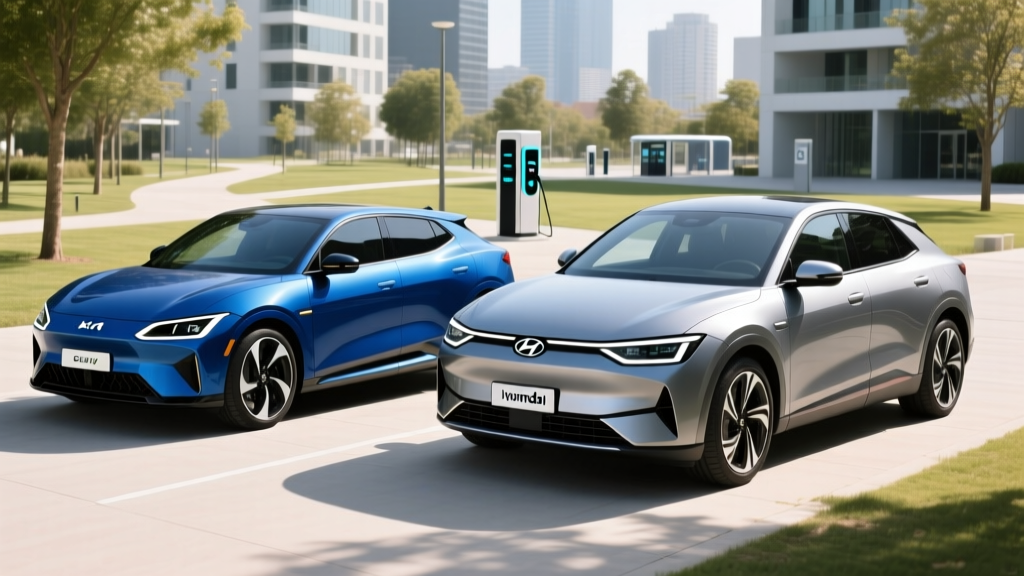
The Kia EV6 and Hyundai Ioniq 5 share Hyundai Motor Group's E-GMP platform but serve different priorities. The Ioniq 5 offers 361 miles EPA range and retro-modern styling; the EV6 delivers sportier handling and slightly faster 10-80% charging at 18 minutes. Both peak at 240 kW DC fast charging, qualify for up to $7,500 federal tax credit (subject to 2026 §30D sourcing rules), and cost roughly $42,900-$44,200 base. Choose the Ioniq 5 for maximum range and cargo space; choose the EV6 for driving dynamics and aggressive styling.
Range & Efficiency: Real-World Numbers
| Specification | 2026 Kia EV6 Long Range RWD | 2026 Hyundai Ioniq 5 Long Range RWD | 2026 Toyota Camry LE (Gas Baseline) |
|---|---|---|---|
| EPA Range | 310 miles | 361 miles | 572 miles (15.1 gal × 38 mpg) |
| Real-World Highway (70 mph) | ~260-275 miles | ~300-320 miles | ~520 miles |
| Cold Weather (20°F) | ~220-240 miles | ~255-275 miles | ~490 miles |
| Battery Capacity | 77.4 kWh usable (NMC) | 84.0 kWh usable (NMC) | N/A |
| Efficiency | 134 MPGe (25 kWh/100mi) | 132 MPGe (25 kWh/100mi) | 32 MPG combined |
| Energy Cost per Mile | $0.04 (home, $0.16/kWh) | $0.04 (home, $0.16/kWh) | $0.11 ($3.50/gal) |
Range Reality Check
EPA estimates assume mixed driving at moderate temperatures. Highway driving at 75+ mph reduces range 12-15% due to aerodynamic drag. Cold weather (below 32°F) cuts range 20-30% from battery chemistry limitations and cabin heating demands. Both models include heat pumps (standard on Ioniq 5, optional on EV6 GT-Line) that recover 5-8% range in cold conditions compared to resistive heaters.
Charging Speed & Infrastructure
Both vehicles use Hyundai Motor Group's 800-volt architecture, enabling 240 kW peak DC fast charging on 350 kW stations. This translates to 10-80% in approximately 18 minutes under optimal conditions (battery preconditioned, ambient temperature 65-85°F).
| Charging Level | Power (kW) | Miles Added per Hour | Time 10-80% | Cost (per session) |
|---|---|---|---|---|
| Level 1 (120V household) | 1.4 kW | 3-4 miles | 50+ hours | $0.04/mile |
| Level 2 (240V home charger) | 10.9 kW (EV6) / 10.9 kW (Ioniq 5) | 30-35 miles | 6-7 hours | $0.04/mile |
| DC Fast Charge (350 kW station) | 240 kW peak | ~900 miles/hour (peak) | 18 minutes | $0.12-0.18/mile |
The charging curve matters: both vehicles sustain 200+ kW from 10-55% SoC, then taper to 150 kW (55-70%), 100 kW (70-80%), and below 50 kW above 80%. Charging from 80-100% takes as long as 10-80% due to battery protection protocols. For road trips, plan 10-80% stops rather than full charges.
Connector compatibility: Both use CCS1 (Combined Charging System) in North America. Tesla Supercharger access requires a CCS-to-NACS adapter ($200-250) and works at reduced speeds (150 kW max) due to protocol limitations.
Cost Breakdown: Purchase, Charging, Maintenance
| Cost Category | 2026 Kia EV6 LR RWD | 2026 Hyundai Ioniq 5 LR RWD | 2026 Toyota Camry LE |
|---|---|---|---|
| Base MSRP | $42,900 | $44,200 | $29,495 |
| Federal Tax Credit (§30D) | Up to $7,500* | Up to $7,500* | $0 |
| Effective Price (after credit) | $35,400 | $36,700 | $29,495 |
| Home Charger Installation | $800-1,500** | $800-1,500** | $0 |
| Annual Fuel/Energy (15,000 mi) | $600 (home charging) | $600 (home charging) | $1,650 ($3.50/gal) |
| Annual Maintenance | $300 | $300 | $600 |
| 5-Year Total Operating Cost | $4,500 | $4,500 | $11,250 |
| Insurance (annual avg) | $1,800-2,200 | $1,700-2,100 | $1,400-1,700 |
*Federal tax credit eligibility depends on 2026 IRS §30D rules: buyer income caps ($150k single, $300k joint), vehicle MSRP caps ($55k sedans, $80k SUVs), and battery sourcing requirements (critical minerals and components from FTA countries). Check IRS.gov for current eligibility. Both models qualify as of early 2026, but sourcing rules tighten annually.
**Home charger installation assumes existing 200-amp electrical panel. Panel upgrades add $1,500-3,000. Licensed electrician required for 240V/40-amp circuit.
Performance & Driving Experience
| Metric | Kia EV6 LR RWD | Hyundai Ioniq 5 LR RWD |
|---|---|---|
| Horsepower | 225 hp | 225 hp |
| Torque | 258 lb-ft | 258 lb-ft |
| 0-60 mph | 7.2 seconds | 7.4 seconds |
| Top Speed | 115 mph | 115 mph |
| Cargo Volume (rear seats up) | 24.4 cu ft | 27.2 cu ft |
| Cargo Volume (rear seats folded) | 50.2 cu ft | 59.3 cu ft |
| Towing Capacity | 2,700 lbs (with tow package) | 2,300 lbs (with tow package) |
The EV6's slightly quicker 0-60 time reflects firmer suspension tuning and sport-oriented throttle mapping. Both offer one-pedal driving via adjustable regenerative braking (0-3 levels, plus "i-Pedal" full regen mode). The Ioniq 5 prioritizes ride comfort with softer damping; the EV6 trades some compliance for flatter cornering.
Common Misconceptions: Myths vs Facts
| Myth | Fact |
|---|---|
| "EVs need battery replacement after 100k miles" | Both include 10-year/100,000-mile battery warranties covering defects and capacity loss below 70%. Real-world data shows 85-90% capacity retention at 150k miles for NMC chemistries with proper charging habits (avoiding frequent 100% SoC). |
| "Charging takes too long for road trips" | 18-minute 10-80% DC fast charges align with typical rest stops. A 300-mile trip requires one 18-minute stop vs. a 5-minute gas fill, but EV drivers combine charging with meals/rest. Planning apps (A Better Routeplanner, PlugShare) optimize stops. |
| "EVs don't work in cold climates" | Range drops 20-30% in sub-freezing temps, but both models include battery preconditioning (activates when navigating to a charger) and heat pumps that recover efficiency. Owners in Minnesota, Canada, and Norway report reliable winter operation with adjusted range expectations. |
| "Home charging installation is prohibitively expensive" | Basic Level 2 installation (40-amp circuit, 240V) costs $800-1,500 for homes with 200-amp panels. This pays back in 2-3 years vs. public DC fast charging ($0.30-0.40/kWh vs. $0.16/kWh home). Federal Residential Clean Energy Credit covers 30% of installation costs (up to $1,000). |
| "The federal tax credit is gone" | The §30D credit remains available through 2032, but eligibility rules tightened in 2024-2026. Both EV6 and Ioniq 5 qualify as of 2026, but buyers must meet income caps and verify battery sourcing. Point-of-sale transfer (dealer reduces price at purchase) is now available. |
Decision Framework: Which KG EV Fits Your Needs?
Choose the Hyundai Ioniq 5 if:
- Maximum range is your priority (361 vs 310 miles EPA)
- You need more cargo space (59.3 vs 50.2 cu ft max)
- You prefer retro-modern styling with pixel-LED lighting
- You value a softer, more comfortable ride quality
- You want standard heat pump (included on all trims)
Choose the Kia EV6 if:
- Sporty handling and aggressive styling appeal to you
- You want slightly quicker acceleration (7.2 vs 7.4 sec 0-60)
- You prefer higher towing capacity (2,700 vs 2,300 lbs)
- You value Kia's warranty reputation and dealer network
- You want a lower base price ($42,900 vs $44,200)
Consider alternatives if:
- You lack home charging access (public charging costs 2-3x more and adds inconvenience)
- You regularly drive 350+ miles/day (gas/hybrid still more practical for extreme range needs)
- You need 7-passenger seating (consider Kia EV9 or Hyundai Ioniq 7, both 3-row SUVs)
- You're on a strict sub-$35k budget (consider used EV market or upcoming affordable models)
First-Time EV Buyer Essentials
Home charging is non-negotiable for most owners. Level 2 home charging (240V, 40-amp) adds 30-35 miles per hour and costs $0.04/mile at $0.16/kWh. Public DC fast charging costs $0.12-0.18/mile and requires detours. If you can't install home charging (apartment, street parking), an EV may not fit your lifestyle yet.
Plan for real-world range, not EPA stickers. Highway driving, cold weather, and aggressive acceleration all reduce range. Buy 20-30% more range than your typical daily driving to account for variability and battery degradation over time.
Maintenance is minimal but not zero. EVs eliminate oil changes, spark plugs, and exhaust systems. You'll still need tire rotations (EVs wear tires 20-30% faster due to instant torque), cabin air filters, brake fluid checks, and wiper blades. Budget $300/year vs. $600+ for gas cars.
Insurance costs 15-30% more. EVs have higher repair costs (specialized training, battery replacement risk) and higher purchase prices. Shop quotes before buying—some insurers offer EV discounts.
Battery degradation is gradual. Expect 1-2% capacity loss per year in moderate climates, slightly more in extreme heat. Both models warrant 70% capacity retention at 10 years/100k miles. Real-world data shows most E-GMP batteries retain 85-90% at 150k miles.
Frequently Asked Questions
Can I charge at Tesla Superchargers?
Not natively. Both use CCS1 connectors; Tesla uses NACS. A CCS-to-NACS adapter ($200-250) enables Supercharger access but limits charging to 150 kW (vs. 240 kW on CCS stations). Tesla's Supercharger network is expanding CCS support, but availability varies by region.
What happens if the battery fails after warranty?
Replacement costs $12,000-18,000 out of warranty. However, catastrophic battery failure is rare—most issues are cell imbalance or BMS faults, often repairable. Third-party shops now offer module-level repairs for $2,000-5,000. Battery technology costs decline 8-10% annually, so future replacements will cost less.
How long does a full charge take at home?
From 10% to 100% SoC on a 10.9 kW Level 2 charger: approximately 7-8 hours. Most owners charge overnight, plugging in at 20-30% and waking to 80-90% (avoiding daily 100% charges extends battery life). Set charge limits in the vehicle's app or infotainment system.
Are these vehicles eligible for state incentives?
Varies by state. California offers $2,000-7,000 (CVRP, income-dependent); Colorado offers $2,500 tax credit; New York offers $2,000 point-of-sale rebate. Check your state's energy office or fueleconomy.gov for current programs. Many utilities also offer $300-500 rebates for home charger installation.
Which is more reliable: EV6 or Ioniq 5?
Both share identical powertrains and E-GMP platforms. J.D. Power 2025 data shows Hyundai and Kia rank similarly in EV reliability (mid-pack, above average). Common issues are software-related (infotainment glitches, charging communication errors) rather than mechanical. Over-the-air updates address most bugs.
Can I tow with these vehicles?
Yes, but with caveats. EV6: 2,700 lbs (tow package required, $750). Ioniq 5: 2,300 lbs. Towing reduces range 30-50% depending on trailer weight and aerodynamics. A 2,000-lb trailer cuts EV6 range to ~160-180 miles. Plan charging stops accordingly.
Bottom Line: Both Are Strong KG EV Choices
The Kia EV6 and Hyundai Ioniq 5 represent the current sweet spot for mainstream EV adoption: 300+ mile range, 18-minute fast charging, $35-37k effective pricing after tax credits, and practical crossover utility. The Ioniq 5 wins on range and cargo; the EV6 wins on price and driving dynamics. Either choice delivers a compelling electric ownership experience—if you have home charging access and realistic range expectations.
For more EV comparisons and ownership guides, see our DOE EV technology resources and IRS clean vehicle credit documentation.