If you're researching karbike electric bikes alongside electric vehicles, you're likely weighing two very different approaches to electrified transportation. Here's the direct answer: a Karbike-style electric cargo bike costs roughly $3,500–$6,500 upfront, requires zero registration or insurance in most states, charges from a standard 120V outlet in 4–6 hours, and is ideal for urban trips under 15 miles. A compact EV like the Chevrolet Equinox EV or Nissan LEAF costs $28,000–$38,000 (before incentives), requires home Level 2 charging for convenience, but delivers 250+ miles of EPA range, climate control, safety ratings, and year-round usability. The right choice depends entirely on your trip distances, climate, cargo needs, and whether you need highway capability.
Quick Verdict
Choose an electric bike (Karbike-class): If 90%+ of your trips are under 15 miles, you live in a mild climate, have secure bike storage, and want sub-$5,000 total cost.
Choose a compact EV: If you need highway speeds, year-round weather protection, passenger seating, cargo capacity beyond groceries, or live where winters are harsh.
What Karbike Electric Bikes Actually Offer
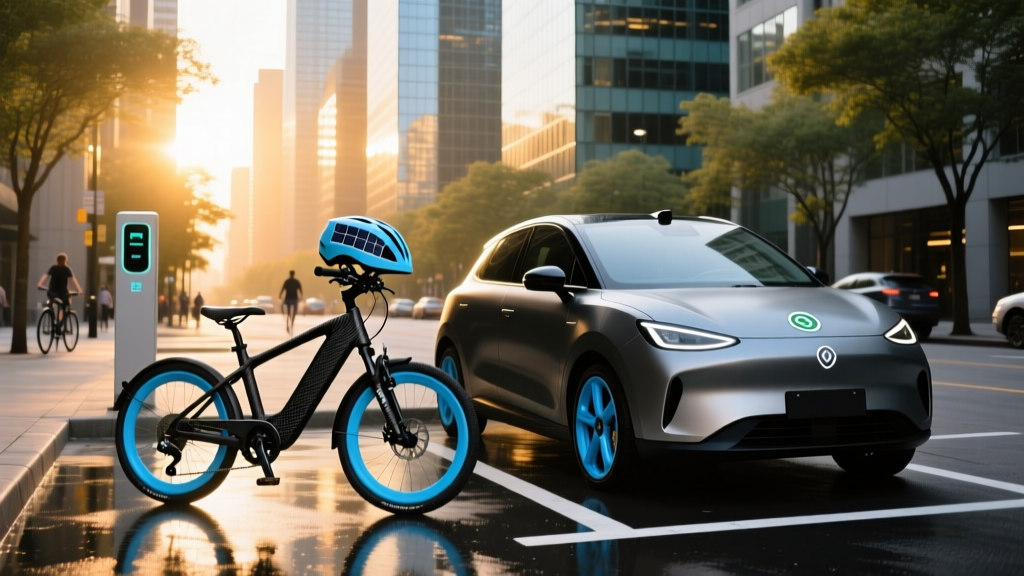
Karbike and similar electric cargo bikes (think Rad Power, Urban Arrow, Tern GSD) occupy a middle ground between traditional bicycles and automobiles. These aren't the e-bikes you might picture — cargo models typically feature 500W–750W hub or mid-drive motors, 500Wh–1,000Wh battery packs, and frames engineered to haul 300–440 lbs of combined rider and cargo weight.
Real-world range on a Karbike-class cargo e-bike typically lands between 25 and 50 miles per charge, depending on assist level, terrain, rider weight, and cargo load. That 500Wh battery, ridden at moderate assist (Level 2 of 5) on flat terrain with a 170-lb rider, will deliver roughly 35–40 miles. Crank the assist to maximum with a heavy load and hilly routes, and expect 20–25 miles.
Charging is straightforward: plug the removable battery into any standard 120V household outlet. A full 0–100% charge takes 4 to 6 hours depending on battery capacity and charger amperage (most ship with 2A or 4A chargers). There's no need for specialized electrical work — a significant advantage over EV home charging installation.
However, it's critical to understand that electric bikes and electric cars solve fundamentally different transportation problems. An e-bike replaces car trips; an EV replaces a gas car. Let's compare them head-to-head with real numbers.
Side-by-Side: Electric Cargo Bike vs Compact EV
| Factor | Karbike-Class Cargo E-Bike | Compact EV (2026 Chevy Equinox EV LT) |
|---|---|---|
| Base Price | $3,500–$6,500 | ~$33,600 MSRP |
| Federal Tax Credit | None (e-bikes excluded from §30D) | Up to $7,500 (subject to IRS §30D income/MSRP/sourcing rules) |
| Effective Price After Incentives | $3,500–$6,500 | ~$26,100–$33,600 |
| Real-World Range | 25–50 miles (battery dependent) | ~290 miles EPA (expect ~240–260 highway, less in cold) |
| Battery Capacity | 0.5–1.0 kWh | 85 kWh usable (NMC chemistry) |
| Charge Time (full) | 4–6 hours (120V outlet) | ~9.5 hours (Level 2, 240V/48A); DC fast 10–80% in ~30 min at 150 kW |
| Top Speed | 20–28 mph (Class 1/2/3 limits) | 115+ mph (electronically limited) |
| Passenger Capacity | 1–2 (with child seat) | 5 |
| Cargo Volume | Panniers + front rack (~3–5 cu ft effective) | 26.4 cu ft (rear seats up), 57.1 cu ft (folded) |
| Annual Insurance | $0–$200 (optional homeowner's rider) | $1,400–$2,200/year (varies by state/driver) |
| Annual Registration | $0 | $50–$200 depending on state |
| Weather Protection | None (rider exposed) | Full climate control, heated seats available |
| Highway Legal | No (bike lanes, paths, local roads only) | Yes (all roads) |
| Maintenance/Year | $100–$300 (tires, brakes, chain) | $300–$600 (cabin filter, tire rotation, wiper fluid — no oil changes) |
The Real Cost of Ownership: 5-Year Breakdown
Sticker price tells only part of the story. Let's model five years of ownership assuming 30 miles/day of commuting, 5 days/week (roughly 7,800 miles/year), which is within range for both platforms if you're disciplined about charging.
| Cost Category (5 Years) | Cargo E-Bike | Compact EV | Gas Compact Car (Baseline) |
|---|---|---|---|
| Purchase Price | $5,000 | $33,600 | $25,000 |
| Federal Tax Credit | $0 | –$7,500 (if eligible) | $0 |
| Effective Purchase | $5,000 | $26,100 | $25,000 |
| Energy/Fuel (5 yrs) | $150 (electricity at $0.16/kWh) | $2,340 (at $0.16/kWh, 3.5 mi/kWh) | $6,240 (at $3.50/gal, 30 MPG combined) |
| Insurance (5 yrs) | $500 | $9,000 | $7,500 |
| Registration (5 yrs) | $0 | $600 | $600 |
| Maintenance (5 yrs) | $1,000 | $2,000 | $3,500 |
| Total 5-Year Cost | $6,650 | $40,040 | $36,840 |
| Cost Per Mile | $0.17 | $1.03 | $0.94 |
The e-bike wins on pure economics by a landslide — but only if it can actually replace the trips you need to make. That $33,390 gap narrows fast if you still need a car for weekend trips, grocery hauls, bad weather days, or passenger transport, meaning you'd own the e-bike in addition to a car rather than instead of one.
Charging Reality: What First-Time EV Buyers Need to Know
If you're considering an EV after researching electric bikes, the charging question is probably top of mind. Here's what the e-bike world doesn't prepare you for:
Level 1 charging (120V household outlet) adds roughly 3–5 miles of range per hour for an EV. That's fine for an e-bike with a 0.5 kWh battery, but an 85 kWh EV battery would take days to charge this way. Most EV owners install a Level 2 charger (240V) at home, which delivers 25–35 miles of range per hour and fully charges overnight.
Level 2 home installation typically costs $800–$2,500 total (charger hardware: $300–$700; electrician labor and panel work: $500–$1,800). If your home's electrical panel is already at capacity — common in older homes with 100-amp service — a panel upgrade to 200 amps can add $1,500–$3,000. Always get a licensed electrician to assess your panel before committing.
For public DC fast charging, expect to pay $0.30–$0.50/kWh at networks like Electrify America or EVgo. A 10–80% charge on a 150 kW DC fast charger takes roughly 25–35 minutes for most modern EVs, though charging speed tapers significantly above 80% State of Charge (SoC) to protect battery health. This is why you'll see EV drivers targeting 80% on road trips rather than filling to 100%.
One thing e-bikes and EVs share: battery degradation. E-bike lithium-ion batteries typically lose 20–30% capacity over 3–5 years (500–800 charge cycles), with replacement costing $400–$800. EV batteries degrade much more slowly — typically 10–15% over 8 years — and are covered by federal-mandated warranties of at least 8 years/100,000 miles with a capacity retention threshold (usually 60–70% of original capacity). According to fueleconomy.gov, modern EV battery packs are lasting 200,000+ miles before significant degradation.
Common Misconceptions, Corrected
| Myth | Fact |
|---|---|
| "An e-bike can replace my car entirely" | Only if 100% of your trips are under 40 miles round-trip, in fair weather, without passengers or large cargo. For most people, an e-bike replaces 50–70% of car trips, not all of them. |
| "EVs have terrible range in winter" | EVs lose 20–35% of EPA range in freezing temps due to battery chemistry and cabin heating demands. A 290-mile EV might deliver 190–220 miles at 20°F. Cold-weather preconditioning and heat pumps (standard on many 2026 models) reduce this penalty significantly. |
| "E-bikes don't need insurance" | While most states don't require e-bike insurance, theft is a major risk. A $5,000 cargo e-bike locked on a city street is a target. A homeowner's or renter's policy rider ($100–$200/year) is strongly recommended. |
| "EVs cost more to maintain than gas cars" | The opposite is true. EVs eliminate oil changes, transmission fluid, spark plugs, and exhaust system repairs. EV owners spend roughly 50% less on maintenance annually, per DOE data. |
| "I can charge an EV from any outlet" | Level 1 (120V) works but is painfully slow — 3–5 miles/hour. Daily EV charging requires Level 2 (240V) for practicality. Plan for installation costs before purchasing. |
| "Everyone qualifies for the $7,500 EV tax credit" | The IRS §30D credit has strict limits: buyer AGI caps ($150K single/$300K joint), vehicle MSRP caps ($55K sedans/$80K SUVs/trucks), and battery critical-mineral and component sourcing requirements that change annually. Verify eligibility before purchasing. |
Decision Framework: Which Is Right for You?
Start Here — Answer These Questions in Order
1. Do more than 20% of your weekly trips exceed 30 miles round-trip?
→ Yes: You need an EV (or keep a gas car). An e-bike alone won't cover these trips.
→ No: Continue to question 2.
2. Do you regularly carry passengers (adults or multiple children)?
→ Yes: You need an EV. E-bikes max out at one child passenger safely.
→ No: Continue to question 3.
3. Do you experience 60+ days/year below 40°F or heavy rain/snow?
→ Yes: An EV provides year-round comfort. E-bike commuting in harsh weather requires serious gear and tolerance.
→ No: Continue to question 4.
4. Do you have secure, ground-level storage with access to a standard outlet?
→ Yes: An e-bike is logistically feasible.
→ No: Storing a $5,000 e-bike on a 4th-floor walkup or on the street is a theft and convenience problem. Lean EV.
5. Can you install a Level 2 charger at home, or do you have reliable workplace/public charging?
→ Yes: An EV is practical for daily use.
→ No: Without reliable charging access, EV ownership becomes frustrating. Consider a PHEV (plug-in hybrid) as a bridge — the Toyota RAV4 Prime offers 42 miles of electric-only range plus a gas engine for longer trips.
6. Is total transportation budget under $10,000 for the next 5 years?
→ Yes: A cargo e-bike is the clear winner on cost.
→ No: An EV's higher upfront cost is offset by fuel savings, safety, comfort, and versatility over time.
The Hybrid Approach: E-Bike + EV as a Two-Vehicle Household
For many households, the answer isn't either/or — it's both. A two-vehicle strategy pairing a cargo e-bike for daily solo commuting with a compact EV for family trips, bad weather, and longer drives offers the best of both worlds:
- Daily commute (e-bike): $0.02/mile energy cost, zero traffic stress, exercise built in, easy parking
- Weekend/family/bad weather (EV): Full range, highway capability, climate control, safety ratings
- Combined annual energy cost: ~$400–$600 (vs $2,000+ for a gas-only household)
- Total acquisition: ~$31,000–$40,000 ($5K e-bike + $26K–$35K EV after credits)
This approach works best in households where one person's commute is e-bike-friendly (under 15 miles, bike-lane accessible) while the other vehicle handles the longer, messier trips. According to NHTSA data, the average American drives 37 miles/day — but that average hides a bimodal distribution where most daily trips are actually under 10 miles, with a few long trips pulling the average up.
What First-Time EV Buyers Should Know Before Purchasing
If your research into Karbike electric bikes has opened the door to EV ownership, here are the non-obvious realities that spec sheets don't highlight:
Range honesty matters. The EPA range figure on the window sticker is a laboratory estimate. Real-world highway driving at 70+ mph reduces range by 15–25%. Cold weather (below 30°F) reduces it another 20–35%. A 310-mile EPA-rated EV might deliver 200 miles on a 20°F winter highway drive. Plan your routes accordingly and treat 80% of EPA range as your practical planning number for highway trips.
Home charging is non-negotiable for daily satisfaction. Public charging works for road trips, but relying on it daily is expensive and time-consuming. Budget $1,000–$2,500 for Level 2 installation before you buy. If you live in an apartment without charging access, advocate for building infrastructure or consider a PHEV.
Insurance costs more for EVs. Expect EV insurance premiums 15–25% higher than comparable gas vehicles, driven by higher repair costs and battery replacement values. Get quotes before purchasing — the difference can be $300–$600/year depending on your state and driving record.
Tax credit eligibility is complex. The federal §30D credit of up to $7,500 can be transferred to the dealer at point of sale (effectively a discount at purchase), but you must meet income limits, the vehicle must meet MSRP caps, and the battery must satisfy critical-mineral and component-sourcing requirements that tighten each year. Always verify current-year rules at irs.gov and consult a tax professional for your specific situation.
Frequently Asked Questions
Can I ride a Karbike-class electric bike in bike lanes?
It depends on the e-bike's classification and your local laws. Class 1 (pedal-assist only, 20 mph max) and Class 2 (throttle-assisted, 20 mph max) e-bikes are generally allowed in bike lanes. Class 3 (pedal-assist, 28 mph max) may be restricted from certain paths. Check your state and municipal regulations — they vary significantly.
How long does an e-bike battery last before replacement?
Most quality lithium-ion e-bike batteries retain 80% of original capacity after 500–800 full charge cycles, which translates to roughly 3–5 years of daily use. Replacement batteries cost $400–$800 depending on capacity and brand. Store batteries between 20–80% charge when not in use and avoid extreme temperatures to maximize lifespan.
Is a compact EV practical if I only drive 20 miles a day?
Absolutely — in fact, short daily commutes are the ideal EV use case. You'll charge overnight on Level 2, never visit a gas station, and use only a fraction of the battery's range daily, which actually promotes battery longevity by keeping the State of Charge in the 20–80% sweet spot. The EV's advantage is that when you do need range for a road trip, it's there.
Do electric bikes qualify for any federal tax incentives?
As of 2026, e-bikes do not qualify for the federal §30D clean vehicle credit (that's limited to four-wheeled vehicles meeting specific battery and sourcing requirements). However, some states and municipalities offer e-bike rebates or incentives — typically $300–$1,500. Check your local transportation authority or energy office for current programs.
What happens if my EV battery fails out of warranty?
Out-of-warranty EV battery replacement currently costs $8,000–$20,000 depending on the vehicle and pack size. However, data from multiple manufacturers shows that catastrophic battery failure is rare — most packs retain 85–90% capacity at 150,000 miles. The more common scenario is gradual degradation that reduces range but doesn't render the car unusable. Third-party battery refurbishment services are emerging as a lower-cost alternative to full replacement.
Can I tow with a compact EV?
Most compact EVs have limited towing capacity — typically 1,000–1,500 lbs when equipped with a factory tow package. Towing also reduces EV range by 30–50% due to the dramatically increased energy demand. If you tow regularly, consider a larger EV platform (Ford F-150 Lightning, Rivian R1T) rated for 7,500–10,000 lbs, or keep a gas vehicle for towing duty.