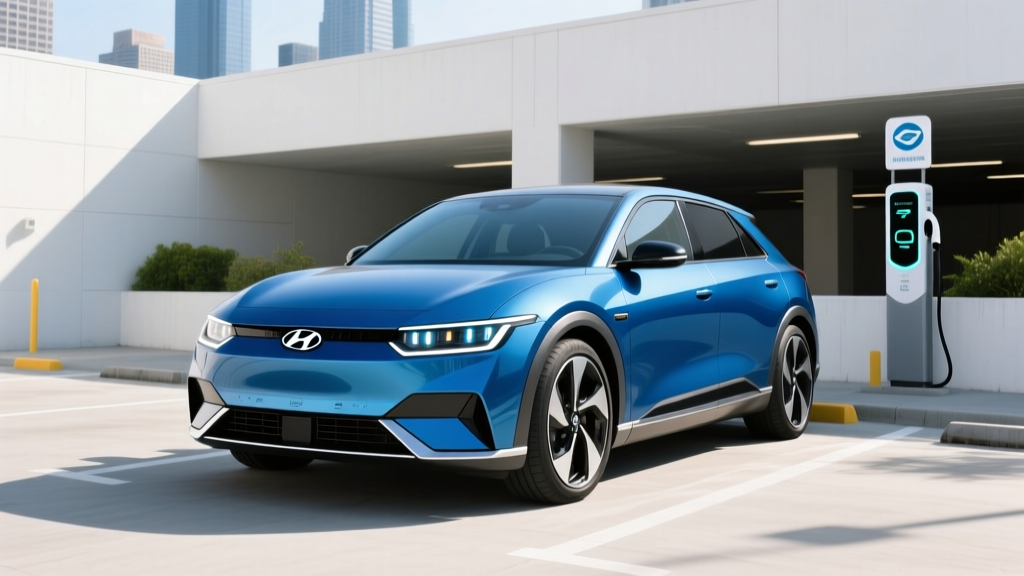
The Hyundai Ioniq 5 remains one of the most compelling electric crossovers on the market in 2026, offering 800V ultra-fast charging, a spacious interior, and competitive range. But for buyers weighing their options, the financial question looms large: should you buy outright, finance, or pursue a Hyundai Ioniq 5 EV lease? The answer depends on how federal incentives, depreciation curves, and real-world running costs stack up over five years.
This guide breaks down every dollar — from the §30D tax credit eligibility maze to insurance premiums and cold-weather range loss — so you can decide whether leasing or buying the Ioniq 5 makes financial sense.
2026 Hyundai Ioniq 5: Key Specs at a Glance
| Spec | SE/SEL (Standard Range) | SEL/Limited (Long Range RWD) | Limited (Long Range AWD) |
|---|---|---|---|
| EPA Range | 245 mi | 310 mi | 290 mi |
| Battery (usable) | 63.0 kWh (LFP) | 84.0 kWh (NMC) | 84.0 kWh (NMC) |
| Peak DC Fast Charge | ~175 kW | ~238 kW | ~238 kW |
| 10–80% DC Charge | ~22 min | ~18 min | ~18 min |
| Level 2 Charge Rate | 10.9 kW | 10.9 kW | 10.9 kW |
| Horsepower | 168 hp | 225 hp | 320 hp |
| 0–60 mph | ~7.5 sec | ~6.5 sec | ~4.5 sec |
| MPGe (combined) | 114 MPGe | 114 MPGe | 103 MPGe |
| Base MSRP | ~$42,600 | ~$47,400 | ~$54,000 |
| Battery Warranty | 10 yr / 100,000 mi | 10 yr / 100,000 mi | 10 yr / 100,000 mi |
The Federal Tax Credit: What Ioniq 5 Buyers Must Know for 2026
The IRS §30D Clean Vehicle Credit offers up to $7,500 — but it is not a blanket incentive. Eligibility hinges on three simultaneous requirements: buyer income caps, vehicle MSRP caps, and battery-component/critical-mineral sourcing thresholds. Hyundai's U.S.-built Ioniq 5 (assembled at the Metaplant in Georgia) has been a credit favorite, but you must verify every box.
- MSRP Cap: SUVs/crossovers must have an MSRP ≤ $80,000. All Ioniq 5 trims qualify.
- Buyer Income Cap: Modified AGI ≤ $150,000 (single), $225,000 (head of household), $300,000 (married filing jointly). If your income exceeds the cap in either the purchase year or the prior year, you're ineligible.
- Battery Sourcing: The $7,500 credit splits into two halves — $3,750 for battery components manufactured in North America, and $3,750 for critical minerals sourced from the U.S. or FTA partners. Hyundai has been ramping domestic battery sourcing via the LG-SK joint venture, but exact qualification percentages shift annually. Verify on the IRS qualified vehicles list before signing.
- Point-of-Sale Transfer: As of 2024, you can transfer the credit to the dealer at purchase, reducing your out-of-pocket cost immediately rather than waiting for tax filing. This applies to purchases, not leases.
- One Credit Per Vehicle: The vehicle VIN must not have been previously claimed for the §30D credit.
Rules subject to change. Consult a tax professional and check the latest IRS guidance before committing.
The Lease Loophole: Commercial Credit (§45W)
Here's where a Hyundai Ioniq 5 EV lease gets interesting. When you lease, the lessor (typically Hyundai Motor Finance or a bank) is the legal purchaser. The vehicle qualifies under the commercial clean vehicle credit (§45W), which has no MSRP cap, no buyer income cap, and no battery-sourcing restrictions. The lessor can claim up to $7,500 and — this is critical — pass the savings to you as a capitalized cost reduction (lowering your monthly payment).
This "lease loophole" has made leasing the most reliable way to capture the full $7,500 regardless of your income or the battery sourcing status. However, lessors are not legally required to pass the full amount. Negotiate explicitly: ask the dealer whether the full $7,500 is applied as a cap cost reduction on the Ioniq 5 lease.
5-Year Total Cost of Ownership: Ioniq 5 vs Gas Crossover
To answer "how much does it really cost to own an EV over 5 years?" we modeled a 2026 Ioniq 5 SEL RWD against a comparably priced gas crossover (think Toyota RAV4 or Honda CR-V AWD at ~$38,000 MSRP) over 60 months and 75,000 miles.
| Cost Category | Ioniq 5 SEL RWD (Long Range) | Gas Crossover Baseline |
|---|---|---|
| Purchase Price / Cap Cost | $47,400 | $38,000 |
| Federal Tax Credit (purchase) | −$7,500 | $0 |
| Net Acquisition Cost | $39,900 | $38,000 |
| Fuel / Charging (75,000 mi) | $4,275 | $9,375 |
| Maintenance (5 years) | $1,200 | $3,750 |
| Insurance (5 years) | $9,750 | $7,500 |
| Depreciation (est.) | −$19,800 | −$14,250 |
| Net 5-Year Cost | $35,325 | $44,375 |
Assumptions: Electricity at $0.16/kWh (national avg, home charging), gas at $3.50/gal, gas crossover at 28 MPG combined, Ioniq 5 at 3.1 mi/kWh. Depreciation based on 5-year industry averages for EVs vs ICE crossovers. Insurance based on national average premiums. Actual costs vary by state, driving habits, and utility rates.
Charging vs Gas: The Per-Mile Cost Math
This is where EVs shine, but the numbers depend heavily on how and where you charge.
| Charging Scenario | Cost per kWh | Cost per Mile (Ioniq 5) | 75,000 mi Total |
|---|---|---|---|
| Home Level 2 (national avg) | $0.16 | $0.052 | $3,900 |
| Home with time-of-use (off-peak) | $0.09 | $0.029 | $2,175 |
| Public DC fast charging (avg) | $0.40 | $0.129 | $9,675 |
| Gas crossover (28 MPG, $3.50/gal) | — | $0.125 | $9,375 |
At 3.1 miles per kWh (the Ioniq 5 Long Range's real-world efficiency), home charging on a standard residential rate saves roughly $5,475 over 75,000 miles compared to gas. If you have access to off-peak utility rates, savings balloon to over $7,000.
But here's the honest caveat: if you rely exclusively on public DC fast chargers at $0.40/kWh, your charging costs actually exceed gas. The Ioniq 5's economics depend on home or workplace charging. Before committing, confirm you have reliable Level 2 access — whether a home garage, apartment building charger, or employer-provided station.
Maintenance Savings: What You Won't Pay For
EVs eliminate the most common recurring service items on gas vehicles. The Ioniq 5 has no engine oil, no transmission fluid, no spark plugs, no timing belt, and no exhaust system. Here's what maintenance looks like:
| Service Item | Ioniq 5 (EV) | Gas Crossover |
|---|---|---|
| Oil changes | Never | Every 5,000–7,500 mi ($50–80 each) |
| Brake pads | 100,000+ mi (regen braking) | 30,000–50,000 mi ($200–400/axle) |
| Transmission fluid | Never (single-speed) | 60,000 mi ($150–300) |
| Coolant | Every ~60,000 mi | Every ~60,000 mi |
| Cabin air filter | Every 15,000–20,000 mi ($30–50) | Every 15,000–20,000 mi ($30–50) |
| Tire rotation | Every 8,000 mi ($25–50) | Every 8,000 mi ($25–50) |
| 5-Year Total (est.) | ~$1,200 | ~$3,750 |
The regenerative braking system deserves special mention. Because regen handles most deceleration, the Ioniq 5's friction brakes see minimal use. Many EV owners report original brake pads lasting well beyond 100,000 miles. Tire wear, however, can be slightly higher on EVs due to instant torque and extra vehicle weight — budget for a tire replacement around 40,000–50,000 miles.
Insurance: The Uncomfortable Reality
Yes, EVs typically cost more to insure. The Ioniq 5 averages $1,950/year nationally, compared to roughly $1,500/year for a gas crossover — a 30% premium. Why?
- Higher repair costs: EV battery packs and power electronics are expensive to replace after collision damage.
- Specialized labor: Fewer body shops have EV-certified technicians, driving up labor rates.
- Vehicle value: Higher MSRP means higher comprehensive/collision payouts.
- Parts availability: EV-specific components can have longer lead times.
That said, insurance varies wildly by state, zip code, driving record, and provider. Some insurers (like Progressive and State Farm) have introduced EV-specific discounts. Always run quotes on the exact Ioniq 5 trim before signing a lease or purchase agreement.
Depreciation and Resale Value Trends
EV depreciation has been volatile. Following the aggressive price cuts Tesla initiated in 2023 and the flood of off-lease EVs hitting the market, residual values for many electric vehicles dropped significantly. The Ioniq 5 has fared better than some competitors thanks to its strong reputation, 800V charging architecture, and Hyundai's 10-year/100,000-mile battery warranty — but it still depreciates faster than a Toyota RAV4.
Current industry data suggests the Ioniq 5 retains approximately 55–60% of its value after 3 years and roughly 40–45% after 5 years, compared to 55–65% for top-selling gas crossovers over the same period.
State, Local, and Utility Incentives
Beyond the federal §30D credit, dozens of states and utilities offer additional rebates — but availability varies enormously by jurisdiction. Some examples:
- California: CVRP rebate up to $2,000 for income-qualified buyers; additional $1,000 for low-income applicants.
- Colorado: State tax credit up to $5,000 for EVs under $80,000 MSRP.
- New York: Drive Clean Rebate up to $2,000 (point-of-sale).
- Utility rebates: Many utilities (PG&E, Xcel Energy, ConEdison) offer $500–$1,500 rebates for home Level 2 charger installation, plus time-of-use rates that slash charging costs.
These programs change frequently. Check your state energy office and local utility for current offerings. The DOE's alternative fuels incentive database is a good starting point.
Lease vs Buy: The Decision Framework
Choose a Hyundai Ioniq 5 EV Lease If:
- Your income exceeds the §30D caps but you still want the $7,500 benefit via the §45W commercial credit
- You want to avoid long-term depreciation risk in a volatile EV resale market
- You plan to drive fewer than 15,000 miles/year (typical lease limit)
- You upgrade vehicles every 3 years and want the latest tech
- You're uncertain about long-term battery health and want warranty coverage for the full ownership period
Choose to Buy the Ioniq 5 If:
- You qualify for the full §30D credit on a purchase and want the point-of-sale reduction
- You drive more than 15,000 miles/year (lease penalties add up fast)
- You plan to keep the vehicle 7+ years, amortizing depreciation over a long horizon
- You want to build equity and avoid perpetual car payments
- You have home charging and low electricity rates that maximize fuel savings
Frequently Asked Questions
How much does it really cost to own a Hyundai Ioniq 5 over 5 years?
Our model shows a net 5-year cost of approximately $35,325 for the SEL RWD Long Range (after tax credit), including purchase, charging, insurance, maintenance, and depreciation. That's roughly $9,000 less than a comparable gas crossover — though your actual cost depends on electricity rates, insurance premiums in your state, and how long you hold the vehicle.
Do I qualify for the $7,500 federal tax credit on the Ioniq 5?
You may. For a purchase, you need a modified AGI under $150K/$225K/$300K (single/HOH/MFJ), and the vehicle must meet battery-sourcing requirements. For a lease, the commercial credit (§45W) has no income or sourcing restrictions, making the full $7,500 more reliably accessible. Always verify current eligibility on IRS.gov.
How much do I save on fuel and maintenance vs a gas car?
With home charging at $0.16/kWh, expect to save roughly $5,100 on fuel over 75,000 miles. Maintenance savings add another $2,550 over 5 years. Combined, that's approximately $7,650 in running-cost savings — enough to offset a significant portion of the Ioniq 5's higher upfront price.
Are EVs more expensive to insure?
Typically yes — about 25–35% more than comparable gas vehicles. For the Ioniq 5, budget roughly $1,950/year vs $1,500/year for a gas crossover. Shop multiple insurers and ask about EV-specific discounts.
How well does the Ioniq 5 hold its value?
The Ioniq 5 retains an estimated 40–45% of its MSRP after 5 years, below top gas crossovers but competitive among EVs. Hyundai's 10-year battery warranty provides some residual-value support. If depreciation concerns you, leasing transfers that risk to the lessor.
What about the Ioniq 5's charging speed in practice?
The Long Range model peaks at ~238 kW on a 350 kW DC fast charger, reaching 10–80% in about 18 minutes under ideal conditions (warm battery, preconditioned). In real-world use — especially in cold weather or at lower-power stations — expect 22–30 minutes. The 800V architecture is a genuine advantage: it sustains higher charging power longer than 400V competitors, reducing the painful taper above 80% SoC.