Quick Answer: Is a Hyundai Electric Van Right for You?
Hyundai's electric van offering for global markets is the ST1 (Service Type 1), a purpose-built battery-electric commercial van announced in 2024 and rolling into select markets through 2025–2026. As of early 2026, the ST1 is not yet on sale in the United States. If you need a Hyundai electric van today for U.S. fleet or personal use, there is no currently available model. The closest alternatives are the Ford E-Transit (EPA-est. 126 miles range, starting ~$55,000) or the Mercedes-Benz eSprinter (~200 miles range, ~$72,000). If you're tracking the ST1 for a future purchase, here's everything known about its specs, pricing, and ownership economics — and how a Hyundai electric van compares to a gas equivalent.
What Is the Hyundai ST1 Electric Van?
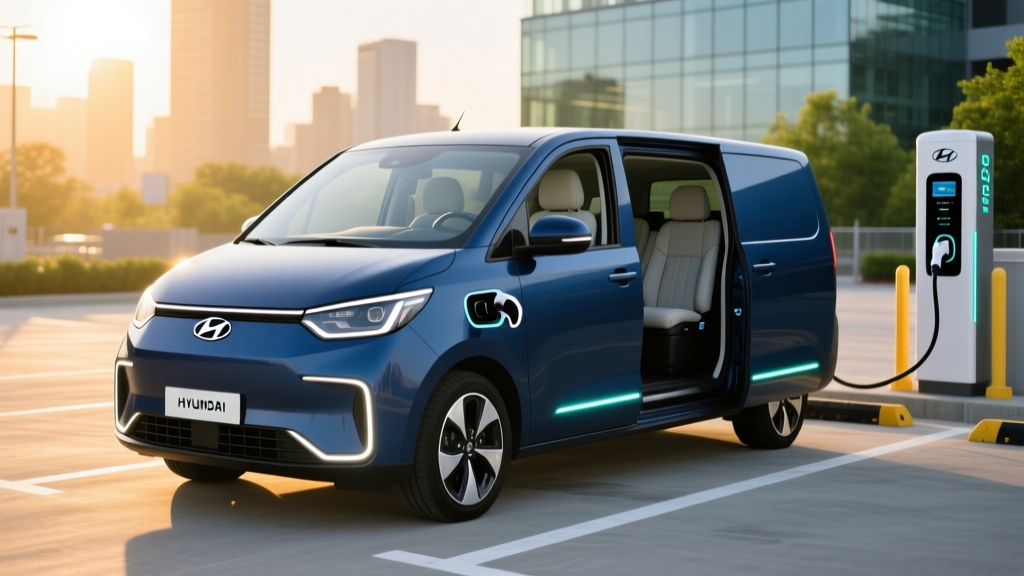
The Hyundai ST1 is a dedicated battery-electric van built on Hyundai's E-GMP-derived commercial platform. It was designed from the ground up as an EV — not a gas van converted to electric — which means a flat floor, optimized cargo volume, and a skateboard-style battery pack beneath the chassis. Hyundai positions the ST1 for last-mile delivery fleets, tradespeople, and shuttle operators, with modular body configurations including a cargo van, service van, and chassis-cab variant.
The ST1 debuted alongside Hyundai's broader commercial EV push, which also includes the XCIENT Fuel Cell heavy-duty truck and the Ioniq passenger lineup. The van targets the same commercial segment that the Ford E-Transit and Rivian EDV (Amazon's delivery van) occupy in North America.
Hyundai ST1 Specs: Range, Battery, Charging, and Performance
Because the ST1 is not yet EPA-rated for U.S. sale, the following specs are based on Hyundai's global announcements and Korean-market data. Treat them as preliminary estimates — U.S.-spec figures may differ when (and if) the van arrives stateside.
| Specification | Estimated Value |
|---|---|
| Battery Capacity | ~76.1 kWh (NMC lithium-ion) |
| WLTP Range | ~310 km / ~193 miles (cargo variant) |
| Estimated EPA Range | ~160–180 miles (U.S. EPA typically 10–15% lower than WLTP) |
| Motor Output | ~160 kW (~215 hp) rear-mounted |
| DC Fast Charge (Peak) | ~150 kW (10–80% in ~27 minutes est.) |
| Level 2 AC Charge | 11 kW (~7 hours for full charge) |
| Cargo Volume | ~5,500 liters / ~194 cu ft (long-wheelbase cargo) |
| Payload Capacity | ~1,000 kg / ~2,200 lbs (est.) |
| Base MSRP (Global Est.) | ~$48,000–$55,000 USD equivalent |
| Battery Warranty | 8 years / 100,000 miles (expected, based on Hyundai commercial terms) |
Real-World Range Reality Check
The WLTP figure of ~193 miles sounds competitive, but U.S. buyers should expect an EPA rating closer to 160–180 miles. In real-world use — fully loaded, stop-and-go urban delivery routes, or cold-weather operation — plan for 120–150 usable miles before needing to charge. That's adequate for most last-mile routes under 100 miles/day but tight for longer suburban or inter-city runs. Cold-weather range loss of 20–30% is typical for NMC packs without a dedicated heat pump circuit for the cabin.
Hyundai Electric Van vs. Gas Van: Cost and Capability Comparison
Let's compare the ST1 (estimated U.S. pricing) against the closest gas-powered competitor, the Ford Transit Cargo Van, which starts around $48,000 for a mid-roof, medium-wheelbase configuration.
| Cost Factor | Hyundai ST1 (EV Est.) | Ford Transit (Gas) |
|---|---|---|
| Purchase Price (Base MSRP) | ~$52,000 | ~$48,000 |
| Fuel / Energy Cost per Mile | ~$0.06 (at $0.13/kWh national avg.) | ~$0.18 (at $3.50/gal, 15 MPG combined) |
| Annual Fuel (15,000 mi/yr) | ~$900 | ~$2,700 |
| Annual Maintenance | ~$400 (no oil changes, fewer moving parts) | ~$1,100 (oil, filters, belts, spark plugs) |
| 5-Year Fuel + Maintenance Total | ~$6,500 | ~$19,000 |
| Federal Tax Credit (§30D) | Up to $7,500 (if eligible — see below) | $0 |
| 5-Year Net Cost (Purchase + Operating − Credit) | ~$50,500 | ~$67,000 |
The math favors the electric van heavily on operating costs. Over five years and 75,000 miles, the ST1 could save roughly $12,000–$15,000 in fuel and maintenance alone, even before any tax credit. For a fleet running 25,000+ miles per year, the savings multiply.
Tax Credit Eligibility: What the §30D Rules Mean for a Hyundai Van
If the ST1 launches in the U.S., federal tax credit eligibility under IRS §30D would depend on several factors:
- MSRP Cap: Vans fall under the commercial vehicle category, which currently has an $80,000 MSRP cap for the new clean vehicle credit.
- Buyer Income Limits: AGI must not exceed $150,000 (single), $225,000 (head of household), or $300,000 (joint filing).
- Battery Sourcing: Critical minerals and battery components must meet escalating domestic-sourcing percentages — 80% critical minerals and 100% battery components from U.S. or FTA-partner countries by 2026. Hyundai's supply chain is still ramping compliance; the ST1 may or may not qualify for the full $7,500.
- Point-of-Sale Transfer: Buyers can transfer the credit to the dealer at purchase, reducing the upfront price directly.
- Commercial Clean Vehicle Credit (§45W): Fleet buyers who don't owe income tax may qualify for the separate §45W commercial credit (up to $7,500 for vehicles under 14,000 lbs GVWR), which has different sourcing rules.
Bottom line: Don't assume $7,500 off. Check the fueleconomy.gov tax credit database when the ST1 is listed, and consult a tax professional for your specific situation.
Real-World Ownership: What a First-Time EV Van Buyer Should Know
Buying an electric van is not the same as buying an electric sedan. The commercial use case introduces variables that most passenger EV guides don't cover.
Home and Depot Charging Access
For a commercial van, "home charging" usually means depot charging. A single Level 2 charger (11 kW) takes roughly 7 hours to fully replenish a ~76 kWh battery — fine for overnight turnaround. But if you're running multiple vans, you'll need a charging management system and possibly electrical panel upgrades. A commercial depot install for 3–5 Level 2 chargers typically costs $15,000–$40,000 including trenching, conduit, panel upgrades, and permits. Always get a licensed electrician's assessment before committing to a fleet purchase.
Driving Patterns Matter
The ST1's ~160-mile estimated EPA range is ideal for urban delivery loops under 100 miles/day with overnight charging. It is not suited for long-haul routes, rural service areas without DC fast-charger access, or two-shift operations without mid-day charging. Before buying, log your actual daily mileage for two weeks.
Cold Weather Range Loss
NMC battery chemistry, combined with a large van's poor aerodynamics and the energy cost of heating a big cabin, means expect 20–35% range reduction in sub-30°F weather. A van rated at 170 miles EPA could drop to 110–130 miles in January in Minnesota. Preconditioning the battery while plugged in mitigates some loss but doesn't eliminate it.
Insurance and Depreciation
EV commercial vans currently carry 10–20% higher insurance premiums than gas equivalents due to higher repair costs and parts pricing. Depreciation data for EV vans is still thin; early E-Transit resale values suggest steeper first-year drops than gas Transits, though this may normalize as the market matures.
Common Misconceptions About Electric Vans
| Myth | Fact |
|---|---|
| "Electric vans can't handle heavy payloads." | The ST1's estimated 2,200-lb payload is competitive with mid-spec gas Transits. EVs deliver full torque at 0 RPM, so loaded acceleration is often better than gas. |
| "Charging takes too long for commercial use." | At 150 kW DC fast charging, a 10–80% session takes ~27 minutes — a reasonable driver lunch break. Most commercial vans charge overnight at Level 2, which is 7 hours and doesn't cut into route time. |
| "The battery will need replacing in a few years." | Modern NMC packs are warrantied for 8 years / 100,000 miles with a 70% capacity retention guarantee. Real-world data from fleet EVs shows ~10–15% degradation at 100,000 miles. Full replacement, if ever needed, costs $10,000–$18,000. |
| "I'll save money immediately." | Higher purchase price and insurance mean the break-even point is typically 2–4 years depending on mileage. Below 10,000 miles/year, a gas van may be cheaper overall. |
| "Any electrician can install a commercial charger." | Commercial Level 2 or DCFC installs require load calculations, potential panel upgrades (200A to 400A service), and utility coordination. Use a licensed electrician experienced in EV infrastructure. |
Decision Framework: Should You Buy a Hyundai Electric Van?
Choose the Hyundai ST1 (or wait for it) if:
- Your daily routes are under 100 miles and predictable
- You have depot or home garage access for overnight Level 2 charging
- You drive 15,000+ miles/year, making the fuel savings substantial
- You operate in a city or metro area with DC fast-charging backup
- You want to lock in lower operating costs and qualify for commercial EV incentives
Stick with a gas or diesel van (Ford Transit, Ram ProMaster, Sprinter) if:
- Your routes regularly exceed 150 miles/day or vary unpredictably
- You operate in extreme cold climates without garage parking
- You lack reliable charging access at your base of operations
- Your annual mileage is under 10,000 — the fuel savings won't offset the higher purchase price
- You need a van now and can't wait for the ST1's U.S. launch timeline
Hyundai Electric Van FAQ
Is the Hyundai ST1 electric van available in the United States?
Not as of early 2026. Hyundai has announced the ST1 for global markets, with initial availability in Korea and select Asian and European markets. A U.S. launch has not been confirmed. Monitor Hyundai's U.S. commercial vehicle announcements for updates.
How does the Hyundai ST1 compare to the Ford E-Transit?
The Ford E-Transit is available now in the U.S. with an EPA-est. 126 miles of range, a 126 kW battery pack, and a starting price around $55,000. The ST1 is expected to offer slightly more range (~160–180 miles EPA est.) and comparable pricing, but it isn't purchasable in the U.S. yet. If you need an electric van today, the E-Transit, eSprinter, or BrightDrop Zevo are your options.
What is the total cost of ownership for an electric van vs. gas?
Over 5 years and 75,000 miles, an electric van like the ST1 can save $12,000–$15,000 in fuel and maintenance compared to a gas equivalent, even accounting for a higher purchase price and slightly higher insurance. Break-even typically occurs at year 2–3 for high-mileage fleet use. Use the DOE's EV cost calculator for your specific electricity rate and driving pattern.
Can I charge an electric van at home?
Yes, if you have a garage or driveway with access to a 240V outlet or a professionally installed Level 2 charger. A home Level 2 install costs $500–$2,500 depending on your panel capacity and wiring distance. For a van-sized battery (~76 kWh), expect a full charge in about 7 hours at 11 kW — ideal for overnight charging.
Will the battery need to be replaced?
Unlikely during typical ownership. Hyundai's commercial battery warranties are expected to cover 8 years / 100,000 miles with a 70% state-of-health threshold. Real-world degradation for NMC packs averages 1.5–2% per year under normal use. At 100,000 miles, expect 85–90% of original capacity remaining. A full battery replacement, if ever needed outside warranty, costs $10,000–$18,000.
Does the ST1 qualify for the $7,500 federal tax credit?
It depends. Eligibility under IRS §30D requires the vehicle to meet battery sourcing thresholds, the buyer to fall under AGI limits, and the MSRP to be under $80,000 (for vans). Hyundai's battery supply chain compliance is evolving; the ST1's credit eligibility will be confirmed when it's added to the fueleconomy.gov database. Commercial fleet buyers may alternatively qualify under §45W.